Hepper is reader-supported. When you buy via links on our site, we may earn an affiliate commission at no cost to you. Learn more.
How Long Do Cats Take to Recover From Neutering? Our Vet Explains

In this article
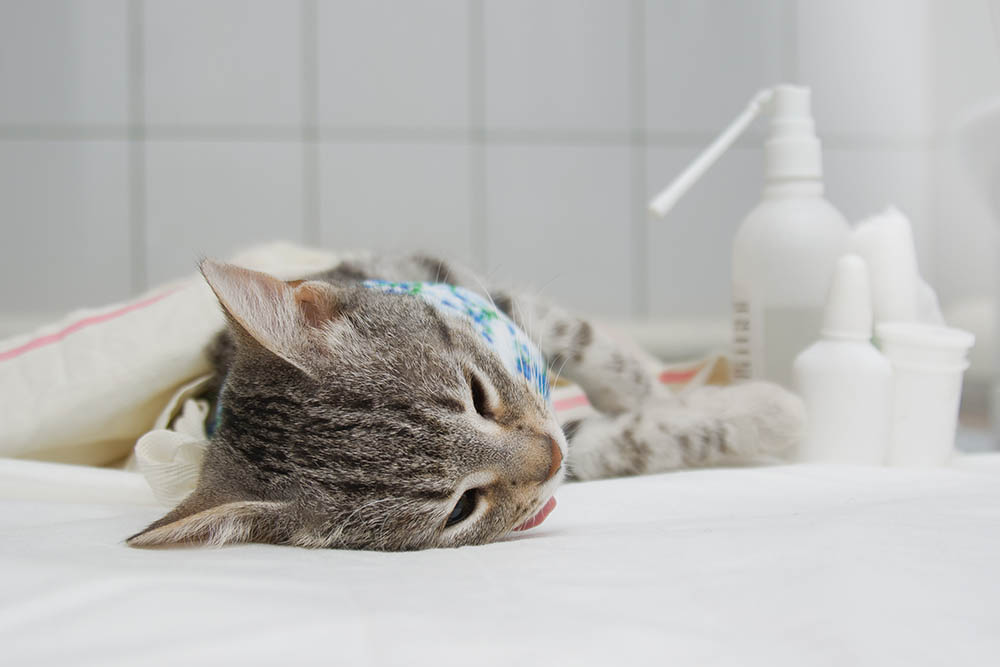
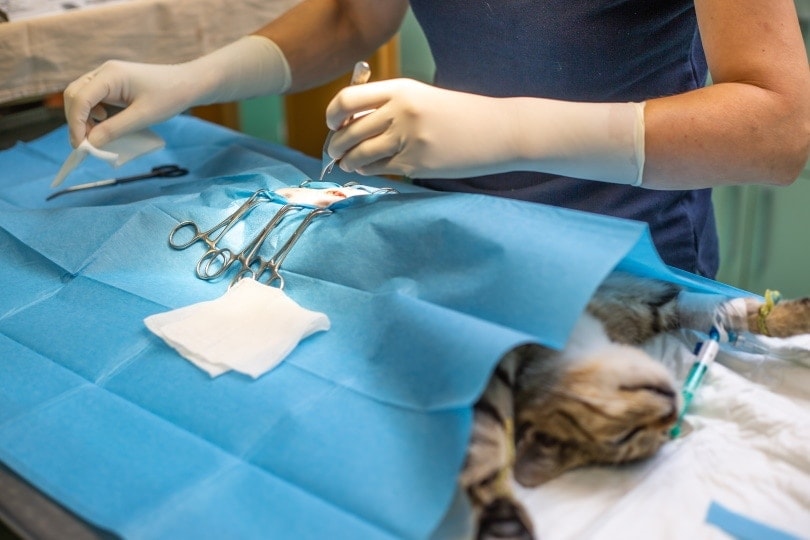
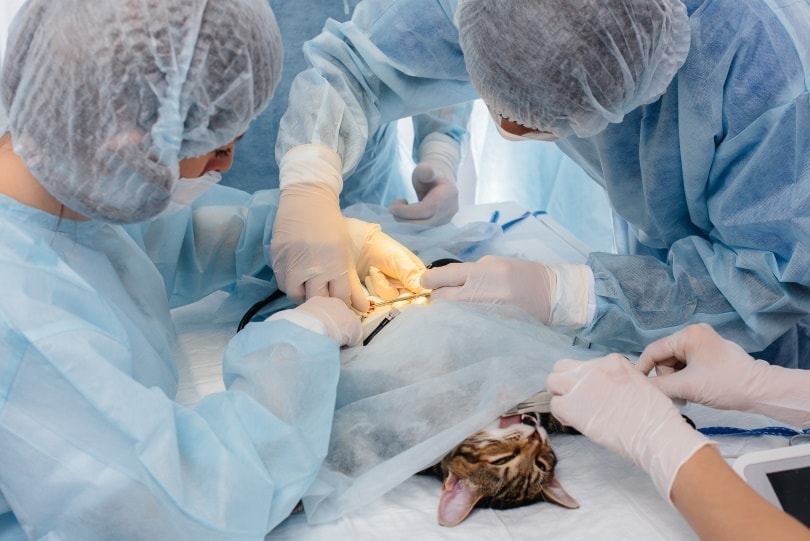
Neutering is the removal of a male cat's testicles. This procedure is most commonly completed in young, healthy cats to help prevent spraying and help decrease the feline overpopulation problem. If your cat is young, has no underlying health issues, and the procedure is routine, he should be acting his normal self within a few days, and fully healed and recovered within 10-14 days.
If your cat is older, has underlying health issues, or is cryptorchid (having a condition where one or both testicles do not descend into the scrotum normally). He may take longer to recover fully.
Let us assume your cat was just neutered. Continue reading to know more about what to expect.

What is aftercare like?
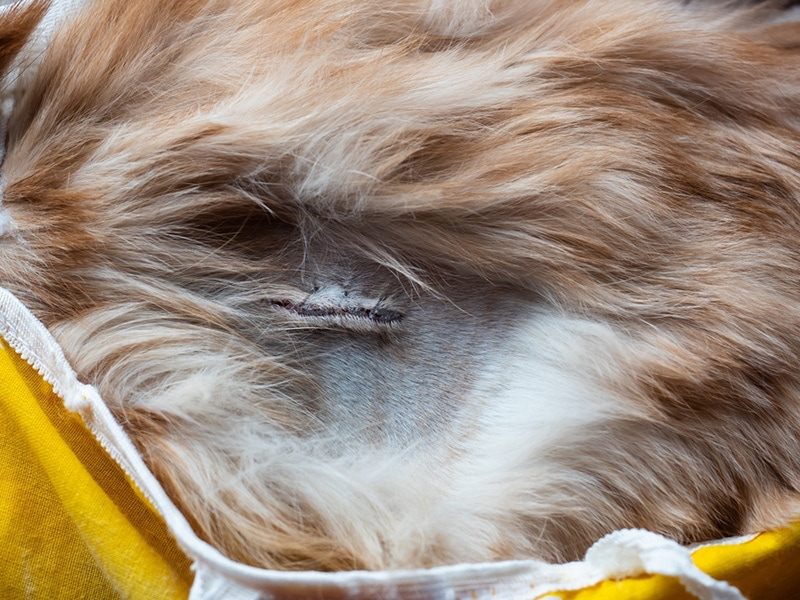
Aftercare for a neuter is fairly straightforward. The surgical incision is often left to heal open (no sutures are visible). Therefore you want to make sure that you use a litter that can’t become stuck in the surgical site. Ask your veterinarian if they have a non-clumping litter, or you can even use plain shredded paper.
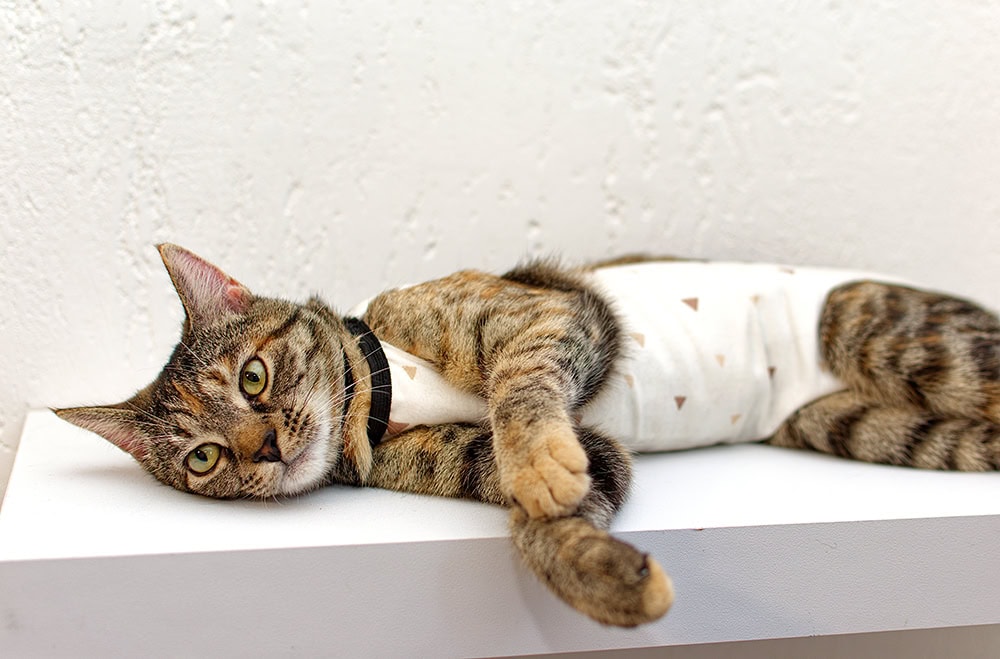
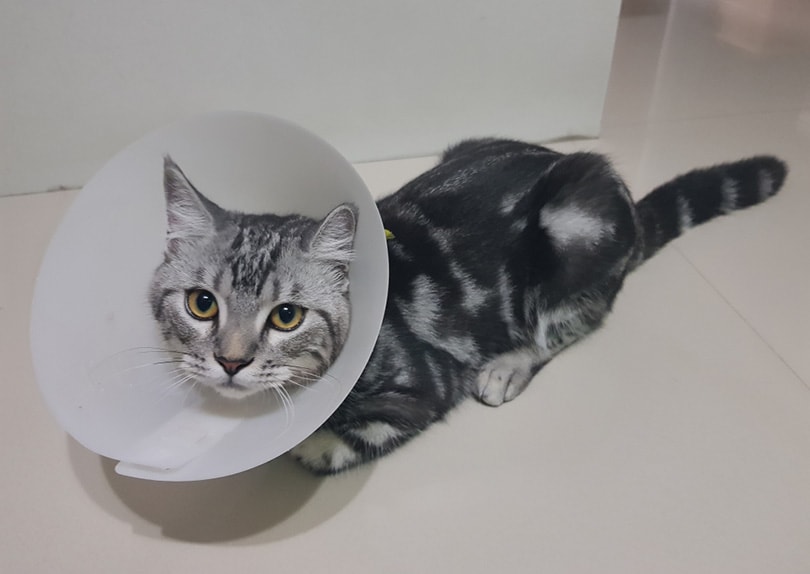
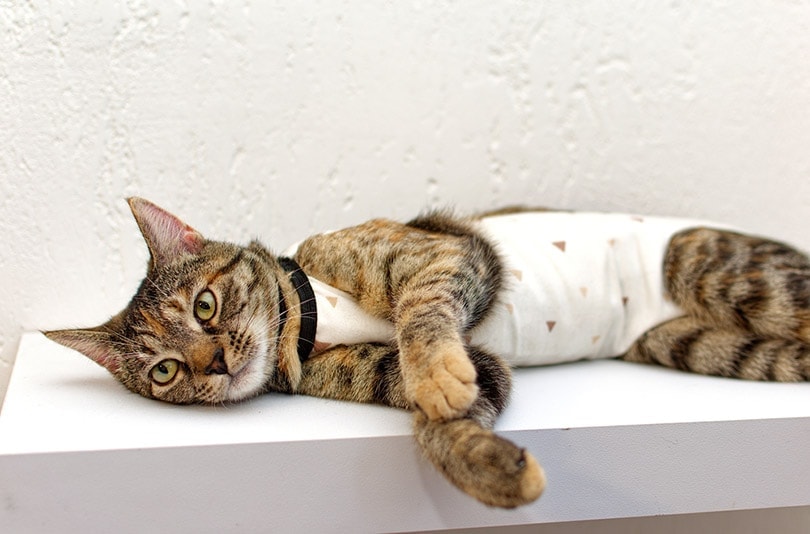
Aside from making sure the area is clean, you’ll want to keep an e-collar (the dreaded cone of shame) on your cat so he doesn’t lick the site. Your veterinarian will likely send you home with pain medications as well to keep you comfortable. Even if your cat is acting normal, administer the pain medications. He will thank you for it.
Does my cat need to be supervised while recovering?
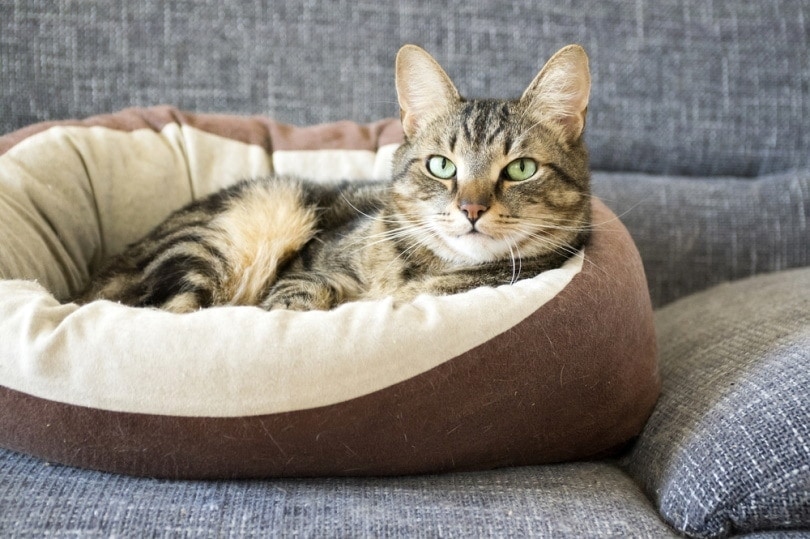
The long and short of it is yes and no. You need to keep an eye on your cat and make sure he is eating and drinking normally, not acting like he’s in pain, and that the surgical site appears to be healing well. However, you don’t need to stay with your cat 24 hours a day. You can safely keep your cat in a small room, such as the bathroom, laundry room, or a spare bedroom. If you have space, you can also use a large dog crate—large enough to keep food, water, a bed, and a litter box—to confine your cat.
Your cat does need to be confined to more closely monitor him, as well as to prevent excessive exercise and activity. Excessive activity, jumping, running, and playing can cause complications with the healing of the surgical site. Keeping your cat confined should be done for 10-14 days, depending on the age and size of your cat and whether or not the neuter was standard or cryptorchid.
See above for more discussion on neutering aftercare!

What do complications from a neuter look like?
As with any type of wound healing, it takes time. You cannot go in for surgery and magically be healed and back to normal in 24 hours. The body has to go through the process of inflammation, healing, and scar formation.
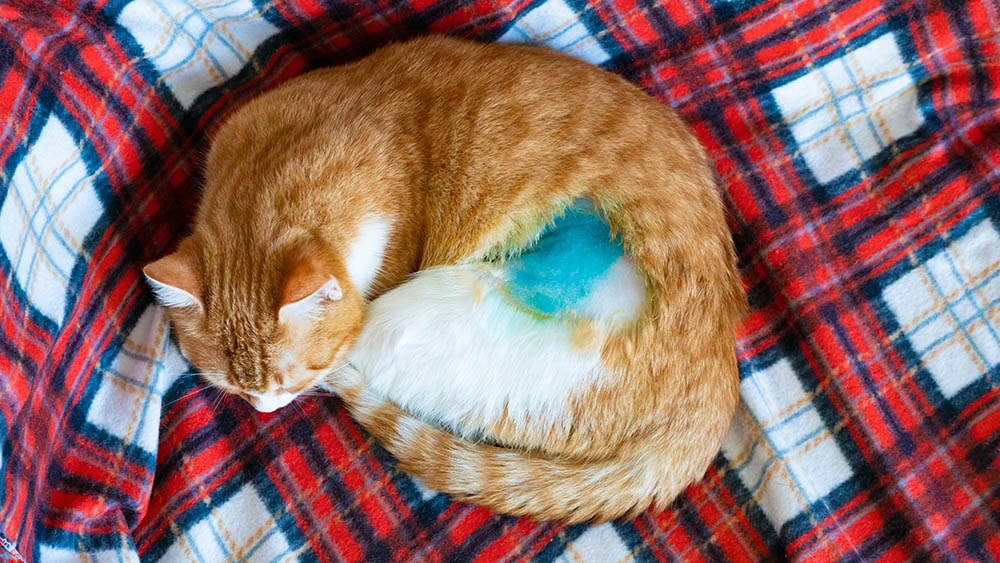
While the body is healing, complications such as swelling, bleeding, or infection can arise. In cats, one of the most common causes of infection following a neuter is allowing your cat to lick itself post-operatively. The mouth is an incredibly dirty place filled with countless bacteria. If your cat is constantly grooming and/or licking his surgical site, those bacteria that normally live in the mouth will be spread to the skin and neuter site. This may cause infection which can appear as redness, purulent discharge (white, green, brown, or yellow), pain at the surgical site, and fever.
Another common complication we see after a neuter is excessive swelling or discharge. Not all discharge is caused by infection. Some discharge may just be from excessive inflammation. Seromas are common at surgical sites and often arise when animals are too active following a procedure.
If you notice any type of discharge, excessive redness, or pain, or if your cat is acting lethargic or does not want to eat, contact your veterinarian. They may want to see your cat for an evaluation, or they may have you send a picture of the surgical site to try and evaluate it remotely.
What can I expect if my cat was a cryptorchid?
Cryptorchidism is when one or both testicles do not descend normally into the scrotum. During maturation, the testicles actually develop within the abdomen. They then make a long journey down through what’s called the inguinal canal into the scrotum. The body develops one testicle on each side of the body. If one or both of the testicles don’t make the journey down to the scrotum, your cat is considered a cryptorchid. While this is a rare occurrence in cats, it can happen.
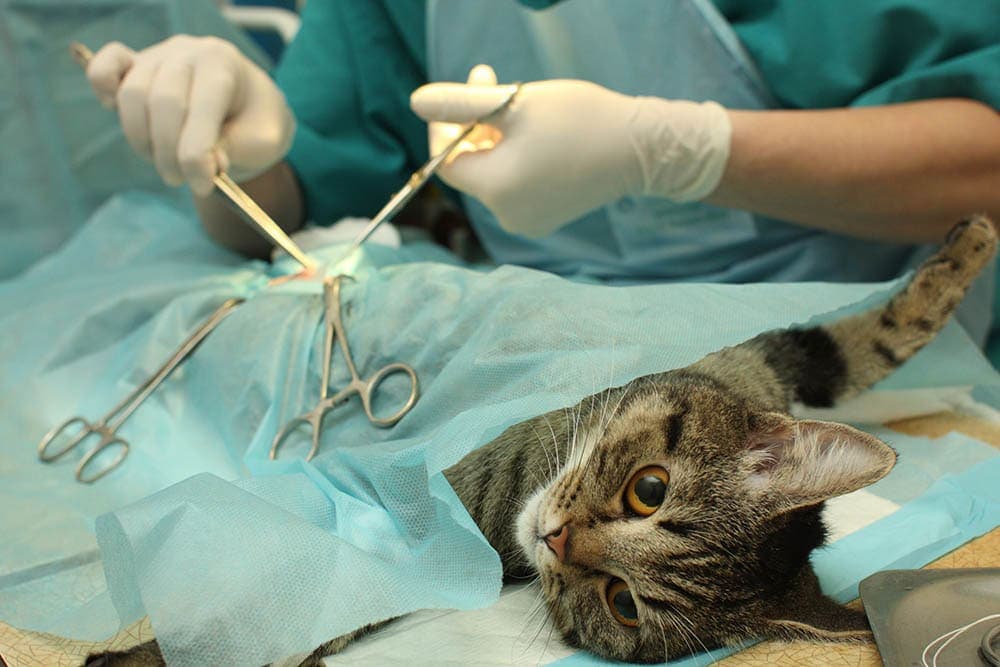
Your veterinarian will determine where the “missing” testicle is. It may still be in the abdomen, or it may be just under the skin near the scrotum. Where the missing testicle(s) is found will determine how extensive of a surgery has to be completed in order to properly neuter your cat.
Your veterinarian can speak to you about the increased length of surgery and what to expect as far as aftercare for your cat. In general, your cat will likely have a total of two incisions in different areas of the body, as opposed to two incisions within the scrotum area like with a simple neuter. If your veterinarian has to get the other testicle from the abdomen, your cat will need to be extremely contained for a minimum of 10-14 days following surgery. Often, stronger pain medications, antibiotics, and sometimes sedatives can be prescribed to keep your cat chill during recovery.
Conclusion
Cat neuters are a common surgery, with some animal shelters doing dozens a day. If your cat is young, healthy, and has a straightforward procedure, he should completely recover within 10-14 days. While complications can arise, diligence on the part of you, the owner, and following your veterinarian’s aftercare instructions can help to ensure a smooth process.
Sources
Featured Image Credit: Andrii Medvednikov, Shutterstock
Get Hepper In Your Inbox


Pet care tips from our vets and experts, straight to your inbox.
You may opt-out at any time. View our Privacy Policy for more information.
Dr. Podlecki is a graduate of The Ohio State University College of Veterinary Medicine with more than 12 years of experience working with small animals in the US. Dr. Podlecki spent 10 years working almost exclusively in emergency and specialty medicine before transitioning to relief in general practice and the ER. She also owns her own veterinary consulting company (renewvetconsulting.com) that helps vet hospital improve their internal culture.
For as long as she can remember, Dr. Podlecki always wanted to be a veterinarian. It is her passion and she lives to help animals. She also owns her own consulting company (renewvetconsulting.com) which focuses on helping veterinary hospitals prioritize their staff to promote a healthier internal culture.
Education
Dr. Podlecki graduated from The Ohio State University College of Veterinary Medicine.
Experience
Dr. Podlecki has over 12 years of experience working in the USA with small animals. For more than 10 years, she worked almost exclusively in emergency and specialty medicine, before transitioning to relief in both general practice and ER.
Join the conversation
Ask a question, share your story, or send private feedback.