Hepper is reader-supported. When you buy via links on our site, we may earn an affiliate commission at no cost to you. Learn more.
Cat Spaying Procedure: Vet-Reviewed Facts & Risks


In This Review
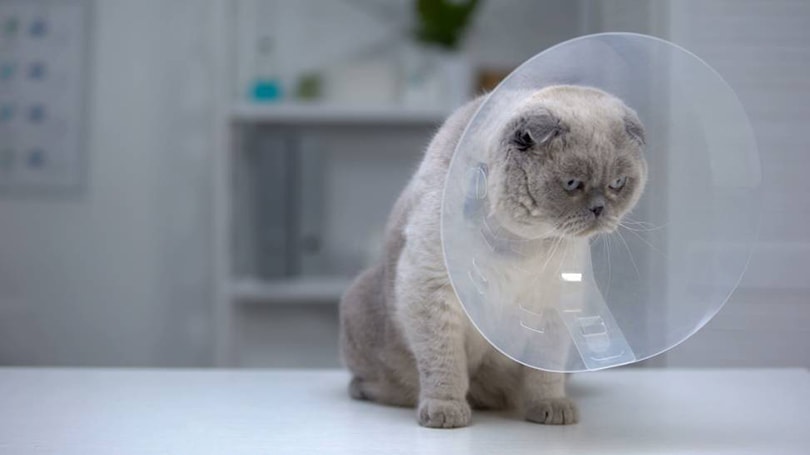
Spaying, sometimes also known as desexing, is the process of removing the reproductive organs of a female cat. This procedure will stop her from producing eggs, coming into heat, and falling pregnant, and unless you intend on breeding, is a procedure recommended by most experts. There are hundreds of thousands if not millions of homeless cats in the United States, and the last thing you want is to add more unnecessarily.
In this article, we’ll take a look at what to expect when spaying your cat, how to prepare her, and how to care for her after the procedure. Let’s get started!

How Old Should Your Cat Be To Get Spayed?
In general, most experts recommend that your cat be 4–5 months old to get spayed. This may seem young, but there are some sound reasons why. Firstly, younger cats heal far quicker from surgery and can even be back to their usual selves within a week or two. Second, cats reach sexual maturity at around this time, and you don’t want your kitten getting pregnant as it’s not good for their health to fall pregnant so young.
How Does Spaying Work?
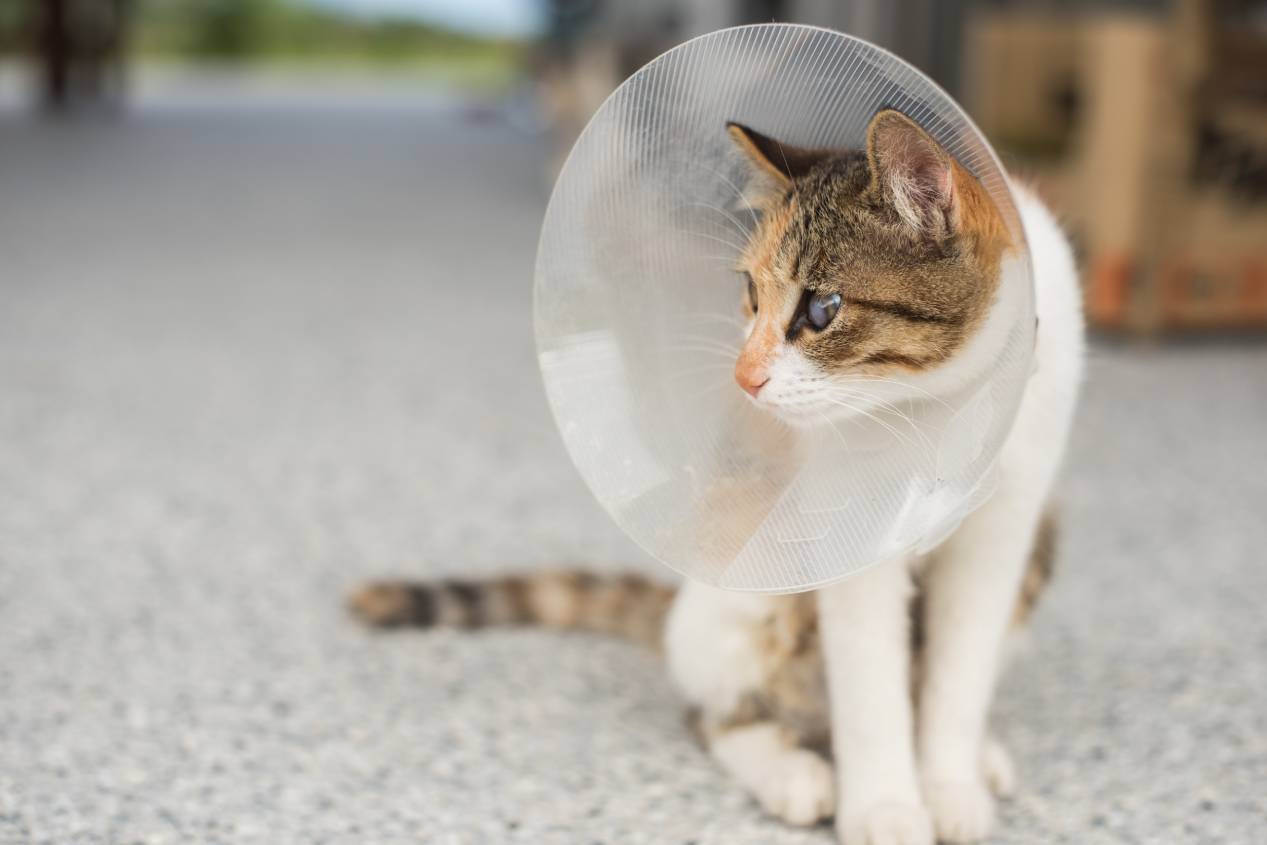
There are two ways in which a cat is typically spayed; via an ovariohysterectomy or ovariectomy1. With an ovariohysterectomy, both the ovaries and uterus are removed, while in an ovariectomy only the ovaries are removed. An ovariohysterectomy is the surgery most often performed in the United States, due to the belief that it will prevent possible future diseases of the uterus.
Both procedures are safe and there are rarely any complications, although there is a greater risk of bleeding when the uterus is also removed. An ovariectomy should be performed on young, healthy cats only, while an ovariohysterectomy is best for older felines.
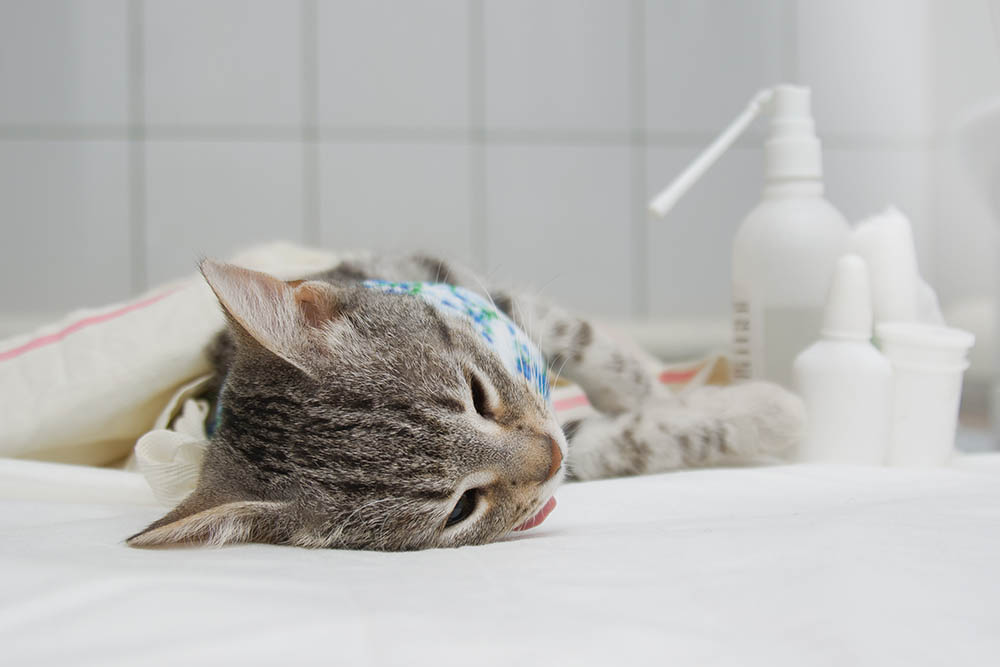
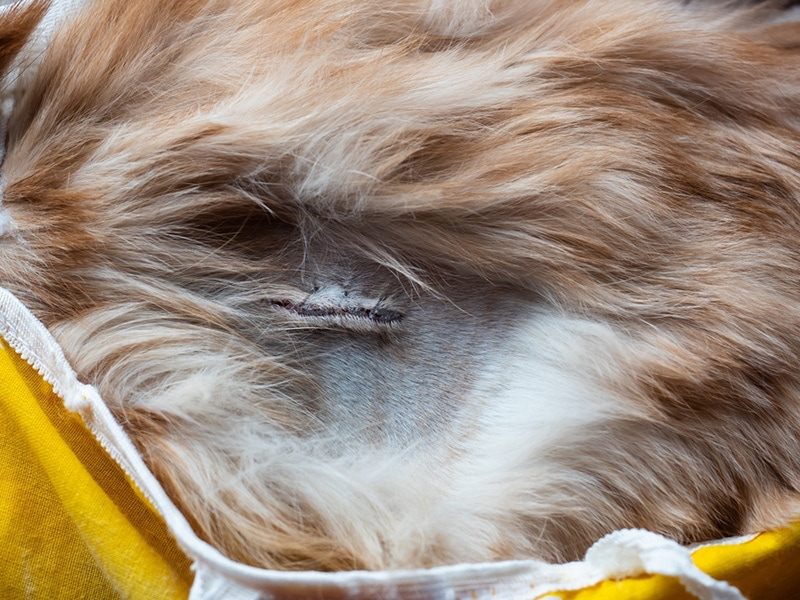
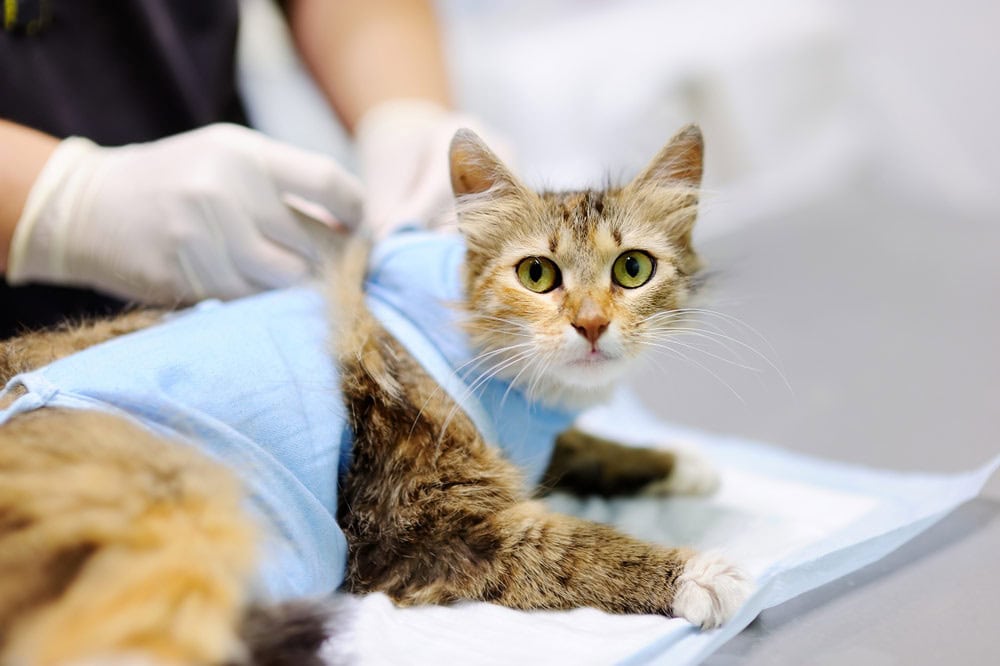
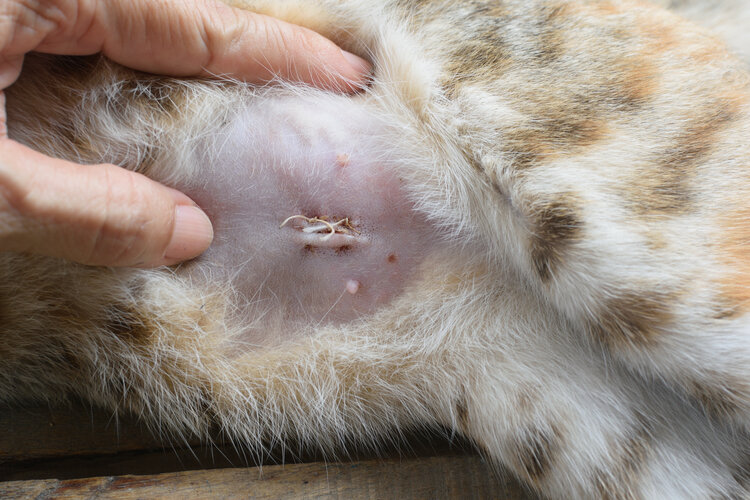
Spaying is a major surgical procedure and requires full general anesthetic, and you’ll thus need to make sure your cat doesn’t eat for 12–24 hours before the surgery. Your vet will typically run blood tests to make sure anesthesia is safe for your cat before or on the day of the surgery. Usually, the procedure takes 30–90 minutes, longer if your cat is in heat as there is more blood in the area, making the surgery a bit more complicated. The operation has come a long way in modern times and is performed through a relatively small incision in which the ovaries and uterus are removed, and then sutured with two layers of stitches, sometimes staples. The internal stitches are dissolvable and absorbed by the body after several weeks, while the top layer of stitches or staples are typically removed after 7–10 days.
Recovery
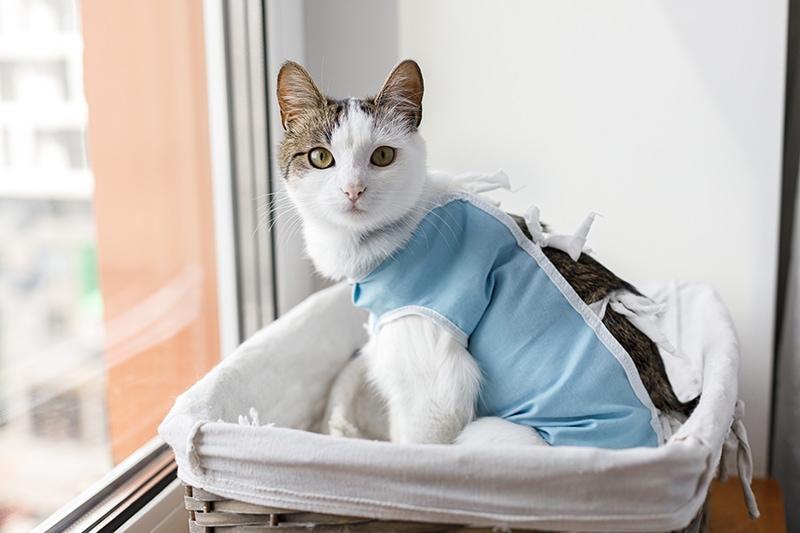
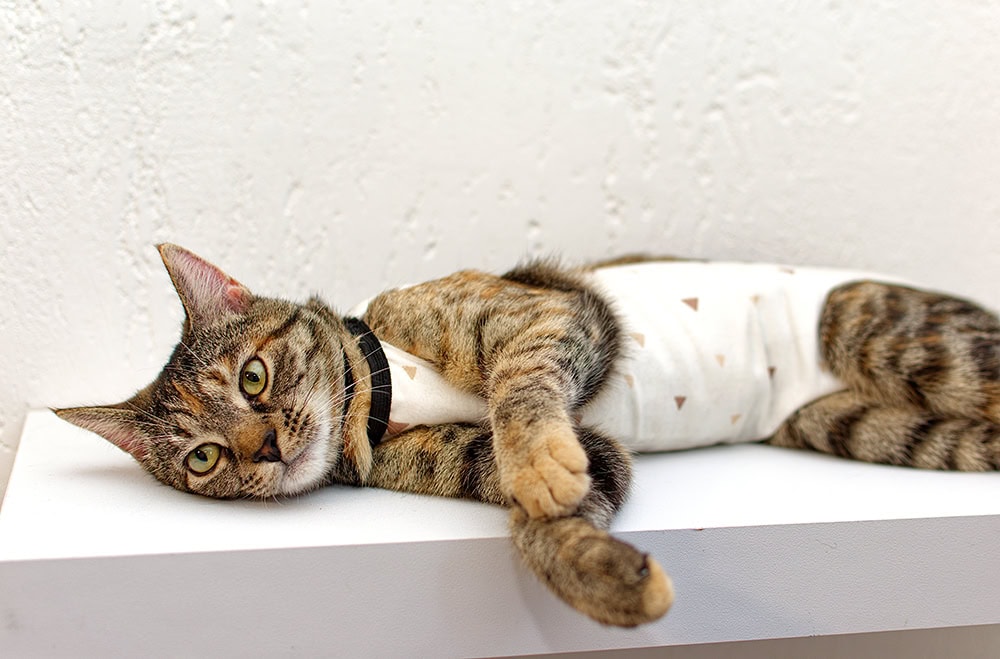
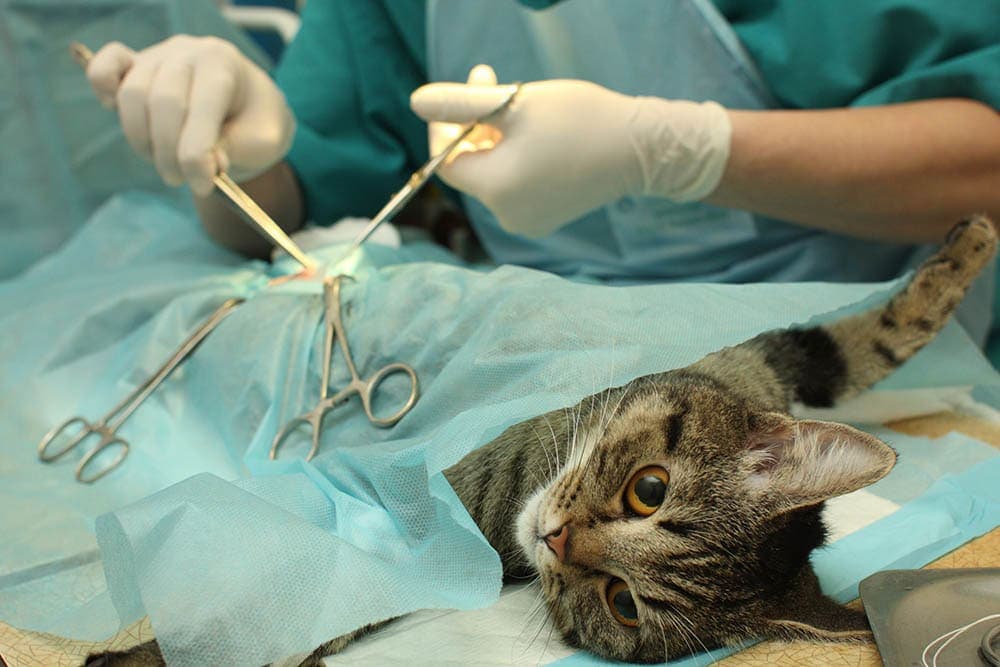
Since the incision is so small most cats are pretty much back to normal within 7–10 days, especially if they are still young. They can have the surgery and come home the same day, provided there are no complications, and awake from anesthetic within 30 minutes.
Risks and Possible Complications
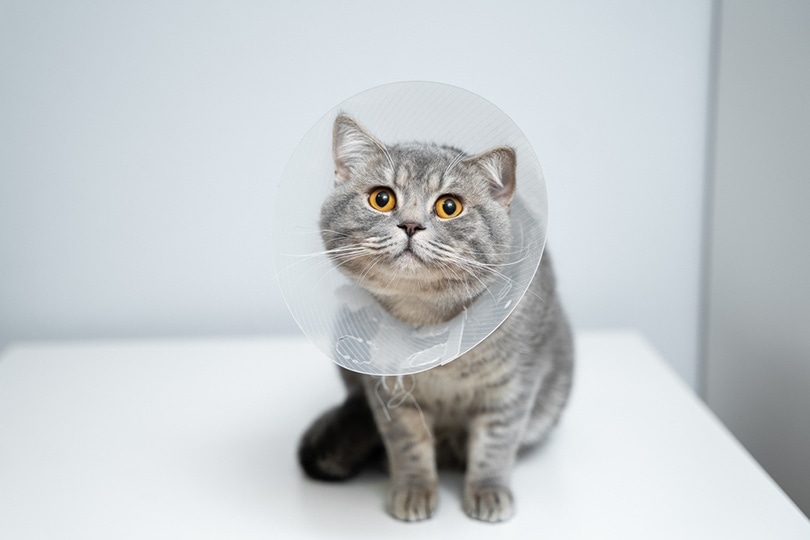
Again, the younger your cat is the safer the procedure and less risk there is of any complications. That said, it’s more difficult to prevent activity in younger cats after the surgery, and so they are more prone to post-procedure complications. These are typically mild and not life-threatening, though. They may suffer from a post-operative infection, internally or externally, but this can usually be controlled with a course of antibiotics. Post-surgical care is essential, and your vet will outline all the precautions you need to take.
Complications are more common in older felines, as they're more likely to have existing health issues. Still, complications are rare and older cats tend to be less active and less prone to post-surgical infections.
Spaying or neutering is only one of many vet procedures your pets may need over the course of their lives. All of those vet visits can be pricey, but you can manage the cost with the help of a good pet insurance plan. The customized options from Spot may help you keep your pet healthy at a reasonable price.

Conclusion
Spaying is a safe, quick, and relatively easy procedure and your cat will typically be back to normal after a week to 10 days. Unless you intend on breeding, spaying is highly recommended to prevent any unwanted pregnancies, as there are millions of cats in the United States already that need homes, and you don’t want to needlessly add to that number.
See Also:
Featured Image Credit By: Sannikova Maria, Shutterstock
Get Hepper In Your Inbox


Pet care tips from our vets and experts, straight to your inbox.
You may opt-out at any time. View our Privacy Policy for more information.
Nicole is a lover of animals of all sizes but is especially fascinated with the feline variety. She’s the proud mom of Baby, a Burmese, and works every day so he can relax in the sunshine or by the fire. She’s always had a cat in her home and has spent countless days with others, observing behaviors and softening up even the grouchiest of the lot. Nicole wants to share her kitty expertise with you so you and your cat can live happy, healthy, and care-free.
Join the conversation
Ask a question, share your story, or send private feedback.