




Click to Skip Ahead
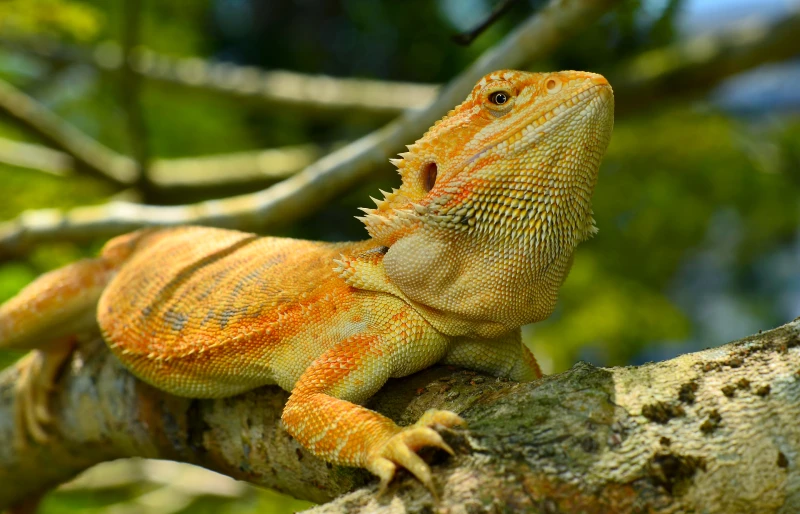
Bearded Dragons are generally quite laid-back reptiles. They watch their insect prey through the corner of their eyes and stretch their long tongues out to catch their quarry. They might even charge across their enclosure or run across the room, but pet Bearded Dragons are not usually prone to fits of sprinting. Surprisingly, for many beardie owners to find out, these little lizards can reach estimated top speeds of up to 9 miles per hour in short bursts, which is nearly twice as fast as a Guinea Pig and considerably faster than Ball Pythons, which can’t even muster up a top speed of 2 miles per hour.
Below, we look at the typical speed of a Bearded Dragon and how this compares to other reptiles and popular pet species.

About the Bearded Dragon
Bearded Dragons originate from Australia, where they live in a variety of locales and habitats. They can be found in arid and semi-arid regions, including deserts, scrublands, and savannahs. They are easy to spot, don’t really shy away from people, and are active during the day.
Because they are active during the day and are calm animals, they have become popular as pets. While it is illegal to export wild Bearded Dragons from Australia, in a bid to protect the country’s natural wildlife, there is a considerable population of pet Bearded Dragons that are bred and sold across the world.
Another reason for the lizard’s popularity as a pet is that they are quite sedentary, tolerant, and often less skittish than a lot of other reptiles. They can be handled, and they will even respond to their owner’s voice, often coming to the enclosure door to be picked up or fed. Their relaxed nature makes it surprising for a lot of owners to learn that Bearded Dragons can sprint at decent speeds.

How Fast Are Bearded Dragons?
Although many factors influence how fast an individual Bearded Dragon can run, these reptiles are capable of surprising short bursts of speed, with estimates suggesting they can reach up to 9 miles per hour. Age, general condition, species, and size of the Bearded Dragon will determine the speed at which one can reach. So, too, is the reason the Bearded Dragon is running. One that is running from a predator or after prey is likely to run a lot quicker than one that is looking for water or simply wants to move to a different location.
Bearded Dragons vs Other Pets
Bearded Dragons are fast for lizards, but how do they compare to other animals?
| Animal | Speed |
| Python | 1.1 mph |
| Sidewinder | 18 mph |
| Leopard Gecko | 3-6 mph |
| Bearded Dragon | 8-9 mph |
| Spiny-Tail Iguana | 9–12 mph (Costa Rican spiny-tailed iguana up to 21.7mph) |
| Guinea Pig | 5 mph |
| Rat | 8-10 mph |
While Bearded Dragons are certainly faster than many smaller lizards, such as Leopard Geckos, they are not the fastest lizards in the animal kingdom. Spiny-Tail Iguanas are among the quickest, capable of sprinting at speeds around 21 miles per hour. Bearded Dragons are faster than Pythons, which generally move at less than 1.5 miles per hour. This puts Bearded Dragons in a moderate speed range—quick enough to catch prey or evade danger, but slower than some of the fastest lizards in the world.
The 3 Reasons for Running
Bearded Dragons are both prey and predator, which means they likely use their impressive turn of pace to chase after and away from animals. The main reasons that Bearded Dragons run are:
1. Running from Predators
Bearded Dragons are prey to several predators in the wild. They are predated by some species of snakes, raptors, and even some large birds. Because they are hunted by such an array of animals, both on the ground and from the air, they need to be able to run quickly to survive.
2. Running After Prey
Bearded Dragons are omnivores. They eat invertebrates, including beetles and ants, as well as vegetation. They don’t need to be able to run at 9 miles per hour to catch these, but they will also eat some small lizards and other vertebrates. The ability to run quickly for short bursts means that they can catch these smaller, often nimble prey animals.
3. Moving Locations
Although Bearded Dragons will generally walk from one location to another, they can sometimes be seen running to a new location. They may run when looking for a water source or simply when moving from one spot to another, to keep their body temperature adequate, if passing through very hot areas. Running is generally safer than walking for prey animals like the Beardie.

FAQs
Can a Bearded Dragon Run on Two Legs?
Bearded Dragons can often be seen running on their two hind legs. This bipedal running doesn’t occur all the time, but it typically happens during short bursts of speed, such as when escaping predators or chasing prey. Researchers have found that this posture is largely due to a shift in their center of gravity as they accelerate, causing them to lift their front legs off the ground temporarily. While it doesn’t necessarily improve stamina, bipedal running allows them to sprint more efficiently and cover short distances quickly.
Can Bearded Dragons Swim?
Not only are bearded Dragons quite nimble on land, but they are also capable of swimming. The Beardie will inhale air to make themselves buoyant and then use their legs to paddle through the water. A swimming Bearded Dragon doesn’t look graceful, and you won’t often see this lizard species using its ability to swim, but they do have the capability. Anecdotally, they have been observed to tuck their limbs slightly and undulate their bodies, which is much more efficient in water than just paddling with their feet.
Can Bearded Dragons Climb?
Bearded Dragons are primarily terrestrial but are often described as semi-arboreal because they do enjoy climbing low branches, rocks, and other elevated surfaces. They have strong legs and sharp claws, both of which make it possible for them to scale the bark of trees and reach higher positions. This also means that pet Bearded Dragons can clamber up stairs and climb some other surfaces, and it means that they do appreciate being given logs and other pieces of wood in their enclosures.

Conclusion
Bearded Dragons are the most popular pet lizard species. These Australian lizards are known for being sedate and easy to care for, but they can achieve short bursts of speed of up to 9 miles per hour when they need to run quickly. Typically, Bearded Dragons will achieve the highest speeds when trying to escape predators or chase after prey, and when they do reach these top speeds, they are likely to run on their two hind legs as their center of gravity shifts. These agile reptiles are also capable of swimming and climbing.
Featured Image Credit: Ery Azmeer, Shutterstock