Hepper is reader-supported. When you buy via links on our site, we may earn an affiliate commission at no cost to you. Learn more.
How Much Space Does a Cat Need? Indoor Space Per Pet


In this article
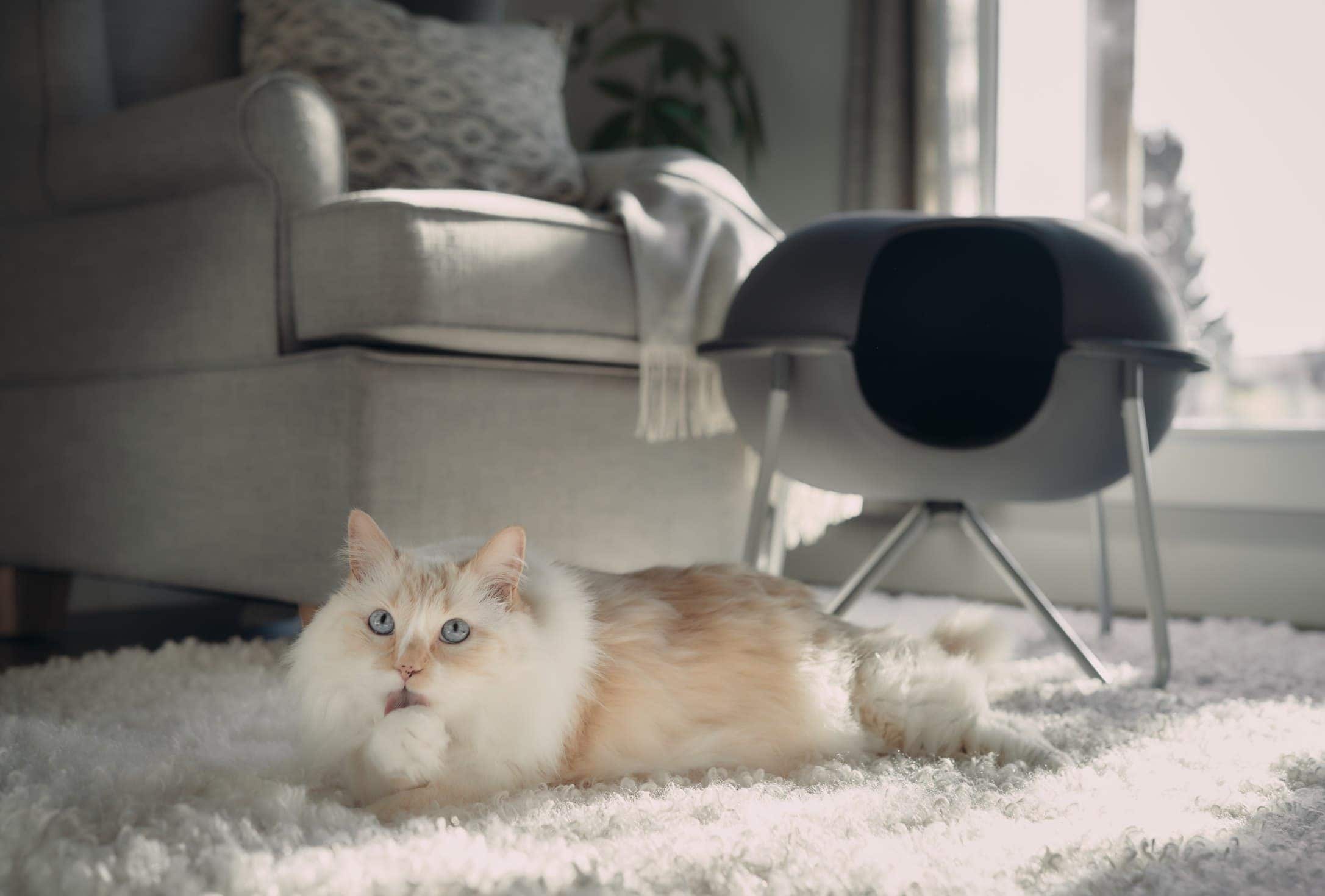
Cats are relatively easy to care for and a good choice for pet owners in small homes or apartments. They don’t need a lot of wide-open space to run around, and litter boxes and food dishes take up minimal room.
While a room can provide sufficient space for a cat, the issue goes beyond that. The space also has to provide the cat with the freedom to express natural behaviors such as scratching, climbing, jumping, and hiding. Read on below to find out more.
How Much Space Does a Cat Need?
So, how much space does a cat need? Some online publications mention that an average cat requires a minimum of 18 square feet of living space. However, you should consider that these are the bare minimum requirements, meaning that they're calculated based on animals in shelter, rescue, and (bad) breeding conditions. The calculation is based on some of the few regulations that establish minimum animal space requirements.
For example, the Electronic Code of Federal Regulations (e-CFR)1 states that a cat’s primary enclosure should provide sufficient space to allow each cat to turn about freely, stand, sit, and lie in a comfortable, normal position, and walk in a normal manner. Additionally, cats should also be provided with a vertical space of a minimum of 3 feet for cats under 8.8 pounds and a minimum of 4 feet for cats over 8.8 pounds.

Cat Space Requirements
Cats are active pets, but they can maneuver around furniture and other objects, so they don’t need tons of open space. For enrichment, most cats prefer towers and perches to climb and lounge on, much like their wild counterparts.
Note that the bare minimum space requirements are calculated per cat in a shelter or rescue setting. For each cat you plan to keep, you will need a minimum of an additional 18 square feet of space. So, if you have two cats, you’ll need at least 36 square feet of space. Three cats will need 54 square feet of space; four cats will need 72 square feet of space, and so on.
Keep in mind that this guideline is for an average housecat, which ranges from 7–10 pounds of body weight. Large breeds, such as Maine Coons, or exotic breeds, like the Savannah, may need more space.
But again, this is the bare minimum and cats need a larger space to thrive and display natural behaviors. When keeping cats together, a very important factor to consider is proper socialization. Even the largest room is insufficient for two fighting cats or one very dominant and one very submissive cat. Freedom from fear and distress is a very important factor to consider in animal welfare.
Enrichment Matters More than Space
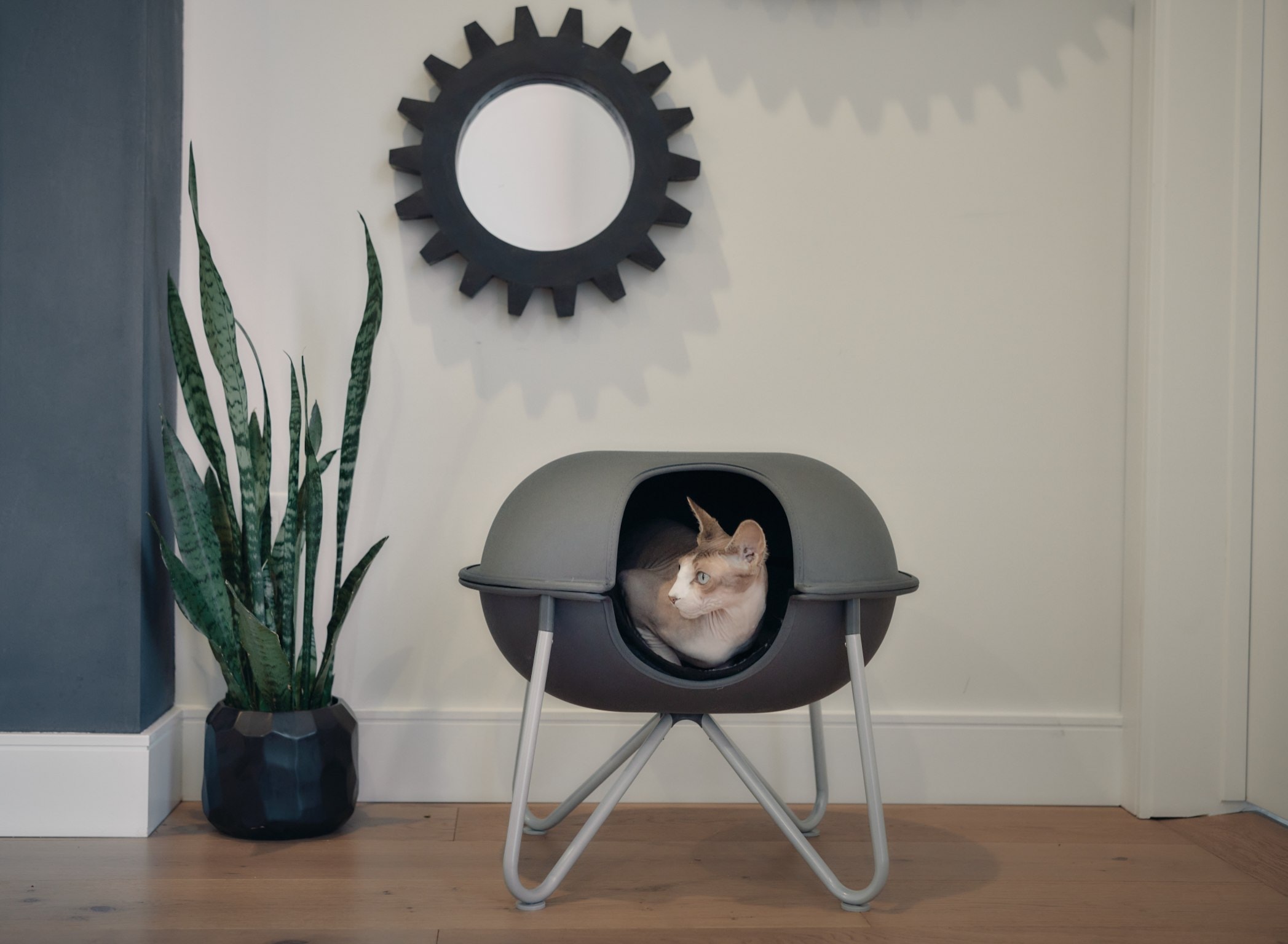
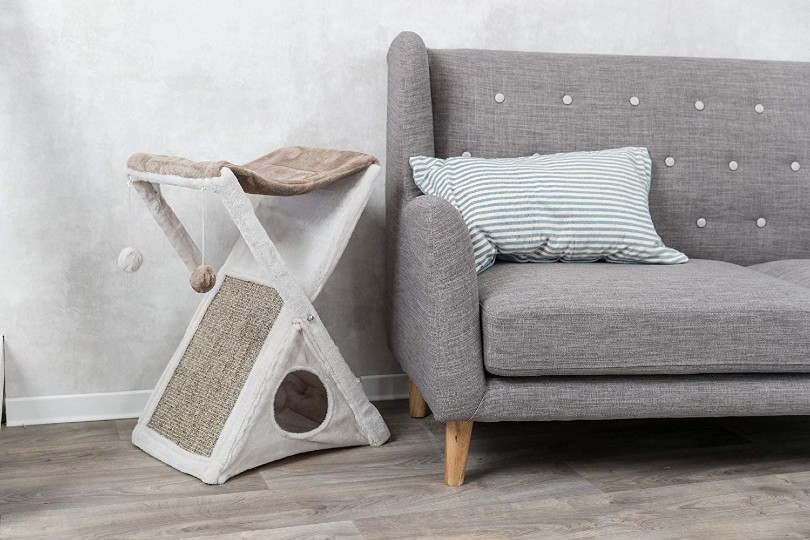
A cat’s minimum space requirements suit its basic needs for personal space, but cats will benefit from the details of that space. As mentioned, cats need space and furniture to climb, perch, hide, and jump, all of which can be satisfied by a cat tower or cat tree.
The more elaborate the setup, the more a cat may get from it. Provided there are no physical limitations, a cat tree or tower provides your cat with climbing areas, perches to stretch out and sleep, and cubbies to hide or observe the surroundings. Elements like this make cats more comfortable and cater to their wild instincts for hunting and stalking.
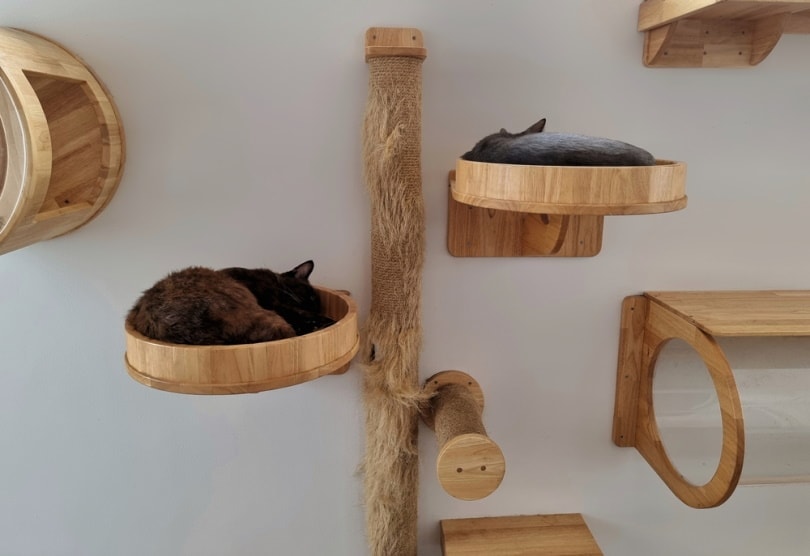
If you have too much space for a cat, whether in the whole house or in a dedicated room, it’s important to fill out the space to make the cat more comfortable. Along with cat towers and perches, you can install cat stars or shelves on the wall to climb and add more enrichment to the space.
While most people allow their cats to roam free around the house, you can dedicate a private room to your cat—its own “kingdom.” You can designate this space as the cat’s space and add features like furniture, beds, toys, a litter box, and food and water bowls. Ideally, set up the furniture to allow routes for your cat to run, but plenty of places to hide or climb.
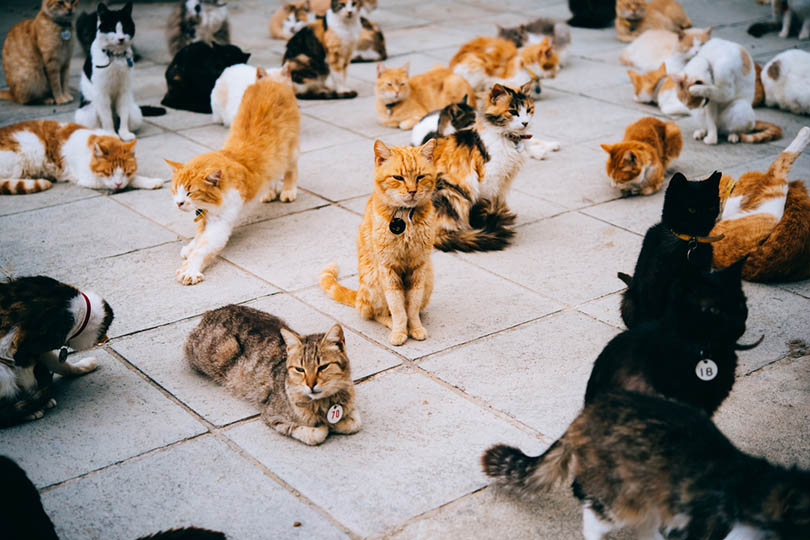
If you have a multi-cat household, it’s vital that there’s enough roaming space and enough furniture, litter boxes, food bowls, and toys to accommodate each cat. Conflict can arise if cats are crammed together in too-small spaces or have to fight for resources, such as food or toys.
How to Tell if a Cat Doesn’t Have Enough Space
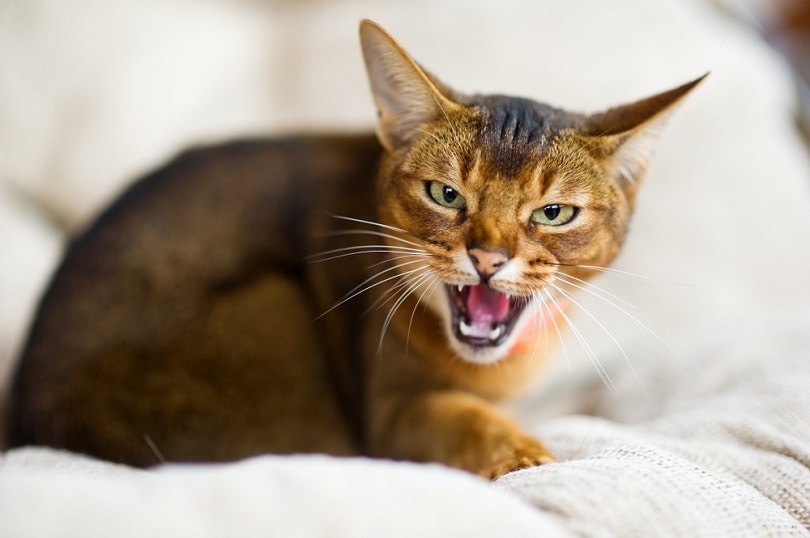
Though they can’t speak, cats are very good at expressing their displeasure. If your cat is stressed, whether from lack of space or lack of environmental enrichment, it may:
If you notice any of these behaviors and there’s no underlying medical cause, it’s important to provide a more cat-friendly space with play structures, toys, and hiding spots. You could even get creative and make your own!
Conclusion
Cats don’t require a lot of space, making them an excellent pet option for small homes and apartments. Remember, the enrichment matters more than the available space, so make sure you’re giving your cat plenty of spots to hide, play, and relax with cat trees, towers, stairs, shelves, or other structures.
Featured Image Credit: Pixel-Shot, Shutterstock
Get Hepper In Your Inbox


Pet care tips from our vets and experts, straight to your inbox.
You may opt-out at any time. View our Privacy Policy for more information.
Nicole is a lover of animals of all sizes but is especially fascinated with the feline variety. She’s the proud mom of Baby, a Burmese, and works every day so he can relax in the sunshine or by the fire. She’s always had a cat in her home and has spent countless days with others, observing behaviors and softening up even the grouchiest of the lot. Nicole wants to share her kitty expertise with you so you and your cat can live happy, healthy, and care-free.
Join the conversation
Ask a question, share your story, or send private feedback.