Hepper is reader-supported. When you buy via links on our site, we may earn an affiliate commission at no cost to you. Learn more.
How to Care for a Pugs Teeth: 8 Vet Approved Tips


In this article
Oral hygiene and care are just as important for dogs as for humans. In fact, as early as 3 years old, 80% of dogs exhibit signs of canine periodontal disease.1 Unfortunately, Pugs are more prone to dental problems due to being a brachycephalic breed, and dental care is essential for your precious Pug. Caring for your Pug’s teeth includes keeping them clean and knowing how to brush them.
In this article, we’ll share expert tips to keep your Pug’s teeth in top condition. Even the busiest Pug parent can incorporate some of these tips into their routine; every bit helps keep your Pug’s pearly whites in optimal health.

The 8 Tips for Caring for a Pugs Teeth
1. Let Your Pug Nibble on Dental Chews
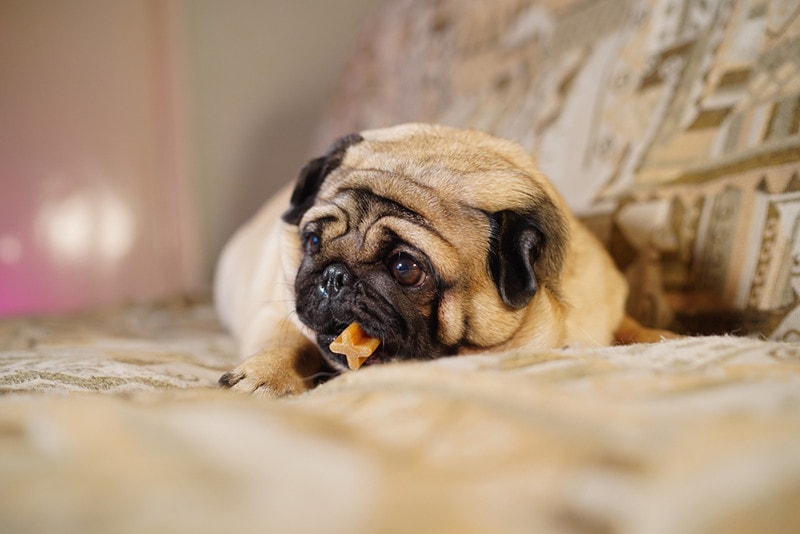
Dental chews are beneficial for your pug. They can satiate its desire for a tasty treat while thoroughly cleaning its teeth. Chews will also keep it busy and distracted from anything else it may be in favor of chewing.
Dental chews are designed to help reduce the buildup of tartar and plaque. They're typically available in various shapes and sizes; some have ridges to get into more areas and stimulate the gums to promote blood flow.
Choose dental chews that carry the VOHC seal of approval for oral health.2
2. Give Your Pug Chew Toys
Pugs enjoy a bit of fun, and a chew toy is one way to keep them busy. Instead of curing their boredom with other destructive behavior, a chew toy can keep your Pug well entertained.
Chew toys satisfy a dog’s instinct to chew while improving oral health. Dogs of all ages use their teeth to explore their environment. Puppies enjoy chewing things to help alleviate teething discomfort, and older dogs are kept mentally stimulated by gnawing and chewing, which helps remove plaque from the teeth.
Chew toys can come in various sizes, shapes, and materials. Materials include rubber, plastic, nylon, and rawhide, and the designs can include interactive features that will keep your Pug interested and entertained.
It is recommended to test the hardness of any dental chews and toys before giving them to your dog. Products either natural or synthetic that are too hard to be indented by a thumb nail are more likely to result in tooth fractures and should be avoided.
3. Use Dental Dog Spray and Wipes
Don’t miss out on close cuddles with your Pug due to unpleasant breath. Dental sprays for dogs will help keep your Pug’s mouth fresh and are a great solution when you don’t have time for a proper cleaning session. Dental sprays are also an excellent solution for in-between brushing sessions.
Dental sprays are designed to freshen your dog's breath and reduce tartar and plaque buildup. You spray the solution on your dog’s gums and teeth, but if your dog doesn’t cooperate, you can apply the spray to your dog’s toy so it can be licked off.
Wipes are also great for oral hygiene, especially if your Pug doesn’t favor the toothbrush. They work the same, but you will rub your Pug’s teeth with the wipe instead of using a toothbrush.
4. Dental Powders
Plaque reducing powders that can be added to your Pug’s daily food rations are available. The powder is formulated from specially selected seaweed and is proven to reduce plaque and tartar build up. It is a good option for dogs that won’t let you within a mile of their mouths with a toothbrush!
5. Use Water Additives
Water additives can support your Pug’s dental health and keep its breath fresh. A dental water additive is a substance created to reduce dental plaque and tartar, kill oral bacteria, and promote better dental hygiene.
These additives typically include natural extracts to keep your dog's teeth and breath clean. They are also great for the pickiest dog because some have no flavors or smells.
6. Use Tasty Toothpaste When Brushing
While some dogs can easily get used to the routine, some love it less than others. When brushing your Pug’s teeth, you must use a specifically designed dog toothpaste since human toothpaste can contain toxic ingredients. To make teeth brushing more appealing, you can choose a flavor your Pug will love, such as chicken, beef, or even peanut butter. You may have to try a few first, but once you find the right one, brushing will become an anticipated part of your Pug’s day.
7. Take Your Dog for Regular Professional Cleaning
Regular dental cleaning with your veterinarian is a surefire way to maintain good oral care for your Pug. A veterinary professional knows exactly what to look out for and has all the necessary knowledge for prevention and treatment.
Most dogs need to have an oral exam and a professional cleaning at least once a year so that they can be assessed for any warning signs of more serious problems. Some dogs are more prone to dental disease, like Pugs, and may require more frequent trips to the professionals, such as every 6 months.
A dental cleaning visit to your vet usually includes a thorough exam, cleaning, and polishing, which will help remove plaque and tartar buildup. Your dog is usually put under general anesthesia while the teeth and gums are evaluated and cleaned. Any diseased teeth will be removed at this time.
8. Regularly Brush Your Pug’s Teeth
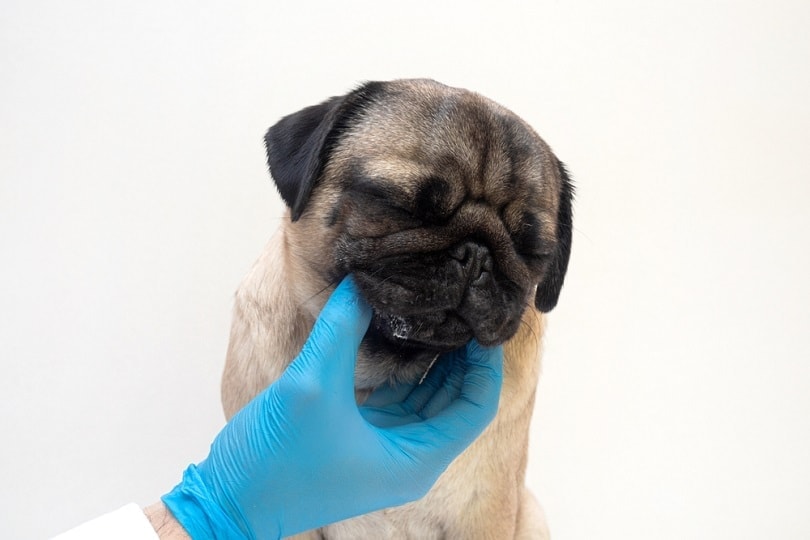
Some dog owners tend to ignore this part of their pet’s daily care routine, but it should not be left out. The Pug’s small mouth leaves little space for teeth. A mouth that is crowded with teeth traps more food particles, which may be harder to remove.
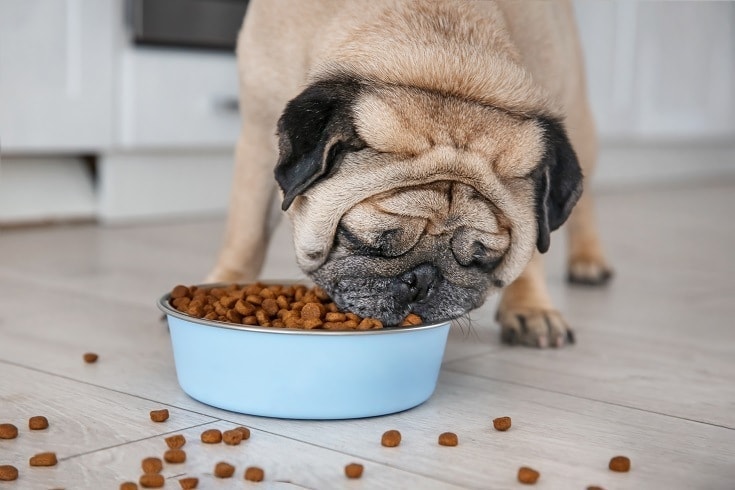
It is often the case that Pugs are given lots of treats and human scrap foods and these are likely to result in further gum and dental problems.

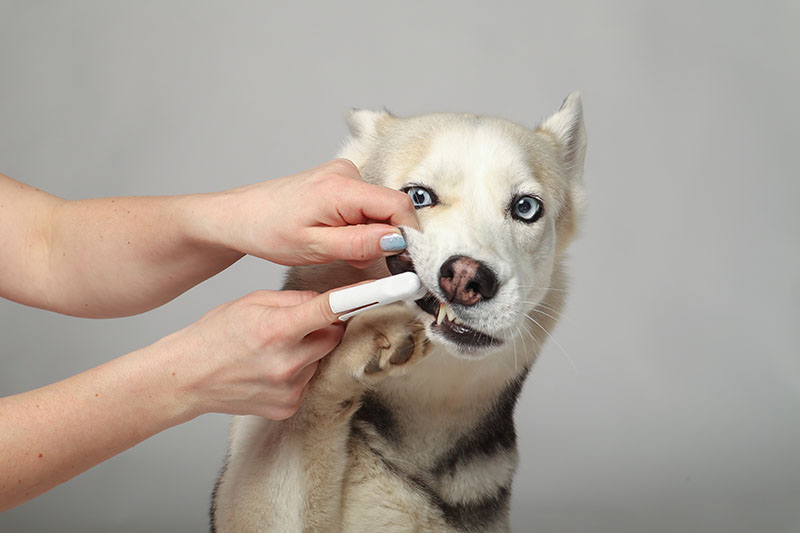
How to Brush Your Pug’s Teeth
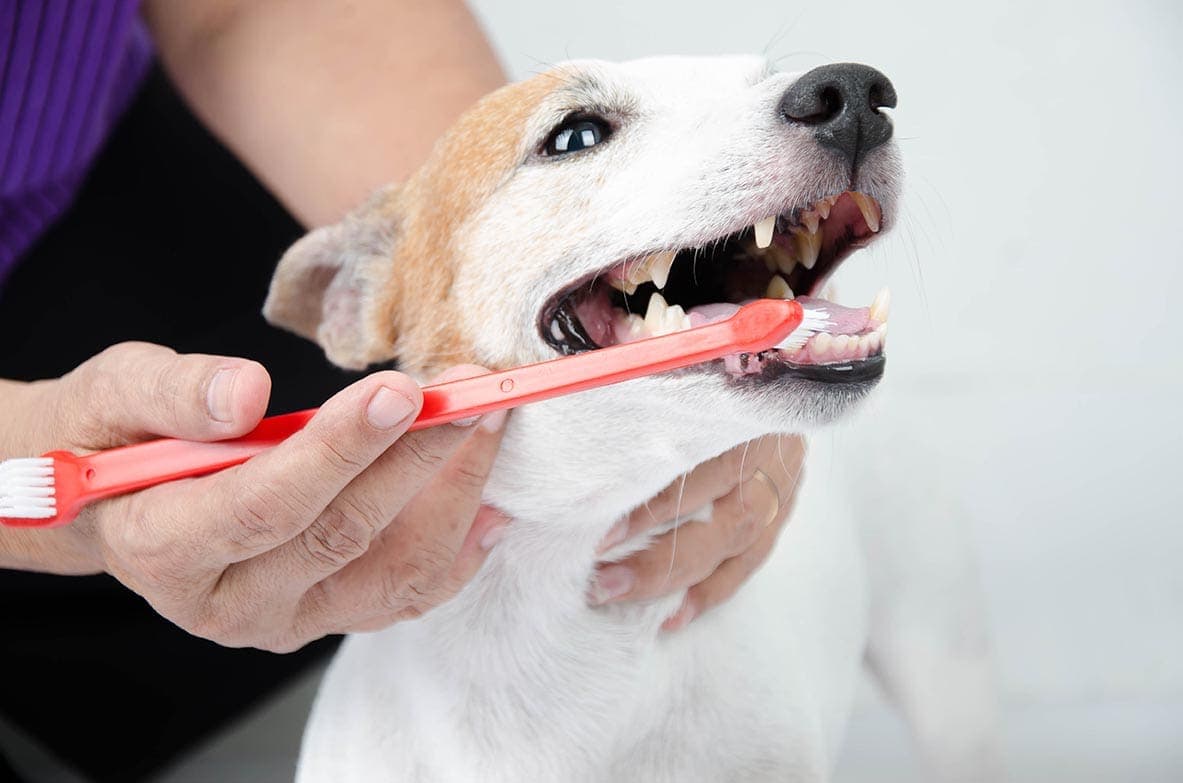
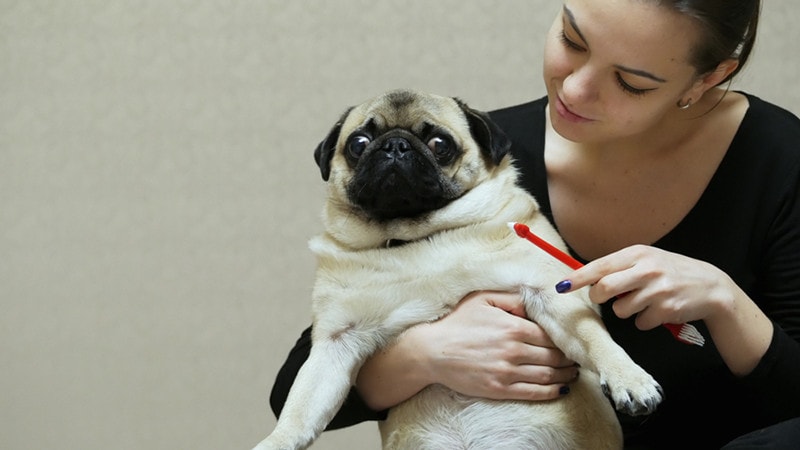
First, you will need an appropriate toothbrush, dog toothpaste, and training treats.
It’s essential to be patient and stay positive. Always reward your Pug, and never force them by holding them down or shouting.
When Should Your Pug See a Veterinarian?
No matter how well you care for your Pugs teeth, you should always check for any signs of dental or gum issues. These are the signs to look out for that indicate you should take your Pug to the vet.
- Bad odor
- Excessive drooling
- Change in eating habits
- Pawing at the mouth or face
- Teeth that are discolored, broken, crooked, or missing
- Swollen or bleeding gums
- Tartar along the gum line
- Any bumps, sores, or growths
Conclusion
Oral hygiene should never be overlooked, especially for a Pug. It is important to take the necessary steps to keep your Pug’s teeth clean. Chew toys, dental chews, and dental sprays are great ways to maintain clean teeth. However, regular brushing with a pet-safe toothbrush is the most critical step in oral hygiene. It is also highly recommended that your Pug is taken for professional dental health assessments with your vet at least every 12 months. Your vet can thoroughly assess the condition of your Pugs teeth and see any warning signs you may miss. Continuously monitor your Pugs teeth and gums and visit the vet as soon as you notice signs of dental issues.
Sources
Featured Image Credit: MishuHanda, Pixabay
Get Hepper In Your Inbox


Pet care tips from our vets and experts, straight to your inbox.
You may opt-out at any time. View our Privacy Policy for more information.
Nicole is a lover of animals of all sizes but is especially fascinated with the feline variety. She’s the proud mom of Baby, a Burmese, and works every day so he can relax in the sunshine or by the fire. She’s always had a cat in her home and has spent countless days with others, observing behaviors and softening up even the grouchiest of the lot. Nicole wants to share her kitty expertise with you so you and your cat can live happy, healthy, and care-free.
Join the conversation
Ask a question, share your story, or send private feedback.