Hepper is reader-supported. When you buy via links on our site, we may earn an affiliate commission at no cost to you. Learn more.
Should You Brush Your Dog's Teeth? Vet-Approved Facts & Tips


In this article
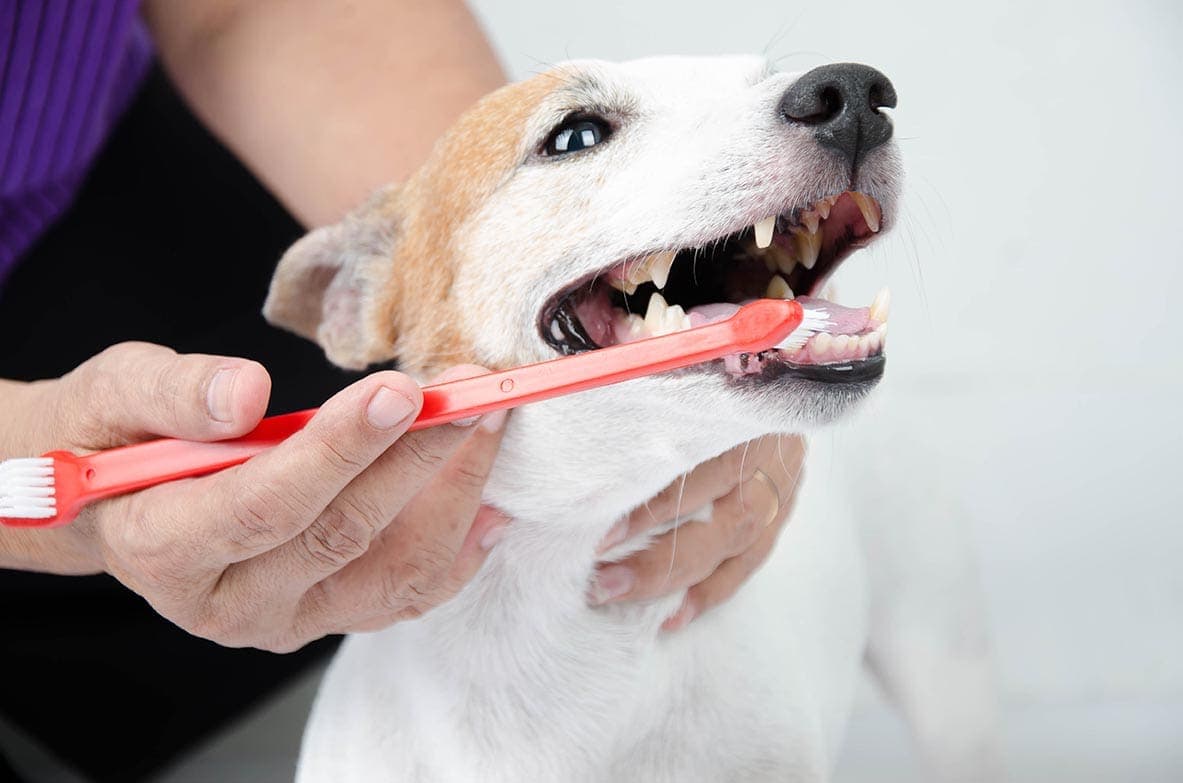
Brushing your dog’s teeth is an extremely important job, but it’s one of those tasks that sometimes gets forgotten about or avoided. So yes, you should definitely brush your dog's teeth.
Unfortunately, without the right care and regular attention, your dog’s teeth can become stained, painful, loose, and lead to gingivitis and other systemic health issues, turning out quite expensive to treat.
We’ll examine why you should brush your dog’s teeth regularly and how to avoid a costly veterinary bill. Let’s take a look!

Why Should I Brush My Dog’s Teeth?
It’s estimated that over 2/3 of dogs over the age of 3 have periodontal disease. It is the inflammation or infection of the tissues surrounding the teeth, and it generally starts as gingivitis (or gum inflammation) caused by plaque buildup. If it is left untreated, the disease can lead to painful tooth loss but also to systemic illness. Bacterial numbers increase in periodontal disease with decaying teeth and can enter the dog’s bloodstream through inflamed gums, causing significant damage to the heart, kidneys and liver.
The minimum you should brush your dog’s teeth is three times a week to remove plaque and prevent tartar accumulation. Ideally, however, you should brush your dog’s teeth twice a day.
How Do I Get My Dog Used to Having Their Teeth Brushed?
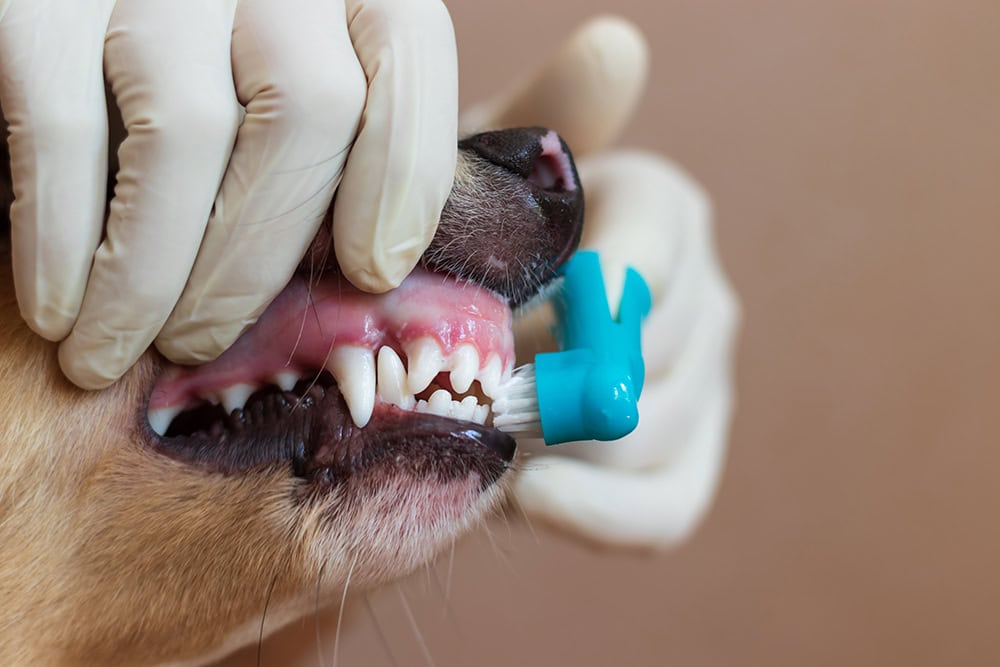
A way for this to be a successful and pleasant experience is to make it a positive one for you and your dog. Praise your dog throughout and reassure them. Offer them treats and allow for plenty of breaks if you feel they are getting stressed. Choose a quiet place where neither of you will be distracted and, for the best results, follow these steps:
- If you have a small dog, try holding them securely in your lap with their head facing away from you. For larger dogs, try sitting in a chair with your dog beside you or kneeling on the floor next to them so you can get to their mouth easily.
- When you brush your pet’s teeth for the first time, use a finger or a soft cloth to rub your dog’s teeth in a back-and-forth motion. Focus on where the gum touches the tooth surface. Start by gently massaging the area and try not to rub the gum, as this may be painful for your dog and you can cause irritation.
- Keep your fingers outside of your dog’s actual mouth, to avoid your dog accidentally biting at them while trying to close their mouth.
- Once your dog is more comfortable with the process, let them taste a little bit of vet-approved toothpaste from your finger, but you should only use toothpaste designed for canines. Human toothpaste is not safe for dogs to ingest.
- When your dog seems happy with the taste of the toothpaste, apply some to the cloth and rub it over your dog’s teeth.
- The next step is to start using a toothbrush. Again, only use one designed for dogs.
It’s best to speak to your vet about dental care before you begin. Different breeds have different jaw alignments. Flat-faced or brachycephalic breeds often have poorly aligned jaws, may have absent or crowded teeth, and are more likely to suffer from dental disease. It can also be more challenging to actually brush teeth in some of these breeds, in which the mouth does not open much, making it hard to check the teeth or see if you’re brushing them properly.
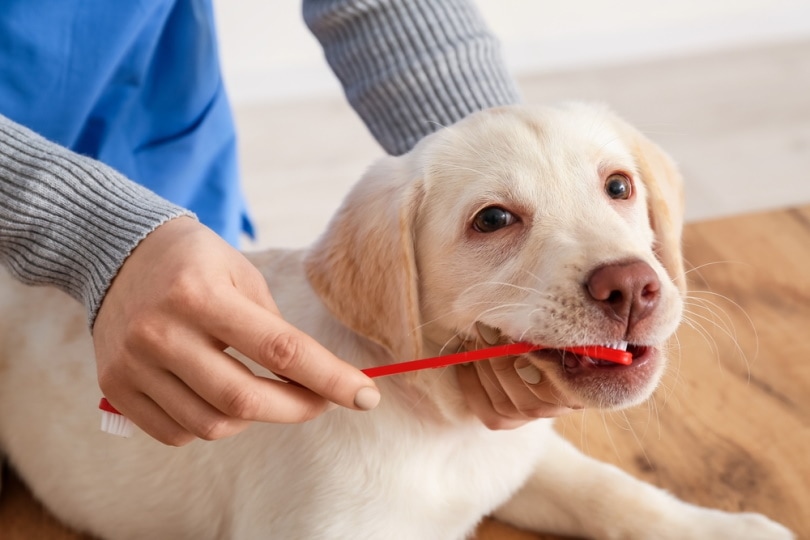
The best way to get your dog used to getting their teeth brushed is to introduce it when they’re a puppy. If your dog already has signs of dental disease, it’s important to first get them checked by your vet, who may recommend cleaning your dog’s teeth under a general anesthetic, as there may not be much you can do at home in some more advanced cases.
How to Maintain Healthy Teeth
Brushing your dog’s teeth is the most valuable task you can do to keep their teeth healthy, and there is no equally efficient alternative to this. But some products have been approved by the Veterinary Oral Health Council and can also benefit your pet’s dental health, alongside regular brushing:
- Dental chews can be served to clean your dog’s teeth between brushings. Always supervise your dog while they’re enjoying their chew, as some dogs might swallow larger chunks rather than slowly chewing, and, depending on the source, size, firmness, and shape of the chew, this may cause chews to get stuck at the back of the throat or lead to signs of a stomach upset, choking, or gastrointestinal blockage. Offer dental treats in moderation and by following the specific product’s guidelines, the same as you would for any other treat, as they are often rich in calories and might predispose your pooch to obesity long term if given every single day, or in inadequate amounts.
- While some dogs might prefer wet food, dry food allows for crunching and, as such, may provide a mild cleaning effect. You can choose between many veterinary-approved brands specifically formulated as dental diets to assist in plaque control.
- You might have heard that bones can clean your dog’s teeth, but they can more often than not be hazardous. Bones can cause dental fractures, get stuck in the dog’s mouth or back of their throat, lead to an upset stomach, and might cause blockage or a constipation. Cooked bones are likely to fragment and could cause severe internal damage.
- There are several dog toys that help reduce or delay plaque and tartar build-up.
- There are safe and vet-approved water additives and oral gel sprays you can also consider using.

Signs Your Dog Has Gum Disease
Although your dog’s teeth may appear healthy, it’s best to regularly inspect your dog’s mouth for tooth decay, bad breath, or gum issues. Be on the lookout for these signs:
- Deposits on the teeth
- Discolored teeth
- Bleeding gums
- Reddened and inflamed-looking gums
- Foul breath
- Overly sensitive teeth
- Loose teeth
- Refusal to eat, especially dry food
- Pawing at the mouth
- Drooling
- Wincing or crying while eating or chewing awkwardly
If you notice any of these signs, contact your vet promptly for an examination.
What Happens at a Routine Dental Cleaning?
Your dog will undergo a thorough dental examination at the vet’s office, followed by dental scaling and polishing, which will remove the plaque and tartar. Your dog will be anesthetized once they’ve been cleared to go under anesthetic. Your vet will examine your dog’s mouth thoroughly, taking note of the alignment and health of the teeth and the extent of the tartar build-up above and below the gum line.
They will take X-rays to assess the viability of the tooth’s root and surrounding bone. If the periodontal disease is deemed severe, they might not be able to save the tooth, and an extraction may be the only option. Sometimes, your vet may refer your dog to a veterinary dentist as well.
It is important to gradually teach your dog from an early age that examining, opening their mouth and touching their teeth and gum is a safe and comfortable thing to do, followed by positive reinforcement by using lots of treats and praise. This way, both you and your vet will be able to easily check their mouth and teeth in a stress-free manner, both for your dog and your fingers.
Final Thoughts
Dental hygiene is incredibly important for canines, not just for their teeth, but also for their general health. It would be best if you brushed your dog’s teeth daily to avoid plaque and tartar buildup. To ensure your dog gets used to it, try to introduce brushing when they’re young. However, if you have an older dog, you can still gradually introduce daily brushing with positive reinforcement without stressing them out or annoying them.
Sources
https://www.rspca.org.uk/adviceandwelfare/pets/dogs/health/teeth
https://www.akc.org/expert-advice/health/why-you-need-to-brush-your-dogs-teeth/
https://vcahospitals.com/know-your-pet/dental-disease-in-dogs
https://vcahospitals.com/know-your-pet/dental-disease-and-its-relation-to-systemic-disease-in-pets
https://www.rvc.ac.uk/vetcompass/news/new-rvc-research-gets-to-the-root-of-dental-disease-in-dogs
https://hoegemeyeranimalclinic.com/blog/what-is-involved-in-a-dog-dental-exam/
Featured Image Credit: Littlekidmoment, Shutterstock
Get Hepper In Your Inbox


Pet care tips from our vets and experts, straight to your inbox.
You may opt-out at any time. View our Privacy Policy for more information.
Kerry-Ann lives in Scotland and wishes her garden was bigger so she could have her very own Highland cow. But her dogs probably wouldn’t like that very much. She has a La Chon called Harry who was poorly with a liver shunt when he was a puppy. It wasn't likely he would make it into adulthood, which was difficult, but he beat the odds and is a healthy old man now. She also has a Pug called Maddie who is a big foodie. She’s small, sassy, and every day she finds a new way to mess with her brother.
When she isn’t writing you can find Kerry-Ann going for long walks when the weather isn't bad, reading, or watching cartoons when she should be tidying her house. She would one day like to be a tourist in her own country and travel through the Highlands with her family.
Join the conversation
Ask a question, share your story, or send private feedback.