Hepper is reader-supported. When you buy via links on our site, we may earn an affiliate commission at no cost to you. Learn more.
How Long Do Pugs Live? Average Lifespan, Data & Care
In this article
One of the hardest parts of owning a pet is losing them. This is why many people opt for pets with long lifespans — after all, we want them to stay with us for as long as possible!
Perhaps you already have a Pug or are considering getting one and want an idea of how many years you might spend with this breed. Pugs on average live around 13-15 years.
Here, we discuss more about the Pug’s lifespan and a few of the common health conditions that can affect this breed. We also touch on what you can do to extend your Pug’s lifespan and give them an overall happy and healthy life.

What’s the Average Lifespan of a Pug?
The average lifespan of the Pug is about 13 to 15 years, but some Pugs might not make it to 10, while others can live well beyond 15 years.
In fact, the oldest Pug on record was Snookie from South Africa, as they lived to the ripe old age of 27! So, it is entirely possible to have a long-lived Pug! It helps that Pugs are on the small side, as small dogs tend to have a longer lifespan than large dogs.
A few factors that will affect your Pug’s lifespan are:
How well cared for your Pug is will play a significant role, but certain situations are out of your control.
Why Do Some Pugs Live Longer Than Others?
Some Pugs can live well into their 20s, but others are not so fortunate. Let’s break down the several factors that can make a difference in a Pug’s lifespan.
1. Nutrition
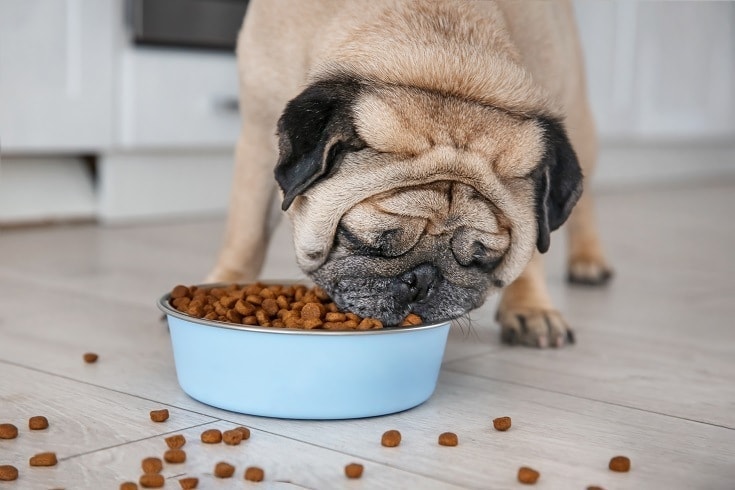
The best thing that you can do for your Pug—or any dog—is to feed them high-quality dog food. The right balance of nutrients from fresh food and plenty of water will give your Pug the foundation for a healthy life. Avoid overfeeding your dog or giving them table scraps, as Pugs are prone to obesity. Also, try to avoid foods that contain excessive amounts of artificial flavors, colors, and preservatives.
2. Environment and Conditions
Pugs were bred to be indoor lapdogs, meaning they should not be left alone for long periods. Living inside also gives them shelter, warmth during the winter, and coolness in the summer. Dogs that live indoors tend to live longer than dogs kept outside.
3. Size
The size is a definite factor. Small dogs, like Pugs, live longer than large breeds. Big dogs are also more prone to certain health conditions because of their size.
4. Sex
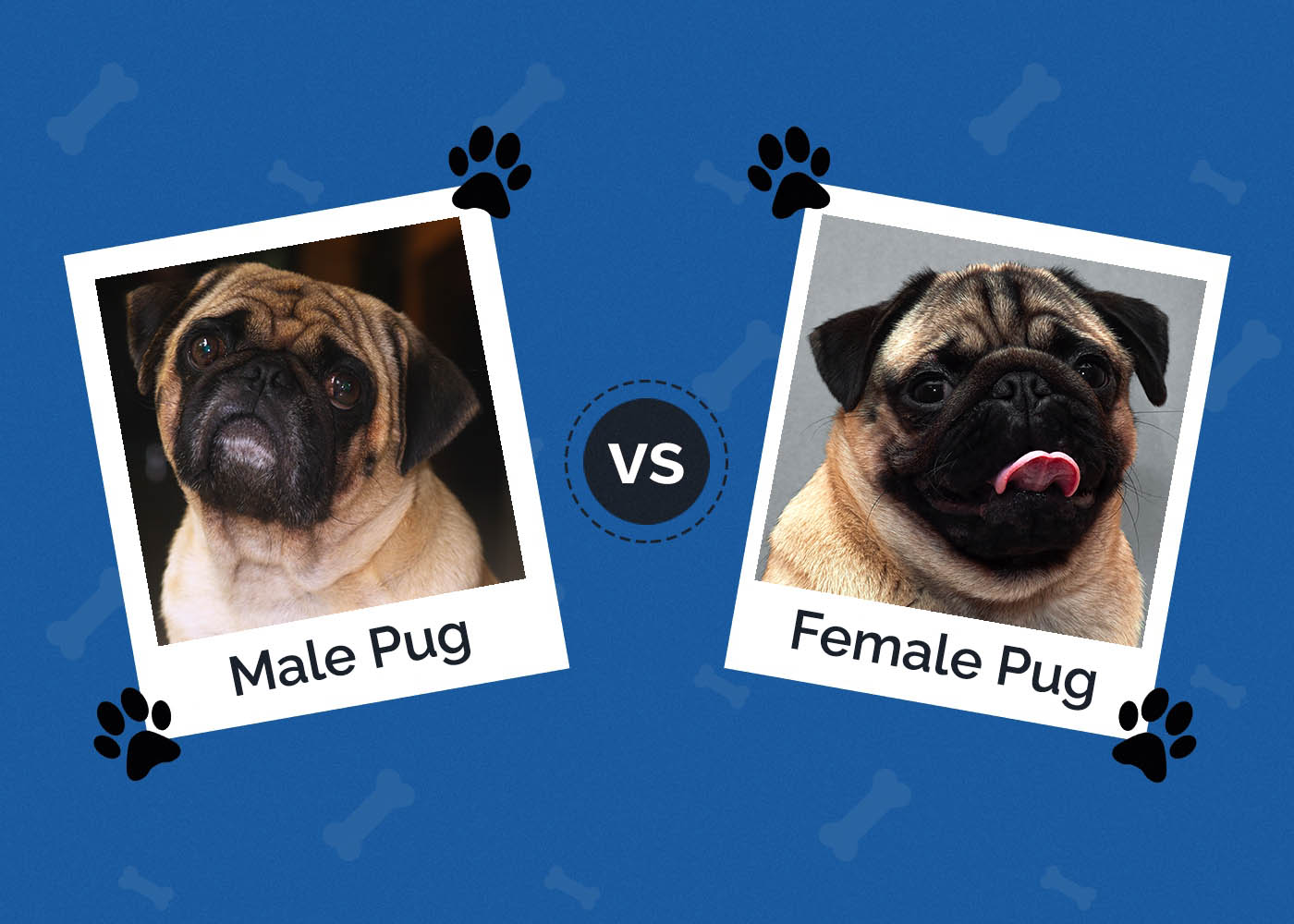
Female dogs tend to live longer than males, especially if they are spayed. But this is just a generalization. After all, the oldest Pug was male!
5. Breeding History
Purebreds are more likely to inherit genetic health conditions, particularly compared to mixed breeds. A Pug breeder should provide you with the medical history of their dogs so you’ll have information about what you might expect with your Pug.
6. Healthcare
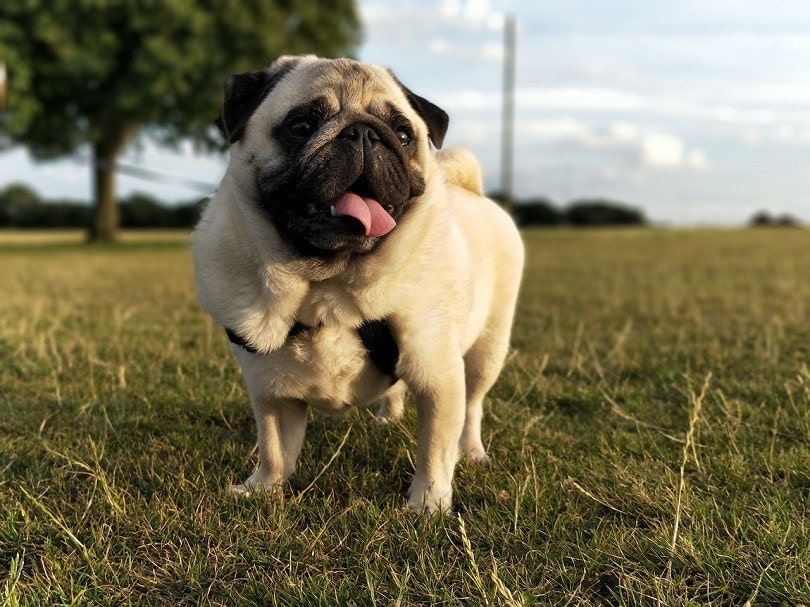
Pugs are prone to several health conditions, especially obesity. Another serious issue for Pugs is due to their brachycephalic anatomy. Having a flat face makes breathing difficult, so it can be dangerous if your Pug gets overheated, and they can also easily experience respiratory distress.
You’ll need to stay on top of the healthcare of your Pug with annual wellness care visits to your vet.

The 4 Life Stages of a Pug
Like all dogs, Pugs growdw quickly after birth and go through several life stages.
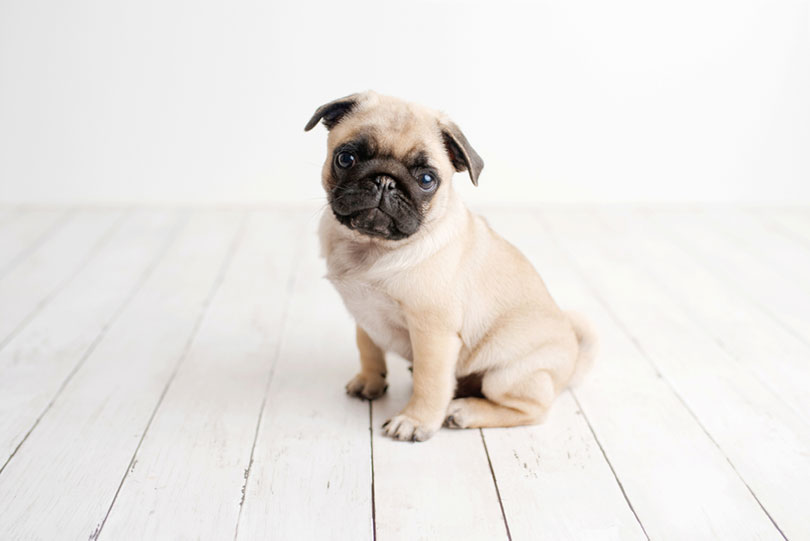
Puppy
From birth to about 6 to 9 months of age is when the most rapid growth occurs. The puppy’s eyes open in their second week, and they'll start weaning by their third or fourth week.
They remain puppies until they can reproduce. Small dogs like Pugs tend to hit sexual maturity faster than large dogs.
Young Adult
This is essentially the equivalent of the teenage years of a Pug. They can technically reproduce but aren’t fully mature yet. This stage can last from 6 to 12 months of age.
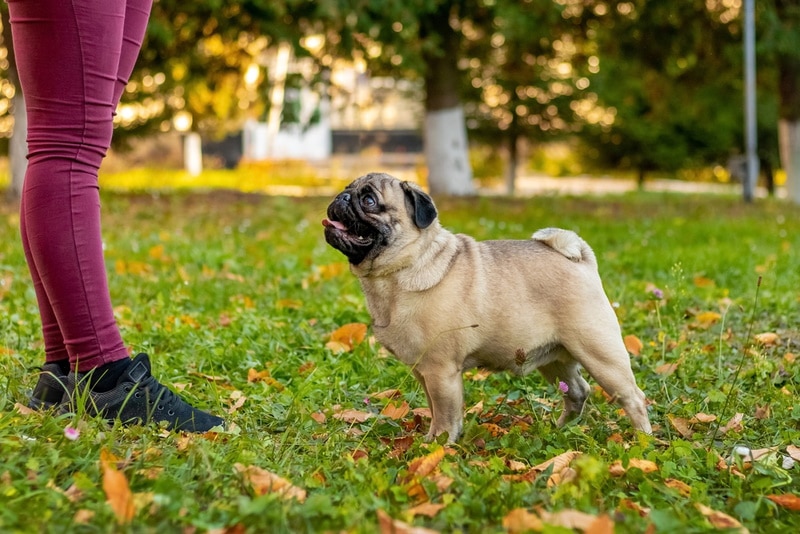
Adult
Once your Pug has stopped growing, they are officially an adult dog and will have reached social and physical maturation. This stage is typically from 1 to 7 years of age.
Senior
When a dog reaches their senior years depends on their size. Most small dogs will become senior dogs by about 9 to 12 years of age. For large dogs, this happens sooner, at about 6 to 9 years. This is the stage where they will need more care and frequent visits to the vet.
Taking care of your Pug through every life stage will help determine how long they will live.
How to Tell Your Pug’s Age
Several signs can give you an idea of your Pug’s age.
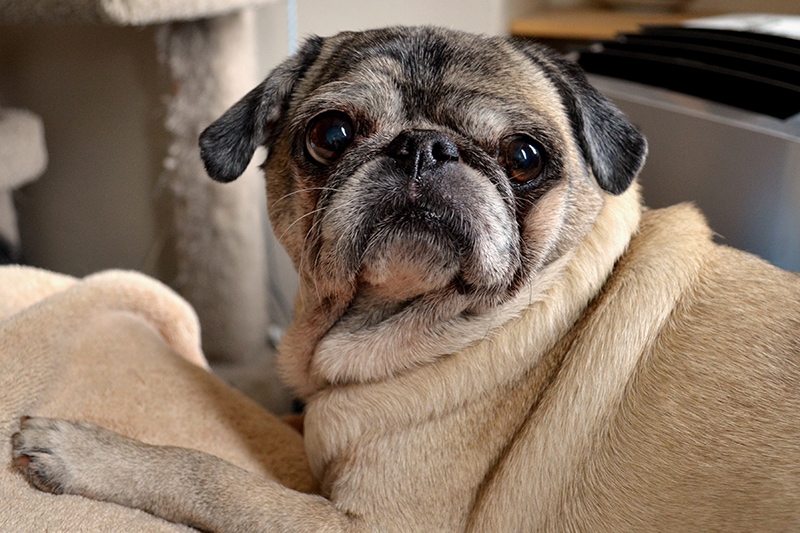
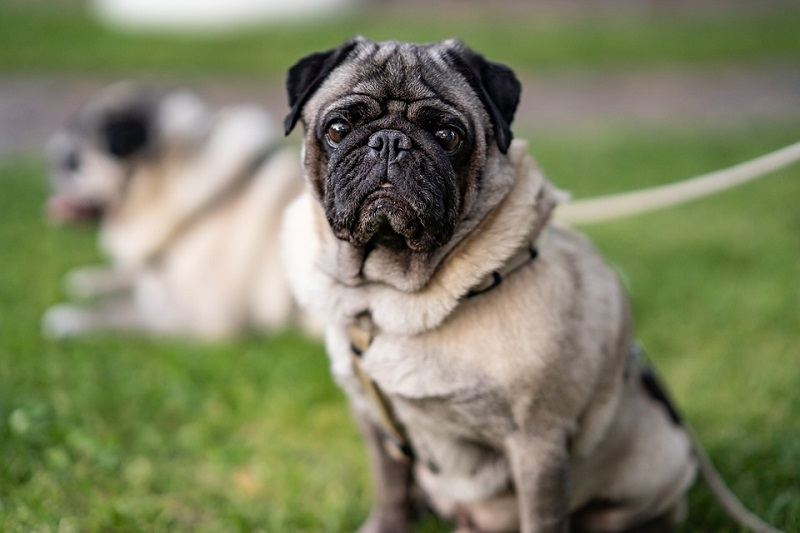
- Gray hair: Just like humans, dogs go gray to a certain degree. If there’s gray around your Pug’s muzzle, this can be a sign of a mature adult. The more gray on the face, usually the older the dog. It might start at around ages 7 to 10, but some dogs will begin to go gray even when young.
- Teeth: Puppy teeth tend to be short, sharp, and temporary. A dog’s adult teeth typically start to emerge around 6 months of age. After this, it becomes harder to determine a dog’s age. Once the permanent adult teeth erupt, the only differences are in plaque buildup, stains, and tartar. Also, young dogs can have stained teeth, and old dogs can have clean, strong teeth. It all comes down to how well their teeth have been looked after.
- Eyes: Some senior dogs develop cataracts, which is a serious condition that gives the eyes a milky appearance and can lead to blindness. The less serious lenticular sclerosis can also occur in dogs at about 6 to 8 years of age.
- Behavior: The energy level of a young dog of about 1 or 2 will be different from a dog of about 6 or 7 years. The older they get, the more they start slowing down.
Some older dogs might develop a form of dementia and become forgetful and confused. They might also struggle with climbing stairs and jumping on or off furniture.
There isn’t one specific way for you to determine your Pug’s age. Try asking your vet, as they should be able to assess your dog's age.
Conclusion
As much as we wish that we could keep our dogs forever, this sadly isn’t the case. Pugs have a decent lifespan, though, which is good news for Pug lovers!
Much of what determines how long your dog will live falls on your shoulders. Feeding them a good diet, exercising them daily, taking annual visits to the vet, and giving them plenty of love all help make for a healthy and happy Pug.
That said, you can’t control whether your pet will come down with a health condition or get injured, which might shorten their life. The best thing that you can do is appreciate your time with your Pug and feel good about making them your happy and well-loved companion.
Sources
Featured Image Credit By: Steshka Willems, Pexels
Get Hepper In Your Inbox


Pet care tips from our vets and experts, straight to your inbox.
You may opt-out at any time. View our Privacy Policy for more information.

Kathryn was a librarian in a previous lifetime and is currently a writer about all things animals. When she was a child, she hoped to work in zoos or with wildlife in some way, thanks to her strong love for animals. Unfortunately, she's not strong in the sciences, so she fills her days with researching and writing about all kinds of animals and spends time playing with her adorable but terribly mischievous tabby cat, Bella. Kathryn is hoping to add to her family in the near future – maybe another cat and a dog.
Join the conversation
Ask a question, share your story, or send private feedback.