Hepper is reader-supported. When you buy via links on our site, we may earn an affiliate commission at no cost to you. Learn more.
How to Make a Cat Vomit in an Emergency (Vet Answer)

In this article
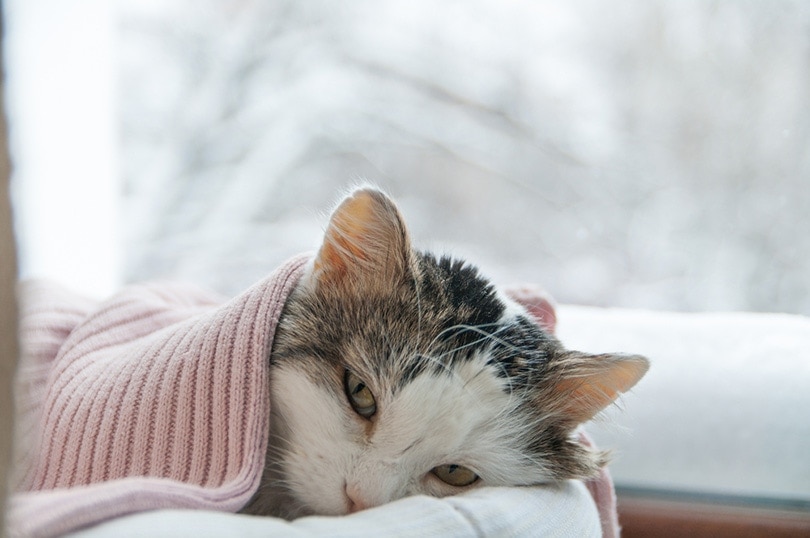
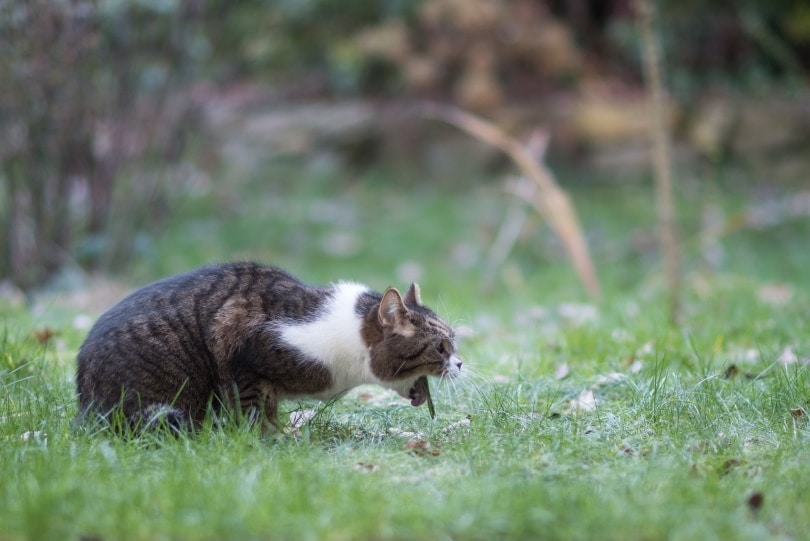
Cats are very inquisitive creatures, and they may eat objects or food that are poisonous or toxic. If you see or know that your cat has eaten something they shouldn't have, one way to potentially avoid them being poisoned is by making them vomit. Induction of vomiting (also known as emesis) is a tricky business in cats—even vets can struggle to make a cat vomit.
It’s important to note that induction of vomiting should only ever be done under the instruction of your vet. You can end up doing more damage than good if you don't know what you are doing.

What to Do If Your Cat Has Eaten Something They Shouldn't Have
If you think your cat has eaten something they shouldn't have that is potentially dangerous, the first thing you need to do is to contact a vet as soon as possible. It's important to give them as much information as possible.
This includes:
Telehealth is often better than a phone call because a veterinarian can assess your cat visually. If you can find an immediate virtual appointment, this is highly recommended. Otherwise, contacting your vet via phone the next best option.
Your vet will be able to guide you over the phone and advise you on the best course of action. Often this will be to bring your cat to the vet as soon as possible. In some circumstances, this is not possible, or it will take too long to travel to your vet. In this case, your vet may advise you to attempt to induce vomiting at home.
Once you have rung your vet and given them all the necessary information, there are several different options depending on the exact circumstances.
Some substances may not be toxic in small doses. There may not be any need to induce vomiting if only a small amount has been consumed but your cat will still need to be monitored closely. If you have any of the packaging or the label of the substance your cat has eaten, take a photo of this or bring it with you to your vets so that they have as much information as possible. Ringing your vet in advance will give your vet time to start getting equipment ready and work out doses of drugs to start treating your cat immediately on your arrival.
In some circumstances, and only under strict veterinary instructions, you may be told to induce vomiting at home. This is an exceptional circumstance if it is not possible for you to attend a vet practice within the 2-hour window or if you are unable to travel. Your vet will always advise you to attend the clinic if possible, and home remedies are not recommended in place of veterinary care.
What Is the Induction of Emesis?
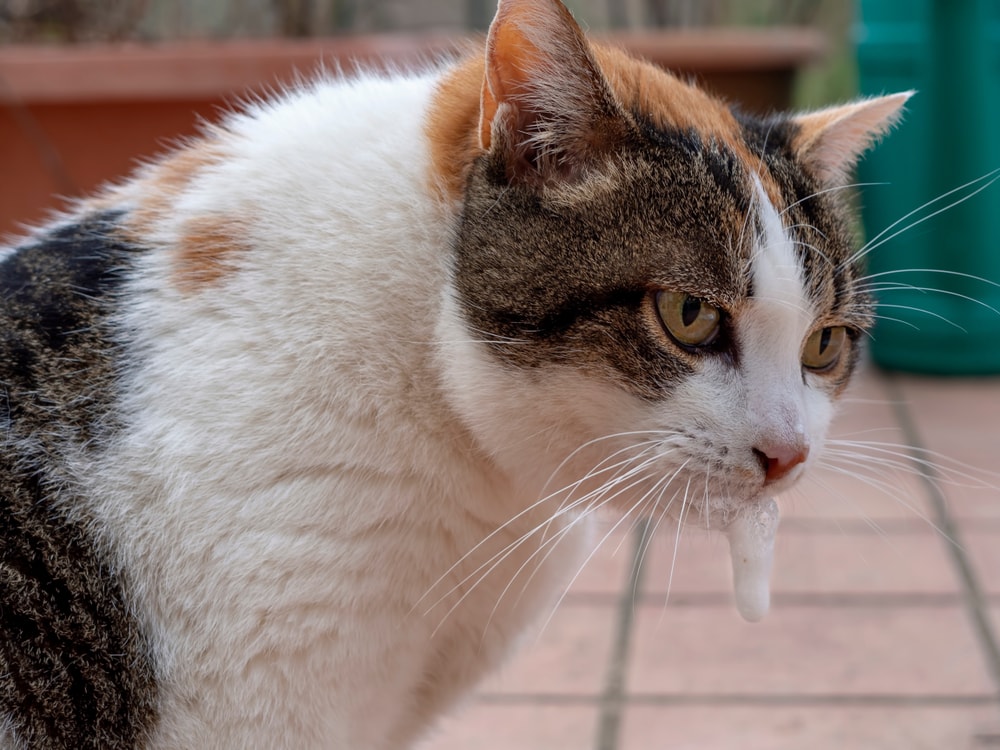
The induction of vomiting involves giving a substance to your cat to make them sick. Removing the contents of the stomach reduces the chances of it being absorbed into the bloodstream. It is very useful for vets to be able to do this as it saves cats' lives. One limitation is that there is a very small window of time in which induction of vomiting is effective—while the substance is still in your cat's stomach. After 2 hours most of it will have been absorbed so there will be little point.
Why Would We Need to Make a Cat Vomit in An Emergency?
Cats very often eat things around the house they aren't supposed to. Sometimes intentionally due to their inquisitive nature and sometimes accidentally. There are many things in and around our homes that cats have access to and end up ingesting.
These include:
If your cat has eaten anything that will cause them damage, the first port of call is to attempt to make them vomit to void the stomach of anything toxic. This needs to be done as soon as possible as the body will start absorbing the contents of the stomach or moving it into the small intestines, hence the urgency.
To read an up-to-date comprehensive list of things that our cats react adversely to you can visit the ASPCA website.
Common Methods of Inducing Vomiting at Home
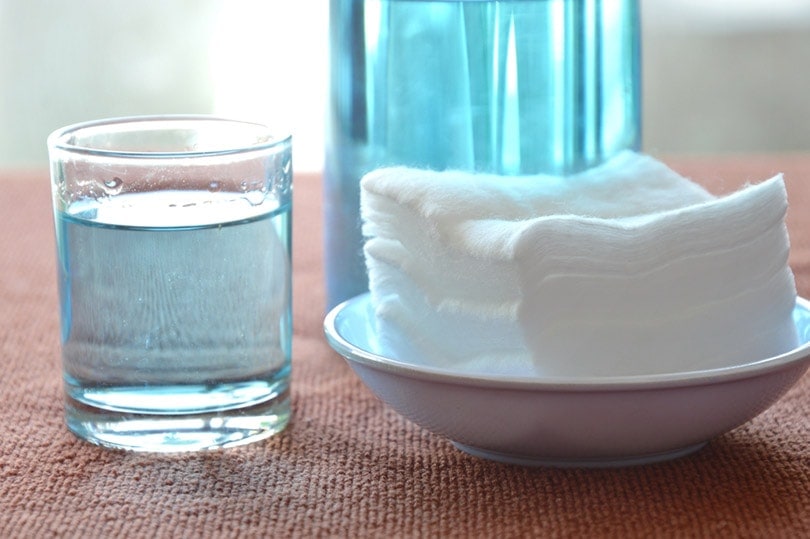
- Previously, a solution of 3% hydrogen peroxide was recommended for making cats vomit. The use of hydrogen peroxide is now advised against as the success rate is extremely low and it can cause severe ulceration of the lining of the stomach so the benefits definitely do not outweigh the risks.
- Another suggestion is to use a saltwater solution. This, again, comes with its own issues. Salt can be poisonous in itself if given in large enough quantities. Salt is filtered out of your cat's bloodstream by the kidneys and if your cat has eaten something toxic that affects the kidneys, they might already be under great strain. This means that extra salt is just adding to the problem. Kidney disease is very common, especially in older cats so in a lot of cases it is not appropriate to risk overloading these organs that are already under a great deal of pressure.
Methods of Inducing Vomiting at Your Vet’s
If you are able to get your cat to your vet practice, this is the best and safest option. There are usually three options your vet will choose from to administer to your cat.
These are:
Dexmedetomidine is an alpha 2 adrenergic agonist. It acts on the chemoreceptor trigger zone to induce vomiting in cats. Cats are thought to have a high concentration of alpha 2 adrenergic receptors in their central nervous system so this is why this drug is chosen for them. Xylazine is also an alpha-2 adrenergic agonist that acts on the chemoreceptor trigger zone.
Apomorphine is a morphine derivative. It works by stimulating the dopamine receptors in the part of the brain that induces vomiting. The use of apomorphine in cats is controversial as morphine and its derivatives can cause excitation reactions in cats.
Problems Encountered with Induction of Vomiting in Cats
The induction of emesis in cats is known to be difficult. It is more complex than the same process in their canine companions. This is because cats have different mechanisms in the central nervous system that cause them to be sick. For example, apomorphine works on dopamine receptors to induce vomiting. In dogs, who respond very well to the drug, the emetic center is regulated by dopamine receptors. In cats the vomiting center is regulated by alpha receptors, therefore they just don't have the right receptors in the correct place for it to have a good enough effect.
Another issue is most drugs used to induce emesis are also sedatives. If vomiting is witnessed, this is usually a side effect, not the main event. So, often we have a sedated cat that hasn't actually been sick, which is obviously a problem as whatever they have ingested is still in their stomach and now, they are sedated too. It is possible to reverse the sedatives, however, valuable time for treatment will have been lost.
When You Should Avoid Inducing Vomiting in Cats
There are some situations where induction of vomiting is contraindicated, even if your cat has consumed something potentially toxic. In these circumstances you can do more harm than good by making your cat vomit so it is important you are aware when it can be dangerous.
These scenarios include:
Conclusion
If your cat has ingested something poisonous, it is possible to make them vomit it back up. The prompt removal of the toxin from their body can be lifesaving in an emergency. The induction of emesis in cats is a tricky business. The drugs currently available are not 100% reliable and they produce variable effects.
Knowing when to make your cat vomit in an emergency as well as when it is not safe to make them vomit are both just as important. If you think that your cat has ingested something poisonous, always consult your vet first.
Sources
Featured Image Credit: Nils Jacobi, Shutterstock
Get Hepper In Your Inbox


Pet care tips from our vets and experts, straight to your inbox.
You may opt-out at any time. View our Privacy Policy for more information.
Dr. Emma is an experienced vet who is always happy to share her knowledge and expertise with our readers. Her passion is surgery but she will happily talk about anything animal related. Dr. Chandley graduated from The Royal Vet College and since then she has worked in general practice in the UK. She has completed a postgraduate certificate in Small Animal Surgery and has also gained Advanced Practitioner status in the same discipline. She enjoys developing her skills in clinical pathology, animal behavior and nutrition as well.
Emma is an experienced veterinarian who is always happy to share her knowledge and expertise with our readers. She is passionate about surgery but will happily talk about anything animal related.
Experience
Since graduating, Dr. Emma has worked in general practice in the UK. She has completed a postgraduate certificate in Small Animal Surgery and has also gained Advanced Practitioner status in the same discipline. She also has expert knowledge in small animal medicine with a special interest in Endocrinology, although surgery is her passion. She enjoys developing her skills in clinical pathology, animal behavior, and nutrition as well.
Education
Emma received her degree from the Royal Vet College, University of London. She obtained her postgraduate certificate from the British Small Animal Veterinary Association and Nottingham Trent University.
She was granted Advanced Practitioner status by The Royal College of Veterinary Surgeons.
Join the conversation
Ask a question, share your story, or send private feedback.