Hepper is reader-supported. When you buy via links on our site, we may earn an affiliate commission at no cost to you. Learn more.
How To Pick Up a Bearded Dragon: 12 Tips & Advice (With Infographic)


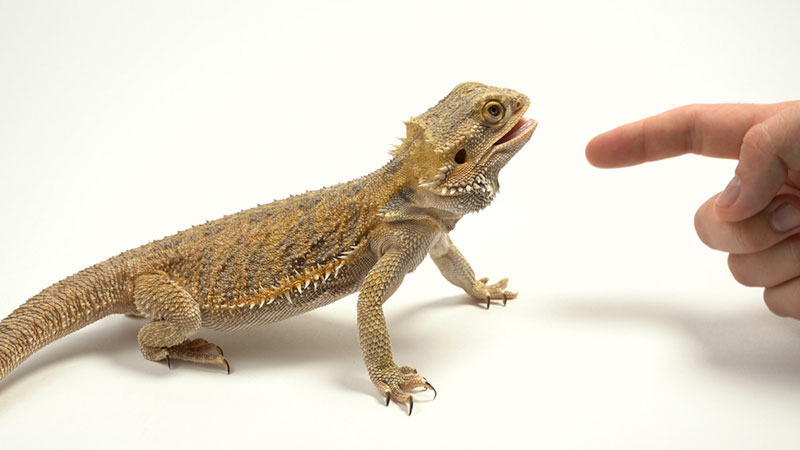
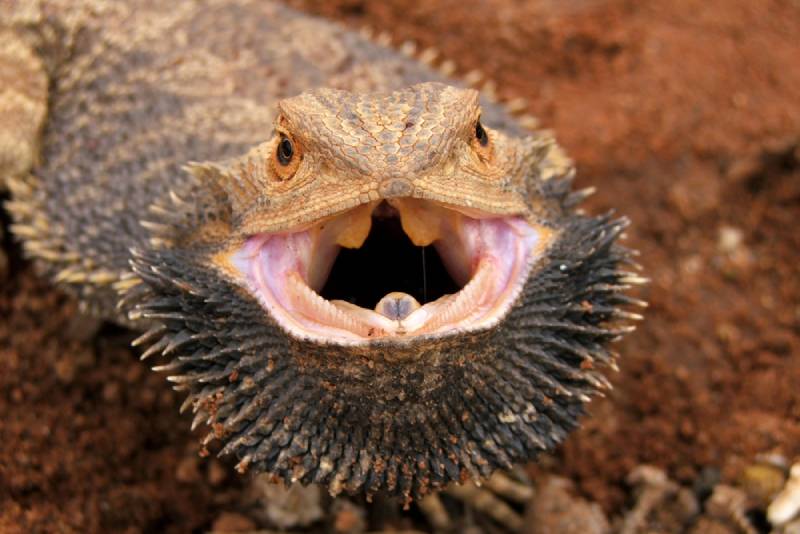
Bearded Dragon bites aren’t usually too painful, but you don’t want to stress your Beardie out to the extent that they feel the need to bite. It will make the experience a negative one and may mean that your Bearded Dragon is less likely to trust you in the future.
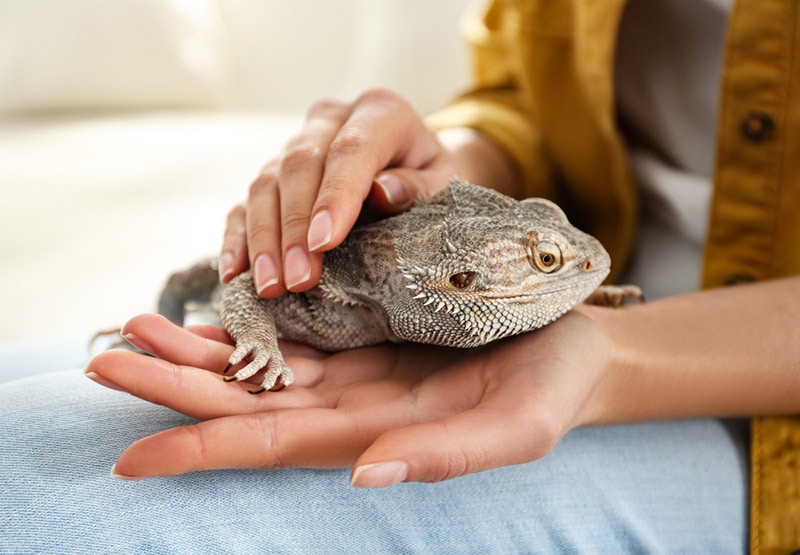
Proper and careful handling helps ensure a positive experience for you both, and it will mean that your Bearded Dragon will be more likely to tolerate handling in the future. Beardies can become comfortable and relaxed around familiar caregivers, and while they may never enjoy being petted for hours at a time, they can enjoy chilling on your shoulder, armpit, or your lap, when properly supported and warm.
Below, we look at 12 tips and tricks to help ensure it is a positive experience that you both enjoy.
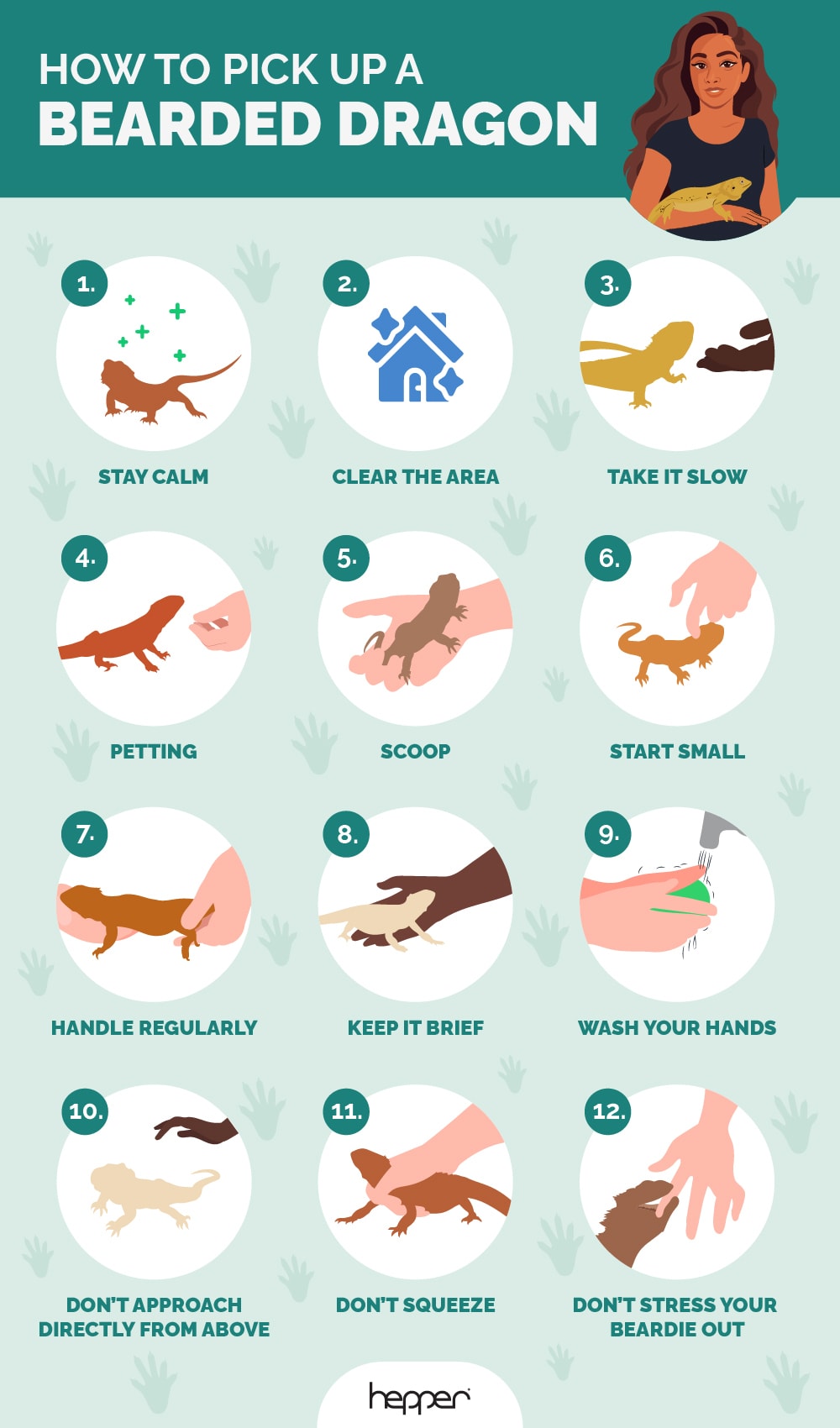

The 12 Tips on How To Pick Up a Bearded Dragon
1. Stay Calm
Handling your Bearded Dragon should be a positive and enjoyable experience for you both. Generally, Beardies are placid and docile animals that don’t bite, but it can happen if they feel threatened, are restrained improperly, or startled. It is most likely to happen if you are panicking or worried and transmitting that tension through sudden movements. Stay calm, enjoy the experience, and do what you can to make it positive for your little lizard.

2. Clear the Area
If you are still quite new to picking up your Beardie, you should have as few distractions as possible. Turn off the TV and make sure you are handling them in a clear area. Beardies can be skittish the first few times being handled so pick them up in a safe area and not too far away from a surface below. Ensure cats, dogs, and other pets are out of the room. If you are handling your Bearded Dragon near its enclosure, make sure there are no roaches or other insects visible that could trigger a feeding response.
3. Take It Slow
Bearded Dragons are prey animals, which means they are constantly looking for threats. If you catch your lizard by surprise, it may mistake you for a predator. This can lead to bites, and it can make the experience a negative one. Approach slowly, let your Bearded Dragon know you’re there, and handle them appropriately.
4. Petting
To facilitate this gradual process, you can start by gently petting your Beardie. Start with gentle petting under the chin, and when it gets used to this, you can start to pet the top of the head if the dragon remains relaxed. Avoid restraining the head or limbs during this stage.

5. Scoop
Don’t try grabbing your Bearded Dragon from above because this is how birds of prey and other predators would hunt. Don’t approach from behind, or this can catch your reptile by surprise. Approach from in front or the side of the Beardie and, with your fingers spread, scoop your Bearded Dragon from underneath so that its body, chest, and pelvis are fully supported. Always support all four limbs and the base of the tail.
6. Start Small
It can take time to gain a Bearded Dragon’s tolerance. The species doesn’t instinctively know how to deal with human interaction, so it will have to get used to being picked up and handled gradually. For the first couple of sessions, you might only get as far as petting. And when you do cradle your Beardie for the first few times, keep sessions to a few minutes long. Your Bearded Dragon needs the heat of the basking lamp and the general warmth of the tank to stay healthy, so most sessions should be kept to a maximum of about 5–15 minutes. If you live in a warm environment, you may be able to keep them out for slightly short periods within this range, but any longer can cause stress and dangerous cooling.
7. Handle Regularly
Bearded Dragons do take to handling after plenty of practice, but you need to start slowly, and you should ensure consistent, gentle handling. Over time, they will learn that you aren’t a threat through habituation and that the experience is a positive one. If you go several weeks between handling sessions, your Beardie won’t get used to the experience, and it will be like starting again every time.

8. Keep It Brief
Sessions really do need to be short. Even if your Bearded Dragon enjoys the experience, it has a lot to take in while out of its enclosure. It has new surroundings with new sights and smells. It likely also experiences a considerable temperature and humidity drop outside the enclosure, and these changes aren’t good when prolonged. Build up to only 5–15-minute handling sessions, and always put your Beardie back in its cage when you’re finished or sooner if any signs of cooling, stress, or restlessness appear.
9. Wash Your Hands
Like many lizard species, Bearded Dragons can carry Salmonella bacteria. Salmonella can make you ill. You should wash your hands before picking up the Bearded Dragon, to get rid of anything that might be harmful to your lizard. And you should wash your hands again after handling them to get rid of anything that might be harmful to you.
10. Don’t Approach Directly From Above
Even if you have built a familiar routine with your Beardie, the species is a prey animal. In the wild, Beardies have several natural predators, and because of the low position of the Dragon, most predators would grab it from above. If you try to pick your Beardie up from above, it can cause anxiety and stress and trigger defensive behavior.
11. Don’t Squeeze
You should hold your Bearded Dragon firmly and securely to ensure it doesn’t fall or jump. However, you don’t need to squeeze it, and doing so can cause injury to the ribs, chest, legs, lungs, and other areas of the body. Be firm but don’t squeeze.

12. Don’t Stress Your Beardie Out
Always think about your surroundings and environment, as well as the physical way that you approach and hold your Bearded Dragon. They are placid animals that will usually take well to handling, but too many negative experiences can make them very wary about being handled in the future. Minimize noises, don’t surprise or startle your little lizard, and don’t keep them out of their home too long. You can always come back and have another go in a few hours or the next day, once the animal has fully recovered from the interaction.
Do Bearded Dragons Like Being Handled?
Bearded Dragons are a popular pet lizard, and one of the reasons for their popularity is that they are docile and generally take to being handled. They do need to experience handling from a young age and regularly to desensitize them to remain calm during handling when they mature.
Does a Bearded Dragon Bite Hurt?
Beardies do have sharp teeth and, although it’s rare, they can bite when they get stressed or scared or mistake fingers for food. Although those sharp teeth can cause some pain, the bites are very rarely serious. You will need to properly wash the wound if the teeth break the skin because Beardies can carry Salmonella, and washing will help prevent infection.
Conclusion
Bearded Dragons are fascinating, fun pets, that have some quirks and behaviors that make them exciting to have around. Considering they naturally have no contact with humans in the wild, they are also usually very tolerant of human handling. Start handling your Beardie when it is young, start slowly and build up, and always return your Beardie to its cage if it starts to get a little stressed.
Over time, you will build a predictable routine, and your pet lizard should remain calm during time outside its enclosure.
Related Read: How to Travel With a Bearded Dragon – 8 Tips and Tricks
Sources
Featured Image Credit: New Africa, Shutterstock
Get Hepper In Your Inbox


Pet care tips from our vets and experts, straight to your inbox.
You may opt-out at any time. View our Privacy Policy for more information.
Nicole is a lover of animals of all sizes but is especially fascinated with the feline variety. She’s the proud mom of Baby, a Burmese, and works every day so he can relax in the sunshine or by the fire. She’s always had a cat in her home and has spent countless days with others, observing behaviors and softening up even the grouchiest of the lot. Nicole wants to share her kitty expertise with you so you and your cat can live happy, healthy, and care-free.
Join the conversation
Ask a question, share your story, or send private feedback.