Hepper blog

Search our database of over 9,984 posts with up-to-date information from our experts and veterinarians.

Hepper is reader-supported. When you buy via links on our site, we may earn an affiliate commission at no cost to you. Learn more.

How to Put On & Fit a Dog Harness: 4 Simple Steps
By Nicole Cosgrove
Share
Ask us a question in the comments
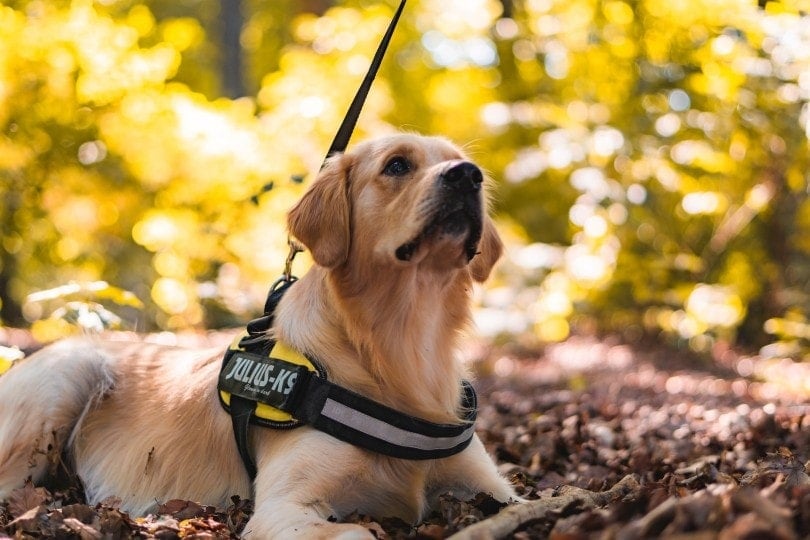
golden retriever in harness

If you just got a new puppy and want to take it for a walk, you will need a leash, and you will need to know how to put it on. If you never had a pet before, it's common to have many questions about securing it on your pet properly. We will help you by providing a step-by-step guide for putting on multiple types of dog harnesses. Join us while we look at the standard, step-in, and front clip harnesses so you can safely and securely take your dog out.

Get the Right Dog Harness Size

No matter what type of harness you are using, it needs to fit your pet properly. If it is too tight, it will be uncomfortable for your pet, and it might even cut off circulation. If it is too loose, your pet will be able to get out of it, putting your pet in harm's way with other animals or traffic. Before buying, look over the package carefully to see if it will fit your pet. We've found that many people who are having difficulty securing the harness are trying to use the wrong size for their pet, leading to confusion. To get the best harness for your pet, follow these next few steps.

  • Get an accurate weight of your pet.
  • Use a measuring tape to get the measurement around your dog's neck.
  • Use a measuring tape to measure the broadest part of the chest. You can do so by putting the tape measure around the dog behind the front armpit.
  • Look for a harness two inches larger than the chest and rated for the weight of your dog.

The 4 Steps to Put On a Standard Dog Harness

The standard harness has a loop around the ribs and another around the neck. A D-ring on the back allows you to clip the leash.

1. Slide the Harness Over Your Dog's Head

When your dog is calm, stand behind it and slide the harness over its head, so the D-ring is toward the back. The bigger loop will go over the ribs, and the smaller loop will go around the neck.


2. Put One Leg In

Put the dog's leg in the first hole, so it's between the two loops.

woman choosing pet harness in pet shop
Photo Credit: BearFotos, Shutterstock

3. Buckle in the Second Leg

Buckling the harness should secure the other leg in its proper hole. If you cannot fasten the buckle, you will need to loosen the strap. If you can't loosen it enough, the harness is too tight.


4. Adjust the Harness

Once you buckle the harness, you can adjust it, so it fits snugly. You should be able to fit two fingers under any strap, but the dog shouldn't be able to get it off.
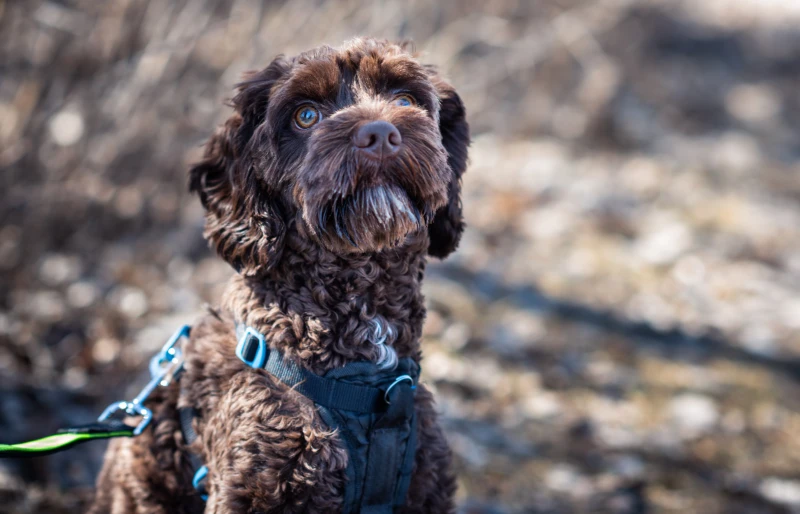
chocolate brown goldendoodle dog in a harness outdoors
Photo Credit: MathieuLphoto, Shutterstock

How to Fit a Step-In Dog Harness

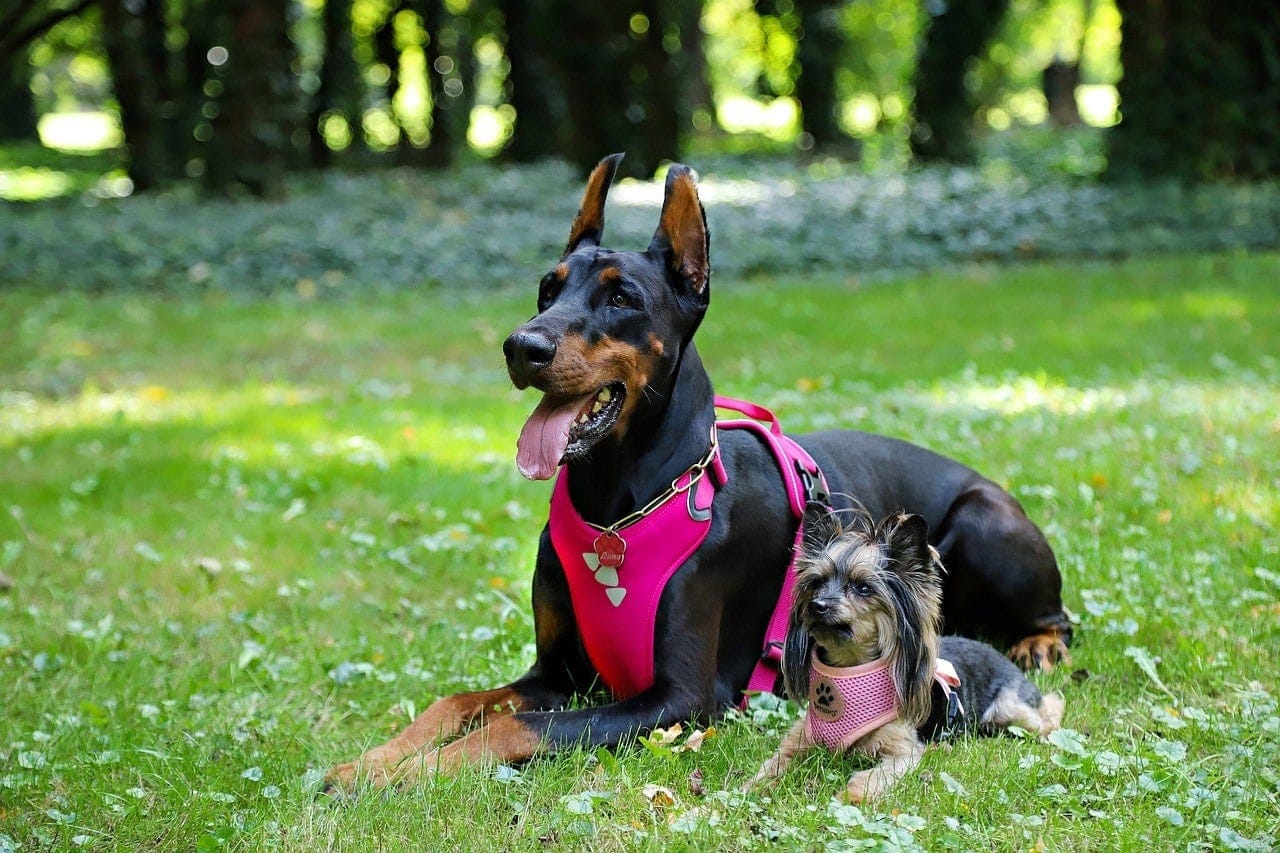
dogs with harness
Image Credit: Yama Zsuzsanna Márkus, Pixabay

The Step-In harness is similar to the last type, but the Step-In Harness forms triangles around the legs, and the Standard Harness forms squares. Some owners feel this type is more comfortable for the dog, but the difference is minimal.

  • To put this harness on your dog, lay it flat on the ground. You should see both triangles, and the buckles should be on top of the D-rings.
  • When your dog is relaxed, have it walk over the harness and place its two feet in the triangles.
  • Pull up the front, clip it behind the neck, and then pull up the other side to clip it around your pet's back.
  • Adjust it to fit correctly. Once again, you should fit two fingers behind each strap, but it shouldn't be loose enough that your dog can wiggle free.

How to Fit a Front Clip Harness

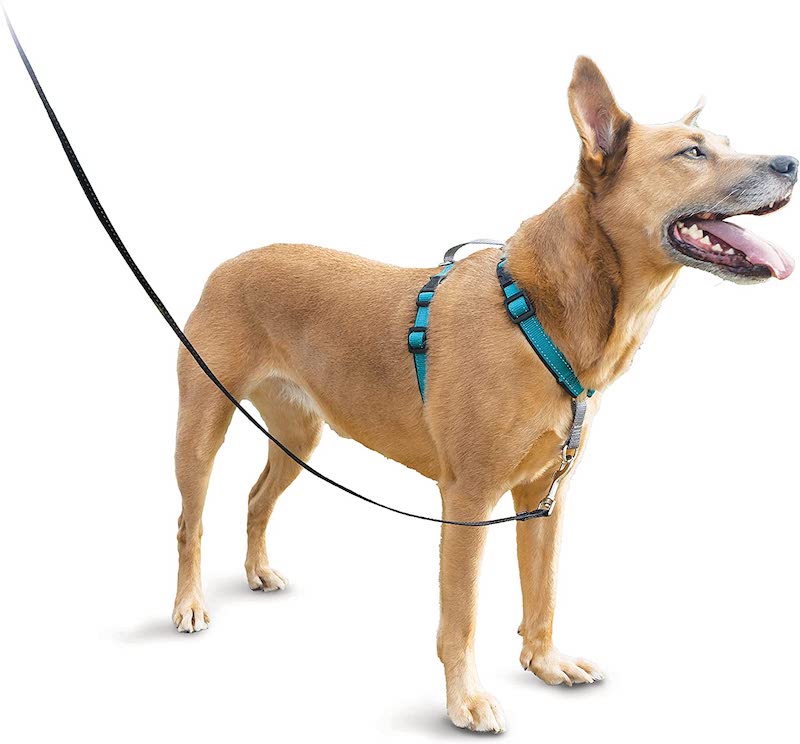
PetSafe step-in dog harness

The Front Clip harness is unique in that it places the D-clip in front of the dog's neck, which should help reduce your pet's pulling. Some Front-Clip Harnesses are the same as the Standard or Step-In types with the D-clips moved to the front, and you will put them on your pet in the same way. However, there is another slightly different type. These harnesses will have a loop that goes around the ribs and a strand across the chest. It will not have a divider that separates the legs.

  • To put the Front Clip Harness on, wait until your dog is comfortable and place the harness over your pet's head so it sits on your pet's left shoulder. The metal ring should sit on the front of your pet's chest.
  • Place your hand under your pet's belly to attach the belly strap.
  • Adjust the harness to fit correctly, and once again, make sure you can fit two fingers under the straps, but the dog cannot wiggle out.

Summary

No matter what type of harness you are using, make sure you put it on repeat until you get the hang of it and your pet gets used to wearing it.  We find that any harness will work better than the collar and leash, but if your pet pulls while you are walking, then a Front Clip Harness will help you can better control your pet.  The front clip is available in any style, so if you have already gotten good at putting on one type, you can continue to use it.

We hope you have enjoyed reading over this guide and learned some new tricks that can help. If we have helped you enjoy your dog walks more, please share this guide to putting on a dog harness on Facebook and Twitter.


Featured Image Credit: Dzmitry Dudov, Unsplash

Get Hepper In Your Inbox

Pet care tips from our vets and experts, straight to your inbox.

List

Select all that apply.

You may opt-out at any time. View our Privacy Policy for more information.

Nicole Cosgrove
Authored by

Nicole Cosgrove

Join the conversation

Ask a question, share your story, or send private feedback.
Rate this post
Required to post. Only our editors see your rating.
Who should see this?

A human reviews every comment before it appears. Your email is never published.

Picked to go with this article

5 Types of Dog Harnesses and Their Differences (With Pictures)

5 Types of Dog Harnesses and Their Differences (With Pictures)

Going for a walk with your dog should be a pleasant endeavor for both you and them. It helps to have the proper equipment for your dog, and the right harness i…

Nicole Cosgrove
By Nicole Cosgrove ·
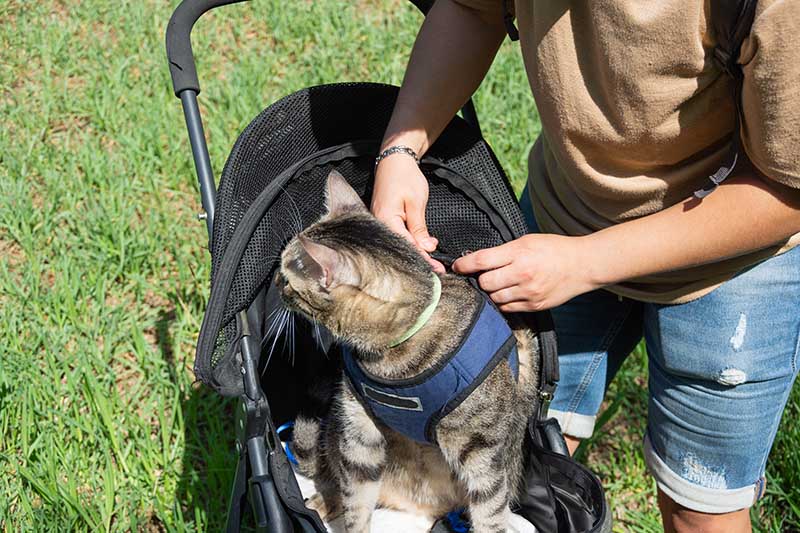
How to Put a Cat Harness On: 5 Vet-Approved Tips & Advice

How to Put a Cat Harness On: 5 Vet-Approved Tips & Advice

While domesticated cats have learned how to live with humans in harmony and accept and adapt to our lifestyles, they still have some wildness in their souls. W…

Jana Blagojevic
By Jana Blagojevic ·
Bella & Pal OxyMesh Flexi Step-in Harness & Leash Set Review: An Expert’s Guide

Bella & Pal OxyMesh Flexi Step-in Harness & Leash Set Review: An Expert’s Guide

Having a dog and not owning a leash set is impossible; walking is such a big part of dog parent life. But with (literally) millions of options on the market, f…

Lisa Lee
By Lisa Lee ·
Dog Collar vs. Harness: Which Is Better for Your Dog? Visual Differences & Overview

Dog Collar vs. Harness: Which Is Better for Your Dog? Visual Differences & Overview

Standing toe-to-toe with the other great debates, like Android versus iPhone or The Beatles versus The Rolling Stones, is the decision of whether to get a coll…

Chris Dinesen Rogers
By Chris Dinesen Rogers ·

Keep reading

More stories you might like

How to Make Sure Your Dog’s Collar Fits Properly: Expert Tips

Your dog’s collar is like your wallet: it is the place where he carries his ID. Your pup should be wearing his collar every time he leaves your home. In fact,…

Nicole Cosgrove
By Nicole Cosgrove ·
How to Make Sure Your Dog’s Collar Fits Properly: Expert Tips

6 Types of Dog Collars and Their Differences (with Pictures)

When you are ready to take your dog for a walk or simply need to restrain your dog, you want a collar that’s best suited for their breed and personality. When…

Nicole Cosgrove
By Nicole Cosgrove ·
6 Types of Dog Collars and Their Differences (with Pictures)

10 Types of Dog Leashes and Their Differences (with Pictures)

One of the most important pet supplies you need for your dog, other than a well-fitted collar, is a leash. Whether for a quick trip around your yard, for a tra…

Nicole Cosgrove
By Nicole Cosgrove ·
10 Types of Dog Leashes and Their Differences (with Pictures)

Progressive Retinal Atrophy in Dogs: Signs, Causes & Treatment

If you’re like most dog fanatics, the day you adopt a puppy or adult dog is one of your happiest, most exciting, and most emotional days. The last thing on you…

Gregory Iacono
By Gregory Iacono ·
Progressive Retinal Atrophy in Dogs: Signs, Causes & Treatment

Is Great Wolf Lodge Pet Friendly? 2026 Policy & Requirements

Are you planning a trip to one of the Great Wolf Lodge’s locations but unsure if they are pet-friendly? Knowing the facts before you go is essential in ensurin…

Rachel Giordano
By Rachel Giordano ·
Is Great Wolf Lodge Pet Friendly? 2026 Policy & Requirements

Is Meijer Pet Friendly? 2026 Policy, Requirements & FAQ

Have you ever considered taking your furry friend to your local Meijer store? If so, this guide will shed some light on Meijer’s pet policy for the current yea…

Nicole Cosgrove
By Nicole Cosgrove ·
Is Meijer Pet Friendly? 2026 Policy, Requirements & FAQ

Who Is the Biggest Dog in the World? Current & All-Time Records (2026 Update)

Dogs are incredible creatures. They are strong, intelligent, and loyal, and set new records every single day! Some dogs can jump over a 75-inch obstacle; other…

Nicole Cosgrove
By Nicole Cosgrove ·
Who Is the Biggest Dog in the World? Current & All-Time Records (2026 Update)

What Causes Dilated Pupils in Dogs? Vet-Verified Facts & FAQ

Very few things are as heart-warming as a pup with beautiful wide open eyes looking at you with affection. The same can’t always be said about dilated pupils,…

Nicole Cosgrove
By Nicole Cosgrove ·
What Causes Dilated Pupils in Dogs? Vet-Verified Facts & FAQ