Hepper is reader-supported. When you buy via links on our site, we may earn an affiliate commission at no cost to you. Learn more.
How to Teach a Dog “Place” in 7 Simple Steps


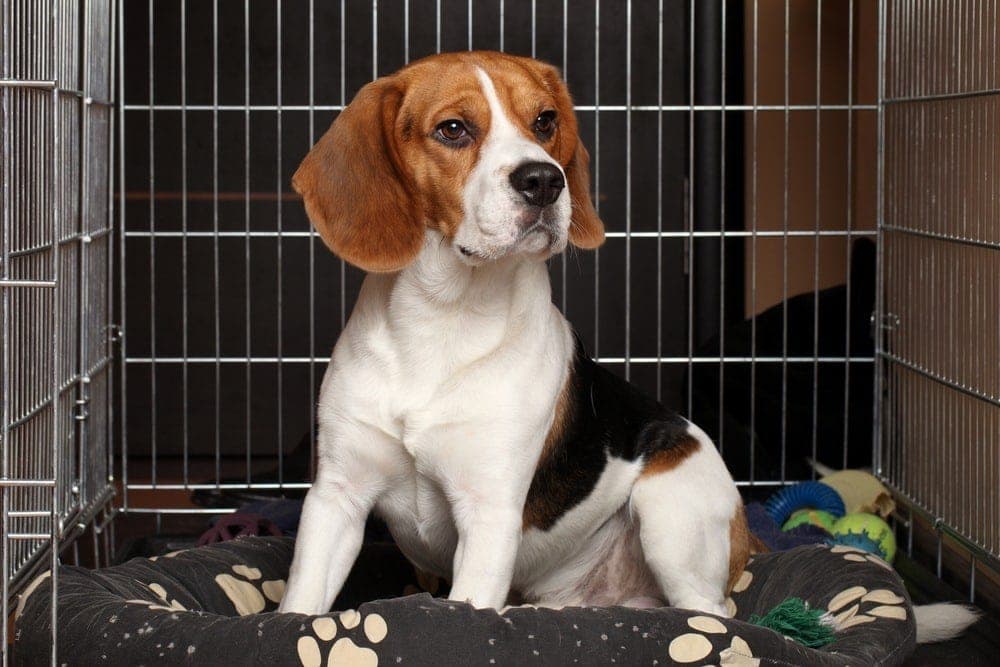
If you can’t seem to get anything done around your house without your dog popping up underfoot, there’s a solution to your dilemma! Training your dog to go to their place and stay there until released is an extremely useful skill that will make your life easier and help your dog learn to relax.
In this article, we’ll tell you how to teach a dog the “place” command in seven simple steps. We’ll also show you some situations where the skill will be most beneficial to your dog.

Before You Begin
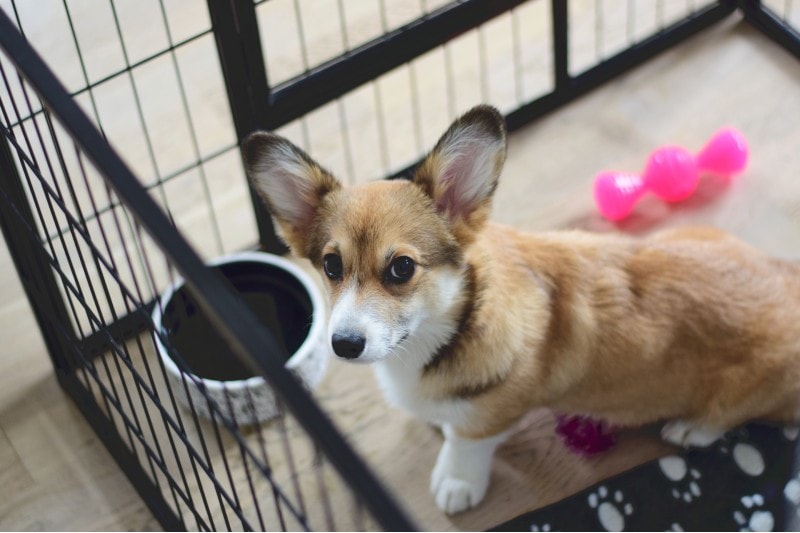
Teaching “place” is easiest if your dog knows how to lie down on command, so brush up on the skill before starting the new one. You’ll also need to decide where your dog’s “place” is, for example, a crate or bed.
Besides the command “place,” you’ll also need a release word to let your dog know when it’s okay to get up. Try to pick something you don’t regularly say in conversation (like “okay”) to avoid confusing your dog.
Besides a designated place, the only supplies you’ll need for teaching this command are treats and a clicker if you’re using clicker-training techniques. As with any training routine, start out teaching the command in a quiet, distraction-proof location.
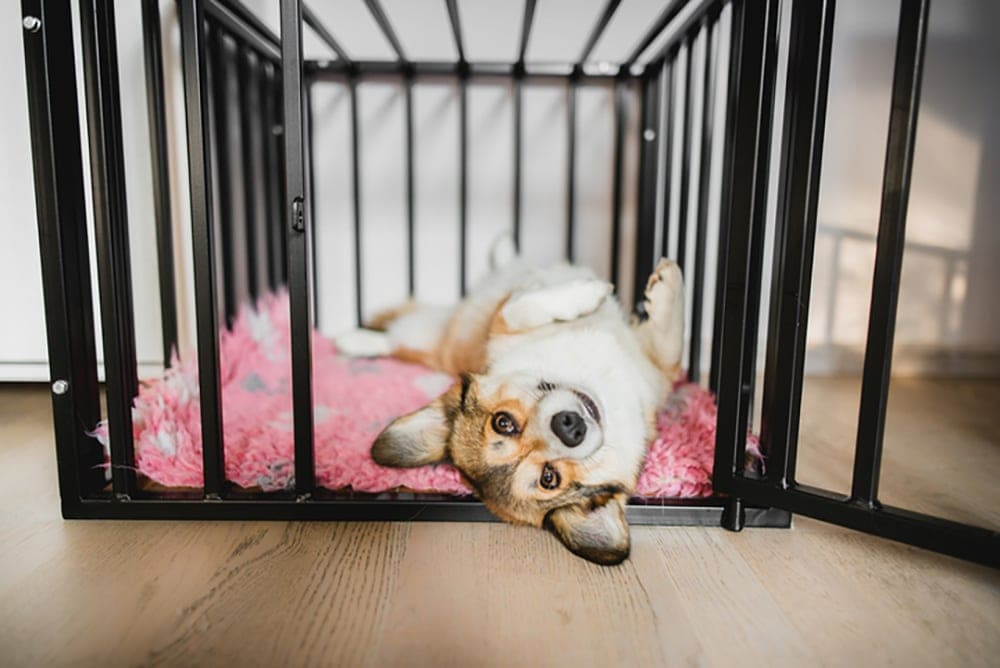
The 7 Simple Steps to Teach Your Dog “Place”
1. Introduce the Place
The first step is introducing the place you want your dog to settle.
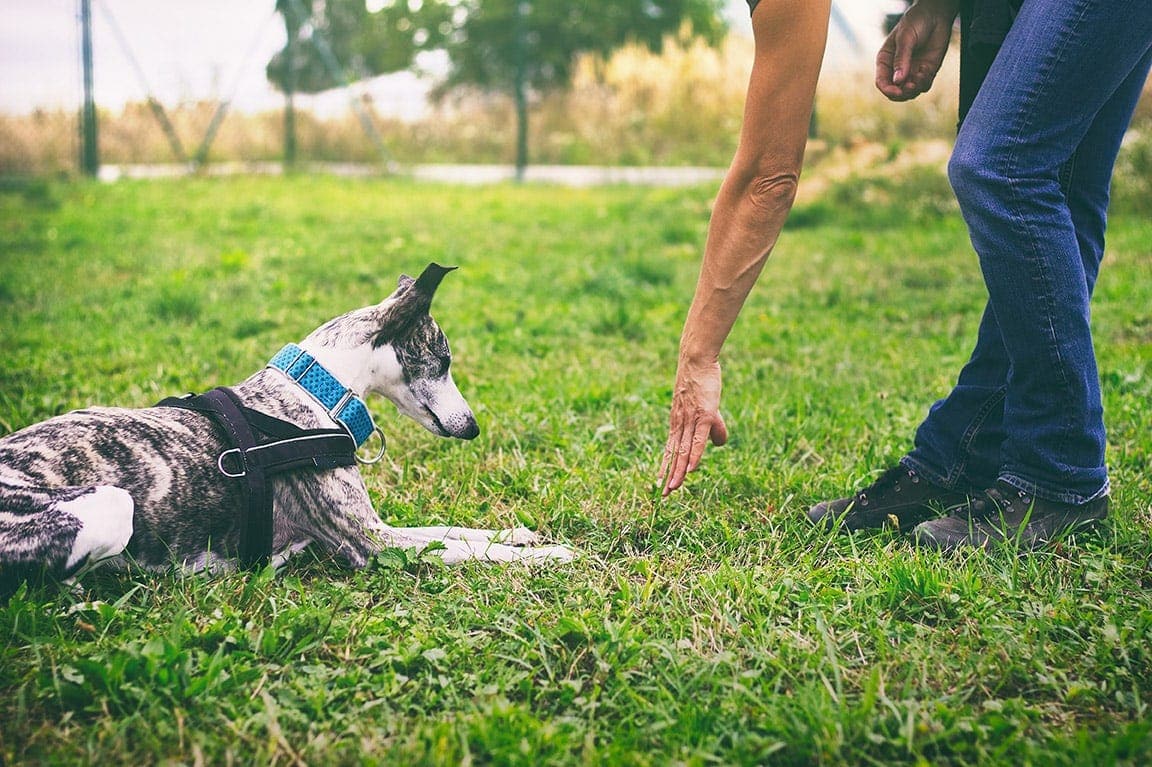
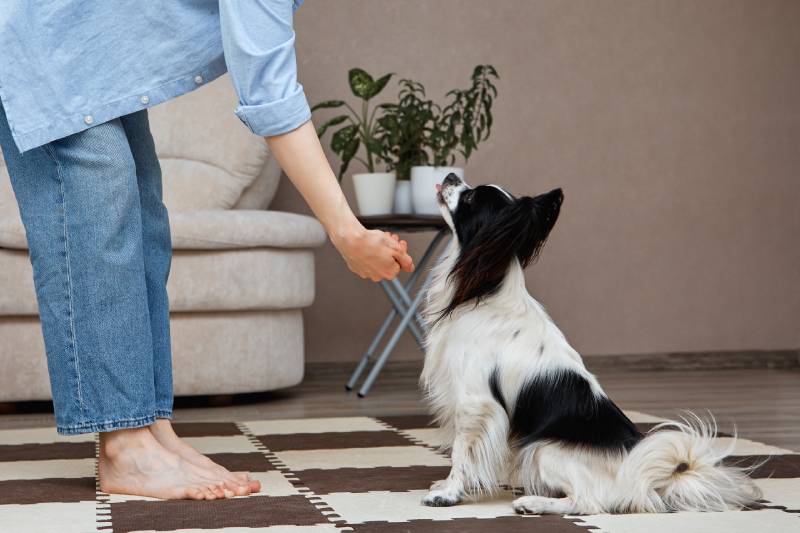
Using treats, lure your dog to their bed or crate while giving the command “place.” If they interact with the bed while sniffing, pawing, or stepping onto it, mark the behavior with a clicker (if you’re using one) and reward it with a treat.
Dropping the treat on the bed for your dog to eat helps reinforce the connection between the place and the reward. Continue to reward your dog for interacting with the place to help them learn that it’s important before moving on to the next step.
If you need help with training your dog, we suggest speaking with a vet online.
2. Move All Four Feet Onto the Place
Next, increase the complexity of the behavior by luring your dog until all four feet are in their place before clicking and rewarding. Use the command “place” as you practice this behavior. Say “place,” lure your dog fully into the bed or crate, and reward.
Continue to perform this training in a quiet location and repeat until your dog readily moves entirely into their place each time on command.

3. Introduce the Release Word
Once your dog is used to placing all four feet in place, teach them your designated release word. Give the release command and lure your dog off the place by tossing a treat. Continue to practice the release word until your dog leaves their place on command without being lured.
4. Introduce Lying Down
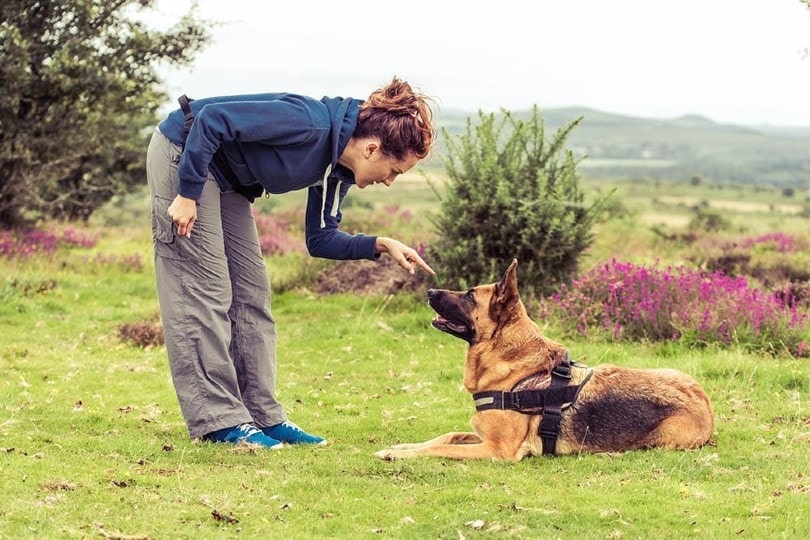
For the next step, your dog will need to lie down in their place before receiving a reward. Lure and command them to the place as you have been, but give the down command before clicking and rewarding.
Practice this step until your dog lies down on their own once they go to its place. Continue to practice the release word from the down position as well.
5. Increase the Time Your Dog Spends on the Place
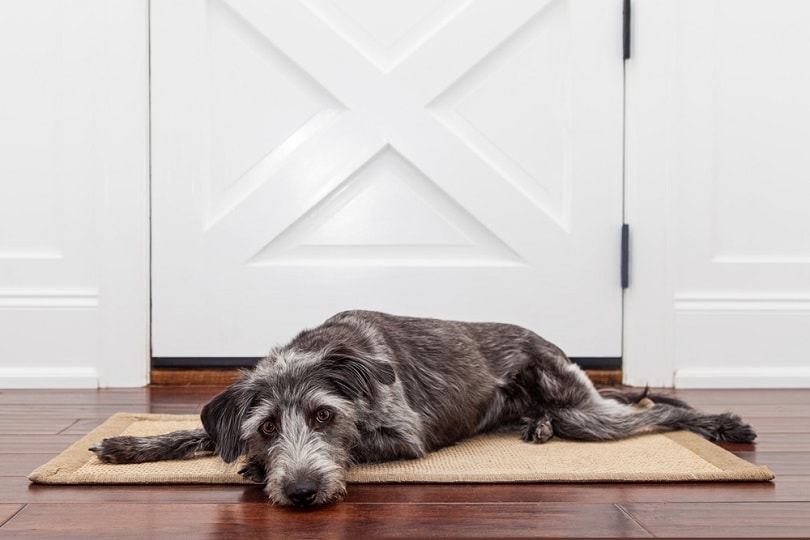
Once your dog reliably lies down in their place right away, gradually increase the time they must stay there before receiving a reward. For this step, continue to work in a distraction-free space. The goal is to work on increasing duration, the distance from the place, and ignoring distractions in separate steps.
6. Increase Distance
Continuing to work in a quiet location, begin standing further away from your dog’s place as you give the command. In this step, you’ll teach your dog to go to their place no matter where they start from. You’re also getting them used to staying in their place until release, even if you’re not right next to them.
7. Add Distractions
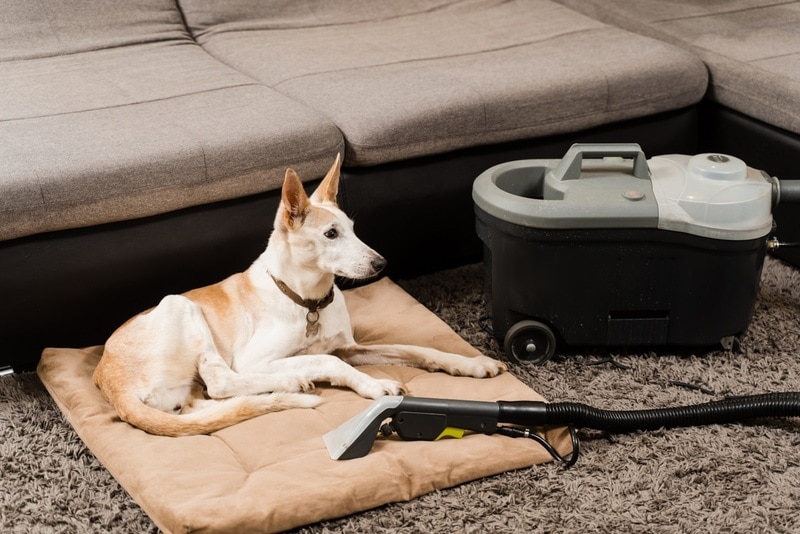
As a final step in your dog’s training, get them used to obeying your “place” command even with distractions around. You may need to decrease distance and duration briefly as your dog gets used to going to their place, even with pets, kids, and the distracting kitchen smells around. Be consistent with your training and ensure other household members are on board as well.

Why “Place” Is a Useful Command
“Place” is one of the most practical commands you can teach your dog. If you’re cooking, cleaning, or doing some other project, teaching your dog to go to their place allows you to perform your task without tripping over your pup or worrying about what they’re up to while you’re distracted.
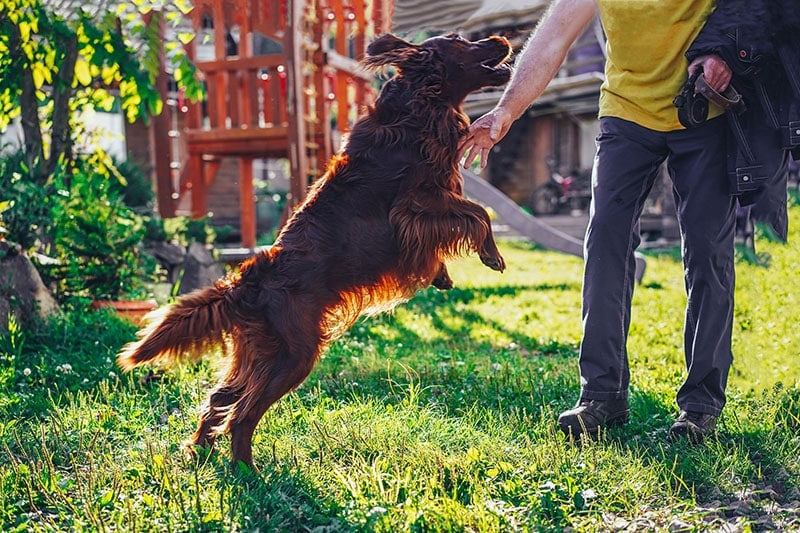
Teaching “place” is also helpful when addressing problem behaviors in dogs. For example, if your dog gets overly excited and jumps on visitors, send them to their place before you open the door.
Having a place to settle is also a good way to give your dog their own space to relax. Teach children not to bother the dog when they’re in their place. In any situation when your dog gets anxious, send them to their place to help them feel more secure.
If your dog’s place is a portable bed or sleeping mat, you can move it to different locations or even bring it to the vet or on camping trips. This can help keep your dog safe and also decrease potential anxiety.
Final Thoughts
Every dog learns at their own pace and there’s no way to predict how quickly your dog will progress through the seven steps. Be patient and make sure your dog has a firm grasp of each step before you move on to the next one. If it’s struggling with a new step, go back to the previous one and practice some more. With time and plenty of treats, your dog can learn to go to its place, and you’ll have the peace of mind of knowing they are safe as you go about your daily routine.
See also:
Sources
Featured Image Credit: Jagodka, Shutterstock
Get Hepper In Your Inbox


Pet care tips from our vets and experts, straight to your inbox.
You may opt-out at any time. View our Privacy Policy for more information.
A lifelong lover of all creatures great and small, Elizabeth got her first cat at 5 years old and at 14, she started working for her local veterinarian. After spending more than 20 years working as a veterinary nurse, Elizabeth decided to step away to become a stay-at-home parent to her daughter. Now, she is excited to share her knowledge with our pet parents. Elizabeth lives in Iowa with her family, including her two fur kids, Linnard, a husky mix and Algernon, the worldʻs most patient cat. When not writing, she enjoys reading, watching soccer, and spending time outdoors with her family.
Join the conversation
Ask a question, share your story, or send private feedback.