Hepper is reader-supported. When you buy via links on our site, we may earn an affiliate commission at no cost to you. Learn more.
10 Dog Training Hand Signals (With Tips to Teach Them)

In this article
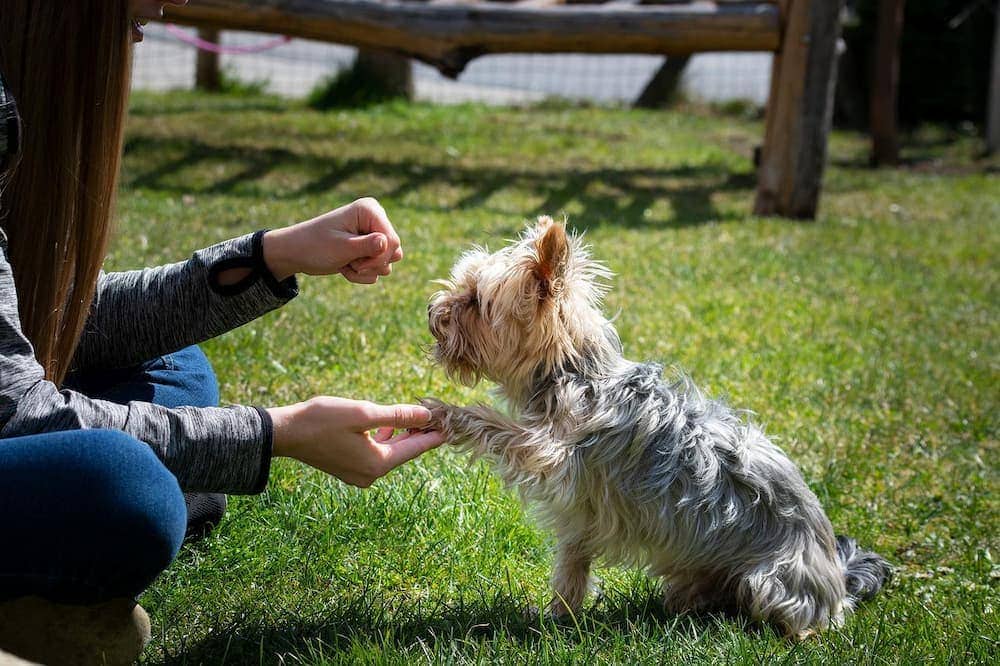
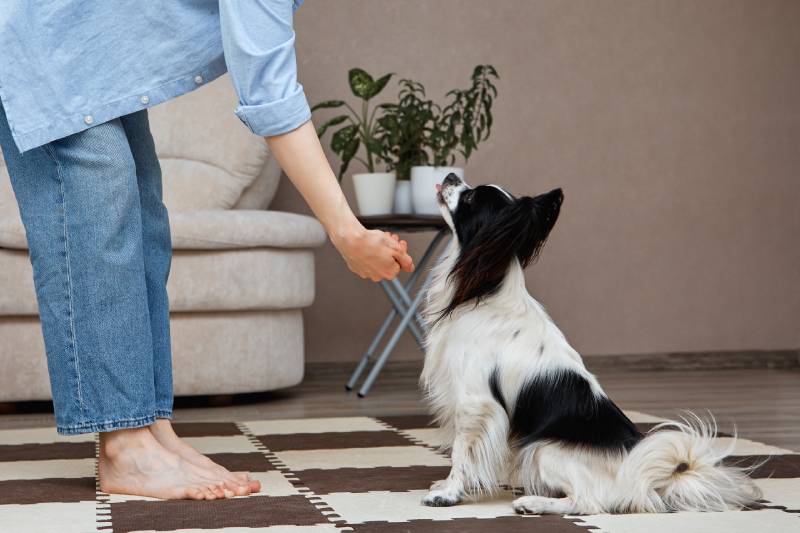
We typically tend to concentrate on vocal commands when training our dogs, but hand signals can also come in very handy, especially in noisy environments where your dog can’t hear you or when you need to communicate with a dog that’s losing its sense of hearing. Hand signal training exercises are also great for sharpening your dog’s concentration and mentally stimulating them.
If this is the first time you’ve heard of this kind of training, don’t worry. Even if your dog didn’t learn hand signals as a puppy, they can still pick them up as adults with patience, consistency, and some tasty treats for motivation. Without further ado, let’s explore some of the most common and useful hand signals to teach your dog.

The 10 Common Hand Signals for Dog Training
Tip: At first, it’s useful to combine a vocal command with the hand signal to help your dog create the association. As your dog starts to get the hang of it, you should be able to give the hand signal without the vocal command. This may take some time and multiple attempts before your dog gets the gist, so be patient.
1. Sit
It is always good to start at the very beginning, and “sit” is often one of the first commands most dogs learn. You can create your own gestures depending on what works for you and your dog, but one recommendation for the “sit” hand signal is an upwards-facing open palm.
Take a treat in your hand, and as you give the verbal command “sit”, raise your hand upwards from your chest to your shoulder to encourage your dog to back into a sit. Reward your dog.
2. Stay
Another very important command is “stay”. The hand signal for “stay” is often an open palm stretched out and facing your dog. With a treat in your hand, give the verbal command and the hand signal simultaneously, and reward your dog with the treat if they stay where they are. If not, keep practicing. Your dog will soon get the hang of it.
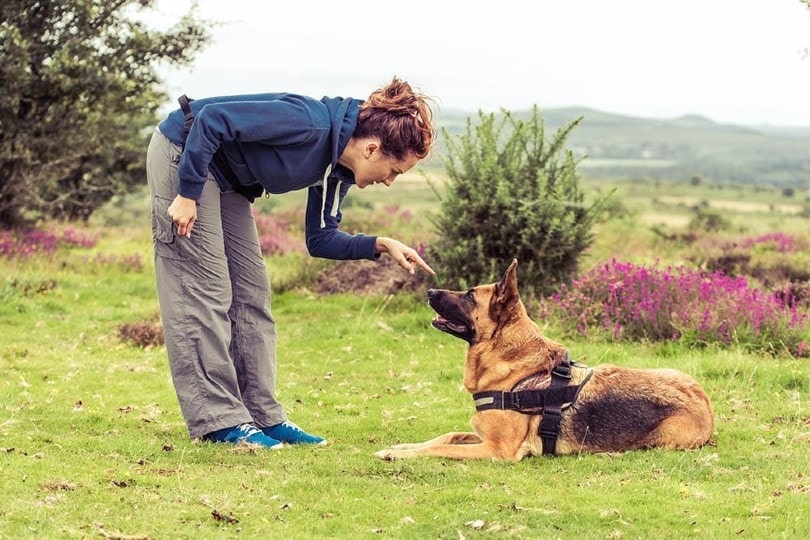
3. Watch Me
“Watch me” or a similar command like “look” is used to get your dog to focus on you when you need them to. To signal this, point your finger towards your eye from the side.
Hold a treat in your hand to help your dog focus, then give them the treat when they look at you, even if it’s only for a short time at the beginning. You can gradually build up the length of time your dog has to watch you before they get the treat.
4. Lie Down
There are many ways to signal “lie down” to your dog, but one common way is to have your hand up in front of your shoulder and lower it toward the ground. You can hold a treat in your hand to encourage your dog to follow the motion.

5. Come
This is one of the core commands every dog should learn because it helps keep them when exploring off-leash. “Come” is often signaled by bringing one hand diagonally across your chest to your shoulder on the other side as you tell your dog to come.
6. Drop It
Teaching a “drop it” or “leave it” command is very handy for situations when your dog picks up something in their mouth that could potentially be dangerous. Pointing to the ground is a simple gesture you can use for this command.

7. Roll Over
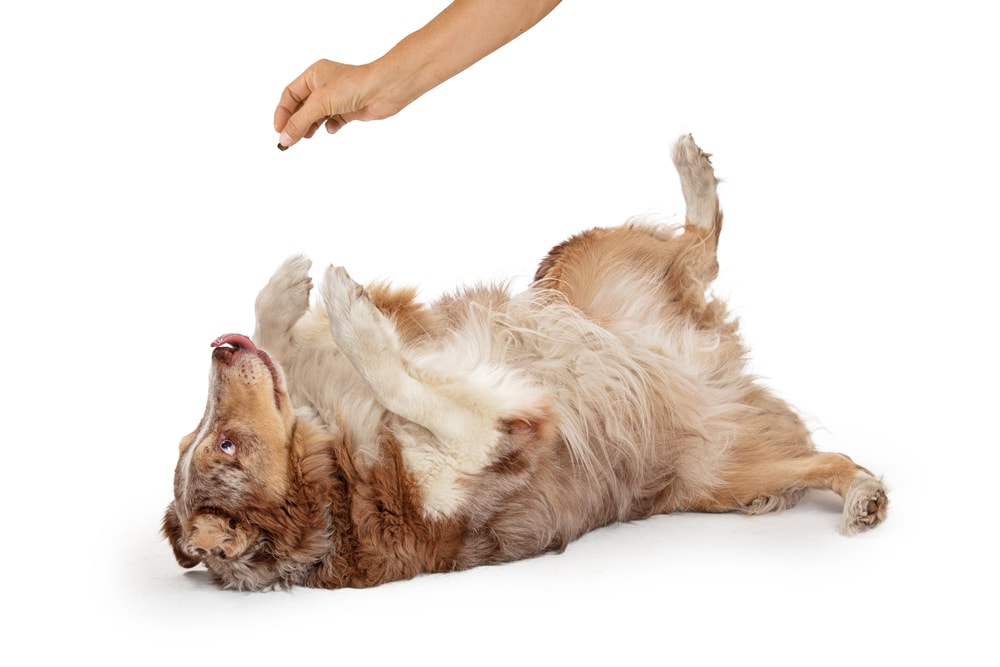
“Roll over” is a simple, fun trick that gets dog lovers everywhere swooning. If you’d like to impress your friends even more, you can teach your dog to roll over with a hand gesture. For example, you might hold your arm out in front of you with your palm facing downwards, then turn your palm upwards in a sort of semi-circular motion. This almost looks like you’re performing a magic trick!
8. Wait
To differentiate the “wait” hand signal from “stay”, which looks quite similar, try placing your open, upwards-facing palm at around waist level. Keep a bend in your arm instead of stretching it right out as you might do with “stay”.

9. Heel
We teach dogs the “heel” command to ensure they remain at our side when out walking, whether on-leash or off-leash. Tapping your hip is a nice, simple “heel” hand signal to use.
10. Fetch
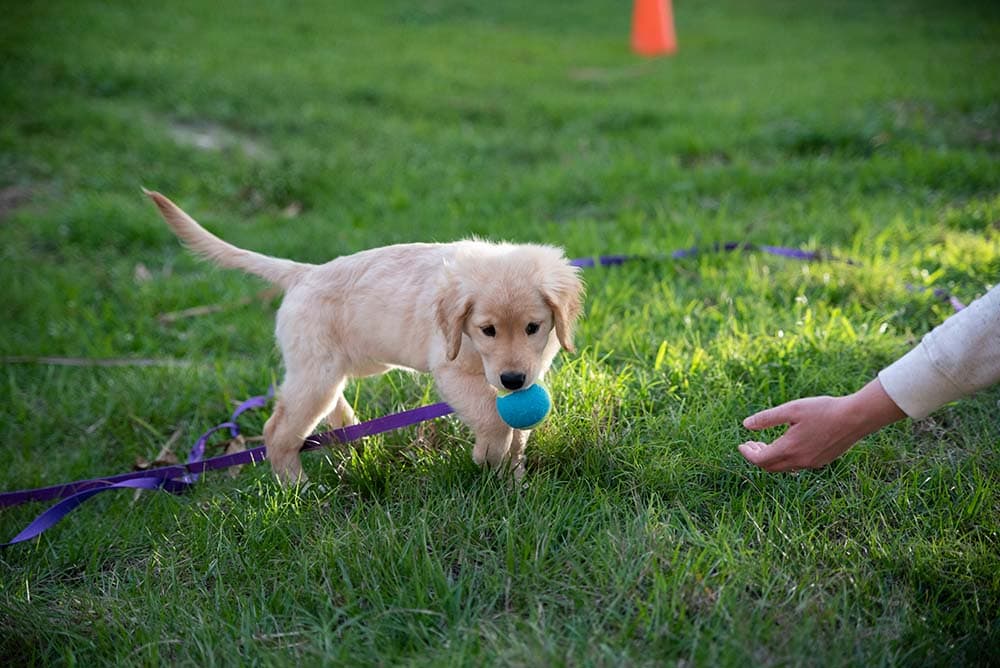
When you throw something you want your dog to fetch, you can let them know by simply pointing towards the object. When your dog has “stay” down packed, you can progress to having them stay while you throw an object, then have them fetch it by giving the “fetch” signal.
This combines two commands in one and is a good exercise for increasing your dog’s focus and self-discipline.

Extra Dog Hand Signal Training Tips
- Don’t feel limited by common hand signals—you’re free to be creative and use any hand signals you feel most comfortable with.
- Make sure there’s a clear distinction between the hand signals you teach your dog to prevent them from getting confused.
- Stick to one hand signal per training session to avoid overwhelming yourself and your dog.
- Remember to immediately mark the moment with a reward when your dog gets something right.
- Be patient with your dog—these commands can take a while to learn.
- Start training sessions in a quiet area where your dog can’t easily get distracted.
If you need help with training your dog, we suggest speaking to an online vet for tips and tricks.

Final Thoughts
We can’t underestimate how useful it can be for dogs to learn the skill of following hand signals. Even if your dog has perfect hearing now, it’s still worthwhile to have a “toolkit” of both visual and verbal cues to use in a variety of situations—especially those in which you can’t verbally give commands—and to make things easier if your dog is deaf or ever experiences hearing difficulties in the future. Good luck!
Sources
Featured Image Credit: Miachikova Natalia, Shutterstock
Get Hepper In Your Inbox


Pet care tips from our vets and experts, straight to your inbox.
You may opt-out at any time. View our Privacy Policy for more information.
Kit Copson is a freelance writer and lifelong animal lover with a strong interest in animal care. She has parented various furry beings over the years and is currently a proud cat mom of two—one skittish but adorable Domestic Shorthair and very chilled (unless hungry) Siamese and a —and dog mom of one—an adopted Bichon Poodle cross. When not writing about or spending time with pets, Kit can be found doodling in her sketchpad, reading, or more often than not, drinking tea.
Join the conversation
Ask a question, share your story, or send private feedback.