Hepper is reader-supported. When you buy via links on our site, we may earn an affiliate commission at no cost to you. Learn more.
How to Teach a Dog to Stay in 7 Simple Steps


In this article
When you bring home a new dog, you are probably anxious to get started on training. It is important to get training going as soon as possible, whether you have a new puppy or an adult dog. The “stay” command is an important command that can prove very useful in different situations. It also helps your dog to master self-control.
If you are wondering how to teach your dog the “stay” command, we’ve got you covered. In this article, we will go over the 7 different steps on how to teach a dog to stay so that you will have this mastered in no time.

The 7 Simple Steps to Teach a Dog to Stay
1. Find a Quiet Spot
You are going to need to capture your dog’s attention and keep them focused on your training, so you need to find a quiet space that is free from distractions. This is especially important when you first begin teaching the command. Whether it be sound, smells, or other people or animals moving about, these can shift their focus from what you are trying to accomplish. You will want some space also, so it’s best to avoid small, confined spaces if possible.
If you need help with training your dog, we suggest speaking with a vet online.
2. Ask Your Dog to “Sit”
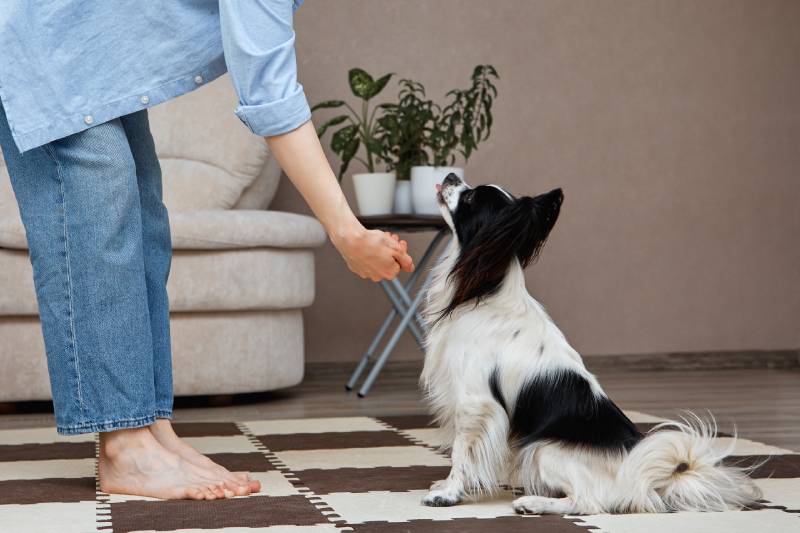
First and foremost, you need to implement the “sit” command. If you have not yet mastered “sit,” it is highly recommended that you first teach them this command because it is nearly impossible to teach a dog to stay if they are not in the sitting position. If your dog does know the command, ask them to “sit” but do not offer a reward immediately. Wait a few seconds as they are sitting and then reward them with enthusiasm, praise, and training treats, or whichever reward gets the best response from your dog.

3. Repeat the Process but Increase the Pause
Now that they’ve successfully “sit” and waited through a few seconds of pause, it is time to repeat this process several times but increase the pause between the “sit” command and the reward. Start by delaying your reward by 3 to 5 seconds longer each time until you have successfully managed a 15-second pause.
4. Introduce the Word “Stay”
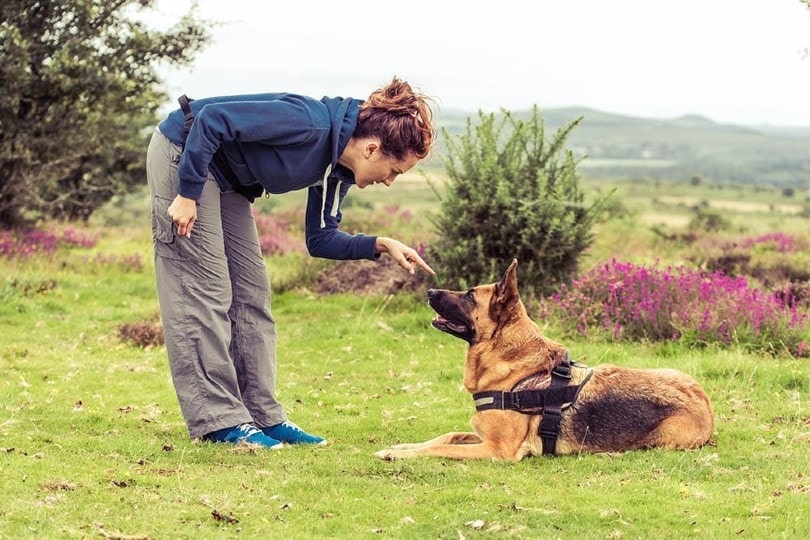
Now that you have them pausing in the “sit” command for at least 15 seconds, you can introduce the word “stay.” Allow your dog to release from the sitting position and when you are ready, ask them to “sit” again. Once they are sitting say “stay” in a very clear and assertive tone, wait through the 15-second pause and then reward them.
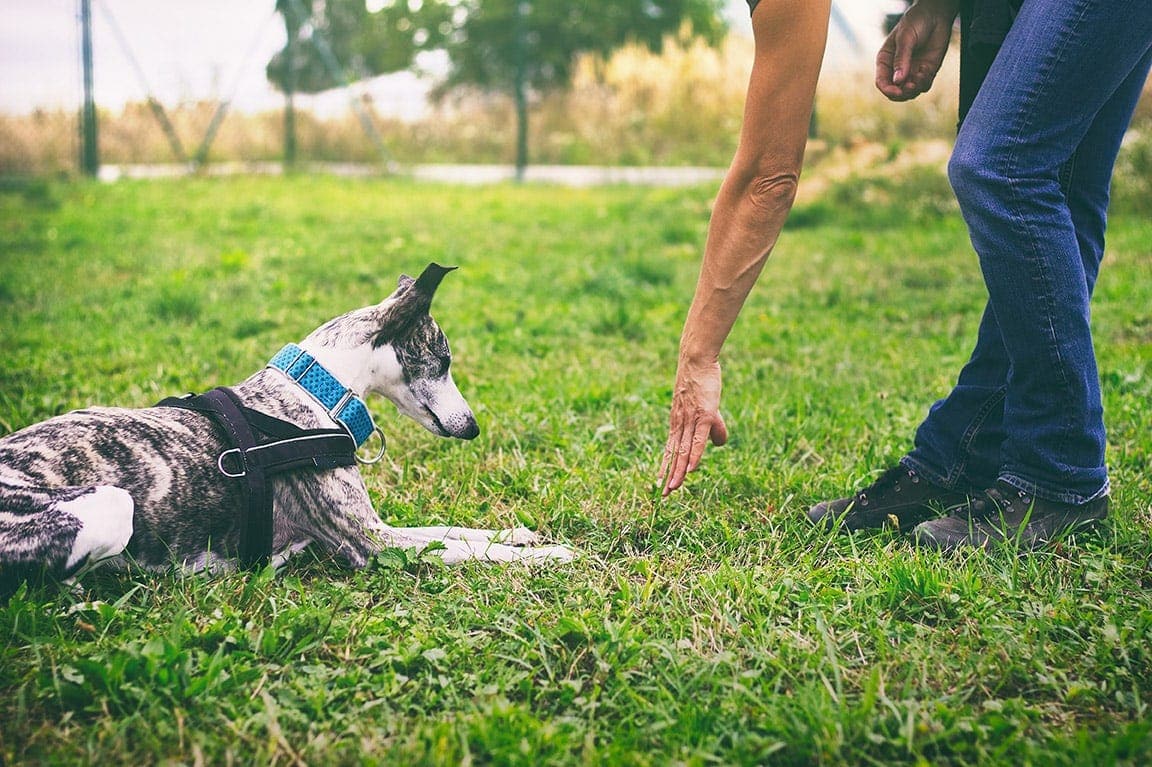
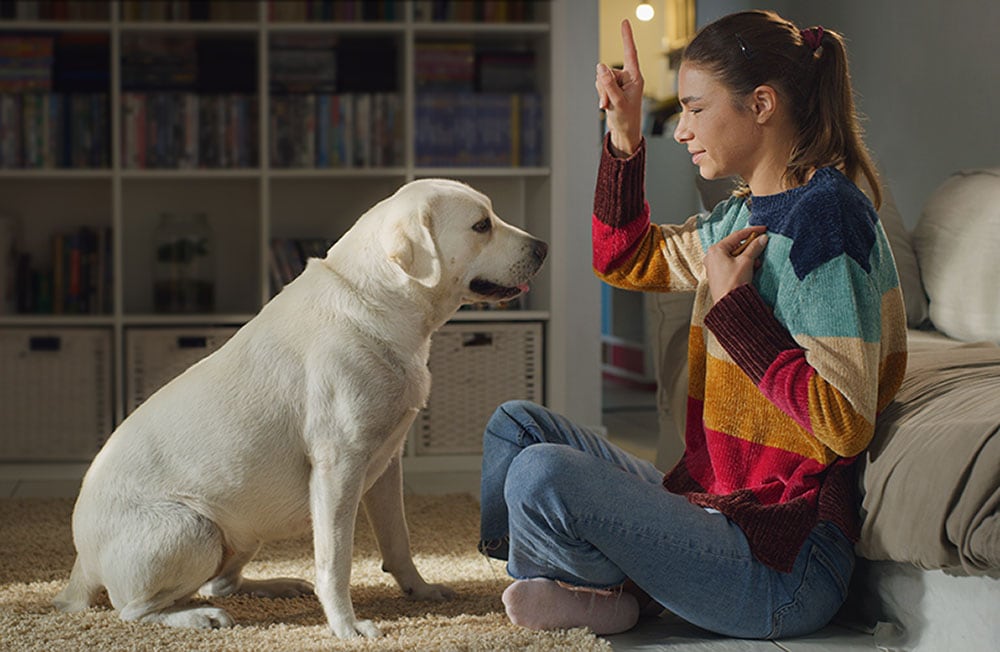
Along with command, you can use a hand signal by holding your palm out in front of you, like one would do while directing traffic to stop. You want to be able to put your hand back down without your dog breaking the stay.
5. Introduce a Release Command
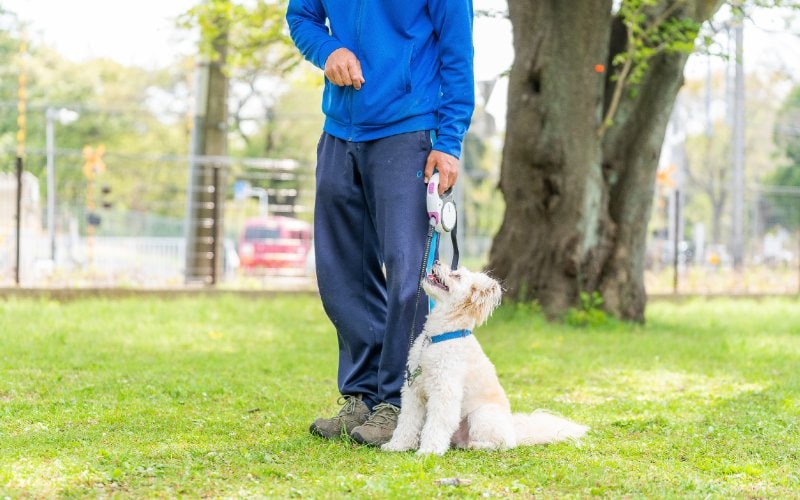
Now that you have introduced the word “stay,” it is time to start using a release command. This can be either a word or a hand signal. In many cases, trainers or owners use these common words as a release command: “ok,” “break,” “free,” or “release.” If you choose to implement a hand signal, you can choose the one that works for you, some examples are putting your hand out as if to invite them over while using their verbal release command, or even putting your hands together and then pulling them apart as if to break the command.
6. Repeat the Process Using “Stay” and the Release Command
Now that your dog has been introduced to the “stay” command and you have implemented your release command into the mix, repeat the process several times while increasing how long your dog is in the “stay” position. Reward them for their obedience each time. Don't overdo it, as you want to prevent them from becoming bored. With training, you want to keep it positive and exciting.
7. Add Some Challenge
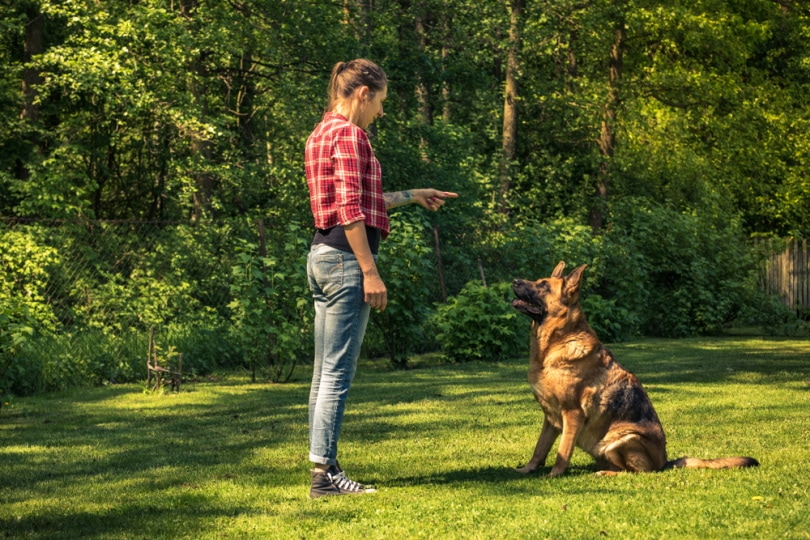
Once your dog has it down, it’s time to challenge them a bit. This is a command that is not only used for obedience but for their safety, too. Your ultimate goal is to keep them in this command for the amount of time you desire and have them obedient to the point they await your release command. Start adding distance between you and your dog while they are in the “stay” command.
Eventually, you want to be able to turn around and walk away as they stay firm in their position. This takes consistency, time, and practice. Start using the “stay” command in everyday life rather than only during obedience sessions to keep it fully implemented into their routine.

The Importance of Positive Reinforcement
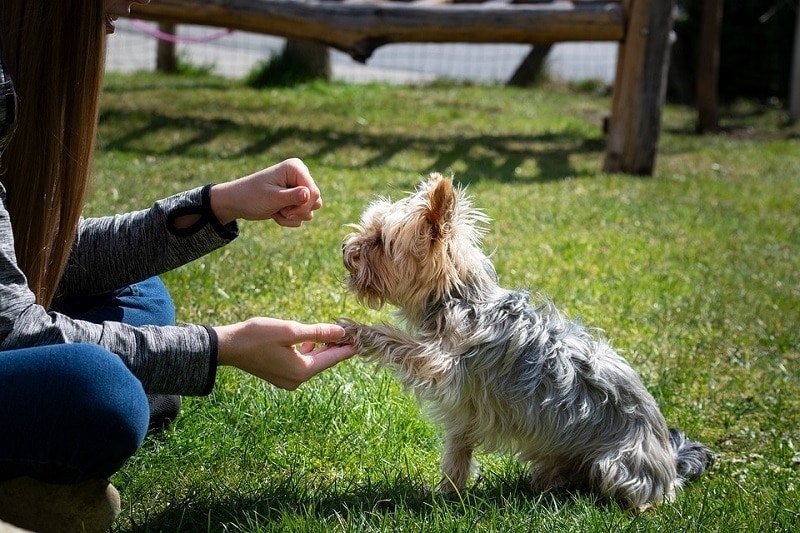
Positive reinforcement training uses a reward when your dog obeys your commands. Reward-based, positive reinforcement training is the most powerful and successful tool in your dog training arsenal because the reward will make your dog more likely to repeat the behavior.
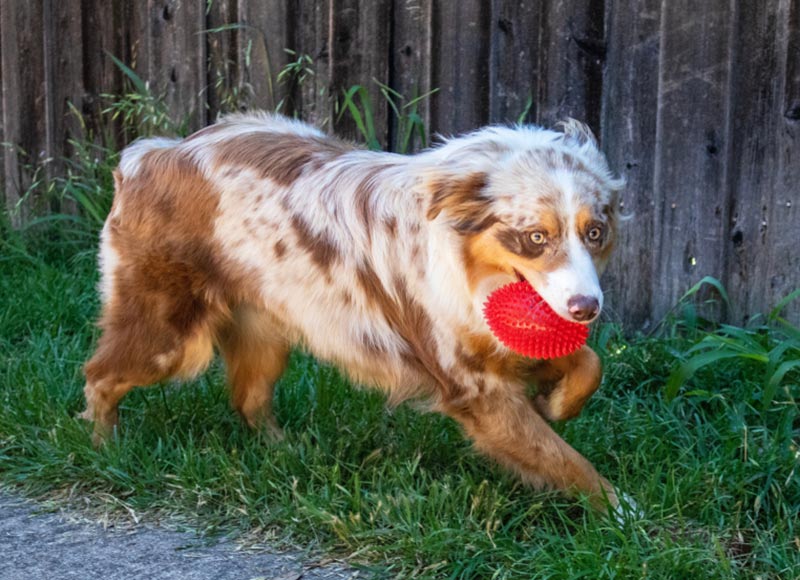
The type of reward you offer is up to you and can be unique to individual dogs. Most of the time, training treats are a great way to go, along with praise and a lot of enthusiasm. If you don’t want to use treats, a lot of praise and affection can go a long way. Some dogs even thrive by offering a ball or another toy for a quick play session as a reward.

Things to Avoid
Learning how to teach a dog certain commands requires lots of patience and consistency. We have gone over some things to do, and now let’s go over some things to avoid during the training process:
1. Don’t Get Frustrated
If you find yourself growing frustrated during the process, it’s time to walk away and come back later. You want to be able to give that positive reinforcement and once you have reached the point of frustration, your dog will pick up on that energy during your session so rather than continue, it’s time to wrap things up. Remember, patience is key during training and if you just don’t have it, don’t try to force it.
2. Don’t Make it Tedious
You want to keep your training as exciting as possible without boring everyone involved. If you keep repeating the same process over and over for extended periods, the training will lose its luster. Try to keep sessions 15 minutes or less and add some variety to the training.
3. Don’t Abuse the Command
The stay command is meant to keep your dog in the place to either keep out of harm’s way or because it is necessary for any given situation. While you want to be able to keep them in the stay command until you release them, you don’t want to keep them in it for long periods, either. For instance, don’t place them in a “stay” and leave the room for a long period or even leave the house for a little while.
4. Don’t Be Inconsistent
One of the key pieces of dog training is consistency. If you are inconsistent, you cannot expect your dog to be well versed in these commands. If you do not utilize the commands in everyday life or take aside time regularly for training, you can lose progress. Keep your training regime as routine and exciting as possible and don’t forget to implement these scenarios into normal life.
5. Don’t Expect Your Dog to Be Like Another
If this isn’t your first rodeo and you have already trained other dogs in the past, you mustn't expect the dog you are actively training to be anything like another dog. Each dog is an individual and you will notice them not just during training, but in everyday life. Some dogs will catch on quickly, others may take some extra time and patience. Do not set expectations for your dog before you begin training. Remember they are an individual and you will have to tailor your training to suit them.
Frequently Asked Questions
Can I Use Another Command in Place of “Stay?”
Yes, you can use any word that you prefer in place of the “stay” command. You do want to ensure that you use it consistently, though. Never use more than one word for each command, this can cause way too much confusion and inhibit the training process. It’s also a good idea to use a short, one-syllable word for the command.
Can I Teach a Senior Dog the “Stay” Command?
You have probably heard the saying “you can’t teach an old dog new tricks,” but that’s not true. While it may be easier to begin training in early puppyhood, you can still teach adult and even senior dogs new commands and tricks, including “stay.”. In some cases, it may be easier to teach an older dog new commands because they are less likely to get distracted compared to a high-energy puppy.
My Training Isn’t Working, What Do I Do?
If you have been hard at work trying to train your dog and they don’t seem to be catching on, you may want to reflect on your technique and whether your training space is quiet enough to prevent outside distractions.
If you are meeting all the necessary criteria by having a quiet space, using consistency, practicing positive reinforcement, and not confusing commands, there is nothing wrong with reaching out for help.
Professional dog trainers exist for a reason. Sometimes dog owners have trouble with training and can benefit from professional help. It’s always a good idea to speak to your veterinarian to rule out any medical or behavioral issues that could be causing a hiccup in training.
If obtaining a professional trainer is necessary, they can help evaluate your dog and your training methods and assist you accordingly. A good trainer will not only help train your dog, but they will also help train you, too. The best way to ensure long-term success is by working with everyone in the household to reach a common goal.
Conclusion
The “stay” command is undoubtedly one of the most widely used and popular commands that dog owners begin teaching right from the get-go. This command is not just convenient, but necessary and can help ensure your dog’s safety in certain scenarios. As long as you are consistent, utilize positive reinforcement, and follow the above steps, your dog will have the “stay” command mastered before you know it. Of course, if you have difficulty, you can always speak to your veterinarian or a professional dog trainer for further assistance.
See also:
Featured Image Credit: Steshka Willems, Pexels
Get Hepper In Your Inbox


Pet care tips from our vets and experts, straight to your inbox.
You may opt-out at any time. View our Privacy Policy for more information.
Lindsay is a wife, mother, nature enthusiast, animal lover, and business major. She was born and raised in the United States and now lives in Tulsa, Oklahoma. She shares her home with a German Shepherd, several snakes, tarantulas, and a couple of rescue cats.
Lindsay and her husband enjoy traveling the US with their children and photographing wildlife. Lindsey is passionate about proper animal care and education around it!
Join the conversation
Ask a question, share your story, or send private feedback.