Hepper is reader-supported. When you buy via links on our site, we may earn an affiliate commission at no cost to you. Learn more.
How to Train a Great Dane: 8 Expert Tips & Advice
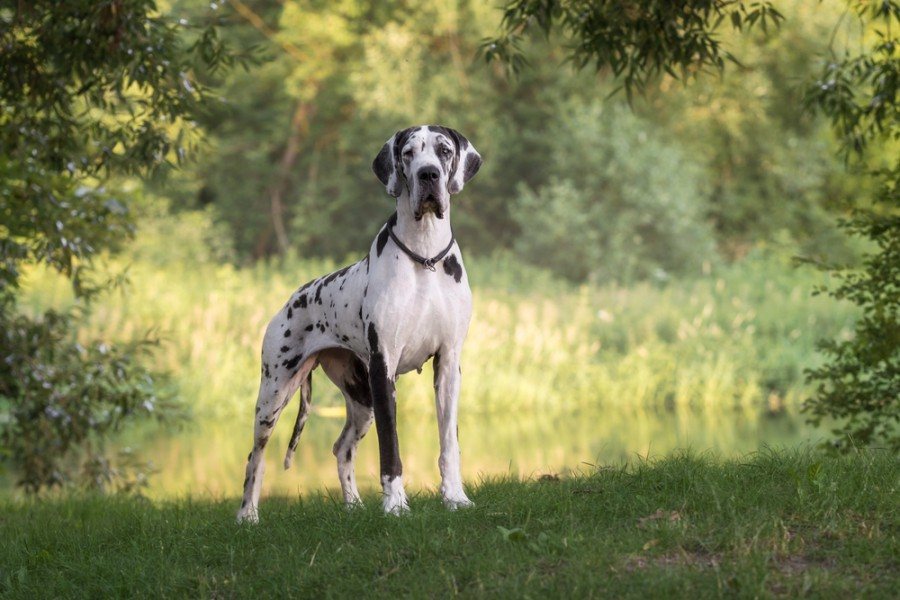
If you’re a new Great Dane parent, you’re in luck. Not only are Great Danes generally gentle and patient companion dogs, but they’re also super smart and responsive to training. That said, training any dog breed comes with its own challenges and it’s not always a straightforward process, especially if you’re new to dog parenting and aren’t sure how best to approach it.
To add to this, every dog is unique and will learn at their own pace—Great Danes are no different. Socializing and training these dogs is more important than ever due to their imposing size and how powerful they are. Though not typically aggressive dogs, failing to train a Great Dane—as with failing to train any breed—could lead to some serious issues.
For this reason, we’ve rounded up and compiled this list of the best training tips in the hopes that you can feel more confident and in control when it comes to training your Great Dane.

The 8 Tips on How to Train a Great Dane
1. Socialize Early
Between the ages of 8 and 16 weeks, it’s important to start getting your Great Dane socialized as this will set the foundation for how they interact with and view people and other animals later on.
It’s crucial that your Great Dane puppy has plenty of positive interactions with people and other dogs/cats early on—just make sure your puppy is fully vaccinated before taking them to certain public places like dog parks and other busy areas. If your puppy isn’t yet fully vaccinated, perhaps invite friends and fully vaccinated, healthy dogs to your home to interact with your puppy.
If you’re unsure of what your puppy can and can’t do between shots, please ask your vet for guidance.
2. Use Positive Reinforcement
Whether you’re training your Great Dane to spend time in their crate, follow basic commands, walk on a leash, or use the bathroom outdoors, knowing what motivates them can make all the difference.
Some dogs are motivated by food, others by toys, and others by attention and praise. As you get to know your Great Dane, you’ll pick up on what motivates them most and use this to your advantage.
For example, if your Great Dane is food-motivated, you could try placing treats in different areas of their crate to get them to go inside and explore or rewarding them with a tasty morsel when they pee outside. If they’re toy-motivated, you could let them carry their favorite toy on walks to focus their attention on something other than barking at dogs or other people.
In short, creating positive associations with what you’re trying to train your Great Dane to do can’t be underestimated and should be a part of every dog parent’s “training toolbox”. Offer rewards quickly after your Great Dane has accomplished something to avoid weakening the positive association.
3. Keep Things Short and Sweet
Just like us, a dog’s attention span only lasts so long. To prevent your Great Dane from getting bored, keep training sessions to no more than 15 minutes at a time. During these sessions, focus only on one aspect of training, for example, teaching your Great Dane to “stay”. Avoid overwhelming them with a load of different commands at once.
4. Use a Harness for Leash Training
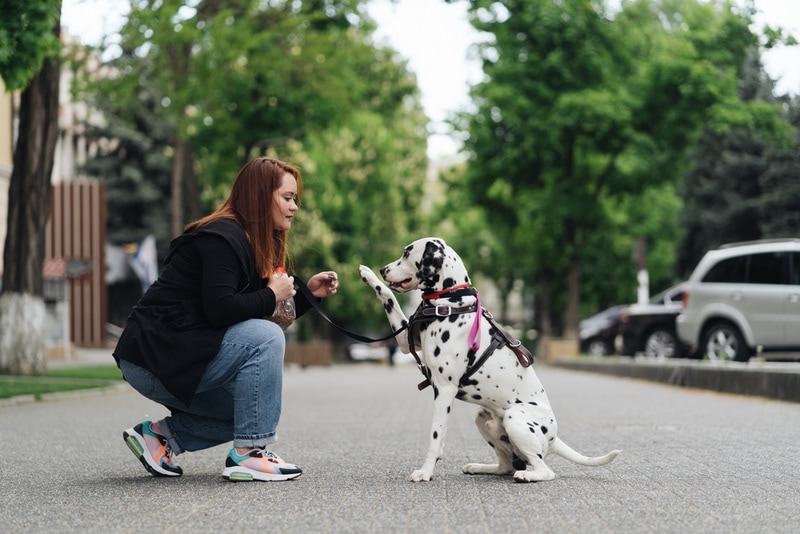
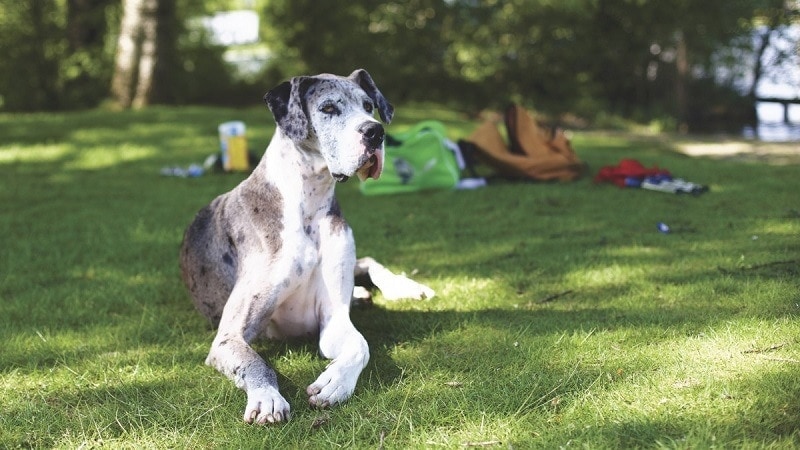
Russel Hartstein, certified fear-free trainer, recommends using a harness that attaches at the front, as these help your Great Dane maintain proper gait.
Hartstein also recommends walking your Great Dane at dawn and dusk (this minimizes distractions) and making sure your Great Dane is mentally stimulated before you go for a walk to put them in a more relaxed state of mind. One idea is to give them an obstacle-based toy or puzzle to figure out before heading out the door.
5. Go to Puppy Classes
It’s a great idea to enroll your Great Dane in puppy obedience classes if possible. This helps with both their training and socialization as they’ll get to interact with a variety of new dogs and people. You’ll also pick up some tips for continuing your Great Dane’s training at home.
6. Be Consistent
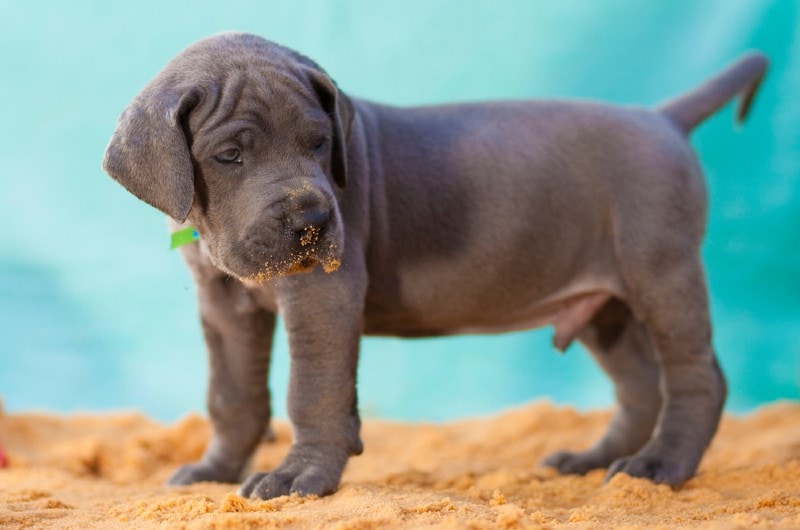
It’s unrealistic to expect your Great Dane to pick things up overnight. Every dog learns at their own pace and, while some will get the hang of things quickly, it may take months for some. Try not to be disheartened—instead, be consistent and keep on practicing and working on what you’re trying to instill.
This is important even if your Great Dane learns the ropes quickly as it’s best to consolidate what they’ve learned and stop them slipping back into old habits. Continue practicing all the way up to when your Great Dane is an adult (between 18 and 24 months old)—it’ll be worth the effort!
7. Don’t Be Harsh
Punishments like yanking on your dog’s leash when they pull or smacking them corrode the bond between you and make your Great Dane fear you instead of respect you. Though it can be frustrating when you feel your Great Dane isn’t “getting it”, you should never resort to these kinds of punishments—they’re damaging and, not to mention, they don’t teach a dog anything.
Instead, it’s best to use positive reinforcement (treats, praise, encouragement, etc.) and redirection strategies.
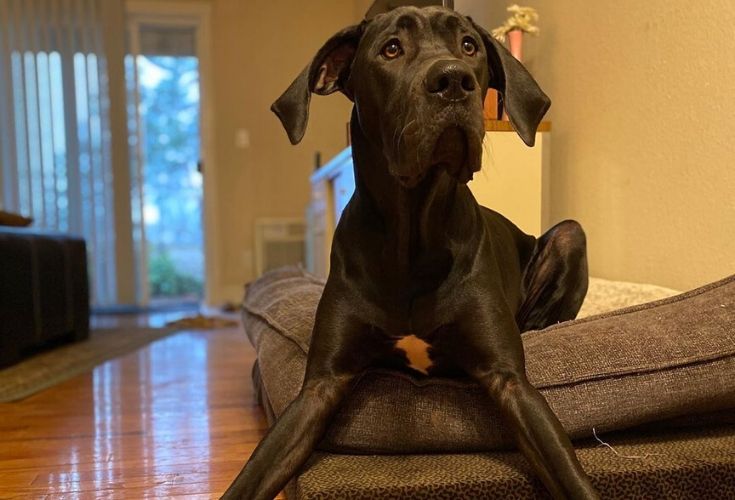
8. Redirect Undesirable Behaviors
For example, if your Great Dane has taken to chewing on the furniture, redirect this behavior by giving them some fun chew toys instead. If you use verbal cues like “ah-ah!” to stop your Great Dane from doing something, make sure you follow it up with redirection.
For example, if you see your Great Dane chewing at a chair leg, react quickly with your verbal cue, then refocus your Great Dane’s attention on something else like a chew toy. Praise them for chewing on the toy instead of the furniture. If you don’t redirect the behavior, your verbal cues will quickly lose their effect.

Frequently Asked Questions
Are Great Danes Easy to Train?
Great Danes are generally considered to be trainable dogs because of their people-loving, eager-to-please personalities. Training is a great opportunity to bond with your Great Dane and to earn their respect. Great Danes need their leader to be firm, consistent, calm, and patient to thrive in the training department.
How Long Does It Take to Train a Great Dane?
This depends on the individual dog, but it can take up to 6 months to train a Great Dane.
When Should I Start Training My Great Dane?
You can start training your Great Dane as soon as you bring them home—the earlier you get started with socializing them, the better. Puppies can leave their mothers when they’re around 8 weeks old.

Conclusion
As with any dog breed, the keys to training your Great Dane are consistency, patience, and remaining unflappable. Though training is conducted in the early stages of your Great Dane’s life, it’s important to reinforce what they’ve learned all the way into adulthood for the best possible results. If you’re having issues training your Great Dane, consider consulting a dog behaviorist for advice.
Sources
https://greatdanecare.com/7-tricks-to-help-train-your-great-dane-faster/
https://wagwalking.com/training/obedience-train-a-great-dane
https://www.akc.org/expert-advice/puppy-information/how-to-train-a-great-dane-puppy/
https://www.rspca.org.uk/adviceandwelfare/pets/dogs/training
https://www.pdsa.org.uk/what-we-do/blog/vet-qa-new-puppy-questions
https://vcahospitals.com/know-your-pet/why-punishment-should-be-avoided
https://www.petmd.com/dog/training/when-start-training-puppy
Featured Image Credit: Al_Er, Shutterstock
Get Hepper In Your Inbox


Pet care tips from our vets and experts, straight to your inbox.
You may opt-out at any time. View our Privacy Policy for more information.
Kit Copson is a freelance writer and lifelong animal lover with a strong interest in animal care. She has parented various furry beings over the years and is currently a proud cat mom of two—one skittish but adorable Domestic Shorthair and very chilled (unless hungry) Siamese and a —and dog mom of one—an adopted Bichon Poodle cross. When not writing about or spending time with pets, Kit can be found doodling in her sketchpad, reading, or more often than not, drinking tea.
Join the conversation
Ask a question, share your story, or send private feedback.