Hepper is reader-supported. When you buy via links on our site, we may earn an affiliate commission at no cost to you. Learn more.
How to Treat a Bleeding Dog: Our Vet Explains First Aid & Emergency Care


In this article
In case of an accident or an emergency, the speed with which you react and the decisions that you make can be decisive in saving your dog's life. Your dog always needs to be taken to the vet afterward, but the first few post-incident minutes can be critical.
In most cases, the first instinct is to panic because you don't know what to do and how to approach the situation. It is important to be calm and have self control because time is vital, and panic is not in your or your dog's favor in case of bleeding, especially for severe hemorrhages. For this reason, you should know how to give first aid to your bleeding dog.

The 5 First Aid Steps for Bleeding in Dogs
The amount of blood that your dog will lose depends on the depth and location of the wound. The heaviest bleeding can come from a seemingly insignificant but deep wound.
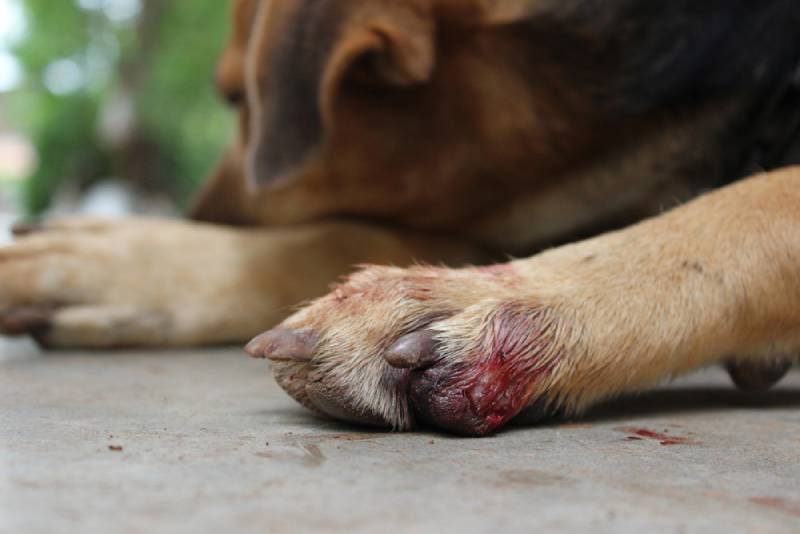
Dangerous cuts include those on the tongue, paws, or muscles. They can bleed profusely and typically require emergency surgery. Here are the steps that you need to follow to give first aid to your dog in the case of bleeding.
1. Make Sure You Don’t Get Bitten
Frightened dogs can bite. Even if your dog is normally friendly, when they are scared and in pain, they can change their behavior (becoming aggressive) to defend themselves. To make sure you don't get bitten by your beloved canine, try to interpret the signals that they give you. For example, they may lick their muzzles, growl, show their fangs, etc.
If you cannot get close to your dog to stop the bleeding, take them to the vet immediately. The vet will probably sedate them first to calm them down, then they will stop the bleeding.
2. Clean the Area
If you can get close to your dog, try to assess the severity of the bleeding, and then clean the area. Use salt water (1 teaspoon of salt per 1/2 liter of water) or commercial sodium chloride, 0.9% (saline). These solutions will flush the wound and remove any debris that may interfere with healing. However, in some cases, there is a risk of dislodging the blood clot that has already formed, so don’t flush a wound that has stopped bleeding.
If your dog was bitten by another animal, wash the area with warm water and a small amount of (antibacterial) soap as soon as possible. Be sure to towel-dry it; never use cotton wool because it leaves fibers in the wound.
3. Stop the Bleeding
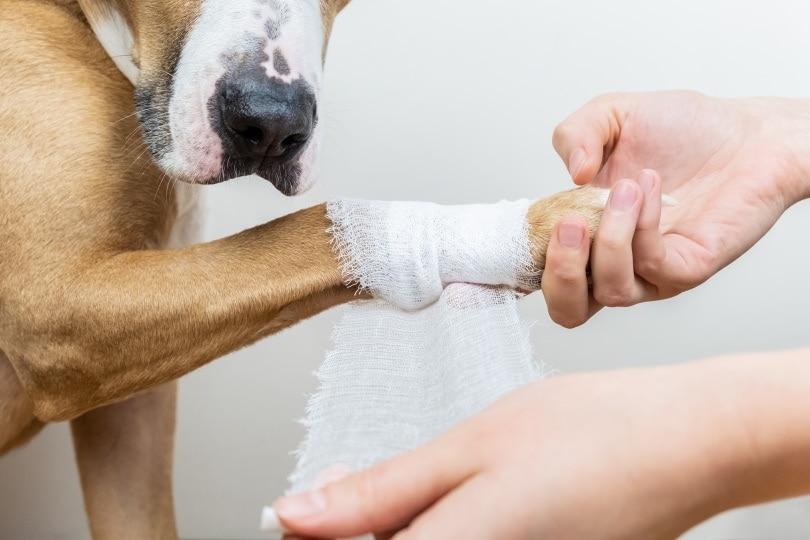
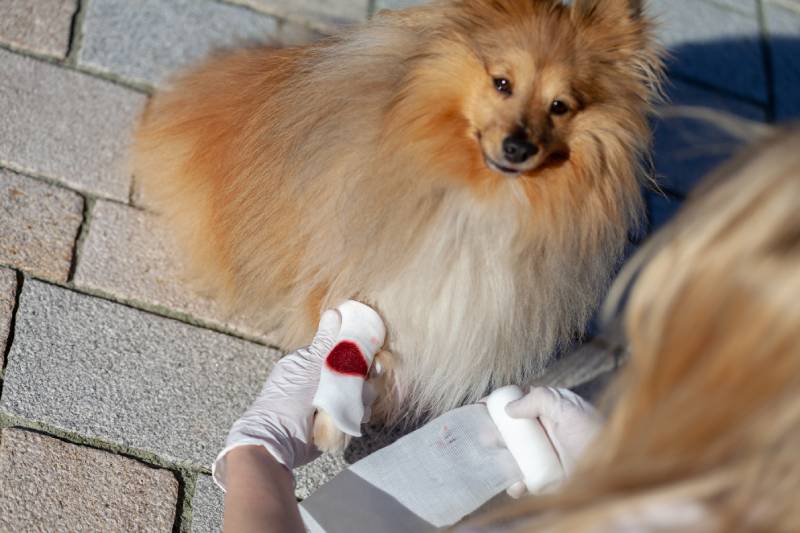
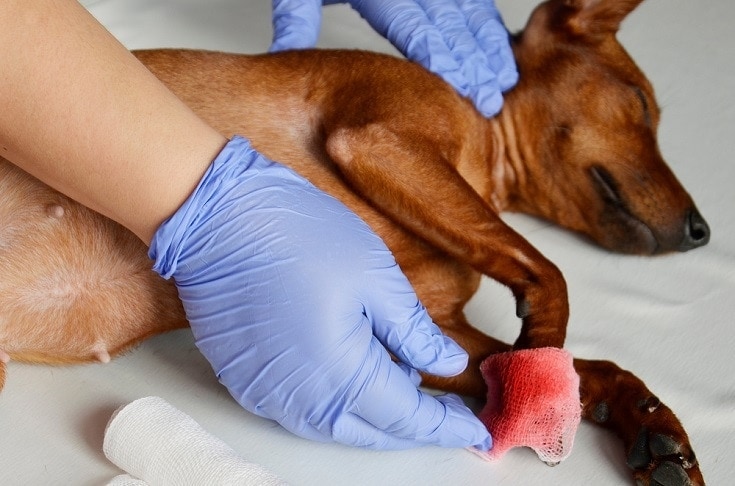
The actual stopping of the bleeding will depend on the affected area. You will need to apply pressure on the wound with a clean cloth and press firmly for a few minutes. If possible, keep a bandage on until you reach the vet. If the bleeding is at the level of the limbs, wrap the leg in gauze or a clean piece of material (like a clean t-shirt), and keep constant pressure for 5–10 minutes, then check if your dog's bleeding has stopped. If your dog is still bleeding, bandage them as tightly as possible. Place a sterile gauze over the wound, then bandage it tightly.
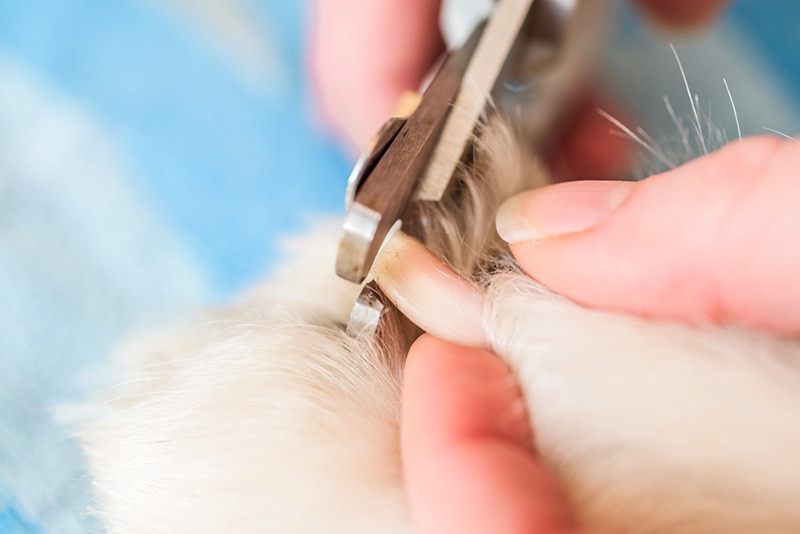
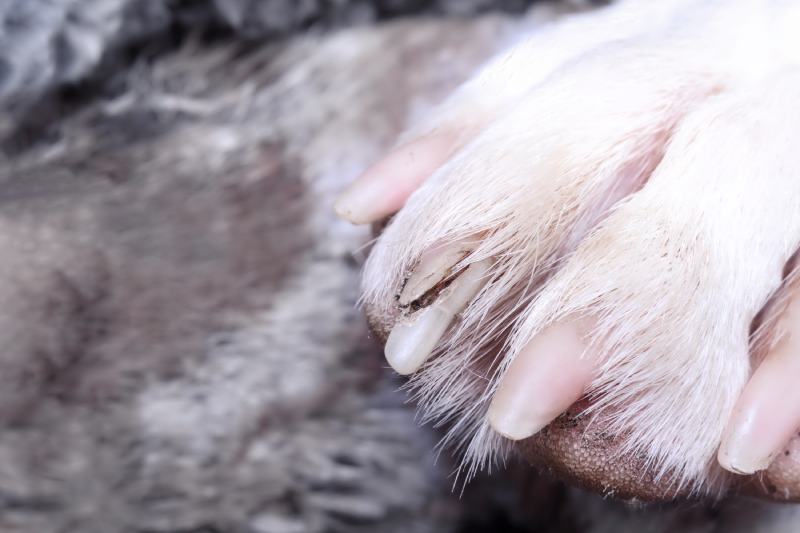
If your dog's nail is bleeding, wrap it in sterile compresses or a clean cloth, and apply pressure. Keep the paw bandaged until you arrive at the vet with your dog.
If a foreign object (glass shard, nail, etc.) has entered your dog's skin superficially, you can use tweezers to remove it if it’s sticking out. Flushing the skin with saline will help remove small particles before you continue to apply pressure.
4. Keep Your Dog Warm (In Case They Lose a Large Amount of Blood)
Try to keep your dog warm. Their temperature may drop if there’s massive bleeding. Wrap your dog with a blanket and put them in a warm room.
5. Transport Your Dog to the Vet
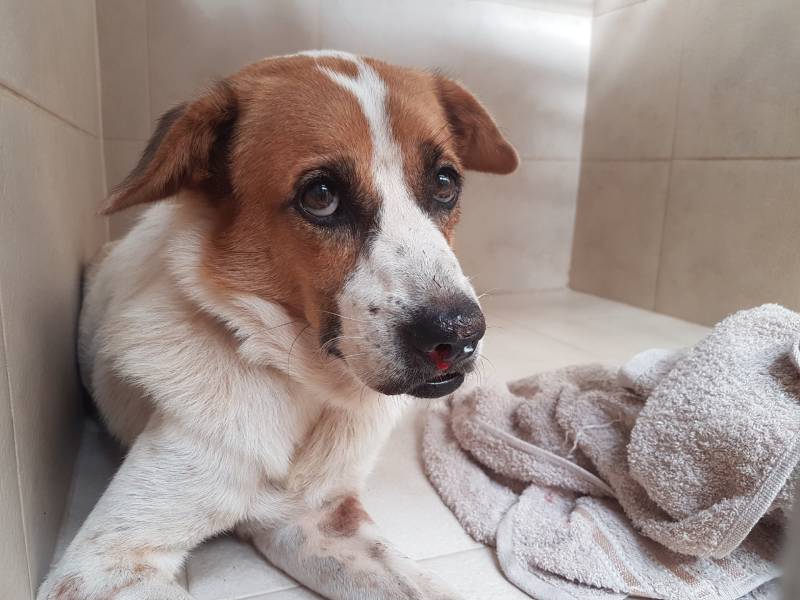
You always need to take your dog to the vet if they are bleeding, but certain scenarios are especially dangerous:
- Your dog must be taken to the vet as soon as possible in case of massive bleeding.
- If your dog has foreign objects in the skin (splinters, glass shards, etc.), it is recommended to go to the vet immediately to remove the objects and stop the bleeding.
- If the muscles are torn, the bandage may prove useless. In this case, you will have to wrap your dog in a clean sheet to prevent contaminating the wound. Transport your pet to the vet as soon as possible.
- Go to the vet immediately if the wound becomes infected or comes from a dog bite.
If the bleeding is superficial and you manage to stop it, you can call your veterinarian to check if a visit is needed.

External Bleeding vs. Internal Bleeding
External bleeding is quite easy to recognize and detect. If the skin is damaged or injured as a result of tissue tears, a puncture, or an abrasion, bleeding occurs.
Internal bleeding occurs when a damaged organ, artery, or vein enables the blood to drain from the circulatory system, collecting inside your dog's body. The amount of bleeding depends on the degree of damage to the organ and the blood vessels. Internal bleeding can only be visible externally if the animal loses a large amount of blood. Clinical signs of internal bleeding include:
- Pale mucous membranes
- Weakness
- Cold paws, ears, and tail
- Distended abdomen
- Coughing blood
- Heavy breathing
- Rapid heart rate Panting
- Progressive weakness
- Painful abdomen
- Sudden collapse
Arterial Bleeding vs. Venous Bleeding
Your dog’s blood color can help you identify what type of bleeding they have. Depending on the damaged blood vessel, your dog's bleeding can be:
- Arterial: The blood is bright red and frothy and flows with pressure.
- Venous: The blood has a burgundy/dark color and flows slowly.
If your dog has arterial bleeding, you must apply pressure to the wound immediately to stop it and then try to get to your vet as soon as possible. Otherwise, your pet can lose a large amount of blood in a short time, and they can go into shock. Arterial bleeding can happen as a result of deep wounds.
In the case of venous bleeding, it is normally easier to control than arterial bleeding and requires applying pressure to the wound.

Conclusion
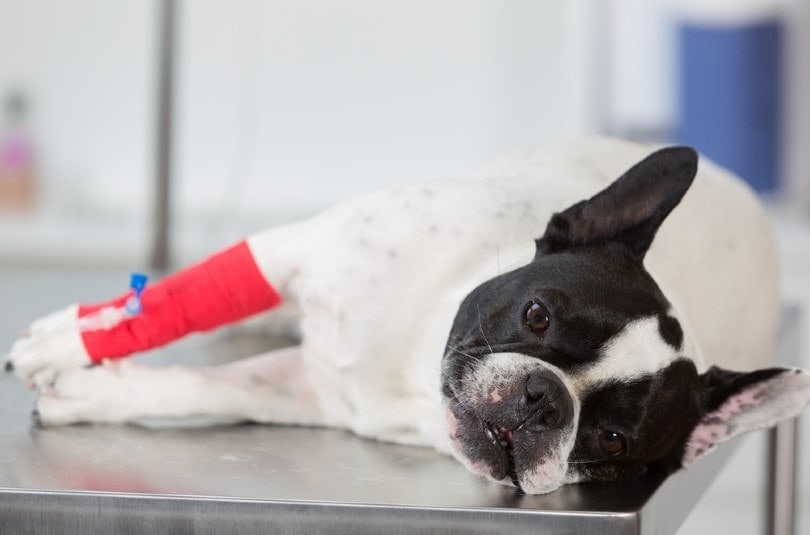
If your dog is bleeding, it is not something to ignore. Sometimes, bleeding that seems minor and unimportant can ultimately be devastating. If your dog is bleeding, first be careful not to get bitten, as they may be stressed or in pain and may change their behavior. Clean the area with warm water and soap or a saline solution. If you don't have water at hand, apply pressure to the wound as soon as possible to stop the bleeding. If your dog's bleeding does not stop, apply a sterile compress to the wound and bandage it tightly. Always take your dog to the vet, whether the bleeding is minor or severe.
See also:
Sources
Featured Image Credit: Nehris, Shutterstock
Get Hepper In Your Inbox


Pet care tips from our vets and experts, straight to your inbox.
You may opt-out at any time. View our Privacy Policy for more information.
Marta has been a veterinarian for over sixteen years working across the UK and Spain and as a remote veterinary consultant. She has wide experience in small animal internal medicine and surgery with a soft spot for cats.
Her main fields of interest are ophthalmology and critical care medicine enjoying every single aspect of animal’s care, and she is a member of the Royal College of Veterinary Surgeons. Marta enjoys sharing the most helpful information with pet parents across the world about every aspect of their life with their beloved ones.
As one of our in-house veterinarians, Marta enjoys sharing the most helpful information with pet parents across the world about every aspect of their life with their beloved ones. She loves knowing that she can support our readers and communicate about any medical topic that might be relevant to your pet’s health and well-being.
Education
Marta graduated from Cardenal Herrera-CEU University in Valencia, Spain. She holds two Ophthalmology Certificates, GPCert Ophthal from ESVPS and UAB.
Experience
Marta has been a veterinarian for over sixteen years working across the UK and Spain and as a remote veterinary consultant. She has wide experience in small animal internal medicine and surgery with a soft spot for cats. Her main fields of interest are ophthalmology and critical care medicine enjoying every single aspect of animal’s care. Marta is a member of the Royal College of Veterinary Surgeons.
Join the conversation
Ask a question, share your story, or send private feedback.