Hepper is reader-supported. When you buy via links on our site, we may earn an affiliate commission at no cost to you. Learn more.
My Dog's Paw Is Bleeding, What Should I Do? Vet-Reviewed Reasons & Tips


In this article
If there is one area of a dog's body that we don't pay much attention to, it is certainly their paws. As dog owners, we seem to think that their feet are invincible, but although they are strong and resilient, they are still prone to injury.
You may not notice that they have injured their paw until you see blood. If you have noticed your dog's paw bleeding, this article will help you distinguish why and guide you on what to do.

Why is My Dog's Paw Bleeding?
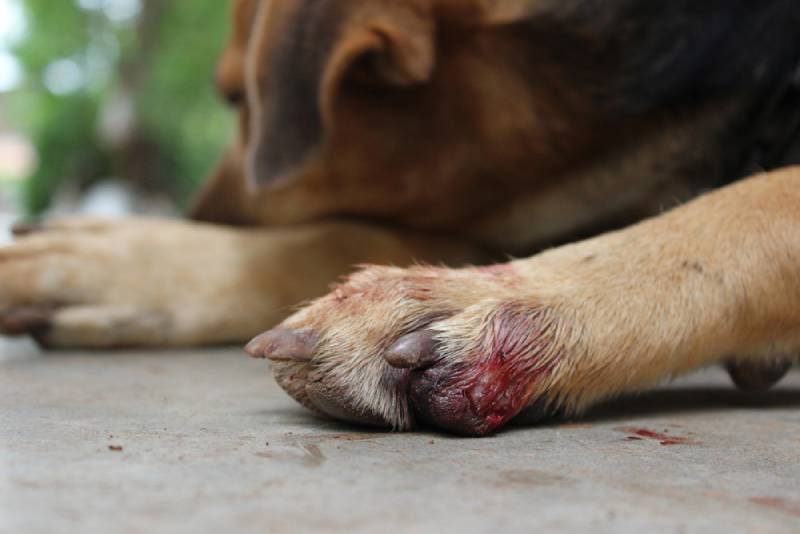
A few injuries can cause your dog's paw to bleed, ranging from dry skin to punctures. The most common reasons for bleeding paws are abrasions and punctures, but other causes of bleeding paws include:
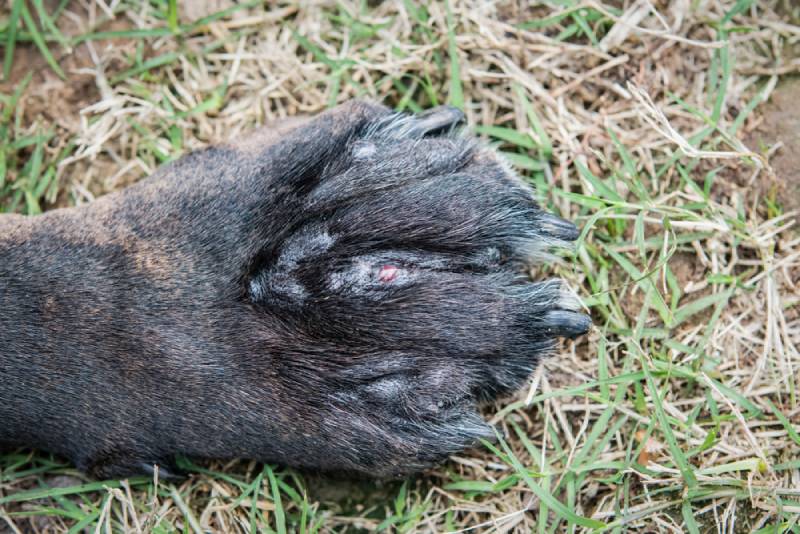
- Punctures: Punctures in your dog’s paw can occur from walking on something sharp or a bite wound from another animal. It could be caused by an object such as a sharp thorn, nail, or a piece of glass.
- Abrasion: An abrasion on your dog’s paw can resemble a graze from rubbing or scraping against something abrasive such as sandpaper or a rough surface.
- Laceration: A laceration is similar to a puncture but is more of a tear on your dog's paw pad. It can be caused by sharp rocks or branches your dog may have walked over, producing a deep or shallow cut.
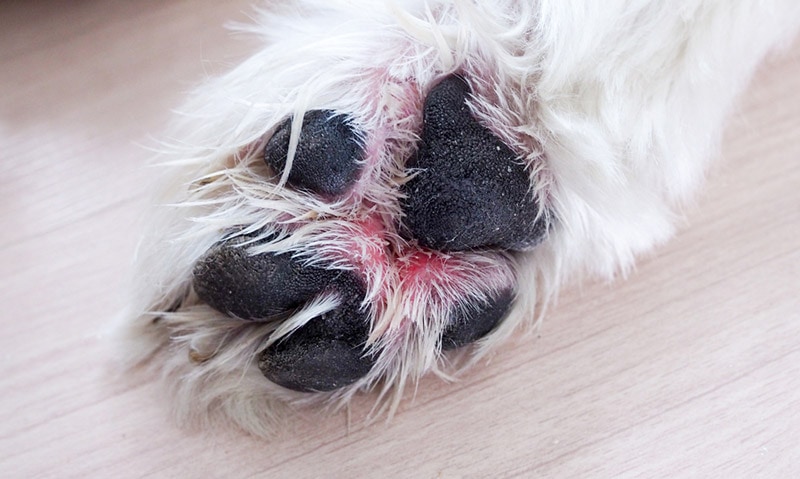
- Dry Skin: Dogs can be affected by dry skin anywhere on their body, but especially their paws if they are exposed to dry weather conditions, hot pavements, snow, or ice. If the skin is extremely dry and cracks, it can bleed.
- Allergies: Allergies can cause your dog’s skin to itch anywhere on its body, including its paws. Allergies can be to food or things in the environment such as house dust mites or pollens.
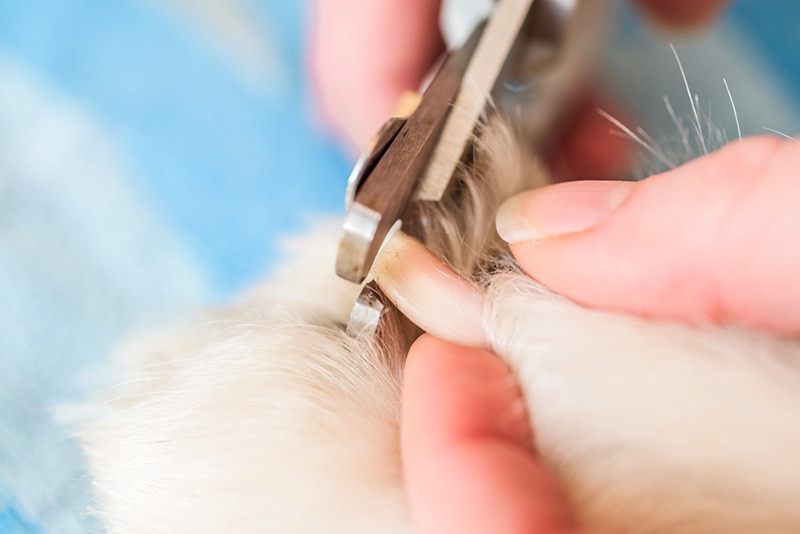
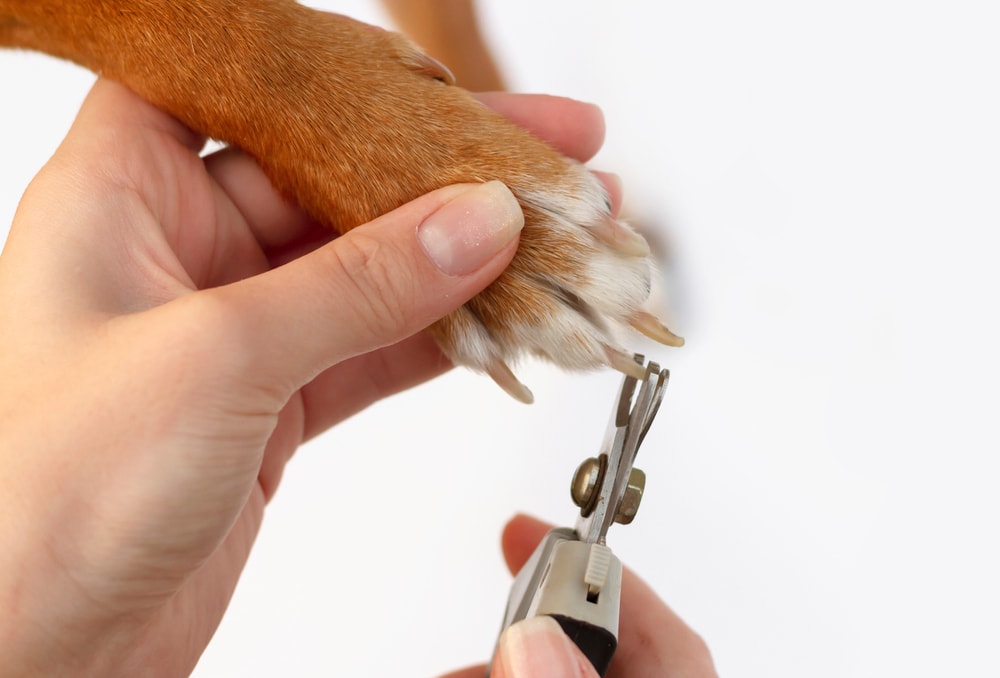
- Broken Toenail: If your dog’s toenail has been caught or snagged on something, it could be cracked or broken and can easily bleed.
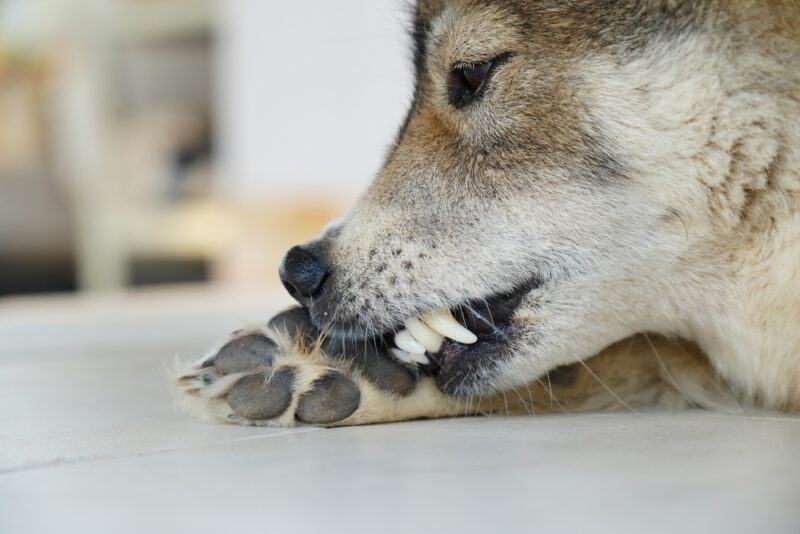
- Infection: An infected wound can become painful and uncomfortable and cause your dog to lick the area. This will cause further irritation and may cause the wound to bleed.

What Should I Do If My Dog's Paw Is Bleeding?
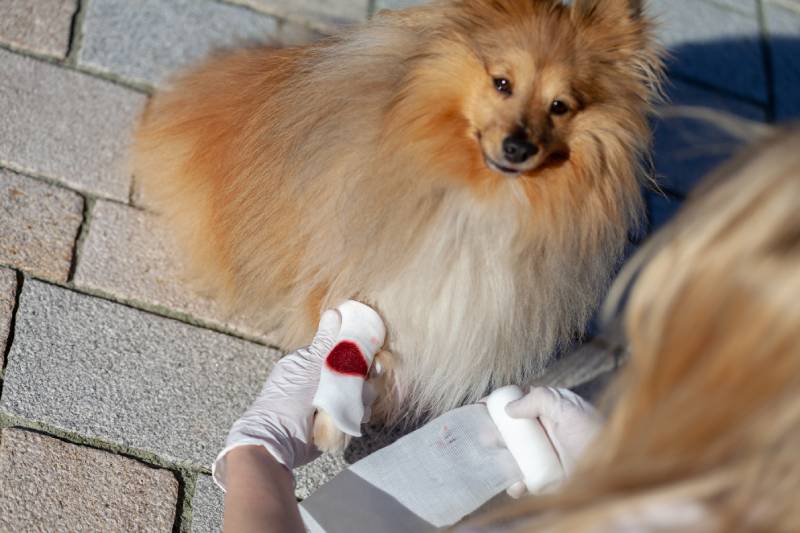
First aid treatment will involve trying to control the bleeding before you can get the wound assessed by your vet. Cut pads and broken nails can bleed more than you might expect and sometimes look worse than they actually are! For broken nails , a small dab of flour can help stem the bleeding.
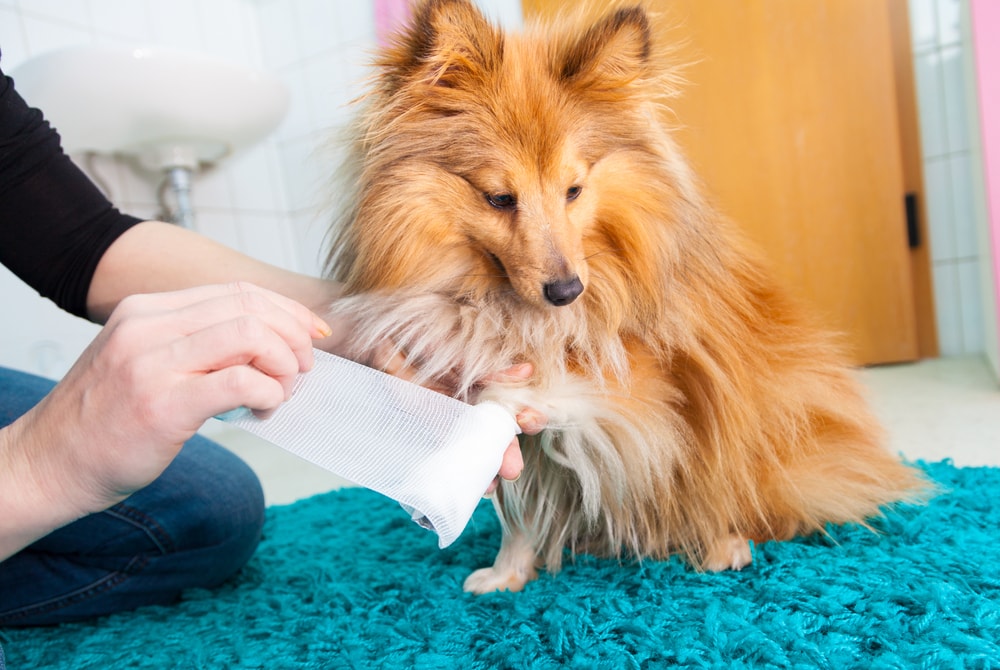
Wrap the paw in gauze or a small clean towel and apply constant pressure. The bleeding should stop in around 5-10 minutes.
If the wound isn't too severe and your dog allows you to handle its paw, wash the wound with cool water and mild pet-safe antiseptic soap.
Unless the wound is very small and your dog is not bothered by it, then it is advisable to get the paw checked by a vet. Remember puncture wounds can look small from the outside but can penetrate bacteria deep into the wound and so are at risk of getting infected. Some deeper and larger cuts may need suturing or bandaging.
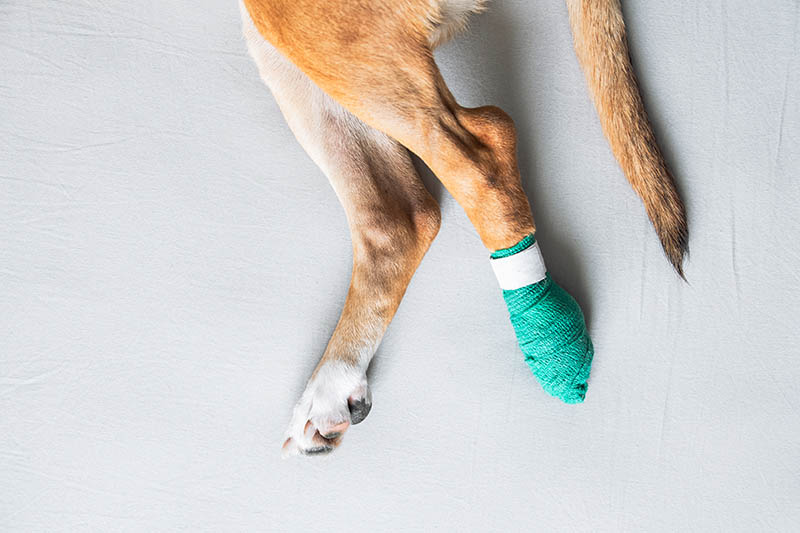
Although you can apply a light dressing for a short amount of time at home as an interim measure, bandages are best done by a professional. Be very careful not to wrap a bandage too tight as it can affect blood flow to the paw. Never leave a bandage on for longer than 24 hours unless applied by a vet.

Should I Let My Dog Lick Its Wounded Paw?
Dogs will usually lick their wounds to help relieve pain and discomfort. There is a misconception that allowing your dog to lick its wounds may help with its healing. Dog’s mouths contain a lot of bacteria which they will transfer to the wound when licking, increasing the risk of it getting infected.
Signs that a wound may be infected can include:
- Inflammation
- Swelling
- Fever
- Heat
- Pus or discharge
- Pain
Keeping your dog from licking its wounded paw may be challenging, but your vet can give you advice on the best way to do this. Sometimes a bandage, covering with a small cotton sock, or a buster collar will be needed to prevent licking. Dog booties are often recommended when walking to protect a paw wound while it is healing, and you will need to limit your dog’s activity.

Tips for Looking After Your Dogs Paws
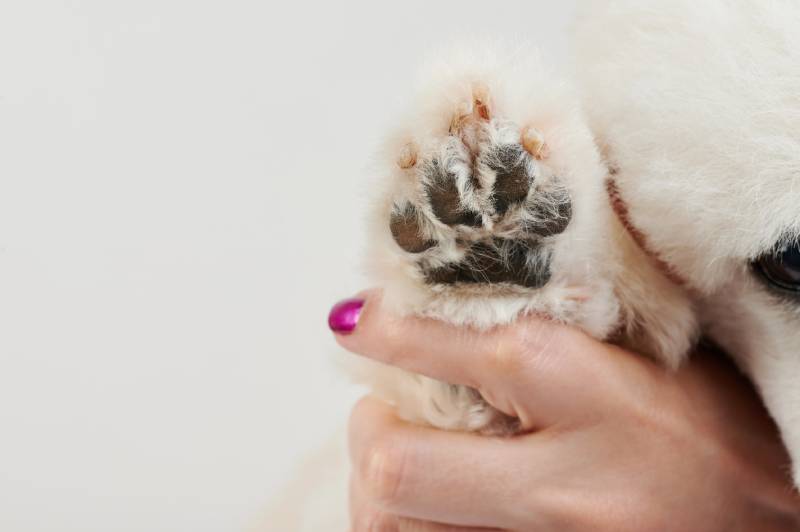
If your dog has healthy paws and paw pads, the risk of infection is less likely if there is a puncture or a cut. If the skin is strong, it is less likely to bleed and is more likely to heal faster. Furthermore, healthy paws are less likely to crack, making them less vulnerable to injuries from outside objects.
Here are some tips for keeping your dog’s paws healthy:
Conclusion
Your dog's paw could be bleeding for several reasons. If your dog's paw is bleeding, your first step is to stop the bleeding and clean the wound so that you can find the injury and determine what has caused it to bleed. If your dog seems to be in a lot of pain and the bleeding does not stop, you should take it to the vet immediately. Also, remember not to overlook your companion's paws and regularly check them for any dryness or injury.
Related Read: Why Are My Dog & Paws Red? 8 Common Causes & Treatments
Sources
https://vcahospitals.com/know-your-pet/first-aid-for-torn-or-injured-foot-pads-in-dogs
https://www.fergusonanimalhospital.com/site/blog/2022/06/16/dog-cut-paw-pad
https://vetericyn.com/blog/how-to-treat-and-prevent-cracked-dog-paws/
https://www.petmd.com/dog/general-health/how-keep-your-dog-licking-their-wounds
https://www.pdsa.org.uk/pet-help-and-advice/pet-health-hub/symptoms/wounds-and-skin-injuries
Featured Image Credit: Mrs.Rungnapa akthaisong, Shutterstock
Get Hepper In Your Inbox


Pet care tips from our vets and experts, straight to your inbox.
You may opt-out at any time. View our Privacy Policy for more information.
Nicole is a lover of animals of all sizes but is especially fascinated with the feline variety. She’s the proud mom of Baby, a Burmese, and works every day so he can relax in the sunshine or by the fire. She’s always had a cat in her home and has spent countless days with others, observing behaviors and softening up even the grouchiest of the lot. Nicole wants to share her kitty expertise with you so you and your cat can live happy, healthy, and care-free.
Join the conversation
Ask a question, share your story, or send private feedback.