Hepper is reader-supported. When you buy via links on our site, we may earn an affiliate commission at no cost to you. Learn more.
I've Adopted a Cat and It Won’t Stop Meowing: Advice to Control this Behaviour
In this article
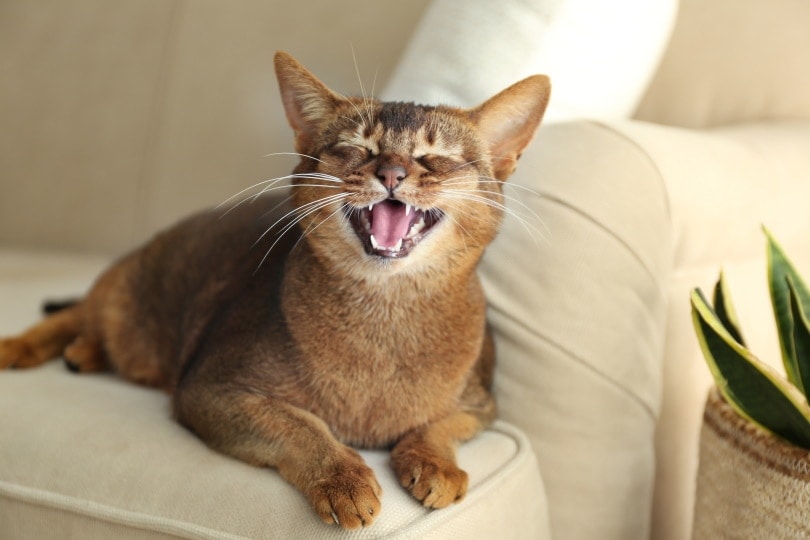
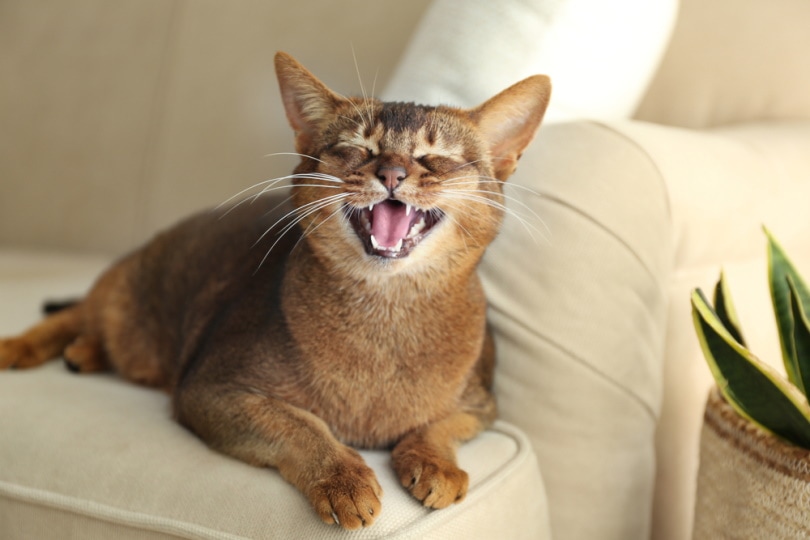
Does your new cat meow too much? Does it seem like no matter what you do or how many toys or treats you give them, your new feline friend just won't stop meowing? Excessive meowing can be a sign of distress or discomfort in cats and it's important to understand why your cat is meowing so you can help them.
Now it can be tricky to uncover the cause of a cat's excessive meowing, but with a bit of patience and understanding, you can certainly get to the bottom of it. So, let's discuss some of the most common reasons why your new cat may be constantly meowing and the steps you can take to help them feel more comfortable and reduce their meowing.

Guide to Identify the Cause of Your Adopted Cat's Meowing
1. Look for Signs of Anxiety and Stress
Anxiety and stress are something that's very common in new kittens when you bring them home, and actually, it's really common with new pets as a whole. Keep in mind that a new cat may be used to being around its mother and siblings, and in close proximity to them on a daily basis. Taking them away from their natural environment can be a bit stress-inducing.
For example, just imagine if someone were to take you away from your home? The best thing to do during this time is to give them extra attention and affection to help them feel more secure. Create a calm and peaceful environment for your cat by keeping it as comfortable as you can for them. This means keeping your place warm, and providing them with food, cool water, and plenty of company.
During this time, almost anything is likely to startle your cat, so be sure to note that they may hide from you quite a bit – so be ready for them to slip into hiding spaces that you may not have access to physically (like beneath the couch, bed, or behind a dresser). Try to avoid startling them with things such as loud music, random noise, or other house animals that may be prone to aggressive behavior.
2. Make Sure They Have Food
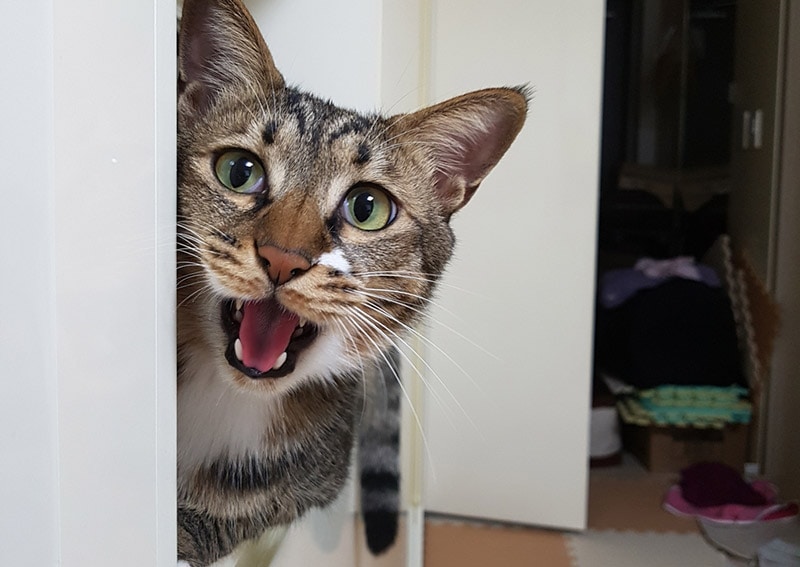
Remember that a cat's meow is its way of communicating something to you – after all, they can't speak the way humans can. If your new cat's meowing constantly, it may be either hungry or thirsty. So as mentioned earlier, be sure to have some wet food or kibble available for them as soon as they cross your threshold. Also be sure to have some cool water available, and if it's a kitten cat it may need shorter bowls so that it can eat and drink comfortably without neck strain (which can cause choking).
If your new cat is still a kitten, it is typically best to feed it wet food, as it contains the moisture needed to digest the food, and it's easier for them to eat. After about 5 or 6 months, you can switch over to dry kibble. You should be feeding a new kitten at least three times a day for the first 3 or 4 months, after that you can decrease to about twice a day.
3. Check for Pain and Medical Conditions
If your cat is meowing more than usual, it may be a sign of pain or distress. If your cat is meowing due to pain or another medical condition, it is essential that you take them to the vet for a check-up. It may have health issues that you can’t see, such as an inner ear infection.
The vet will be able to give you an accurate diagnosis and determine the best course of treatment for your cat. Even if your cat has been behaving normally, it's always a good idea to take them for regular check-ups as part of their preventative care.
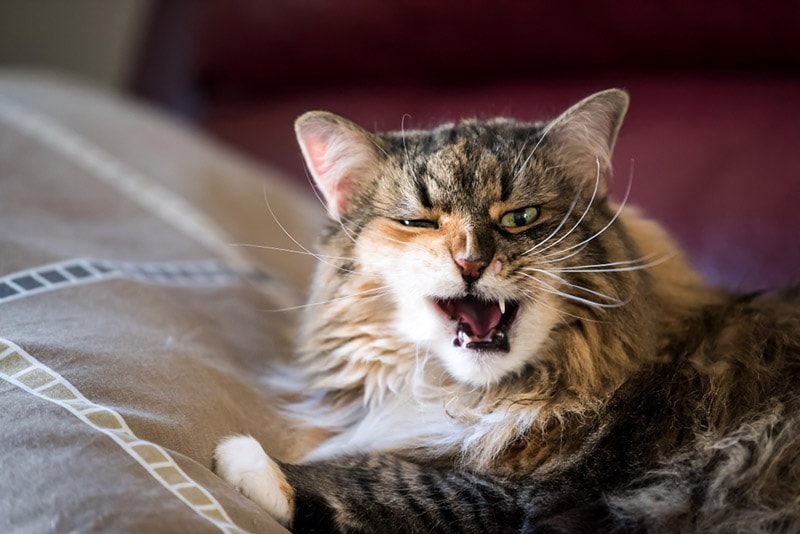
4. Look for Cognitive Issues
This may be a less common reason, especially if the new cat is a kitten, but it's something that should be considered as well. It's possible that your new cat may also have cognitive issues. As a result, it may be prone to excessive meowing out of boredom, confusion, or habit.
If you believe that your cat is experiencing cognitive issues such as disorientation, vision impairment, or hearing issues, it’s best to take it to the vet as soon as possible to get a professional diagnosis – and note that this could also be a sign of an underlying disease.
5. Decide If They’ve Reached Sexual Maturity & Want to Mate
If your cat meows excessively at night, and they're not spayed or neutered, it could be a sign they are trying to attract mates. When they're in heat, unspayed female cats will make a distinct yowling sound. This behavior can be stopped by simply having them spayed.
And male cats that aren't neutered will produce a yowling sound whenever they smell a female cat that is in heat – something that’s likely to happen if you allow your cat outdoors at any point. And though male cats don't go into heat as female cats do, when they reach sexual maturity, they will start urinating around your home in an effort to mark their territory and attract a female. Having them neutered can stop this, in addition to the excessive yowling/meowing.
Note that having a cat spayed can run anywhere from $300 to $500, while male neutering will typically run about $200 to $300. Your cat's behavior should return normal (and without the excessive meowing) if this is the case.
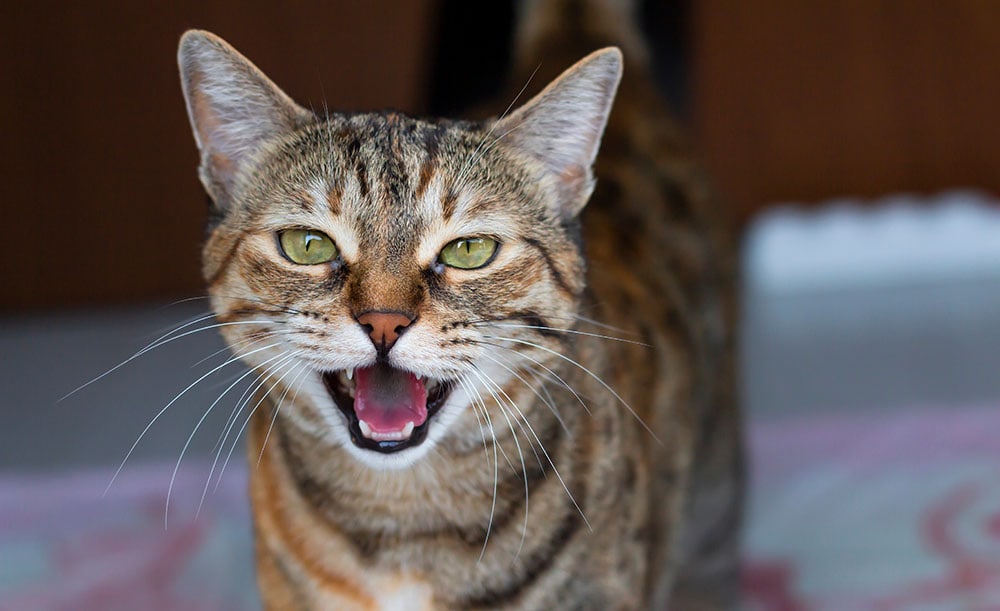
6. Provide Toys and Entertainment
Sometimes your new cat, whether it's a kitten or adult, will simply meow because it wants your attention or because it's bored. If all of the other boxes are checked off and you believe that this is the reason for its constant meowing, be sure to give it plenty of mental and physical stimulation.
This includes providing it with interactive toys, playing with them regularly, and spending quality time with them. It's also a good idea to provide them with a scratching post or perch to give them an outlet for their energy. And don't underestimate the joy that cats can find with DIY climbing shelves and homemade catnip-based toys.

How to Identify the Cause of Your Cat's Meowing
It can be tricky to identify the cause of your cat's excessive meowing, as it can be a sign of multiple things. To figure out why your cat is meowing, it's important to observe your cat and look for clues. Pay attention to when your cat meows, how frequently they meow, and what they're doing when they meow. This can help you narrow down the possible causes of your cat's meowing.
You should also consider if your cat has any other health issues or if there are any recent changes in their environment that could be causing stress or anxiety. If your cat has recently been through a major life event, such as a move or the loss of a family member, this can be an additional cause of stress and anxiety and could be contributing to your cat's excessive meowing.
Conclusion
Excessive meowing in cats can have a variety of causes, from anxiety and stress to hunger and thirst. Identifying the cause of your cat's meowing can be tricky, but you'll need to do a bit of investigative work to narrow down the main cause. Once you have identified the cause, there are steps you can take to reduce their stress or discomfort, from providing them with extra attention and affection to making sure they have access to food and water.
You'll also want to ensure that your cat doesn't have any undiagnosed medical issues, which may cause it to be in pain and meow as a result. Knowing the root causes of your cat's meowing can help you create a loving and peaceful home for both you and your furry friend.
Sources
Featured Image Credit By: New Africa, Shutterstock
Get Hepper In Your Inbox


Pet care tips from our vets and experts, straight to your inbox.
You may opt-out at any time. View our Privacy Policy for more information.

Nicole is a lover of animals of all sizes but is especially fascinated with the feline variety. She’s the proud mom of Baby, a Burmese, and works every day so he can relax in the sunshine or by the fire. She’s always had a cat in her home and has spent countless days with others, observing behaviors and softening up even the grouchiest of the lot. Nicole wants to share her kitty expertise with you so you and your cat can live happy, healthy, and care-free.
Join the conversation
Ask a question, share your story, or send private feedback.