Hepper is reader-supported. When you buy via links on our site, we may earn an affiliate commission at no cost to you. Learn more.
Why Do Cats Meow at Night? 8 Vet-Reviewed Reasons & How to Stop It


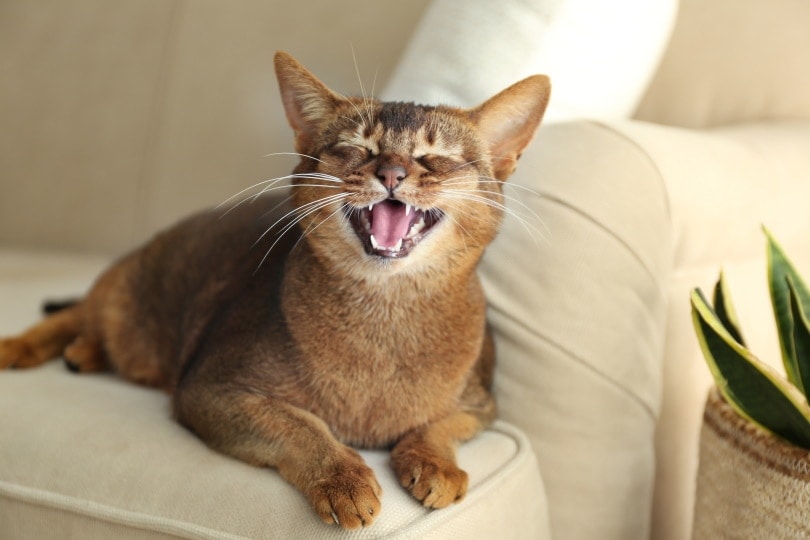
So, you're laying in your bed getting ready to drift off, and all of a sudden—the meowing commences. Your eyes shoot open as your cat screeches down the hall. Are you in for yet another sleepless night? How can you make it stop?!
Dramatics aside, if your cat is meowing at night, you’ll likely wonder why and what you can do to stop it. No worries, fellow cat owners. We have some reasons for your kitty’s wails along with solutions for you. Read on!

The 8 Likely Reasons Why Cats Meow or Cry at Night
1. Your Cat Wants Attention
We all know what attention hogs our kitties can be. Since cats love to stay up at night, they could just be alarming the household if there's nobody to play with. If they're looking for attention and you are not accessible, these vocalizations may just be an invitation to come to play or give them some cuddles.
Your cat may also want your attention for another reason, like more food, water, or a good cleaning of the litter box. Make sure you’ve ticked these boxes before you get into bed so luck will be on your side for a sound sleep.
2. Your Cat Is Bored
The household is quiet, which can be quite dull for some cats, especially kittens and young cats. If your kitty is the type that needs ultra-stimulation, they might be just trying to let everyone know they need something to fill their time.
Keeping lots of (quiet) toys, food puzzles, perches, and scratch posts around and making sure your cat has a comfortable place to snooze can help curb their bored meowing. Ensuring your cat gets plenty of physical exercise through interactive games and mental stimulation in the daytime, particularly nearing bedtime, will also help to reduce their boredom and frustration, hopefully making them tired and calm overnight.
3. Your Cat Might Have Separation Anxiety
If your cat stays in the house's main space and your bedroom door is shut, they might be experiencing some separation anxiety. Some animals do not like being away from their owners, so it can result in increased vocalizations when you're trying to sleep. Anxiety may be generalized or manifest when triggered by certain things.
Causes of feline anxiety should be identified with the help of a veterinarian and a certified animal behaviorist, to get to the root of the problem. It may cause your cat to feel anxious even when certain predisposing triggers aren’t even present, and besides nocturnal wakefulness, it can lead to excessive vocalization and house soiling. Anxiety in cats should not be ignored, as it’s likely to worsen and cause further behavioral problems.
4. Cats Are Crepuscular
For a long time, people believed that cats are nocturnal creatures. This is not entirely true. Cats are what you call crepuscular, meaning they're active during dusk and dawn. If your cat tends to be more active at night, you might notice them meowing more when the household is quiet.
If this is just normal nightly behavior for your cat, use ambiance and white noise to block out the sound. Or you could try to keep them in a secluded room the farthest from where you sleep. They might not be happy about it—but their pet parents need their beauty rest. Providing plenty of environmental enrichment and mental stimulation will tire out your feline and reduce their nighttime shenanigans.
5. Your Cat Might Have an Underlying Health Issue
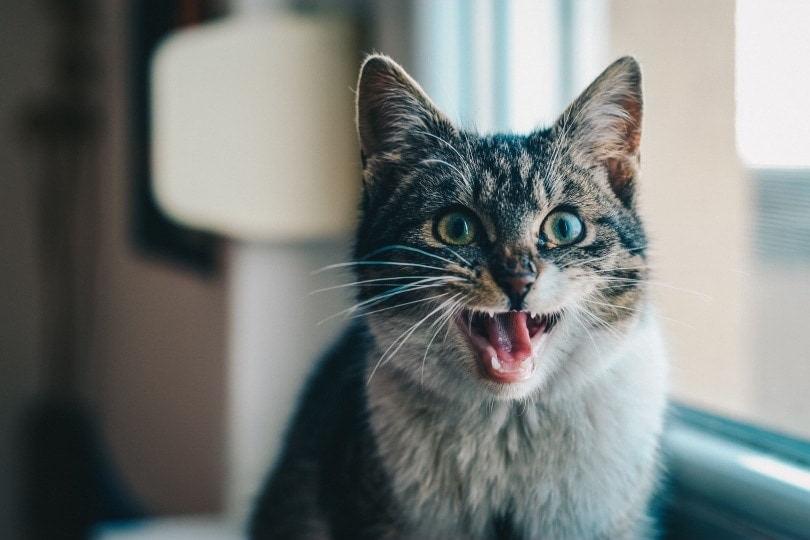
Health issues like kidney problems, hyperthyroidism, high blood pressure, wounds, fractures, and many others, may cause nighttime (or any time) meowing because these conditions make your cat feel unwell, lethargic, confused, or painful, depending on the exact cause. Anything that causes your cat physical anguish can trigger vocalizations.
If the meowing is unlike your cat, it comes on very suddenly or out of nowhere and is accompanied by any other signs of illness or changes in their demeanor, you should schedule an appointment with your veterinarian urgently.
Of particular concern are certain life threatening complications of heart disease, such as thromboembolism or a blood clot, and serious traumatic injuries or bone fractures in outdoor cats after an accident, that can cause sudden loud meowing that even sounds similar to yowling. These are very obvious and cannot be mistaken for other more harmless causes of nighttime meowing, but we felt they were too important not to be mentioned.
Excessive and distressed meowing in these cases occurs due to extreme pain, and the cat is often not able to use one or more of their legs, dragging themselves around, unable to stand or walk, with both back legs usually being affected in case of a blood clot. These conditions require emergency veterinary care.
6. Your Cat is Entering Senior Years
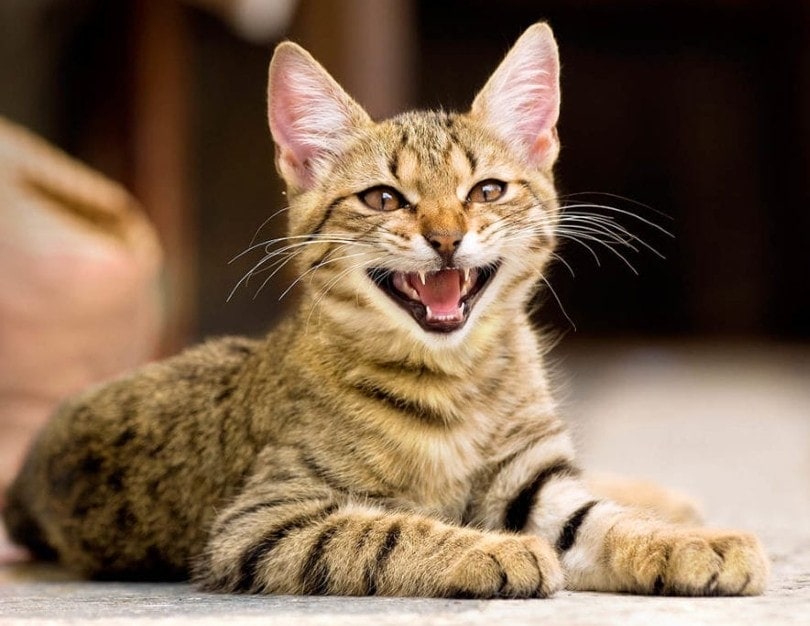
If your cat is getting older, this could be a product of advancing years and declining cognitive function. Senior cats may experience confusion, spatial disorientation, unwillingness to play, excessive sleeping, long periods of staring blankly into space or at walls, indifference to food and water, or excessive begging for food while actually not wanting to eat, missing the litter box, and episodes of loud vocalizing, frequently in the middle of the night.
If they are suddenly alone in the darkness, with an altered cycle of wakefulness and sleep, they might be a little bit confused as to what's going on. Their confusion might trigger increased meowing during slumber hours.
Speak to your veterinarian if your senior cat is exhibiting any of these or other signs and changes in their behavior, as they may also indicate an underlying health issue. Try a nightlight in their sleeping area, and you can also give lots of cuddles before hopping into bed, so they feel satiated by human contact while you sleep.
See Also: Senior Cat Care
7. Your Cat Is Yowling
If your cat isn't fixed, they might be yowling. Yowling is a term used for a mating call to attract a suitor. You might notice it because it sounds very throaty and drawn out. If your cat is doing this, they might be trying to get a little late-night action.
This problem can be solved by a simple appointment with your veterinarian to get them neutered or spayed. Once they lose the desire to find a mate, the yowling will cease.
8. Trapped
If your cat is naturally adventurous and used to roaming freely, they may feel trapped at night. The house is quiet, no one is about, and they are all alone with no way outside. They might just be trying to tell the world they aren't happy feeling so constricted.
If you have your cat limited to one room, you might consider letting them have free range of the house. If this is an issue preventing your sleep, try to place them in a room farthest from yours to create a minimal distraction. However, ensure there is plenty of environmental enrichment, perches and toys, and even consider allowing them access to a secure outdoor catio, if available.
Conclusion
Your cat carrying on at night can be seriously distracting. You both should be able to live harmoniously and find common ground. So the most essential part of nighttime vocal control is finding the underlying reason.
Once you do, you can address the issue accordingly. If you need the help of your vet or just want to voice your concerns, don't be afraid to consult professionals for behavioral guidance.
See also:
Featured Image Credit: New Africa, Shutterstock
Get Hepper In Your Inbox


Pet care tips from our vets and experts, straight to your inbox.
You may opt-out at any time. View our Privacy Policy for more information.
Ashley Bates, a freelance writer with a passion for pets, is currently studying animal therapy. She is a mother to four children and 23 pets, both furry and feathery. Ashley actively volunteers at local shelters, advocates for animal welfare, and rescues animals in distress. Her mission is to promote awareness, education, and entertainment about pets to help prevent animal homelessness. She specializes in the care and well-being of dogs and cats.
Join the conversation
Ask a question, share your story, or send private feedback.