Hepper is reader-supported. When you buy via links on our site, we may earn an affiliate commission at no cost to you. Learn more.
How to Tell if a Ghost Shrimp is Pregnant: 5 Signs
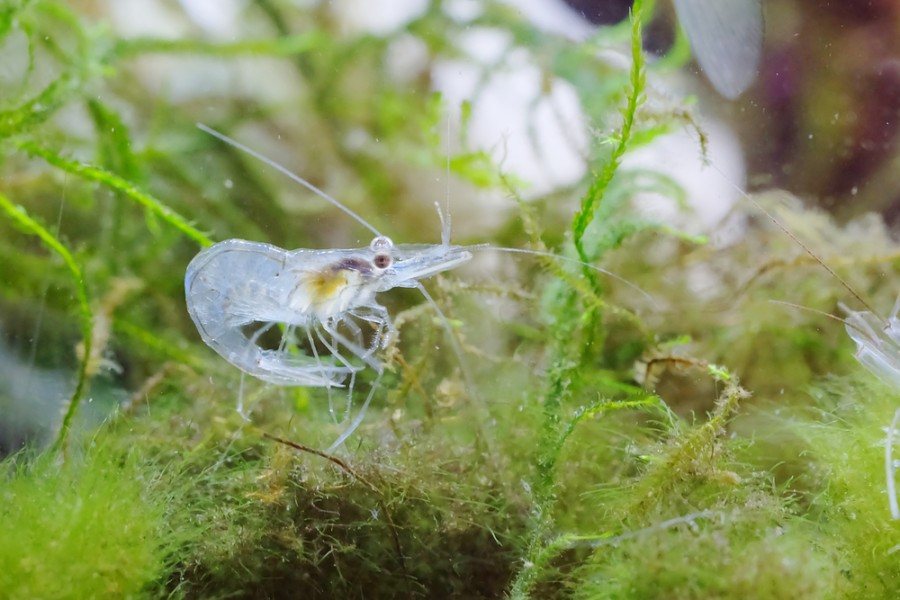
Ghost shrimp are some curious little creatures indeed. These shrimp are transparent, and you can actually see right through them. If you have male and female ghost shrimp in a tank, they will probably breed. As far as animals in aquariums go, ghost shrimp are easy breed.
That said, learning how to tell if a ghost shrimp is pregnant can be a bit tricky, although it is made easier by the fact that you can literally see inside of them. You can tell if ghost shrimp are pregnant because you can actually see the eggs inside of her!

The 5 Signs Your Ghost Shrimp Is Pregnant
There are a few telltale signs that your female ghost shrimp is pregnant. Before we get into these signs, we do need to mention one thing, which is that ghost shrimp are never actually pregnant, per say. Only live-bearing animals that give live birth to their young are considered to be pregnant.
Egg layers like ghost shrimp are never actually pregnant. The term used to describe pregnancy in egg layers is “gravid.” So, how can you tell when your female ghost shrimp is gravid?
1. Green Dots
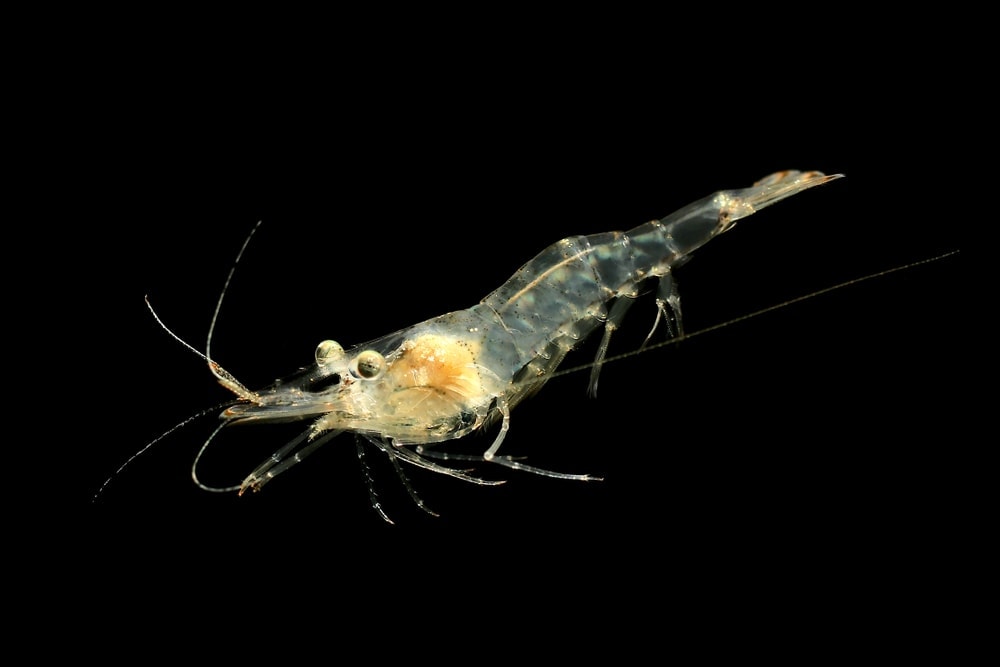
The first sign that you may notice, a strong indication that your shrimp is pregnant or gravid, is if you see small green dots near her abdomen, right by the part known as the saddle. At first, they will look like nothing more than miniature green dots, gut they will get larger and grow over time.
No, they don’t get huge, as ghost shrimp in general are very small, but if your ghost shrimp is gravid, you should see those green specks, which over time grow into very teeny tiny green balls. These are the eggs growing. Technically, this is not actually her stomach or abdomen, but what is known as a saddle. These eggs will be attached to her rear legs.
2. Fanning Her Legs
Another sign that a female ghost shrimp is pregnant or gravid is if she keeps fanning her legs that have the eggs on them.
Exactly why pregnant female ghost shrimp fan their legs is unknown, although it may have something to do with keeping the eggs well oxygenated, or it could be that the eggs are irritating here.
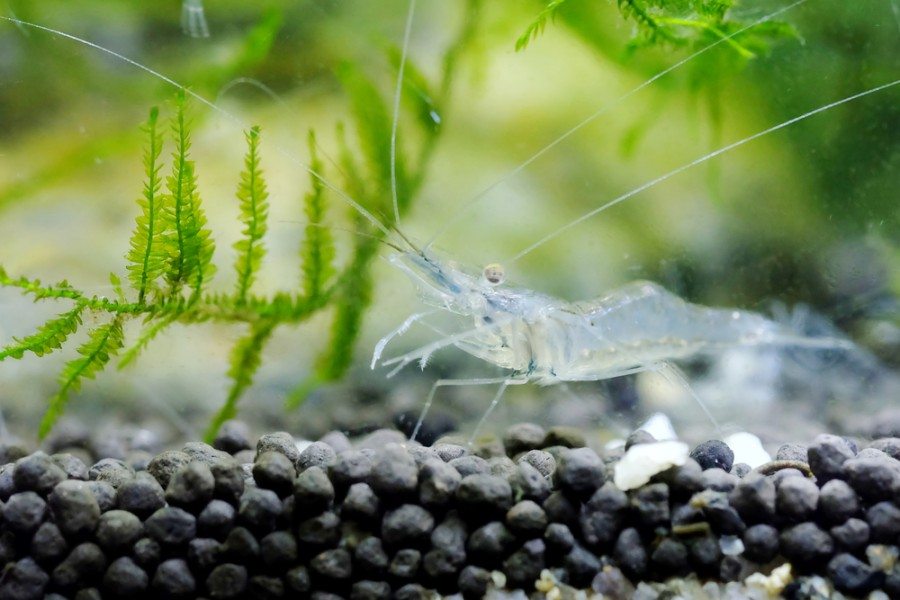
3. Green or White Dots Under Her Tail
Those green eggs, once the male has fertilized them, should turn white in color and they will increase in size just a little bit. If they are white, then you know that they have been fertilized, and as they grow in size, they may move lower down in the saddle at the rear of the rear legs.
4. She’s Gained Some Weight
One clear sign that a female ghost shrimp is pregnant is if she is gaining a bit of weight. The weight gain will be negligible, but having 20 to 30 eggs attached to her will definitely make her seem larger than before.
5. The Males Getting Real Friendly
If your female ghost shrimp is pregnant or gravid, you may notice that there are males all around her. As is the case in the animal kingdom, males will compete for dominance, for the right to fertilize those eggs and pass on their genes.
If you notice that male ghost shrimp are fighting with each other and fighting for the female’s attention, chances are almost 100% that she is pregnant.

Pregnant Ghost Shrimp Stages Explained
At first, the female ghost shrimp will start to produce eggs. Female ghost shrimp will produce eggs every 3 weeks, roughly. You will see those little green dots in her saddle, right by the base of the body, by the swimmerets.
For the first week or so, they will stay right there and will not change much in appearance. After the first week, those eggs will start to grow a little larger and may become slightly lighter in color, going from very dark green to a lighter green.
During the 7- to 14-day mark, you will notice these eggs getting slightly bigger by the day, and they will move further down the saddle, away from her body, and to the legs. By the beginning of the third week, the males should have fertilized the eggs, at which point they should start to turn white. You may even be able to see little black dots inside of the eggs at this point, which are the eyes and stomach of the shrimp fry.
By day 21, those eggs should hatch and the shrimp fry should emerge.

FAQs
Do Ghost Shrimp Lay Eggs or Live Birth?
Ghost shrimp, as previously noted, are egg layers, which means that they do not give live birth. These animals carry their eggs for a set amount of time, and if the eggs are fertilized by the males, will then hatch and let loose the shrimp fry.
Once again, a pregnant female shrimp that is carrying eggs is referred to as gravid or berried.
How Long do Ghost Shrimp Carry Their Eggs?
On average, a female ghost shrimp will carry her eggs for a total of 3 weeks. These eggs start out in the saddle and slowly move out of the saddle and onto the hind legs over time.
From the time the eggs are first produced to the time when they hatch into shrimp fry, it should take no longer than 21 days or 3 weeks.
How Many Babies do Ghost Shrimp Have?
A female ghost shrimp will on average have 20 to 30 fry every time she produces eggs. They produce eggs every 3 weeks roughly. So, within a single year, a ghost shrimp can potentially have hundreds of babies.
Do Ghost Shrimp Die After Laying Eggs?
No, there is no evidence which would show that ghost shrimp die after laying their eggs. That said, ghost shrimp are very fragile and often die in aquariums due to a number of reasons, including but not limited to improper feeding, bad or fluctuating water conditions, and being eaten by fish.

Final Thoughts
Ghost shrimp are definitely not the easiest animals to take care of. They’re pretty sensitive to many things, and they make for great fish food too. That said, if you notice that a female is pregnant, get ready because your aquarium is about to have a new influx of inhabitants.
See also:
Featured Image Credit: Nicholas Toh, Shutterstock
Get Hepper In Your Inbox


Pet care tips from our vets and experts, straight to your inbox.
You may opt-out at any time. View our Privacy Policy for more information.

Lindsey discovered her passion for fish keeping after a junior high school field trip to the Shedd Aquarium in Chicago. Prior to becoming Editor-in-Chief of It's a Fish Thing, Lindsey studied marine biology at the University of California-Santa Cruz. She loves goldfish, tetras, and mystery snails, and recently began experimenting with a saltwater aquarium.
Join the conversation
Ask a question, share your story, or send private feedback.