Hepper is reader-supported. When you buy via links on our site, we may earn an affiliate commission at no cost to you. Learn more.
Is Roundup Safe for Dogs? Vet-Approved Safety Advice & Info



In this article
Roundup is a popular weed killer that is often used for lawn and garden maintenance. It can be used on personal property, public parks, schools, and commercial farms. Because Roundup contains a non-selective herbicide, it is not safe for dogs. Dogs can get harmed by touching an application of Roundup while it is still wet and by ingesting plants that have been sprayed by it.

What Is Roundup?
The main active ingredient in Roundup is glyphosate. Glyphosate is a chemical that prevents plants from creating the proteins necessary for plant growth. It works systemically by being absorbed by plants and destroying them from the inside out. Since it is a non-selective herbicide, it will kill any type of plant that comes in contact with it.1
There have been many concerns about the safety of glyphosate. The Environmental Protection Agency (EPA) has stated that the glyphosate in approved herbicides is safe as long as you follow the label instructions. The EPA has also stated that glyphosate isn’t likely to be carcinogenic.2

Dogs and Lawn Safety
While you can control what types of herbicides and pesticides you use on your own lawn, the same can’t be said for other people’s lawns. Therefore, it’s important to keep safety measures in mind while you’re walking with your dog.
First, be on the lookout for signs that indicate that a lawn has been recently treated with herbicide. Sometimes, landscaping companies will put a small stake on lawns after they’ve treated them with synthetic weed killers. If you see these signs, it’s best to avoid having your dog walk on the lawn for at least a full 24 hours. This will ensure that enough time has passed for your dog to walk on the lawn safely.
Next, keep an eye out for your dog and make sure that they don’t chew any grass or plants on someone’s lawn. You never know what sorts of chemicals and other unsafe substances have come in contact with the lawn. So, it’s possible for your dog to ingest something accidentally that would cause them to get sick.
If you’re a homeowner, and your dog walks and plays in your yard frequently, you may want to consider switching to pet-friendly weed killers. There are several different weed killers that use organic ingredients rather than glyphosate. These types of weed killers are also more eco-friendly, and some of them are also safe and more beneficial for natural pollinators. Just keep in mind that not all organic or natural weed killers are pet safe. So, make sure to check the labels before switching to a new product.

What to Do If Your Dog Comes in Contact With Roundup
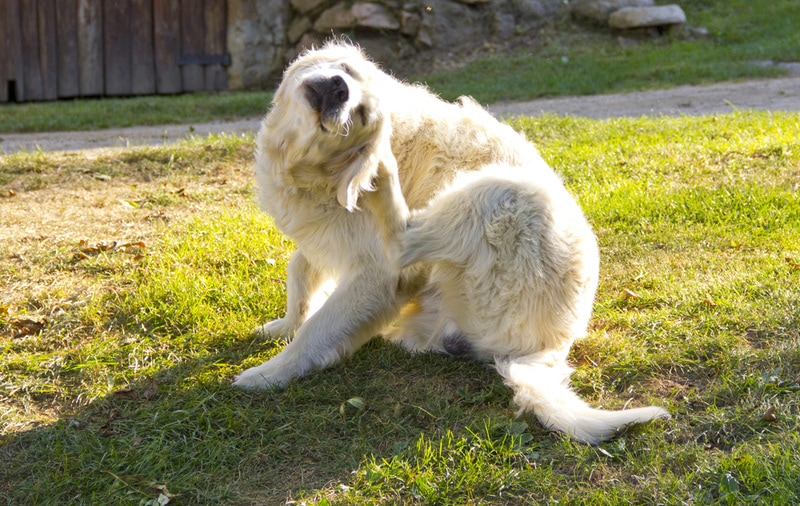
Roundup can cause external irritation and gastrointestinal upset for dogs. Dogs that have rolled around in Roundup before it has dried can end up with itchy and inflamed skin. Roundup can also get into their eyes and cause pain, and it may cause their noses and paws to swell.
If your dog has come in contact with Roundup, give them a bath as soon as possible to rinse off any chemicals from their skin and coat. Then, monitor their condition and be on the lookout for signs of skin irritation.
It’s best to contact your veterinarian if your dog has ingested a plant that has been treated by Roundup. Dogs that lick or eat small quantities of treated plants may get an upset stomach or experience vomiting or diarrhea. If they’ve ingested a larger amount, particularly of the concentrated product, they may appear lethargic and drool excessively, and in some cases it can have serious, life threatening effects. It’s important to get your dog to your veterinarian or contact an animal poison control hotline as soon as possible.
Conclusion
Roundup isn’t safe for dogs, and dog owners must be watchful and prevent their dogs from coming in contact with grasses and plants that have been sprayed by it. Roundup can be painful and irritating for dogs if their skin comes in contact with it, and it can also cause an upset stomach if licked or eaten. Access to larger quantities can have more severe and even life threatening effects. Since glyphosate is toxic to dogs, it’s important to seek medical attention as soon as possible if they ingest it.
Featured Image Credit: Ivanova N, Shutterstock
Get Hepper In Your Inbox


Pet care tips from our vets and experts, straight to your inbox.
You may opt-out at any time. View our Privacy Policy for more information.
Jessica is a freelance writer who spends most of her day reading and writing while her fluffy Cavapoo, Nora, naps beside her. She loves and appreciates pets and animals because there’s so much to learn from them, and they do so much for people. As a dog mom, she understands the special relationship that pet parents have with their pets. So, she loves sharing helpful information that people can use to better understand their pets. When she’s not writing, you can find her walking dogs, tending to her plant babies, or drinking her nth cup of coffee.
Join the conversation
Ask a question, share your story, or send private feedback.