Hepper is reader-supported. When you buy via links on our site, we may earn an affiliate commission at no cost to you. Learn more.
Komondor Dog Breed Info: Pictures, Characteristics & Facts
In this article
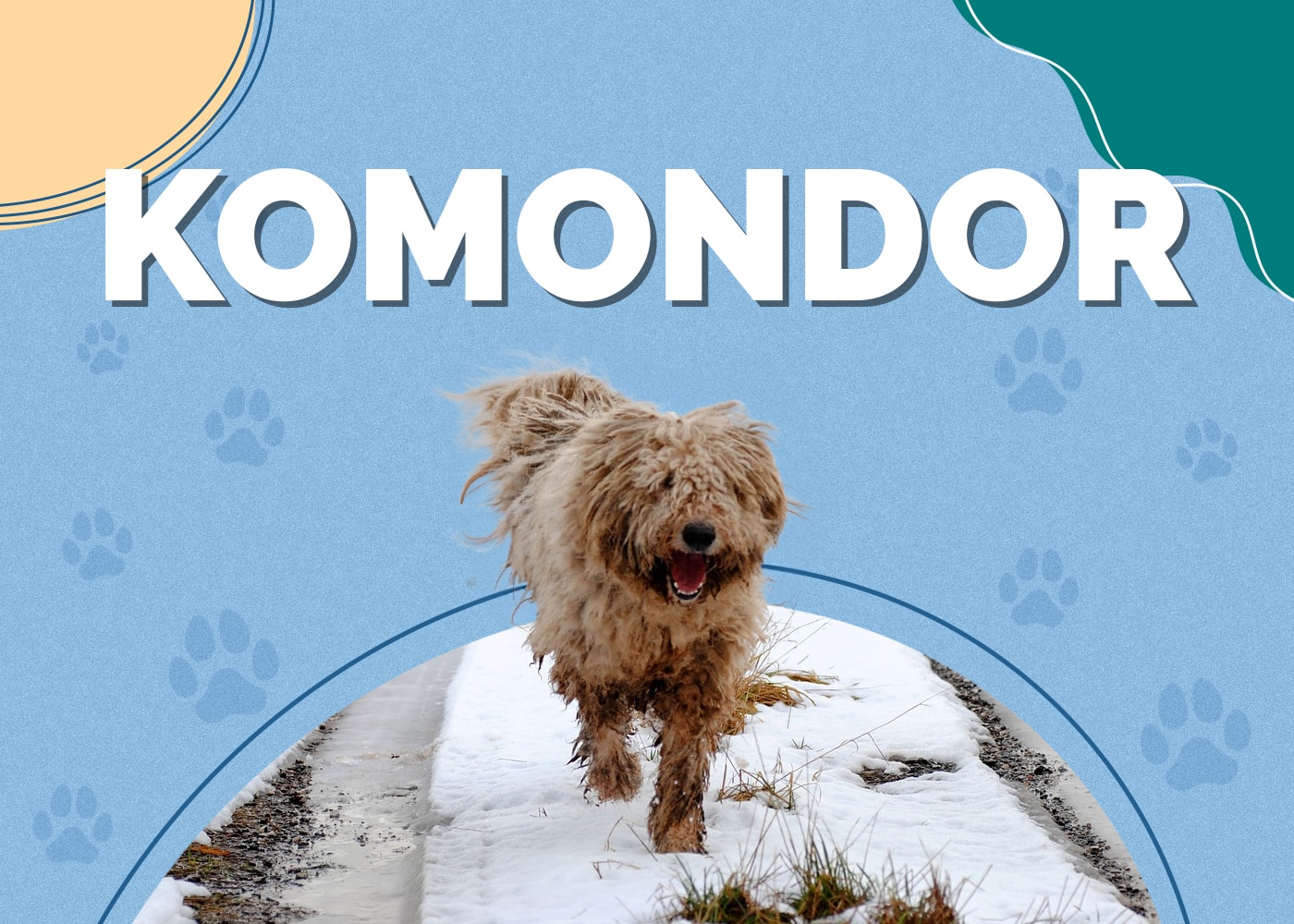
You may have seen photos of this distinctive breed but know little about them other than their incredible corded coats. There’s so much more to the Komondor than their amazing hairdos.
Breed Overview
Height:
Weight:
Lifespan:
Colors:
Suitable for:
Temperament:
This isn’t a breed that’s going to suit everyone, though. Their huge size and history as a guardian for large flocks of sheep mean they not only have a strong protective streak, but they’re also independent and won’t hesitate to make their own decision if they haven’t had training or direction.
If you’d like to know more about the incredible Komondor, you’re in the right place! We’ll tell you everything you need to know so you can decide whether this might be the perfect breed for you.

Komondor Characteristics
Komondor Puppies
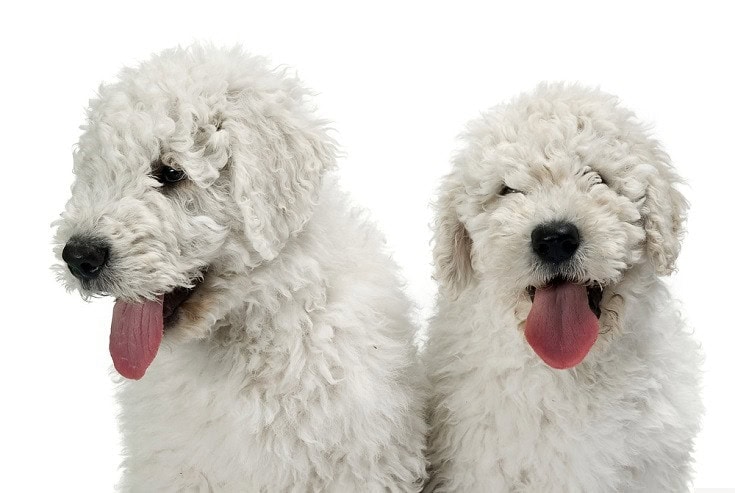
All puppies are adorable, but the Komondor with their soft and fluffy white coat and deep dark eyes is one of the cutest of them all! Don’t be tempted to come home with a puppy before you know if you can provide the right kind of home for this unusual dog.
Komondors are a big breed, with males weighing over 100 pounds once fully mature. They also have a protective and independent nature, which means they need an experienced owner who can socialize them from a young age. They're a good choice for active people who can offer their dogs enough space to run around in.

Temperament & Intelligence of the Komondor 🧠
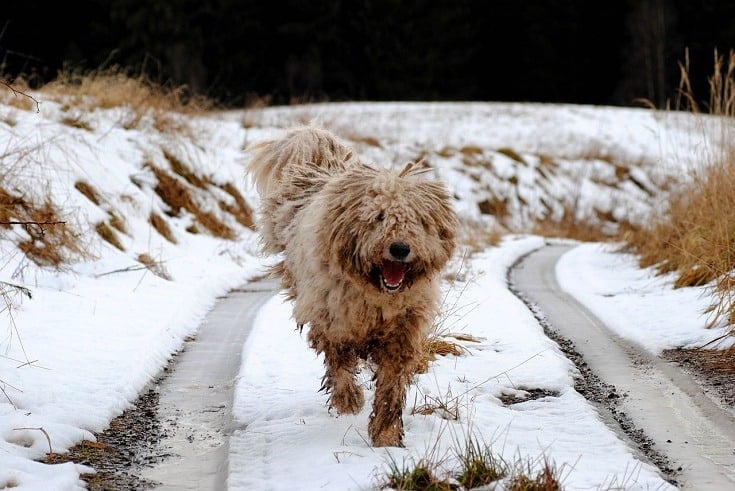
Komondors are extremely intelligent and make devoted dogs to their owners, but that doesn’t mean they don’t have an independent streak as well. They’re quite happy to solve a problem using their own initiative, so they need an experienced owner who can keep up with them and anticipate what they might be about to do next!
They might love their owners but are wary of strange humans and even warier of strange dogs. The sheer size of the Komondor also means they need a family that understands how to live with a large breed dog, especially one that’s protective and opinionated.
Are These Dogs Good for Families? 🏡
Komondors make dedicated and loyal family pets, but they’re best suited to families with older children who know how to safely interact with dogs.
They can be wary of strangers, so you’ll need to take time to introduce them to friends and family who visit your house often. Once a Komondor has accepted someone into their “flock,” they won’t forget them when they come around the next time.
Does This Breed Get Along with Other Pets? 🐶 😽
Komondor dogs can be wary around other strange dogs, and this can turn to aggression if not properly managed. They do best as the only dog in a household.
When it comes to other pets, they usually get along well with cats and other small pets.

Things to Know When Owning a Komondor
Owning a Komondor needs plenty of time and money — just taking care of their coats is a job in itself! As a large protective breed, they need more attention and training than some other, more laidback breeds. Here’s everything else you need to know about these charismatic dogs.
Food & Diet Requirements
Komondors need high-quality dog food, but the breed can eat less than you might expect for a large breed. There wasn’t always much food available while guarding sheep, so they often ate whatever a shepherd had to spare.
As a result, they are “good-doers,” and you need to be careful not to overfeed them. Most breeds need a high-protein diet, but for Komondors, too much protein can result in scratching and skin conditions.
Komondors can suffer from gastric torsion or bloat, so their daily ration should be split into two or three smaller meals rather than one large one. If they eat quickly, consider using a slow feeder to make them take more time over their meals. Don’t allow them to exercise too much for an hour after feeding.
Exercise 🐕
Even though they’re a large breed, the Komondor doesn’t need a huge amount of exercise. They’re used to walking slowly with a flock of sheep rather than sprinting or running for long distances.
Two or three walks of around 30 minutes each will be enough to keep a Komondor happy. They also benefit from a large backyard where they can stretch their legs, but this needs to be secure. They will automatically guard their home territory, so owners need to guarantee that their dog can’t escape if they see something that they feel that they need to defend their territory from.
Training 🦮
The Komondor can be sweet and obliging when they’re puppies, but if not carefully trained by an experienced handler, they can soon become willful and independent. Their natural protective instincts can kick in, and if they don’t feel like they’re getting enough direction or engagement from their handler, they’ll simply rely on their own independent spirit to solve problems without you!
Positive reinforcement techniques work great with this breed, as does keeping training sessions fun and interesting. Komondors will sometimes simply decide that a new command isn’t worth learning, so their handler needs to make sure they can watch for signs that their dog is getting bored.
Komondors need plenty of socialization from a young age to make sure they accept meeting a variety of people and other dogs. They are naturally wary of strangers, so their owners need to make sure a Komondor understands to come back when called and accepts visitors to the family home.
This breed has a tendency to not get on that well with other dogs. So, during puppy training classes and beyond, make sure you watch for signs that other dogs may be getting too close.
Grooming ✂️
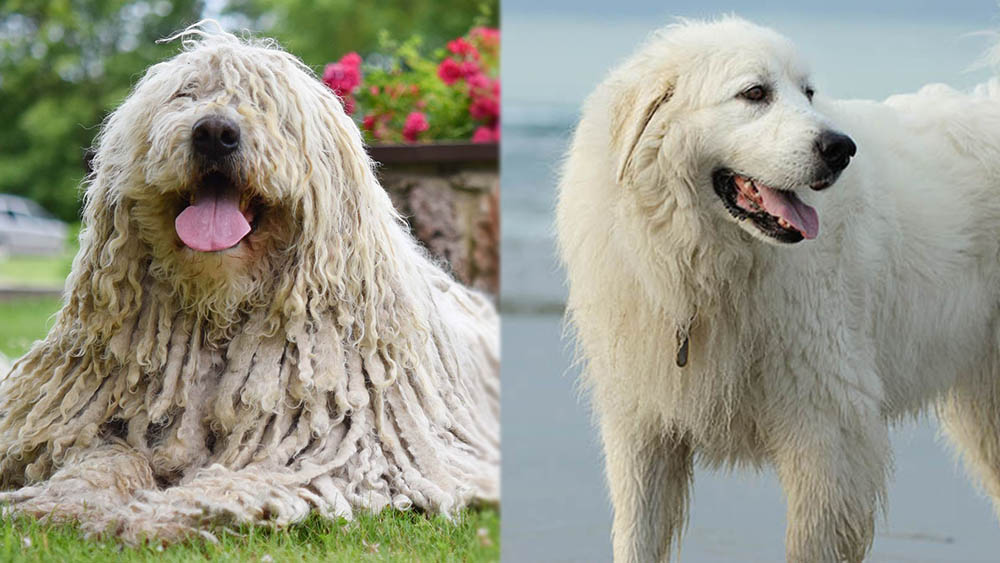
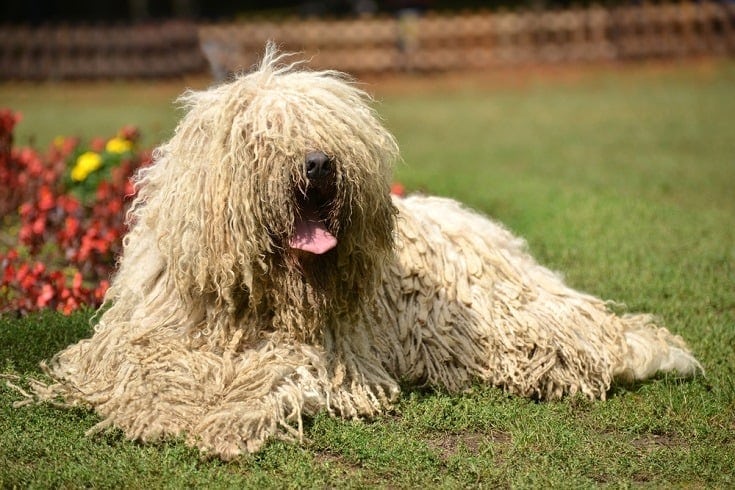
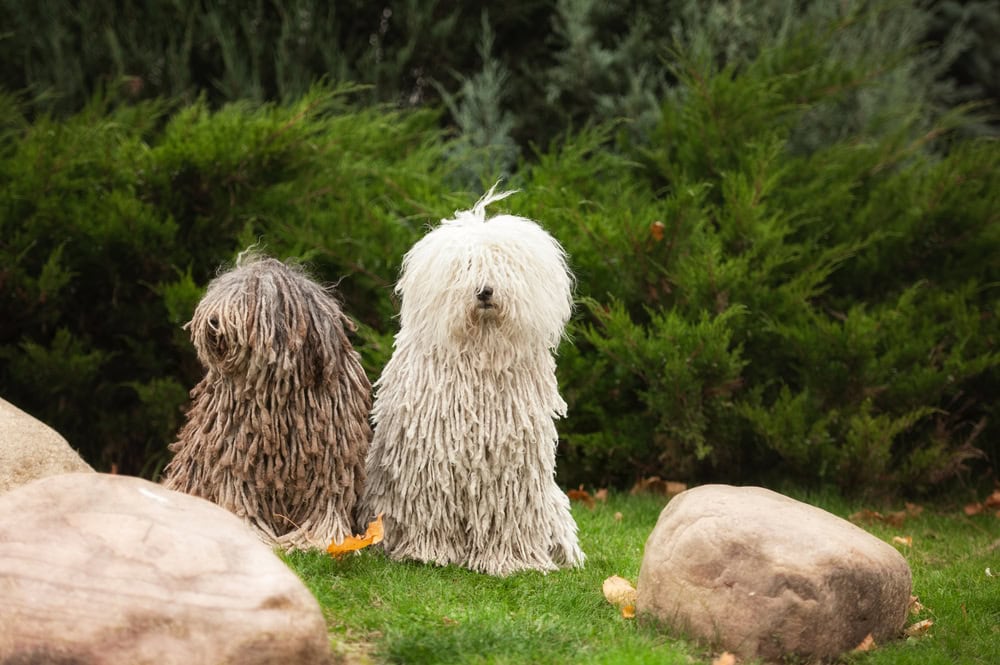
The unique coat of the Komondor needs different grooming attention than that of any other breed. Puppies are born with a soft and short coat that starts forming the distinctive cords when your puppy is around 12 months old. You’ll need to take care to keep your pup’s coat clean and dry at this point.
These cords need to be gently pulled apart to help keep their individual shape and stop them from matting. Once a dog is around 2 years old, the cords should be fully formed and you’ll just need to maintain them as they grow! Eventually, your dog’s coat will reach the ground.
Many Komondor owners keep their dog’s hair around the mouth trimmed, as otherwise, it can get stained. When you want to bath your Komondor, you might need to set aside the whole day. Washing them isn’t the problem, but making sure their coats dry out fully can take hours.
You can clip a Komondor’s coat, but of course, this takes away one of the reasons that many people love this breed.
You might want to check this out: 11 Best Dog Wipes: Reviews & Top Picks
Health Conditions ❤️
Compared to many other purebred dogs, the Komondor suffers from few health conditions. We’ve listed those that affect the breed the most. It’s always a good idea to speak to any breeder about which health checks they give their parent dogs and whether they have any particular advice about how to manage certain conditions.

Male vs Female
You might now be totally convinced that the Komondor is the right breed for you, so now all that’s left to do is decide if you should get a male or female pup, right?
We actually recommend waiting to meet the litter of puppies that you’re interested in before making any final decisions.
As Komondors are a rare breed, you might not get a chance to specify whether you’d prefer a male or female puppy. If you need to sign up for a waiting list, you might only be able to reserve a puppy and not the exact sex, and the litter might not even be born yet!
The personality of each puppy isn’t going to depend on their sex, so it’s far better to choose your forever dog by seeing which puppy’s personality appeals to you most, rather than picking your puppy because you thought that you’d prefer a male puppy over a female.
3 Little-Known Facts About the Komondor
1. They’re also known as the mop dog.
Once you’ve seen these dogs’ amazing coats close up, their nickname “the mop dog” makes total sense! Their coats mat into long cords that do indeed look similar to a mop. You might also see them called Koms.
2. They’re an ancient Hungarian breed.
The first written mention of this breed was in the 16th century, but they’ve been around for far longer than that. It’s thought that the Komondor is related to the Russian Owtcharka. Their original purpose was to guard flocks of sheep, and they still have a strong desire to guard and protect, but these days, it’s their families instead of sheep!
3. They’re on the cover of Beck’s Odelay album.
You might have seen this breed gracing the cover of Beck’s 1996 album, “Odelay.” The shot was taken by Joan Ludwig, a canine photographer. The photo also made it to the cover of the American Kennel Club’s magazine “Gazette,” back in 1977.
Conclusion
The Komondor is a unique breed with plenty of amazing qualities. If you’re an experienced dog owner used to working with large, independent breeds, then they could be perfect for you.
These dogs are protective of their families and won’t hesitate to step in if they think that any of you are in danger. Komondors don’t always get along well with other dogs, so a home where they’re the only dog will probably suit them best. While their coats don’t need regular brushing, they do need a great deal of maintenance, including bathing, which can take hours!
If you think that you can provide the perfect home for a Komondor, then you’ll be guaranteed a loyal and protective friend for life.
See Also:
Featured Image: Marcel Jancovic, Shutterstock
Get Hepper In Your Inbox


Pet care tips from our vets and experts, straight to your inbox.
You may opt-out at any time. View our Privacy Policy for more information.

Emma is a freelance writer, specializing in writing about pets, outdoor pursuits, and the environment. Originally from the UK, she has lived in Costa Rica and New Zealand before moving to a smallholding in Spain with her husband, their 4-year-old daughter, and their dogs, cats, horses, and poultry. When she's not writing, Emma can be found taking her dogs for walks in the rolling fields around their home...and usually, at least some of the cats come along, too! Emma is passionate about rescuing animals and providing them with a new life after being abandoned or abused. As well as their own four rescue dogs, she also fosters dogs for re-homing, providing them with love and training while searching for their forever homes.
Join the conversation
Ask a question, share your story, or send private feedback.