Hepper is reader-supported. When you buy via links on our site, we may earn an affiliate commission at no cost to you. Learn more.
Transylvanian Hound: Info, Pictures, Characteristics & Facts
Breed Overview
Height:
Weight:
Lifespan:
Colors:
Suitable for:
Temperament:
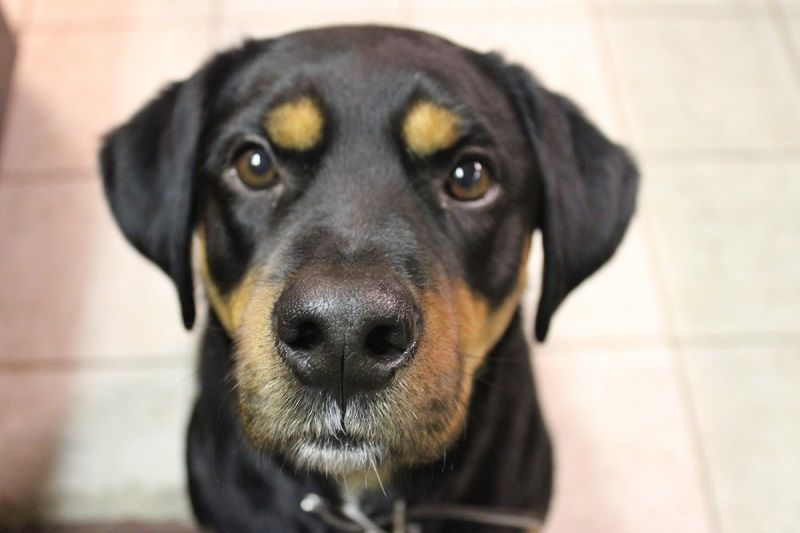
A popular pet among the Hungarian aristocracy in the middle ages, the Transylvanian Hound nearly died out by the start of the 12th century. Developed for hunting game, they were widely used until Hungary began focusing on agriculture instead of hunting. It wasn’t until 1963 that the breed received any sort of recognition, spurring on a motivated effort to preserve and grow the rare breed.
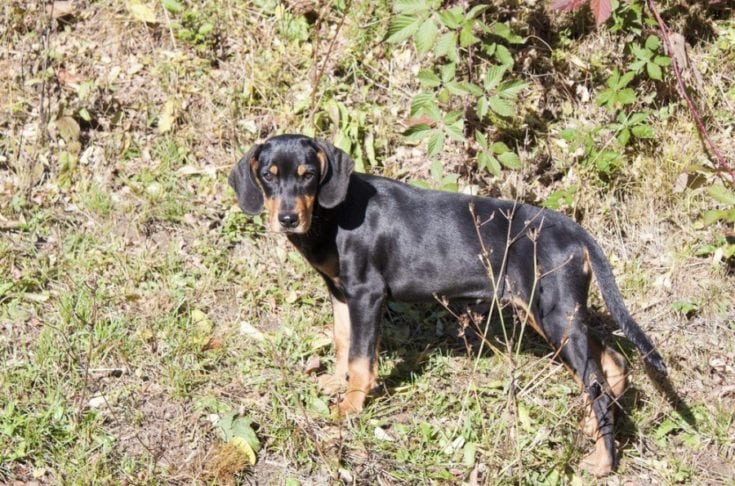
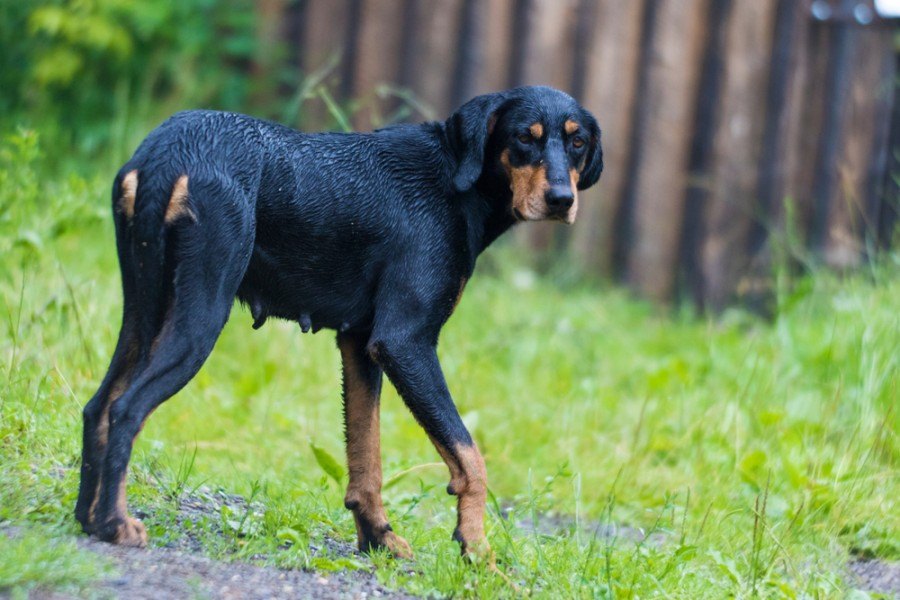
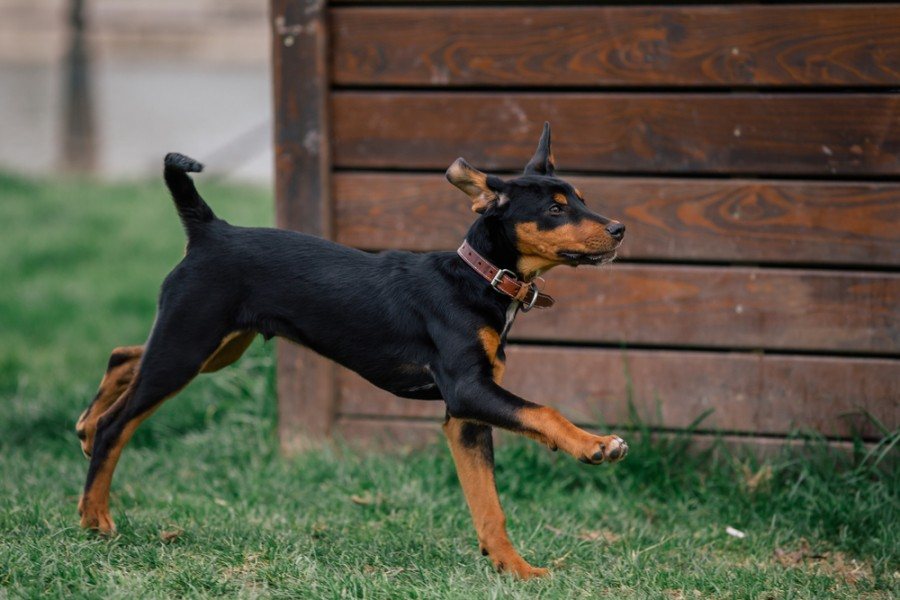
Often mistaken for a thin Rottweiler, the Transylvanian Hound has very similar black and brown markings and coloration. They’re smaller than Rottweilers, but still a pretty sizable dog at 55-80 pounds and reaching up to 26 inches in height.
Bred as a scent hound, Transylvanian Hounds are rather independent. They like your attention, but they don’t need it all the time. Contrary to many other breeds, Transylvanian Hounds like to have a bit of alone time for themselves. They also like to explore and are very curious. If they catch wind of an interesting scent in their powerful nose, they’ll go on long expeditions that can span many miles in search of whatever has enticed them.

Transylvanian Hound Puppies
Transylvanian Hound Characteristics
This breed is just starting to get its bearings. They’ve only been actively preserved since the 1960s and haven’t gained a high level of popularity yet. They also aren’t fully accepted by the AKC as of yet. However, in 2015, they were registered in the AKC Foundation Stock Service, bringing them one step closer to being recognized by the AKC.
Because of this, they haven’t had the chance to become wildly expensive like other breeds that are AKC recognized. While you may not spend too much when purchasing your pup, there are costs in making sure you have everything your new pup will need. Not to mention ongoing costs over the course of their life.
These dogs are loving and loyal, however, they are better suited to people who have an established history in raising dogs.
3 Little-Known Facts About The Transylvanian Hound
1. There Were Originally Two Varieties
Before the Transylvanian Hound nearly faced extinction, there were two distinctly different varieties; the long-legged and short-legged. Both were bred for hunting. The long-legged hound was used for hunting large game and the short-legged was used for hunting smaller game over rocky terrain.
When the breed was finally recognized and the effort was made to preserve and grow their numbers in the 1960s, the short-legged variety was all but gone. Today, only the long-legged variety is readily available and many believe that the short-legged Transylvanian Hound is gone for good.
2. They Were Used For Hunting Big Game
The long-legged Transylvanian Hound, the one that remains today, was used for hunting the biggest game around. They helped bring down bears, boars, and bison. The short-legged variety was used for hunting smaller game.
Today, they’re still used with great success as trackers thanks to their excellent noses. But they have also proven to be great retrieval dogs as well, thanks to their high levels of intelligence that allow them to be easily trained for different tasks.
3. Their Oldest Ancestors Are From The Magyar Tribes
When some unknown Asian scent hounds accompanied the Hungarian Magyar tribes into Transylvania, they were crossed with local Celtic scent hounds to create some of the oldest ancestors that we know today of the Transylvanian Hound. This was way back in the 9th century, over 1,000 years ago!

Temperament & Intelligence of the Transylvanian Hound 🧠
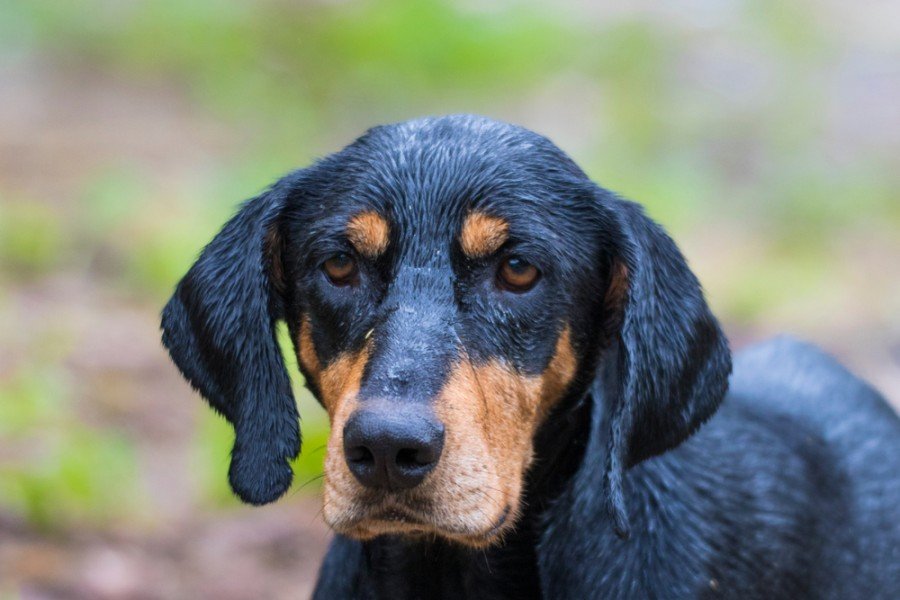
Intelligent and loyal, the Transylvanian Hound is an excellent companion breed. While many breeds need near-constant attention from their owners, the Transylvanian Hound is a bit more independent. These dogs prefer to have some time to themselves and do well with owners who aren’t home to give them attention all the time.
Despite their independence, these are loyal and loving dogs. They’re highly intelligent and easily trained. With a little positive reinforcement, you can have a well-trained, obedient dog that doesn’t need you every minute of the day.
But watch out that their independence doesn’t bite you in the butt. They’ve got strong noses and if they pick up on a smell, they’ll be happy to leave on their own, venturing out for a new discovery. They’re as curious as dogs get and love to socialize with other dogs, so watch out for them escaping. They can travel miles to follow a scent and won’t think twice about it!
Are These Dogs Good for Families 🏡
Because they’re easily trained and generally friendly dogs, Transylvanian Hounds make excellent family pets. They don’t need constant attention and they’re pretty low maintenance, so they’re great for families who aren’t going to be home all the time.
This breed does need a lot of exercise though since they are pretty high-energy. They do best with a large, secure yard that they can roam and play in without being able to break out and follow their noses!
Though they do well with kids, Transylvanian Hounds aren’t the best fit for families with very small children. They’re a high-energy, excitable breed that can actually hurt a toddler when they get too animated. Still, they’re great for families with older kids and will play with the children for hours on end.
Does This Breed Get Along with Other Pets? 🐶 😽
Transylvanian Hounds are known for being very social. They love to be around other dogs and will take every opportunity to play with their canine companions.
Despite being bred as a hunting dog, Transylvanian Hounds don’t have a particularly strong prey drive. This is partly why they’ve made good retrievers as well.
Because of this low prey drive, they’re usually great with other dogs of all sizes, even the smallest ones. This is especially true if the dog has been properly socialized from an early age.

Things to Know When Owning a Transylvanian Hound:
Food & Diet Requirements
Transylvanian Hounds are a medium-sized dog that will generally require about two to three cups of high-quality dry dog food each day. They don’t have any special dietary requirements that need to be met. However, they are a high-energy breed and often benefit from being fed an active-canine formula.
Exercise 🐕
Though low-maintenance when it comes to grooming, Transylvanian Hounds are somewhat high-maintenance regarding their exercise needs.
You can expect to spend about an hour each day exercising your Transylvanian Hound. Like many dog breeds, if you don’t provide enough physical activity and fun, your dog might get bored and begin to exhibit destructive behaviors.
You’ll want to provide plenty of structured activity for your Transylvanian Hound. Walks are good, but make sure to keep your dog on a leash so it doesn’t take off to track a scent and get lost or hurt. Games like fetch are also a great way to help your dog get plenty of exercise.
For a dog this active, a large yard is optimal. A small yard is also acceptable, but they won’t do as well in a home without a yard. This dog likes to be independent and needs plenty of exercise, so it needs a safe place where it can roam and play on its own.
Training 🦮
This breed is very smart and has proven to be excellent at the skilled tasks of tracking and retrieving. Similarly, they can be taught all sorts of commands and tasks, including obedience training.
They take well to all sorts of training and can learn quickly without too much effort. They do have a bit of an independent streak, but a firm hand and some positive reinforcement can defeat that quickly, making this an easy to train breed overall.
Grooming ✂️
The Transylvanian Hound has a double coat, so you might expect it to require extensive grooming and maintenance. Luckily, that’s not the case. They require only minimal grooming, except for twice a year when they shed heavily. Aside from these two short periods, the Transylvanian Hound doesn’t shed very much.
You’ll want to brush their coat once a week with a slicker brush to remove the dead and loose hairs. They also don’t need to be bathed often except to speed up the shedding during the heavy-shedding times of the year.
Health and Conditions ❤️
When looking for a dog, health is often a top priority. Purebred dogs are generally thought to be less healthy than mixed breed dogs and are more susceptible to health complications many times.
But the Transylvanian Hound is an exception. This breed is very healthy and has few health concerns to worry about. Aside from elbow and hip dysplasia, there aren’t any conditions that commonly affect this breed.
Hip dysplasia: This is a rather common condition that tends to affect larger dogs most often. It’s caused when the hip grows improperly and the top of the femur won’t fit properly into the hip socket.
When this happens, the femur will rub against the pelvis instead of sitting inside the socket. This can cause discomfort, pain, and loss of movement in the legs.
There’s no cure for hip dysplasia, unfortunately. However, it can be mitigated if caught early and your dog’s quality of life can remain high for many years.
Elbow dysplasia: This malformation of the elbow is one of the leading causes of lameness in dogs. Elbow dysplasia occurs when the three bones that make up the elbow joint don’t fit together properly.
The result of this condition is pain, arthritis, and eventually lameness. There’s no treatment once the elbow has been damaged and progressive arthritis will set in shortly reducing the functionality of the joint and leading to greater pain over time.
Male vs Female
Male Transylvanian Hounds are usually the bigger specimens of the breed, starting at 55 pounds and topping out at around 80 pounds. Females are much smaller, generally occupying the weight range between 40-60 pounds. Likewise, males tend to be a little taller, spanning 22-26 inches compared to the 20-24-inch height of the females.

Conclusion
Smart, loyal, and easy to train, the Transylvanian Hound makes an excellent hunter or companion pet. They’re great for families and just as good for individuals since their independent nature means they don’t need constant attention. Just make sure you can provide ample backyard space and about an hour of exercise each day.
With the dashing looks of a Rottweiler but the friendly demeanor of a lab, the Transylvanian Hound is a great blend of traits. They’re courageous and bold, fearless enough to hunt bears and boars. Simultaneously, they’re gentle and playful, ready to play with your children for several hours straight. Whether you’re looking for a hunting companion or a best friend, the Transylvanian Hound is a great option.
Featured Image Credit: Pxhere
Get Hepper In Your Inbox


Pet care tips from our vets and experts, straight to your inbox.
You may opt-out at any time. View our Privacy Policy for more information.

Nicole is a lover of animals of all sizes but is especially fascinated with the feline variety. She’s the proud mom of Baby, a Burmese, and works every day so he can relax in the sunshine or by the fire. She’s always had a cat in her home and has spent countless days with others, observing behaviors and softening up even the grouchiest of the lot. Nicole wants to share her kitty expertise with you so you and your cat can live happy, healthy, and care-free.
Join the conversation
Ask a question, share your story, or send private feedback.