Hepper is reader-supported. When you buy via links on our site, we may earn an affiliate commission at no cost to you. Learn more.
Manchester Terrier vs. Doberman: How Do They Compare? (With Pictures)

In this article
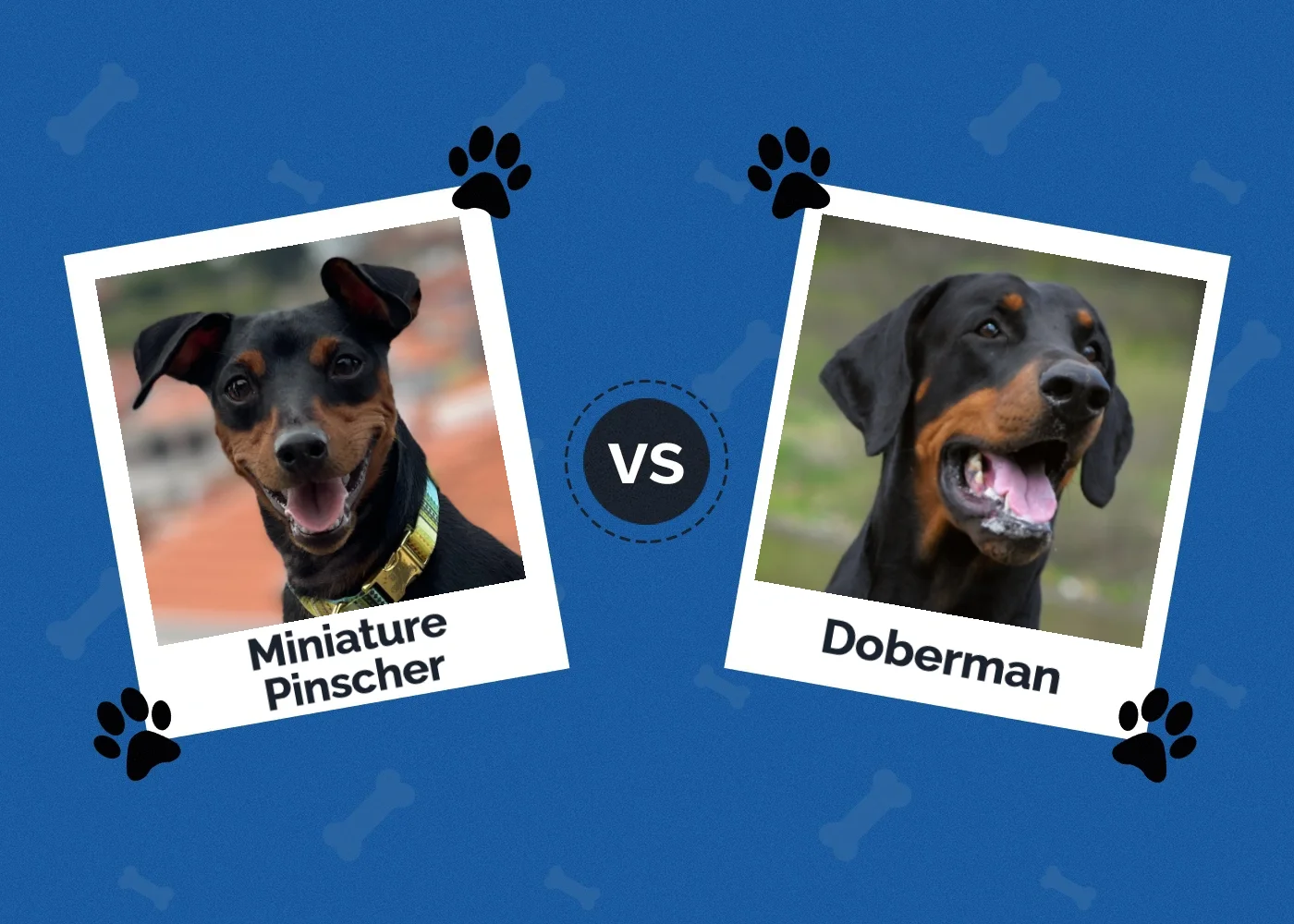
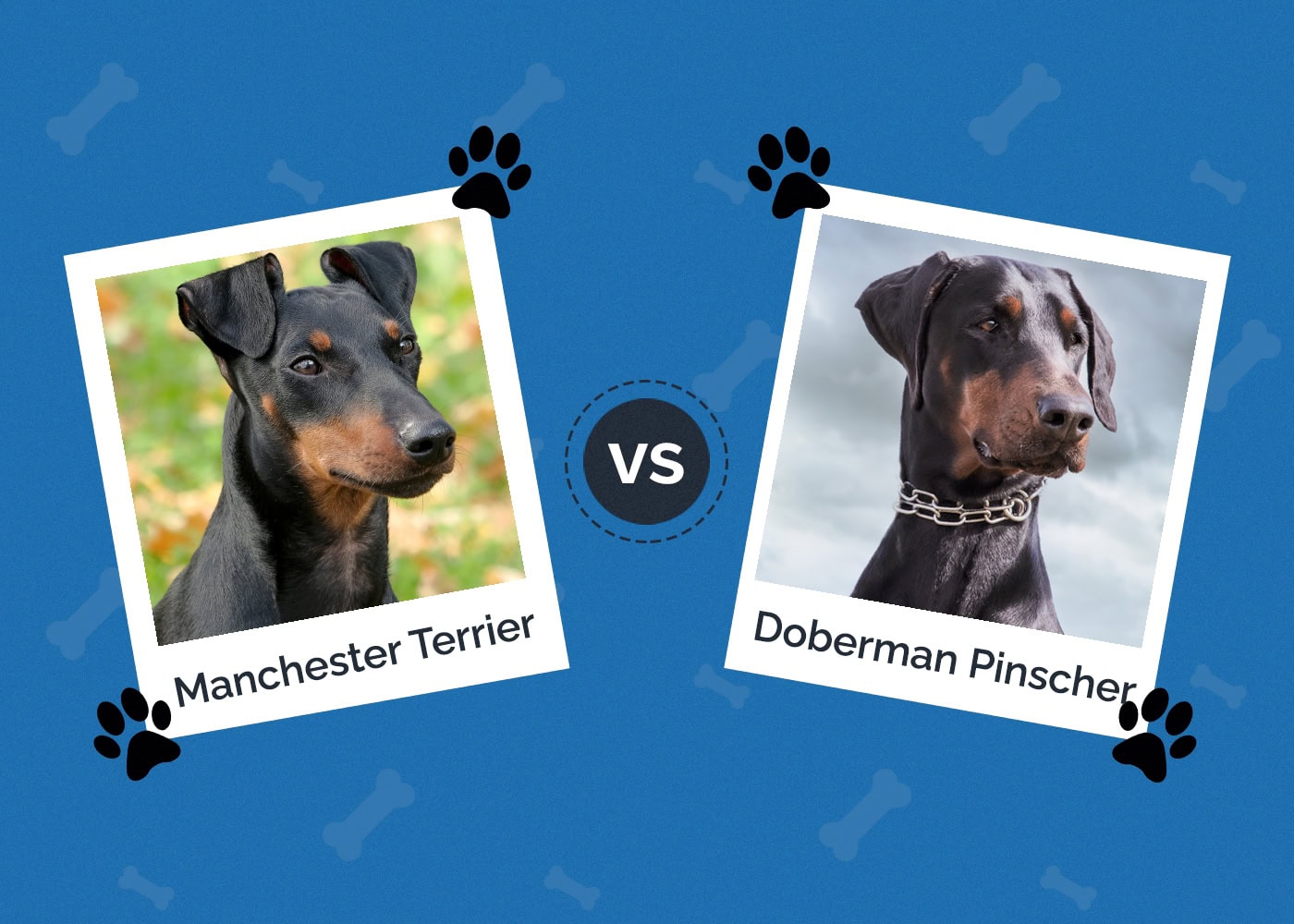
Manchester terriers and Dobermans may look quite similar, but these breeds have different personalities and needs! Manchester terriers are relatively small dogs. Even the largest of the breed’s three sizes, the standard, rarely makes it past around 16 inches at the withers. And most weigh less than 22 pounds. While these sleek athletes were bred as rabbit and rat killers, they're quite sweet.
Most get along well with other pets and enjoy being active with their favorite humans. Dobermans were initially bred as personal protection dogs and have well-developed muscles. They’re loyal and fearless and bond deeply with their owners. Because these dogs are so strong, early training is critical to ensuring your buddy remains well-behaved, as unsocialized Dobermans can often be aggressive toward smaller animals and strangers.
Dobermans require a good amount of exercise, with most needing anywhere from 1–2 hours per day to stay grounded and happy. Keep reading to learn more about these two stunning breeds.

Visual Differences
At a Glance
Manchester Terrier Overview
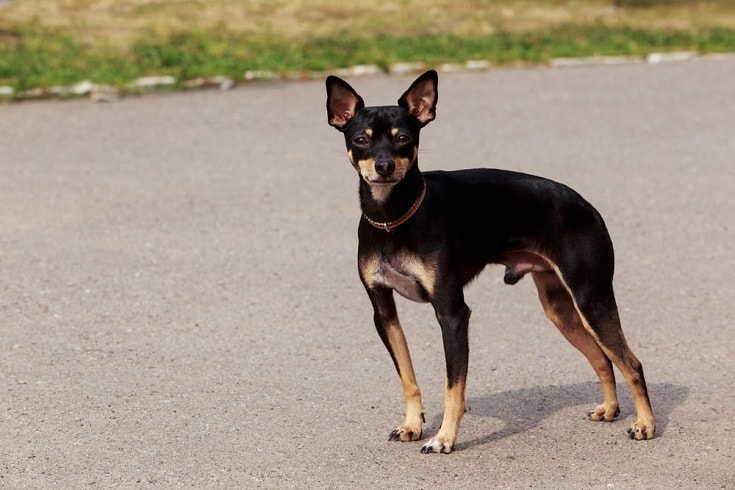
Manchester terriers emerged as a breed in the middle of the 19th century, and they were developed in the United Kingdom to hunt rabbits and kill rats. Back in 19th century Manchester, the dogs gained fame due to their prowess in ratting pits.
They came to be associated with Manchester, although similar tenacious ratters could also be found in other locations. The breed first gained AKC recognition in 1887, but the organization classified toy and standard Manchester terriers as separate breeds until 1956. The AKC currently considers Manchester terriers one breed with two classifications: standard and toy.
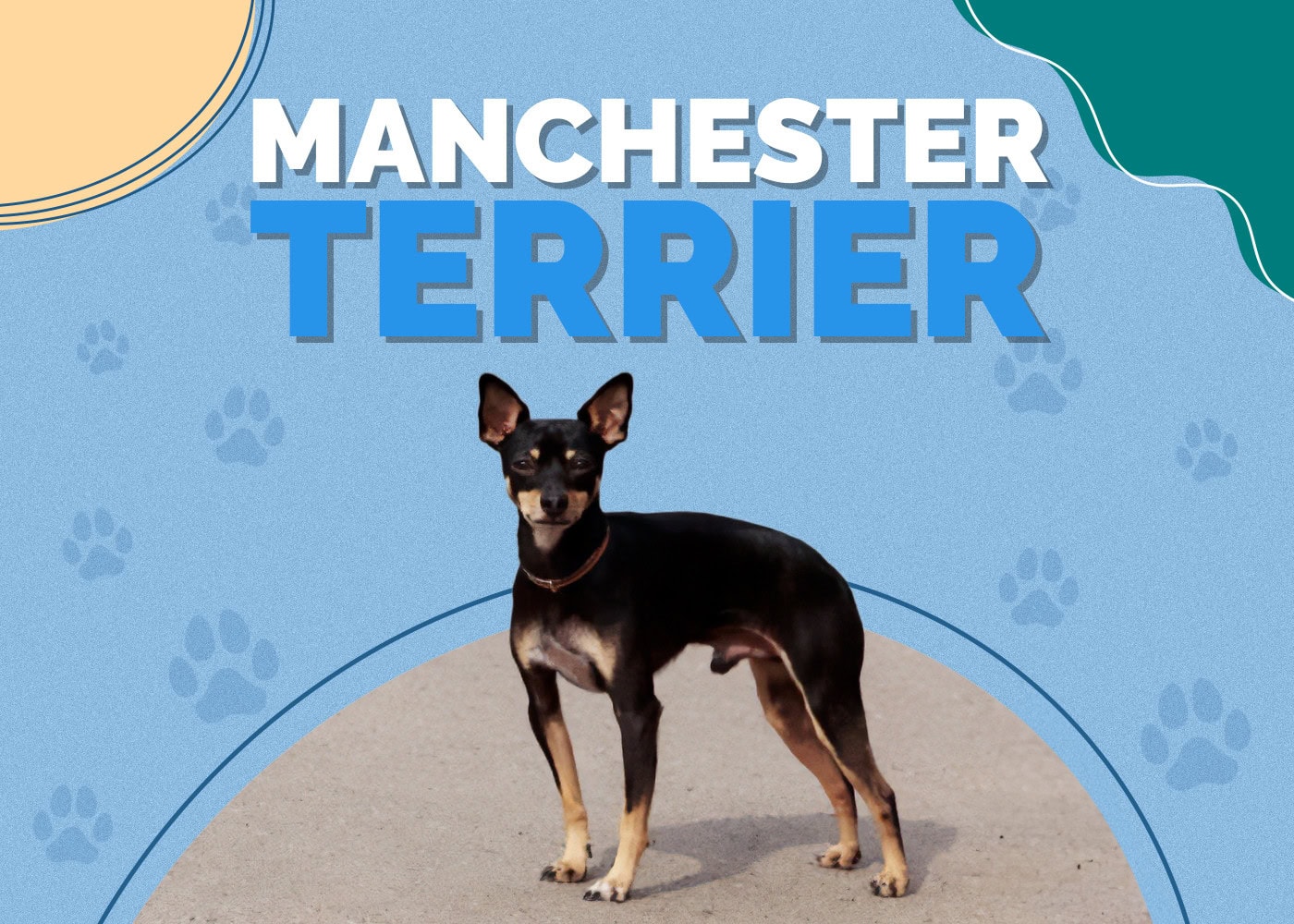
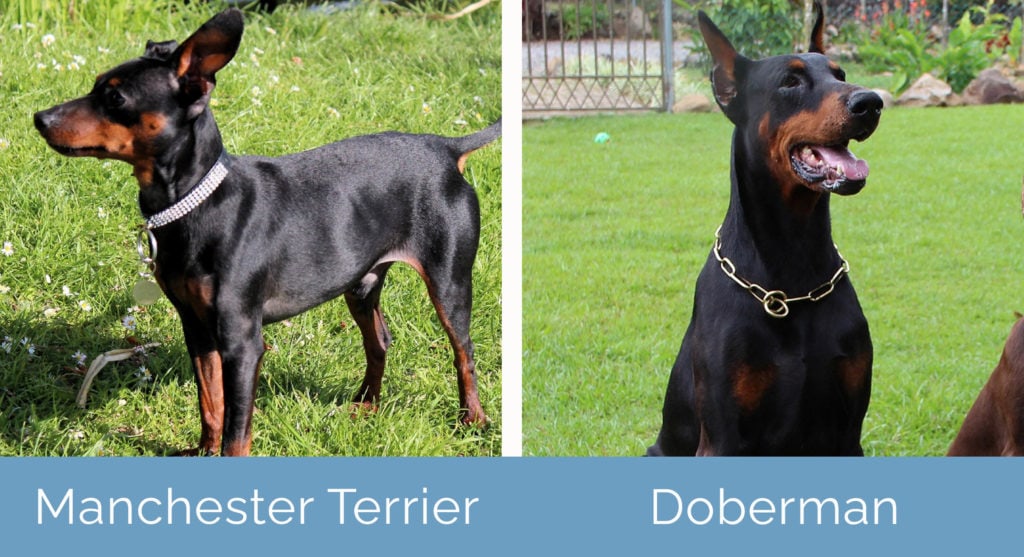
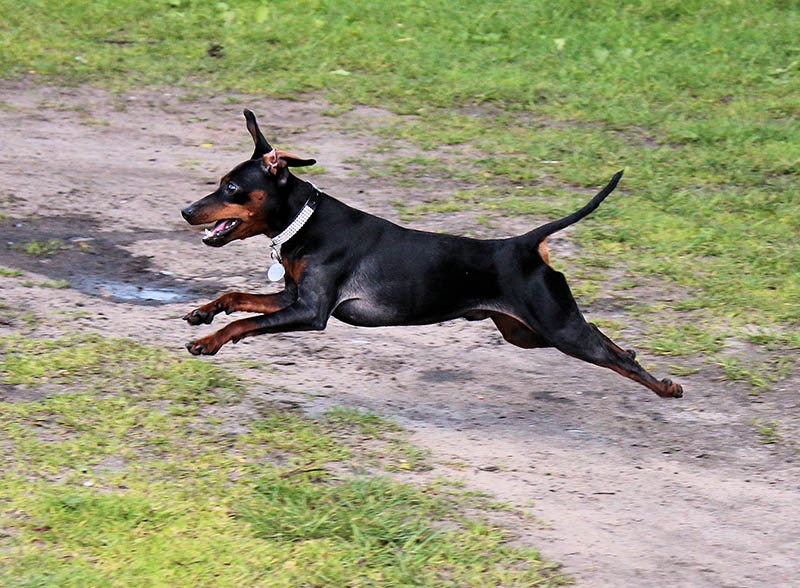
Manchester terriers look like tiny Dobermans. They have the same sleep dark coats and highlights as Dobermans do. And while Manchester terriers are incredibly athletic, they're also not as muscular as Dobermans. Manchester terriers come in three sizes: standard, miniature, and toy.
The standard version is considered part of the American Kennel Club's (AKC) terrier group. Toy Manchester terriers reach a maximum of 12 inches and usually weigh less than 12 pounds. They compete in the AKC's toy division. Manchester terriers of all sizes have the same body shape, coloring, and temperament; only their ear shapes are different.
Personality
Manchester terriers are smart, eager, and loyal. They love to be in the thick of things and do well in busy families. They tend to have a ton of energy and lots of spirit. Manchester terriers are generally good with kids but need adequate training to keep their terrier instincts under control when around tiny unpredictable humans.
And while they're generally super sweet, Manchester terriers aren't great choices for homes with cats and other small mammals, as they can sometimes become aggressive when their chasing and catching instincts are triggered. However, some Manchester terriers do reasonably well around cats and other critters they grow up with.
Exercise
These active dogs require a fair amount of daily exercise. Most need about an hour per day of moderately vigorous exercise. A few daily brisk walks should be more than sufficient, but most can handle an occasional 2 or 3-mile run. And while they love heading out into the great outdoors, they often tire when walking for long periods. T
Try to keep hikes in the 3–5 mile range. Miniature and toy dogs often require a bit less exercise than standard pups. Because of their size, it can often be difficult for miniature and toy dogs to keep up on long runs or handle rugged terrain.
Training
Manchester terriers tend to be intelligent and easy to train, and many owners report that their pets have fantastic problem-solving abilities. If you're looking for a fun training-based activity to do with your dog, obedience and agility competitions are great options.
Not only will your dog benefit from a good workout, but they'll also get a good dose of mental stimulation to help keep them emotionally on an even keel. Other training options for these dogs include freestyle doggie dancing and tracking. Remember to keep things positive, as these sensitive canines don't respond well to harsh training methods.
Health & Care
Manchester Terriers tend to be reasonably healthy dogs, with most living anywhere from 15–17 years. They can develop certain health conditions, including hypothyroidism, cardiomyopathy, and progressive retinal atrophy. Many veterinarians recommend early testing for hip, thyroid, and eye problems.
Their coats require minimal maintenance, but they must have their nails regularly clipped and their teeth brushed. Aim for at least once-monthly nail trims, more often if necessary. Try to brush your dog’s teeth two or three times a week using canine-specific toothpaste since fluoride is poisonous to dogs.
Suitable for: Active Families Without Other Pets
Manchester terriers make great pets for active families seeking an intelligent, friendly canine addition. These clever dogs love to hang out with people and are incredibly easy to train.
They don't require much grooming or have many health conditions to worry about. However, there are better choices for households with cats or other small mammals, as Manchester terriers have a strong prey drive and are inclined to give chase if not properly socialized and trained.

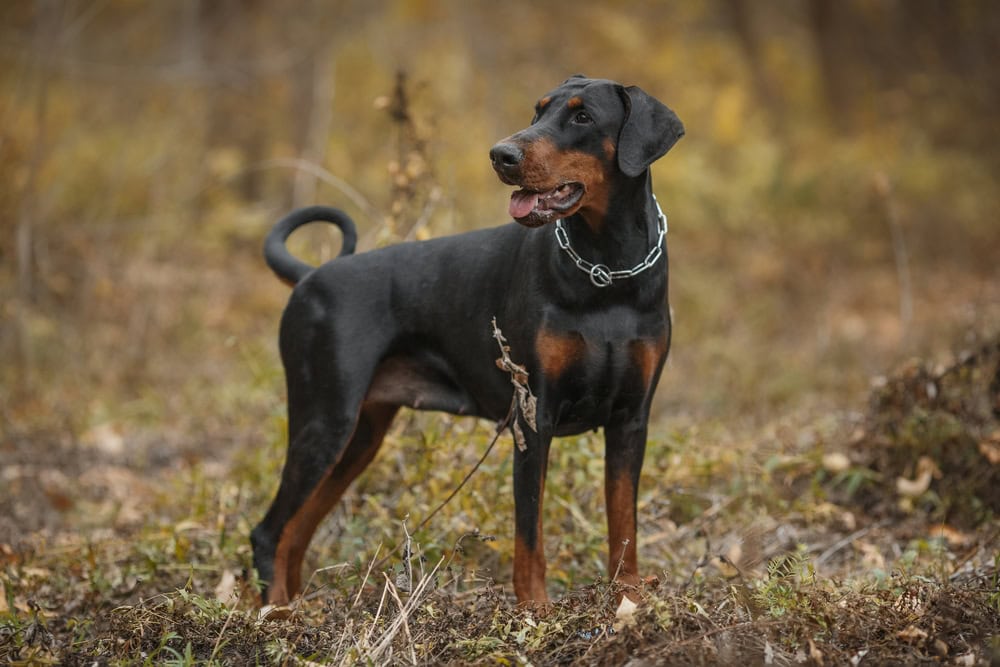
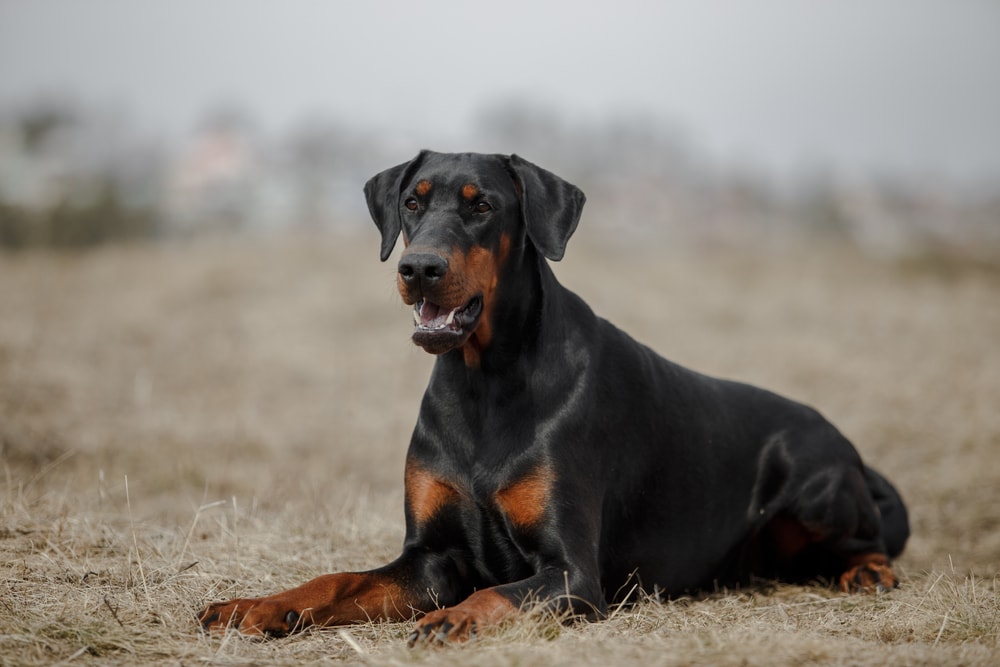
Doberman Overview
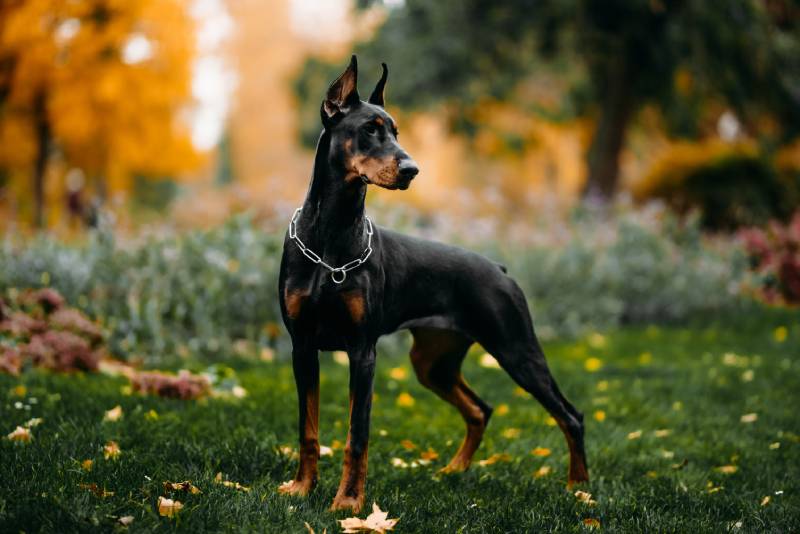
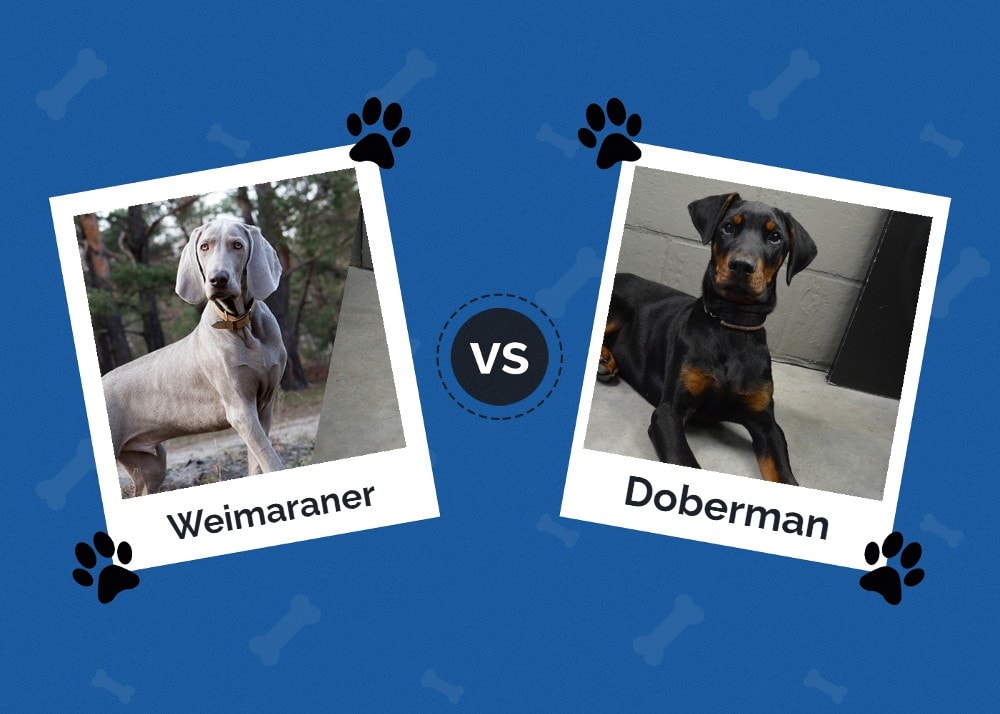
Dobermans haven't been around that long! Karl Dobermann developed the breed in the 1890s after deciding that some canine protection was needed on his tax-collecting rounds in Germany. Dobermann mixed several breeds, including German pinschers, Rottweilers, and Weimaraners.
However, the precise mix that created these sleek dogs remains a mystery; Dobermann, the head of the local dog pound, didn't leave detailed records. The breed quickly became popular due to its athleticism, loyalty, and trainability. The AKC recognized the breed in 1908; in 2021, it was the 16th most popular breed in the United States.
Also, Dobermans are incredibly smart, observant, fearless, and loyal. They were bred initially as personal protection dogs and often worked with military and law enforcement teams. But they're also in demand as therapy and guide dogs due to their incredible loyalty and tendency to focus on one person.
They require a fair amount of serious exercise, and early training is an absolute must, or these protective dogs can become aggressive. Several localities have restrictions on Dobermans, either banning the breed entirely or requiring these dogs to be leashed and muzzled at all times in public.
Personality
Dobermans usually have sweet personalities; they're typically affectionate and incredibly loyal. They bond deeply with their family and can become very attached to and protective of their favorite people. They tend to be quite gentle with kids, particularly those they know well.
They're not great around cats and smaller dogs—both can provoke aggression in some Dobermans. However, most control their instinct to chase with consistent obedience training. Dobermans that grow up around cats often get along quite well with kitties and are happy to include felines in their sphere of protection.
Exercise
Dobermans require serious exercise. These active, agile dogs need 1–2 hours of exercise daily. And a few good walks won't really cut it with these energetic, muscular athletes. Dobermans love a good hard run or a flyball workout. Most can run anywhere from 3–5 miles at a good pace.
These powerful dogs can quickly become difficult to manage without sufficient exercise due to their pent-up energy. They love hikes and exploring the great outdoors with their family members, and they even do well on multi-day backcountry hikes.
Training
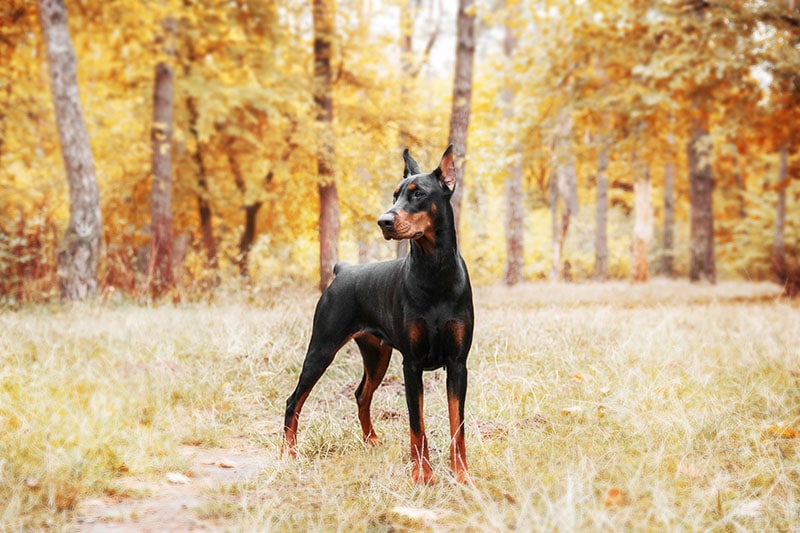
Dobermans require training to learn how to channel their protective tendencies effectively. They are working dogs and love using their minds, solving problems, and engaging in productive activities by their owner’s side. These loving dogs do incredibly well with reward-based training as Dobermans instinctively seek to please their owners.
Rewarding the behavior you want to see instead of punishing inappropriate doggie conduct decreases the chances that your pet will become aggressive out of fear. While training needs to be consistent, treats and praise often deliver the best results with Dobermans.
Health & Care
Dobermans have a heightened risk of developing conditions such as cardiomyopathy, progressive retinal atrophy, hip dysplasia, and von Willebrand's disease. The AKC suggests that Doberman parents purchase their pet from a reputable breeder who tests their animals for hip, eye, heart, and thyroid conditions.
Dobermans have gorgeous, sleek coats that don't require much grooming. A quick daily brush will keep your pet's fur nice and shiny, and it's a great bonding activity. A monthly bath is more than enough to keep your buddy looking sharp. They must have their nails clipped about once a month and their teeth brushed a few times a week.
Suitable for: Experienced Dog Owners Who Love a Good Outdoor Workout
Dobermans make great companions for experienced dog owners looking for a powerful, loyal, protective companion. These gorgeous dogs are incredibly smart and easy to train, which is crucial because they can quickly become difficult to control without good obedience training. Because they require frequent exercise, they do best in active homes.
Remember that these dogs are often subject to breed-specific restrictions, so double and triple-check that you're in the clear before bringing one of these darlings home. Make sure to give your homeowners or renters insurance policy a quick once over before adopting a Doberman, as many companies won't write policies for Doberman-owning households.
Which Breed Is Right for You?
Manchester terriers and Dobermans are both beautiful animals. Although they look pretty similar, they have varying physical requirements and temperaments.
Dobermans are much larger than Manchester terriers and require way more room to be happy. Manchester terriers are usually happy in moderately-sized suburban homes, and most backyards offer more than enough space for a good game of fetch. Manchester terriers need to get their blood pumping, but most are okay with a few daily walks and regular games of frisbee and fetch.
Dobermans, however, require a ton of space and exercise. Most need 1–2 hours of serious physical activity per day. We're talking multiple walks and hardcore games like flyball. Dobermans are great for those with active lifestyles looking for a loyal pet ready to conquer the great outdoors by their side. Manchester terriers are better suited for suburban life.
The two also have highly divergent temperaments. Manchester terriers were initially bred as ratters. They have a high prey drive and are inclined to chase smaller critters. Dobermans were created to provide canine muscle and tend to be extremely protective. These beautiful dogs can easily become difficultquicklyndle without good training.
Sources
Featured Image Credit: (L) Radomir Rezny, Shutterstock | (R) Dyrefotografi, Shutterstock
Get Hepper In Your Inbox


Pet care tips from our vets and experts, straight to your inbox.
You may opt-out at any time. View our Privacy Policy for more information.
Lorre Luther a reformed lawyer from the United States, she moved to the Netherlands to follow her dream and become a writer. Currently living in Rotterdam, Lorre enjoys traveling and reveling in the astonishing beauty of our planet. As an animal lover, Lorre is convinced that cats are smarter than humans.
Join the conversation
Ask a question, share your story, or send private feedback.