Hepper is reader-supported. When you buy via links on our site, we may earn an affiliate commission at no cost to you. Learn more.
Mobility Assistance Dogs: What They Do, Qualifications & FAQ
In this article
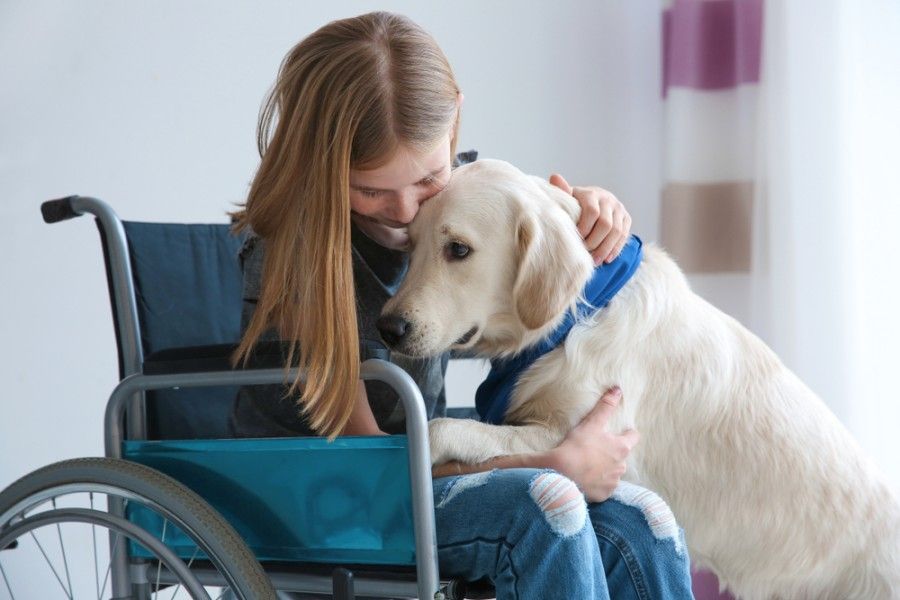
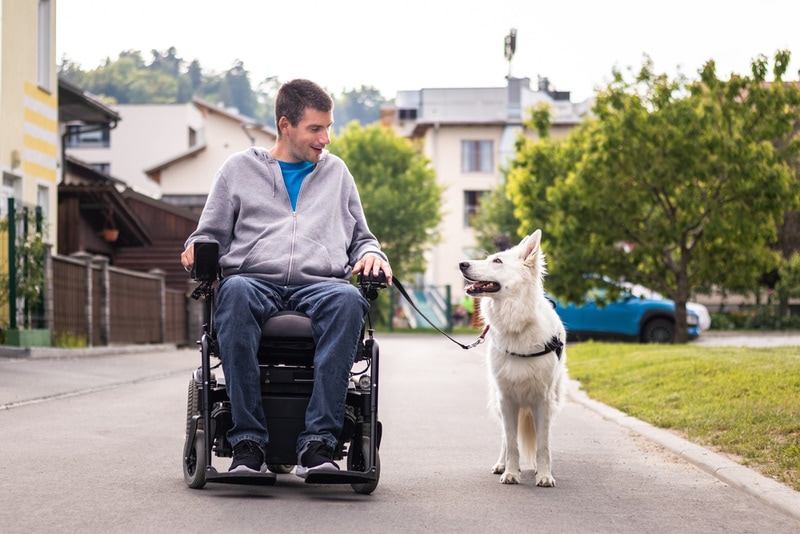
A mobility assistance dog is a unique type of service dog that assists people with physical disabilities, such as people who are in a wheelchair. These dogs may help with balance, strength, or mobility issues to ensure their owners live happy and independent lives.
Having a canine companion and support system can make a lot of previously challenging or impossible tasks possible for owners with disabilities, including public transportation, living alone, enjoying hobbies, and much more.

How Does It Work?
For people with physical disabilities, daily tasks like moving around the house, retrieving items from out-of-reach places, or standing up and sitting down can be challenging. Mobility assistance dogs help these people with day-to-day activities to help them live independently.
As an example, people with balance issues may struggle to walk around comfortably without handholds or rails. Mobility assistance dogs can be trained to serve as a brace for their owner to help them maintain balance and restore strength. Some of these dogs are trained to push or pull to help their own get up from a seated position.
For people who rely on public transportation, mobility assistance dogs can be a crucial support system to call for an elevator or press the button for automatic doors. They can also turn lights on and off or open and close doors.
Mobility assistance dogs are also trained to provide help in an emergency. They can call 911 and notify others of the emergency and the location, provide protection for the owner until help arrives, and prevent further injuries. For example, if someone with limited mobility loses consciousness while crossing a street, the dog can make sure they’re not immobilized in the path of traffic.

What Are the Different Tasks Mobility Assistance Dogs Can Do?
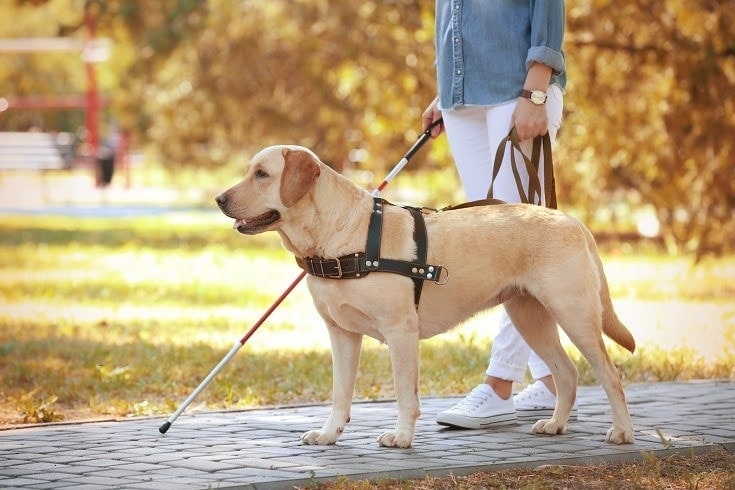
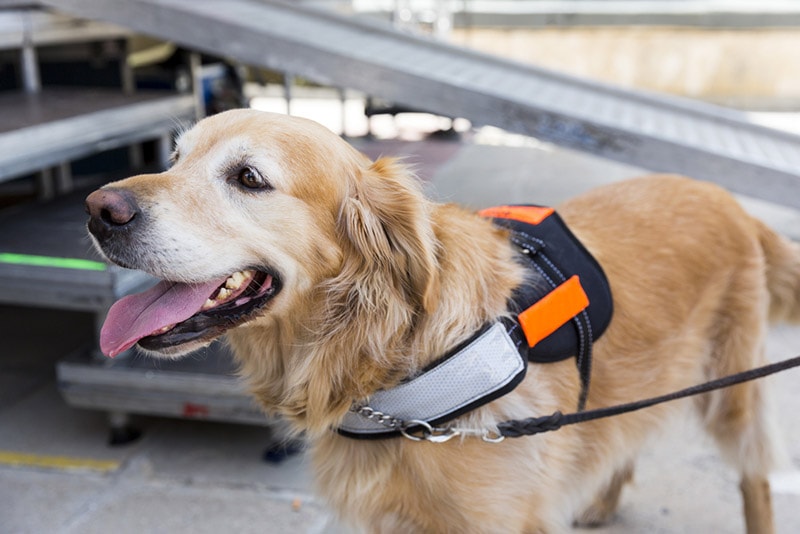
Mobility service dogs can perform a lot of different tasks for their owners, including helping them brace against the dog to prevent falling. They may also wear a special harness that their owners can hold onto for balance while standing, sitting, or walking.
Some of these dogs are trained to open and close doors and cabinets, often with special modifications, to help people living at home access different parts of their homes. They may also push buttons or flip light switches both at home and in public, such as an elevator door.
Mobility assistance dogs can retrieve items for their owners, carry them over, and put them down, assisting people with items that may be out of reach.
In emergency situations, such as if an owner falls, the mobility assistance dog is trained to notify others by one of the following ways:
Mobility assistance dogs can perform other tasks in an emergency, such as warming them if their temperature drops or removing clothing if they spike a fever.

Where Is It Used?
Mobility service dogs are a specialized type of service dog, but they may be used to help people with a wide variety of disabilities. Some of the conditions that may benefit from a mobility assistance dog include:
- Spinal cord injury
- Arthritis
- Vertigo
- Visual impairment
- Migraine
- Coordination problems
- Neurological, cardiac, or metabolic disorder
- Spina bifida
- Multiple sclerosis
- Heart disorders
- Muscular dystrophy
- Parkinson’s disease
- Brain injury
- Gait or balance issues
Mobility assistance dogs are extremely versatile and can be helpful for virtually any medical condition that prevents someone from living independently.

How Are Mobility Assistance Dogs Trained?
There’s no specific program that mobility assistance dogs go through for training. All of them are trained for general assistance and obedience, but their training is then specialized to the help they provide. These dogs are tailored to the person who needs them, often with consideration for their innate abilities and characteristics.
Mobility assistance dog training typically begins early in the dog’s life, often in puppyhood, with basic obedience. Once they’re finished growing, their training is focused on stability work and specialized training for specific conditions or disabilities.
One of the challenges for these dogs is having the focus to continue to perform their jobs in distracting environments. They must have meticulous attention to detail and precision, as well as sensitivity to small changes in their owner that could indicate a problem.
Physical and Behavioral Characteristics of Mobility Assistance Dogs
Though many different breeds can become successful mobility assistance dogs, their size, strength, and demeanor matter. Toy or small breeds are often too small to perform a lot of tasks for their owners, so dogs should be around 24 inches tall at minimum.
If the dogs are being used for large adults, they should be over 100 pounds and taller. Dogs that are required to act as a brace or pull a wheelchair need to be large or giant breeds that can adequately support that weight.
As far as behavioral characteristics, mobility assistance dogs must be loyal and responsive, calm, and easygoing. Dogs that are too anxious or get stressed easily may not be a good choice. They must also be intelligent and obedient but neither overly excited nor lazy.


Frequently Asked Questions
Do Mobility Dogs Need to Wear Special Equipment?
The Americans with Disabilities Act (ADA) does not require identification like a vest, harness, or ID tag for mobility assistance dogs. But in order to perform their duties, these dogs may need to wear a harness with a sturdy handle or other modifications to help their owner.
What Are the Best Breeds for Mobility Support?
The best mobility assistance dogs are a combination of athletic build and size with a good capacity for training and learning. Often, the best breeds for mobility assistance are Golden or Labrador Retrievers, Poodles, and mixes of these breeds, but that doesn’t mean a different breed or mix can’t be successful if it has the other traits. These breeds are often chosen for their responsiveness and obedience, size, and friendliness.
What Should Owners Do for Mobility Assistance Dogs?
All the tasks performed by mobility assistance dogs are necessary for their owners to live full lives without depending on others. In return, owners should provide their dogs with regular veterinary care, entertainment, and lots of love with treats and rewards. Mobility assistance dogs are “always on” to ensure they are there for the care of their owners, but they rest and relax, too.

Final Thoughts
Like other service dogs, mobility assistance dogs are incredible heroes that help people with all types of physical disabilities gain a new lease on life. These dogs are often trained to help with their owner’s specific condition, not only for day-to-day activities but for emergencies.
Sources
Featured Image Credit: 24K-Production-Shutterstock
Get Hepper In Your Inbox


Pet care tips from our vets and experts, straight to your inbox.
You may opt-out at any time. View our Privacy Policy for more information.

Nicole is a lover of animals of all sizes but is especially fascinated with the feline variety. She’s the proud mom of Baby, a Burmese, and works every day so he can relax in the sunshine or by the fire. She’s always had a cat in her home and has spent countless days with others, observing behaviors and softening up even the grouchiest of the lot. Nicole wants to share her kitty expertise with you so you and your cat can live happy, healthy, and care-free.
Join the conversation
Ask a question, share your story, or send private feedback.