Hepper is reader-supported. When you buy via links on our site, we may earn an affiliate commission at no cost to you. Learn more.
Parrot Molting: When It Happens & Signs to Note (Vet-Reviewed)


In this article
We all know that parrots come in a multitude of shapes, sizes, and colors. Their brightly colored feathers make them some of the most beautiful creatures on earth, so it can be quite distressing when those feathers turn dull and start to fall out. The good news is that all parrots will lose and replace their feathers once or twice a year in a process known as molting.
The specific times and molting process can vary amongst different parrot species, but it all happens for the same reason. If you are eager to find out when parrots molt and what signs to look out for, then this article is for you.

Parrot Molting 101
Parrot feathers function similarly to the fur of mammals, and play several important roles in their everyday life. Parrots rely on their feathers for temperature regulation, camouflage, aerodynamics during flight, waterproofing, and even for courtship. Due to the importance of their feathers, parrots need to shed and replace their feathers in a process known as molting, to maintain the health and condition of their plumage.
Why Do Parrots Molt?
The main reason for parrots to molt is to replace their old, worn-out feathers with a healthier set. A parrot’s feathers cannot be repaired once they have become old or damaged. Parrots rely on molting to keep their feathers in good condition, and if they don’t, several of their everyday functions might be affected.
Parrots do not molt so that they can grow bigger; molting has nothing to do with their growth, but rather for their feather maintenance. In the wild, parrots are exposed to rain, harsh sunlight, branches, and other stimuli that can wear down their feathers, making molting a necessity.
When Do Parrots Molt?
Most parrots only molt once or twice a year, specifically during early autumn and late summer. They rely on certain environmental cues to signal when they need to molt, such as daylight length or temperature. Wild parrots usually have an easier time responding to the environmental cues to molt, but this can be difficult for pet parrots.
Pet parrots are often exposed to artificial lighting and more stable temperatures in captivity because they are nestled inside our homes. They do not experience the same changes in daylight and temperature as wild parrots do, and this can interfere with when and for how long your parrot molts. This can result in irregular and sometimes incomplete molts.
It usually takes parrots around 2 months to complete a molt, depending on their health and species. Smaller parrot species, such as the cockatiel, may molt more often but for a shorter time than larger species.
How Do Parrots Molt?
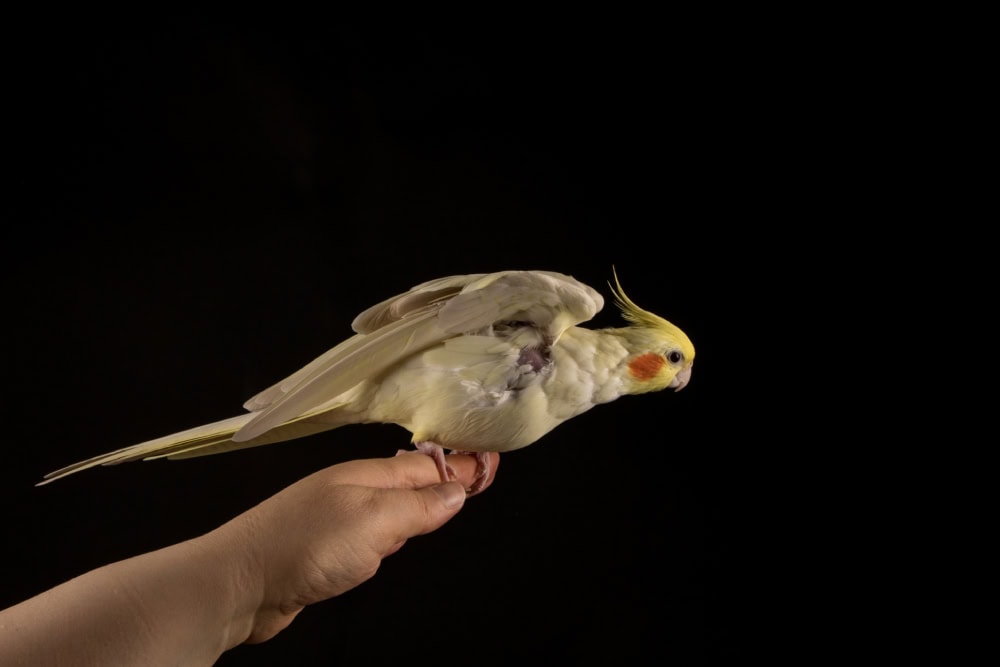
Parrots molt by shedding their feathers from different sections of their body. They do not lose all of their feathers at once and regrow new ones shortly after. During a molt, a parrot’s old feathers detach from their skin as the new feather grows at the base and pushes through. The molting process usually begins on their wings and ends on their tail.
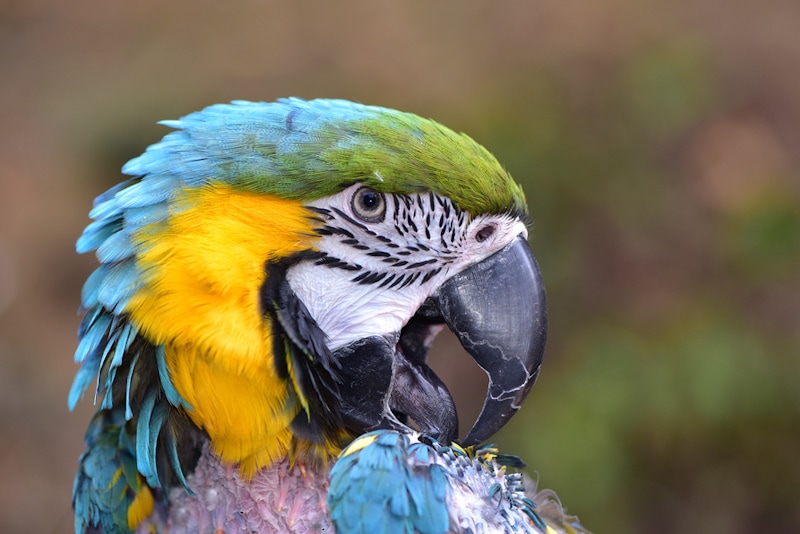
It is normal for your parrot to look a bit scruffy and unkempt as they molt and regrow new feathers.
The 5 Signs Your Parrot Is Molting
Let’s look below at five signs your parrot could be molting.
1. Increased Feather Loss
The most noticeable sign your parrot could be molting is when they start losing more feathers than usual. Patches of feathers may start to fall out as it is replaced with new growth, and you might notice that more feathers are lying at the bottom of their cage.
2. Pin Feather Growth
The new growth exposed after parrots shed their feathers is called pin feathers. This is the beginning stage of the new feather growth and pushes through a skin follicle. Once exposed, pin feathers feel and look similar to the bristles of a brush. They are made up of keratin, the same fibrous protein found in our fingernails.
3. Irritability
It is common for parrots to show signs of irritability during molting as it can be an uncomfortable process. Although the old feathers do not hurt when they fall off, the new growth might feel uncomfortable. The pin feathers are usually sore when touched because it has nerve endings, so it is a good idea to avoid rubbing those areas.
Furthermore, parrots can become very itchy as they molt. This itchiness not only makes them irritable but also causes them to preen more.
4. Appetite Changes
Parrots may experience changes in their appetite alongside pin feather growth. They generally start eating less food than usual and sometimes refuse food entirely. An illness should first be ruled out before assuming your parrot is eating less because of molting.
Parrots should not go without food for more than 24–48 hours and need to be taken to an avian veterinarian if this is the case.
5. Reduced Activity
You can expect your parrot to be less active and slightly lethargic during a molt. This is likely because they feel uncomfortable, stressed, and itchy. You should let your parrot rest while they molt and avoid disturbing them while they are sleeping. Your parrot should regain their energy again once they recover from molting.
What Factors Can Affect Molting?
We mentioned earlier that parrots kept as pets are often sheltered from normal environmental cues like changes in day length and temperature, which can affect when and how often they will molt. Parrots kept in warmer environments, such as homes with central heating, will often molt more frequently than they would in the wild, and this can mean they will need extra food to support the turnover of feathers.
Illness and poor nutrition can also impact how often, and how successfully, your parrot will molt. It’s important to be familiar with the normal features of your particular parrot species so that you can recognize when things aren’t normal.
When Is Molting A Problem?
You should not mistake your parrot's natural molting process for feather plucking behavior. Excessive feather plucking could indicate your parrot is feeling bored, stressed, or ill. Feather plucking and molting are two separate things that happen for very different reasons. Because molting is a gradual process, there is not much skin exposed during a molt, as the shed feathers are already in the process of being replaced. A parrot who is plucking will create bald patches on their body.
Although it is normal for your parrot to preen and pick out damaged feathers, plucking behavior is an extremely worrying sign for your pet. Parrots are intelligent, curious, and social birds that need companionship and activities to keep them enriched, happy, and healthy. When parrots become lonely, frustrated, or bored, they will redirect their energy on plucking out their own feathers, creating large bald patches, usually starting on their fronts. This can quickly become a fixation that can be difficult to stop once they have started.
If you have welcomed a parrot into your life, it is vital that you provide them with company, toys, puzzles, and variety to keep their minds challenged. If you won’t be able to spend several hours per day interacting with your pet, they will be far happier with a companion. If you notice your parrot starting to pluck their feathers, or you spot an area of featherless skin, there is something wrong and you need to get in touch with your vet or avian specialist right away.
Conclusion
Molting is a completely natural process for parrots in captivity and in the wild. Parrots molt so that their new feather growth can replace old and damaged feathers. Most parrots will molt twice a year, but some species only molt once a year. Parrots kept as pets may molt more or less frequently than their wild counterparts due to living in more stable environmental conditions. A molt can last for several weeks, and your parrot might be more irritable and less active during it. Molting parrots shouldn’t go entirely bald from molting, as the new growth will be visible as the old feathers are shed.
Feather plucking is a serious problem that occurs when a parrot is sick, in pain, bored, depressed, or frustrated. It should not be ignored, and needs swift intervention to avoid severe feather loss and long term consequences.
Always speak to a vet or avian specialist to ensure you are providing everything your parrot needs to stay happy and healthy.
Sources
Featured Image Credit: Gualberto Becerra, Shutterstock
Get Hepper In Your Inbox


Pet care tips from our vets and experts, straight to your inbox.
You may opt-out at any time. View our Privacy Policy for more information.
Sarah is residing in South Africa with her partner and pets. She currently is interested in veterinary science and ichthyology, which she wants to study alongside her main passion: pet content writing. Sarah has over 60 fish including goldfish, tropicals, shrimp, and snails. She also keeps hamsters and a tarantula and wishes to provide quality content for readers and allow others to learn from her knowledge and experience. Sarah has much experience in all aspects of pet care, and providing the world with knowledge on ethical pet ownership is her lifelong dream.
Join the conversation
Ask a question, share your story, or send private feedback.