Hepper is reader-supported. When you buy via links on our site, we may earn an affiliate commission at no cost to you. Learn more.
Feather Plucking in Parrots: Signs, Causes & Vet-Reviewed Care Tips


In this article
Do you notice your parrot’s plumage looking a bit thin? Are there always feathers at the bottom of the cage? If so, your bird may be suffering from a condition known as feather plucking1. This is a common problem with pet birds, but that doesn’t mean it should go undiagnosed or untreated. Feather plucking can be indicative of an underlying health condition and should always be evaluated further to determine its root cause.
Read on to learn more about feather plucking, including its causes and what you can do to stop it.

What Is Feather Plucking in Parrots?
Feather plucking happens when a parrot pulls out their own feathers. This behavior is relatively common in companion birds and not often seen in those that live in their natural habitat2. Affected birds will pluck or chew out their own feathers for many reasons, which we’ll get into more in-depth later.
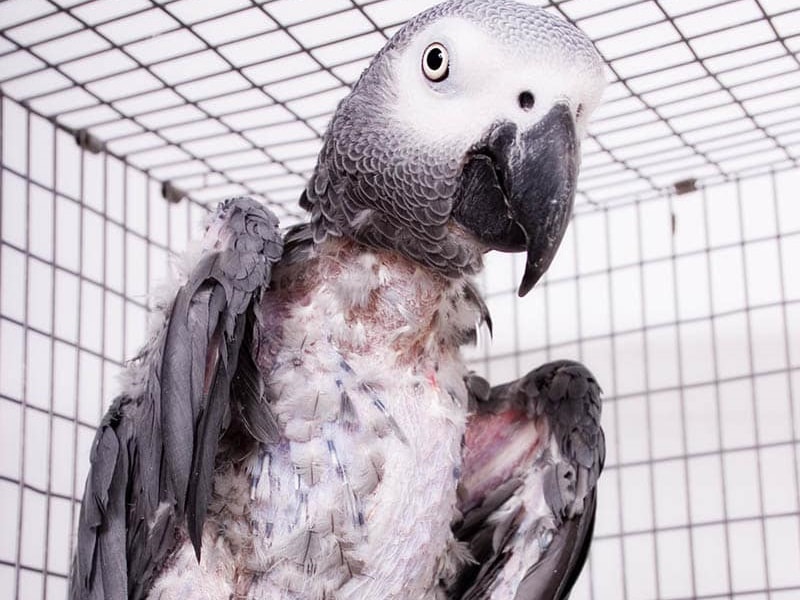
Feather plucking may initially appear to be a purely aesthetic condition, affecting how the bird looks. However, it can decrease your parrot’s ability to keep herself warm and dry and cause skin infections and other serious complications.
What Are the Signs of Feather Plucking in Parrots?
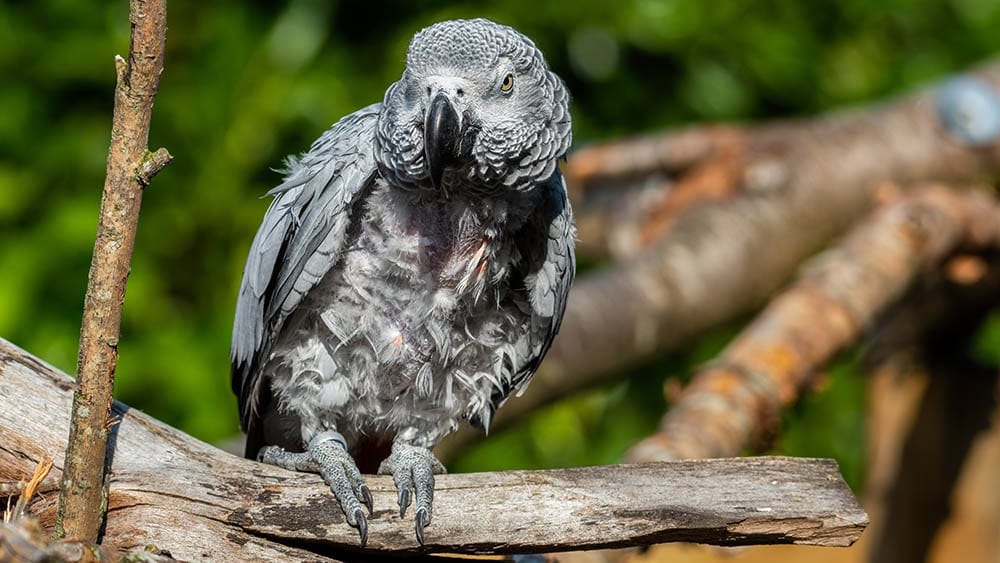
Finding a pile of feathers in your parrot’s cage is the most obvious sign of feather plucking. But chances are that’s not the only thing you’ll notice, as she may exhibit various signs and behaviors, including:
- Damaged feathers
- Untidy or dull-looking feathers
- Broken skin
- Thinning or bald areas
- Signs of blood
- Dry, flaky skin
- Scratching
- Depression
- Irritation
- Stressed-out behaviors
What Are the Causes of Feather Plucking in Parrots?
If you’ve noticed a pile of feathers in your bird’s cage, you’ve probably already Googled, “Why do parrots pluck their feathers?” Unfortunately, there is no one reason for this behavior, which is part of what makes it so difficult to treat and diagnose. There are many potential causes of feather plucking in parrots, though they generally fall into one of two categories: medical or behavioral. Let’s look a little closer at some of the most common causes of feather plucking.
Conditions in the Home
Birds are much more sensitive than we give them credit for, so your parrot’s feather plucking could be due to the conditions of her home environment. Things you might not even know are affecting your pet could be the reasoning behind her destructive behavior. The following conditions are just some of the reasons your bird could be pulling out her feathers:
- Someone in the home actively dislikes the bird (even if they’re not directly unkind to her)
- A stressful or conflict-fueled home
- A noisy or unpredictable environment (e.g., loud television, many other pets, lots of visitors)
- A pollutant-filled home (e.g., cigarette smoke)
- A public home (e.g., doctor’s office or pet store)
- A potential predator around the house (including your beloved pets)
Birds that are kept inside a cage all day long without interaction or environmental enrichment are likely to develop this aberrant behavior.
Improper Nutrition
Feeding your parrot the improper diet for her life stage or species can lead to feather plucking. A balanced diet is an important component of bird husbandry, and malnutrition can cause stress that leads to feather picking.
Food allergies can also cause this behavior. Any component of the parrot’s diet should be inspected to rule out an allergic reaction. The preservatives and dyes often added to seeds and pelleted diets have been known to cause allergies.
Sudden Changes
Sudden changes to your bird’s cage or home environment can trigger stress that can potentially lead to feather pulling. These changes can include:
- Relocating the enclosure to a space she doesn’t like
- Erratic room temperature shifts
- Changes to the family (e.g., divorce or bringing home a newborn)
- Losing a mate or friend
- Loss of something familiar for a time (e.g., a favorite toy)
Skin Conditions
Inflammatory skin conditions or skin infections can cause feather plucking, as they can make your parrot very uncomfortable. She may respond to this discomfort by pulling at her feathers. Even parasites like feather mites and lice can cause feather plucking.
Medical Conditions
Certain health conditions and diseases, including liver damage, tumors, respiratory infections, and kidney failure, can cause discomfort, which may lead to feather plucking. If your parrot’s feather pulling is accompanied by other concerning signs of changes in behavior, it is best to see a veterinarian to rule out anything medical that may need intervention.
Infectious diseases, such as psittacine circovirus (also known as psittacine beak and feather disease), can affect a bird’s immune system, while attacking and damaging fast-growing epithelial cells from the skin, beak, feathers, and nails.

The 5 Ways to Care For a Parrot That Feather Plucks
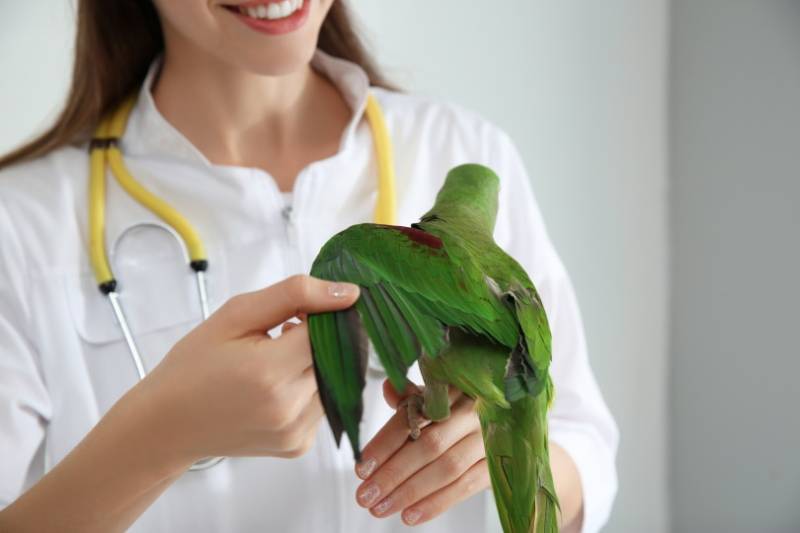
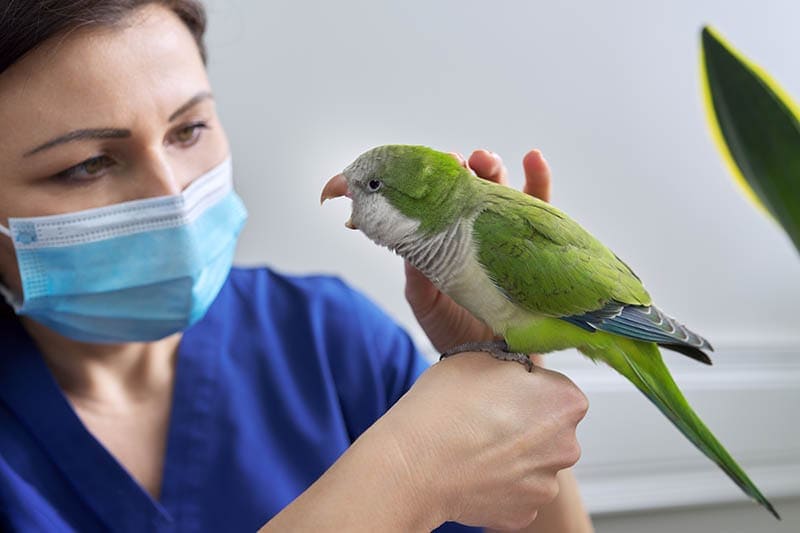
The treatment for feather plucking will depend upon the cause, so you must have your parrot evaluated by an avian veterinarian as soon as you notice the first signs of feather pulling.
Let’s look at some of the most common management plans for this condition.
1. Diet
Providing your parrot with a balanced diet will address diet-related feather plucking and ensure your pet lives a long and healthy life. Most experts recommend a pelleted diet specifically formulated for your parrot’s species and life stage. You’ll also want to supplement her pellets with fresh vegetables, fruits, and some seeds.
2. Sleep
Parrots need an uninterrupted period of 10 to 12 hours of sleep nightly. It would be best if you kept your bird in a dark, separate room to ensure she gets the rest she requires. Maintaining a consistent sleep schedule is best, so putting her to bed and waking her up at around the same time daily is recommended.
3. Stress Reduction
Look at your bird’s environment to see if anything in her space is causing an uptick in her stress levels. Is she in a noisy or chaotic area in your home? Is someone handling her more often than usual? Is the cat hanging out by the cage? Avoiding stressors can make a huge difference in the anxiety levels of your parrot.
4. Boredom Reduction
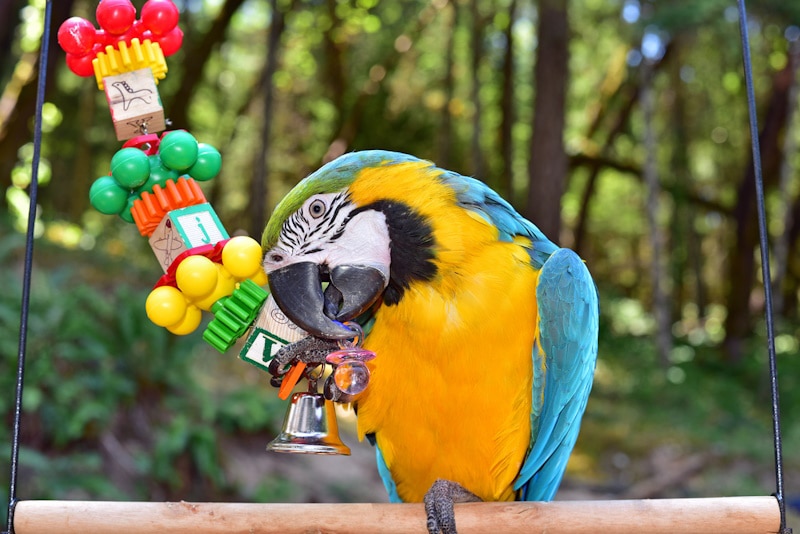
Sometimes parrots will feather pluck simply out of boredom, so ensure you give her the mental and physical stimulation she needs daily. Rotate her toys out every week to keep things fresh and interesting.
Focus on providing your parrot with opportunities to express her natural behaviors by giving her space to fly, providing foraging toys, socializing with her daily, and offering puzzles for a fun challenge.
5. Medical Intervention
If your avian vet has determined a medical reason for your parrot’s feather plucking, they will recommend several treatment options depending on the root cause. They may also offer prescription behavior-modifying medications as part of your bird’s treatment plan.
Frequently Asked Questions (FAQ)
Do plucked-out feathers grow back?
It depends. Birds can and often do grow back their feathers after the root cause of this behavior has been addressed. However, it is much easier to reverse the signs of feather plucking if caught early. Severe plucking can cause irreversible damage to the follicles to the point where the feathers will not grow back.
How will my veterinarian diagnose feather plucking?
Your avian vet will work with you to determine what factors in your parrot’s life may lead to her destructive behavior. They’ll take an extensive history and ask questions about her environment and diet. Be prepared to answer such questions as:
- How long has your parrot been pulling out her feathers?
- Have there been any recent changes to her environment?
- What size cage is she kept in?
- What does her day-to-day life look like?
- What food is she fed?
The vet may recommend running several tests, including blood tests, skin tests, and even X-rays.
Does feather plucking hurt?
Yes, feather plucking does hurt.
When your parrot pulls out a feather with the shaft and all, it also pulls out the supporting skin tissues. This can be extremely painful and lead to skin inflammation. However, if your bird’s plucking is due to emotional pain, she may feel temporary relief after the feather comes out due to her brain releasing endorphins that calm anxiety. The behavior can quickly become a compulsive habit since she’ll feel immediate relief from her anxiety once the feather has been plucked out.
Conclusion
Feather plucking can be extremely hard to manage, especially if it isn’t caught and treated early. If you believe your parrot has begun to pluck their own feathers compulsively, a visit to the vet should be in order. They can help you determine the root cause of this behavior and create a treatment plan to address it before it gets out of control and causes irreversible damage.
Sources
Featured Image Credit: Tracy Starr, Shutterstock
Get Hepper In Your Inbox


Pet care tips from our vets and experts, straight to your inbox.
You may opt-out at any time. View our Privacy Policy for more information.
Chantelle's life revolves around two passions: writing and animals. Raised on the prairies of Canada amidst a menagerie of pets, she now lives with five cats, two guinea pigs, and a bearded dragon. Together with her husband and child, Chantelle delights in being an exemplary animal parent, going as far as installing wall-mounted cat shelves to give their cats an indoor playground. When she's not cozying up with her cats or snapping their amusing antics, she enjoys venturing into the Rocky Mountains, binge-watching her favorite Netflix shows, and indulging in spontaneous reading adventures.
Join the conversation
Ask a question, share your story, or send private feedback.