Hepper is reader-supported. When you buy via links on our site, we may earn an affiliate commission at no cost to you. Learn more.
12 Amazing Poison Dart Frog Facts: Vet-Verified Info With Pictures


In this article
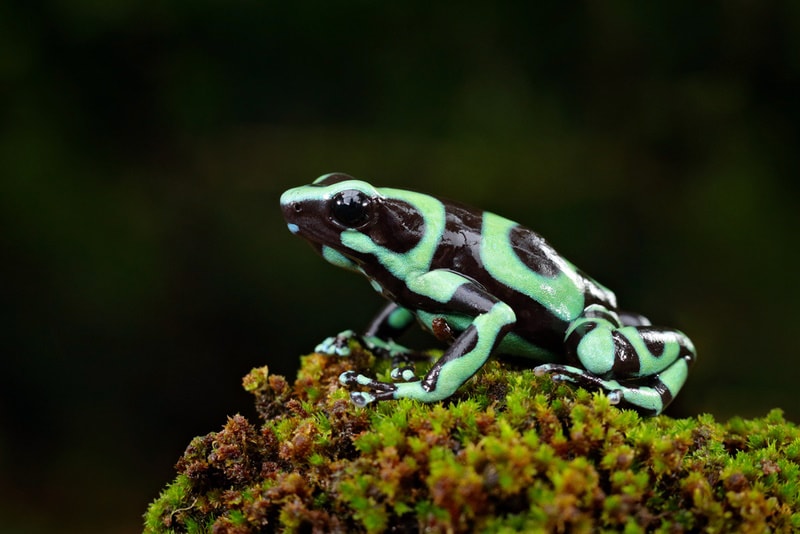
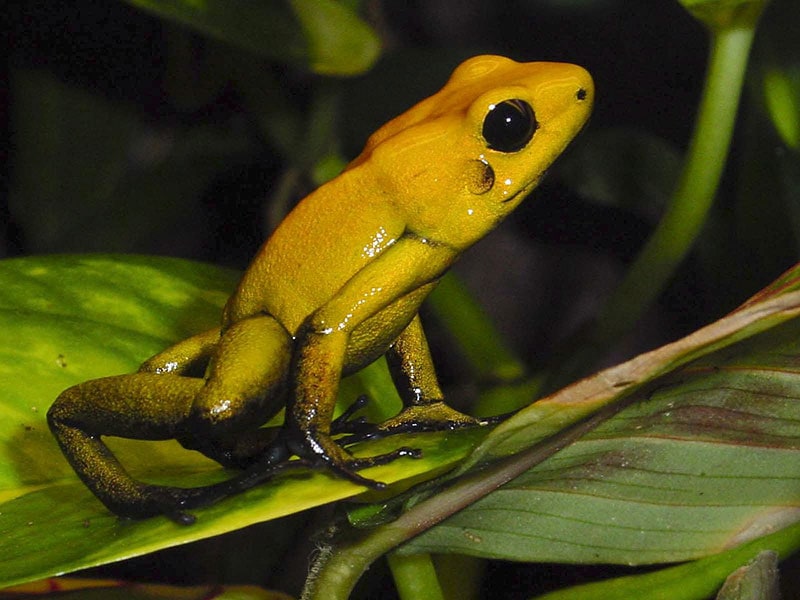
One of the world’s most toxic amphibian families (Dendrobatidae), Poison Dart frogs are tiny, brightly colored frogs found in the rainforests of Central and South America. Between their enticing name and range of vibrant yellows, oranges, reds, greens, and blues, Poison Dart frogs are well known across the world, but here are some facts you probably don’t know about these tiny creatures.

The 12 Amazing Poison Dart Frog Facts
1. Poison Dart Frogs Go By Many Names
Poison Dart frogs go by many names. They are commonly called Poison Dart or Poison Arrow frogs because the indigenous community reportedly rubbed their arrow tips on a few potent species before hunting. The three documented species used for this purpose belong to the genus Phyllobates.
2. There Are Around 200 Species of Poison Dart Frogs
There are around 200 species and 16 genera of Poison Dart frogs, including those that live in the Amazon Rainforest. They are collectively known as Poison Dart frogs, but only a few species have been documented as used to poison blow dart tips. Some species are nonpoisonous, especially when bred as pets.
3. All That Beauty Is a Warning
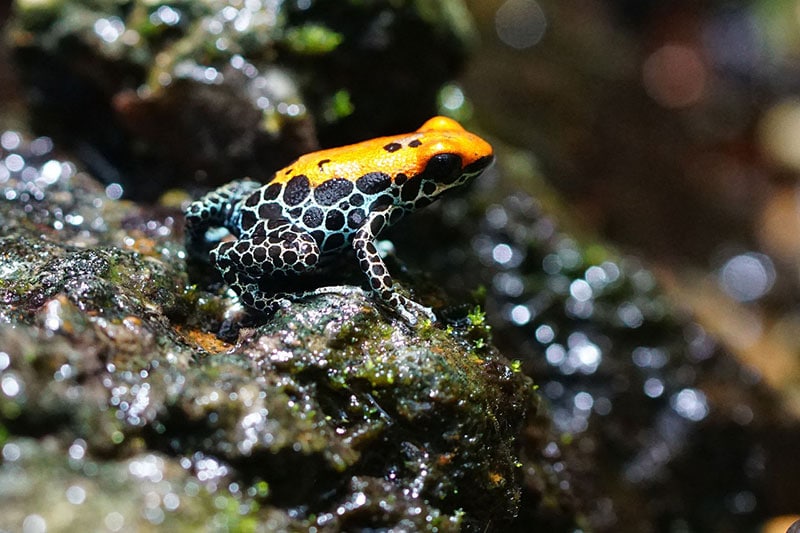
Many reptiles and amphibians have drab colors to blend into their surroundings. Not the Poison Dart frogs! These vibrant frogs have brightly colored skin that, while beautiful, acts as a warning to predators that they’re a danger to eat. This phenomenon is known as aposematism.
4. The Golden Poison Frog Is Among the Most Toxic on Earth
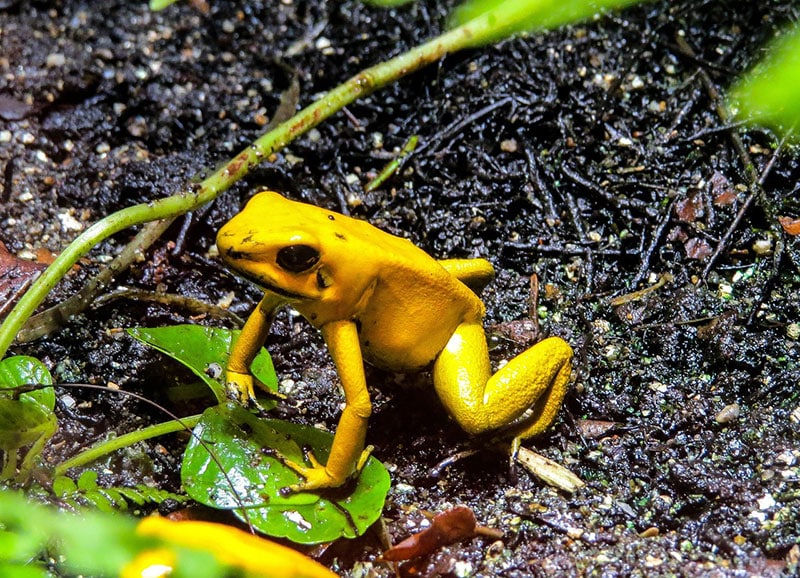
Though nearly all Poison Dart frogs carry some level of poison, the Golden Poison frog (Phyllobates terribilis) is one of the most toxic on Earth. A single milligram of the poison is potent enough to kill between 10 and 20 humans.
5. Poison Dart Frogs Are Useful to Medicine
Medical researchers have been studying Poison Dart frogs to examine the potential applications for their poisons. Once inside a victim, the poison embeds itself in the proteins responsible for conducting electrical impulses through nerves and muscles, such as the heart, causing paralysis and heart attack.
Studying the poisons has led to insights into how electrical impulses play into heart function and pain sensation to develop breakthrough medications, but because many frogs are endangered, researchers can no longer harvest enough of the toxin. Fortunately, chemists at Stanford University developed a 24-step asymmetric synthesis of batrachotoxin to continue their research.
6. Poison Dart Frog Dads Pull Their Weight—Literally
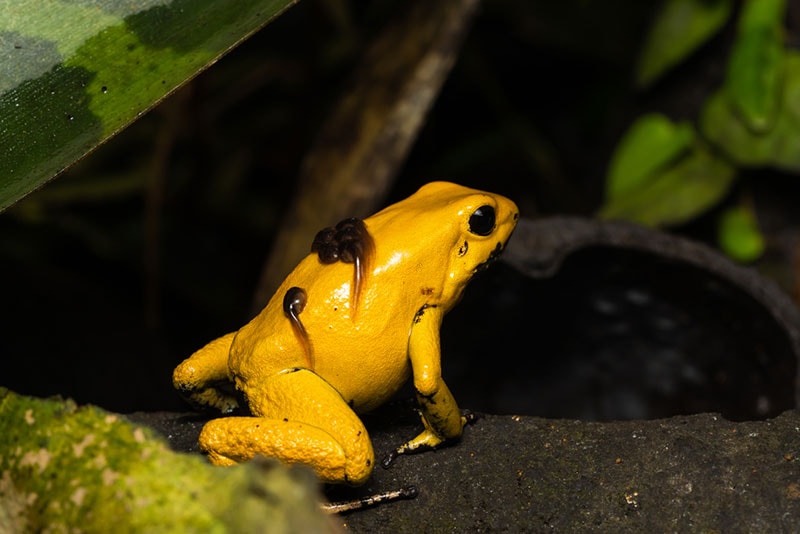
Many Poison Dart frog females lay eggs on land in damp areas. The males take over duties to guard the eggs until they hatch into tadpoles. The offspring crawl onto the dad’s back while he finds a water source, then he shakes them off to complete their development.
7. Poison Dart Frogs Are Part of a Toxic Food Chain
Poison Dart frogs don’t produce poison like some other species. They get it from their diet, which includes ants, mites, and termites that feed on the toxic plants of the rainforest. This is why Poison Dart frogs gradually lose their poison when kept as pets.
8. Poison Dart Frogs Are Immune to Their Own Poison
Poison Dart frogs have five naturally occurring amino acid replacements in their muscles, one of which gives them immunity to their own toxin. Though this answers the question of why these frogs don’t succumb to their own toxicity, it’s the result of a single genetic mutation and doesn’t provide any options for an antidote to the poison.
9. Poison Dart Frogs Have Natural Predators
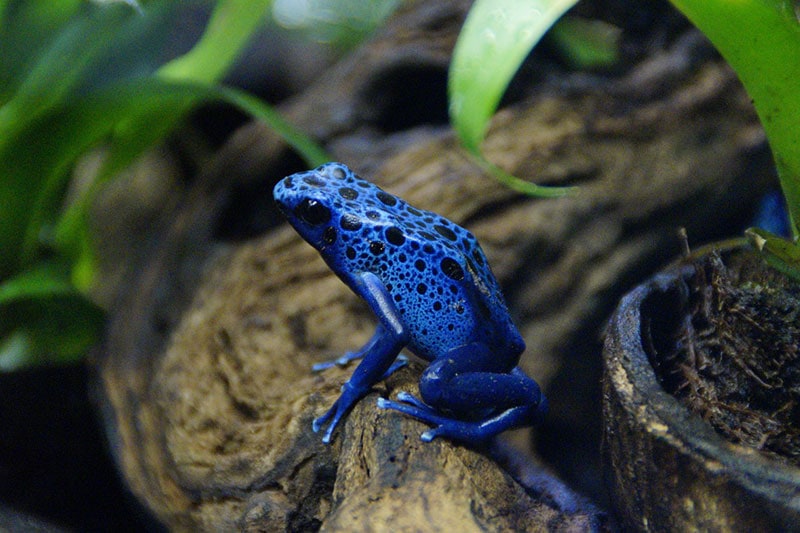
Most predators know to stay away from brightly colored animals like the Poison Dart frog, but they do have some documented predators, such as the fire-bellied snake. This venomous snake is one of the only known animals to have developed immunity to the high levels of toxins in the Golden Dart frog and other Poison Dart frog species.
10. Their Health Offers Insights Into the Environment
Poison Dart frogs have porous skin, like other amphibians, and respond quickly to changes in the environment. By examining the health of the local Poison Dart frog population, researchers can determine the health of their ecosystem.
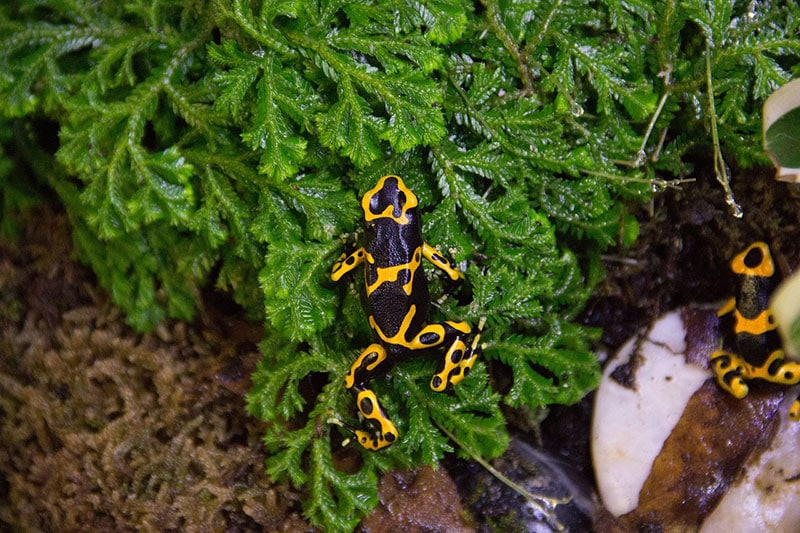
11. Their Courtship Is as Flamboyant as Their Appearance
Poison Dart frogs reproduce all year and engage in elaborate and lengthy courtship rituals that last hours. Together, the male and female visit possible egg deposit sites before they mate. The courtship begins when the male begins a mating “dance” of stroking and cleaning the leaves.
12. Poison Dart Frogs Are at Risk
Many species of the Poison Dart frog are threatened by habitat loss, climate change, and over-harvesting for the pet trade. Conservation groups are committed to preserving not only the environment but the frogs to ensure their survival in the wild as well as those kept as pets.
Are Poison Dart Frogs Good Pets?
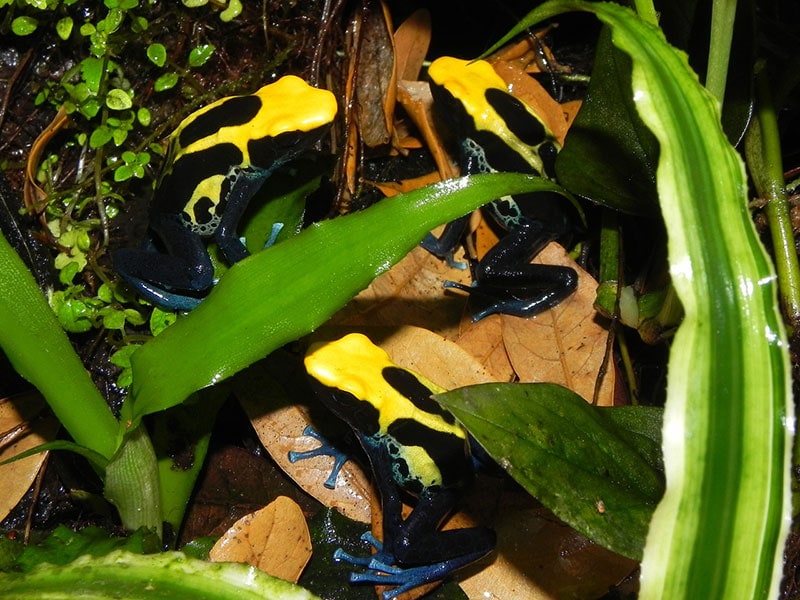
Poison Dart frogs can make interesting pets. They require minimal maintenance and enhance a beautiful habitat as a display pet, especially when paired with other species. When raised as pets and away from their normal diet, these frogs gradually lose their toxicity.
Unfortunately, these frogs are popular as pets for their bright coloration, leading to excessive and unethical harvesting. If you want to get a pet Poison Dart frog, it is important to work with an ethical breeder, and not adopt wild-caught specimens.

Conclusion
Poison Dart frogs are as beautiful and fascinating as they are dangerous, especially when you consider some of these little-known facts. They play an important role in their rainforest ecosystem, including a role as a living weapon for Indigenous people, and may hold the key to future medical breakthroughs in pain management and heart health.
Related Read: Interesting Tree Frog Facts
Sources
Featured Image Credit: Marcus61, Pixabay
Get Hepper In Your Inbox


Pet care tips from our vets and experts, straight to your inbox.
You may opt-out at any time. View our Privacy Policy for more information.
Nicole is a lover of animals of all sizes but is especially fascinated with the feline variety. She’s the proud mom of Baby, a Burmese, and works every day so he can relax in the sunshine or by the fire. She’s always had a cat in her home and has spent countless days with others, observing behaviors and softening up even the grouchiest of the lot. Nicole wants to share her kitty expertise with you so you and your cat can live happy, healthy, and care-free.
Join the conversation
Ask a question, share your story, or send private feedback.