Hepper is reader-supported. When you buy via links on our site, we may earn an affiliate commission at no cost to you. Learn more.
Are Frogs or Toads Poisonous to Dogs? Vet-Reviewed Facts & FAQ


In this article
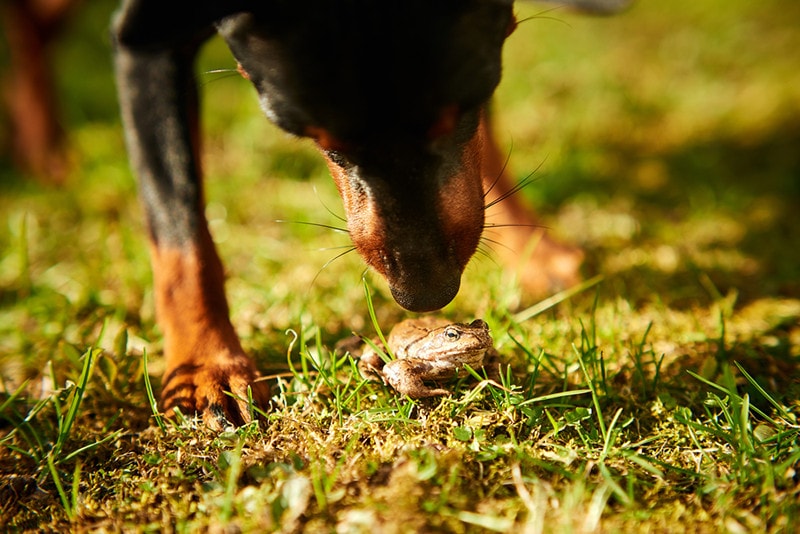
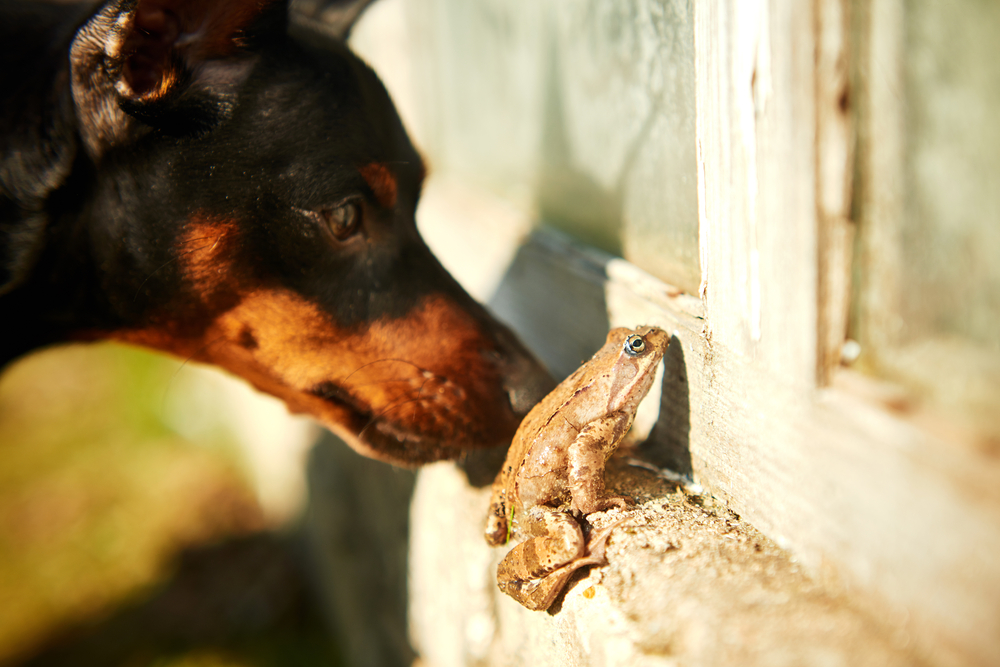
The majority of frog and toad species are not harmful to dogs, but certain species can secrete poisonous toxins. If your curious dog has eaten a frog, it is usually not a cause for concern unless the frog they have eaten a species that secretes a harmful poison. Toads are usually the main concern and can pose a danger to your dog if they are ingested.
If your dog has eaten a frog or toad, it is best to take them to a veterinarian for a health evaluation. Some frog and toad toxins can cause serious toxicosis in dogs, so contacting a veterinarian for further guidance is the safest option.

Poisonous Frogs and Toads
All frogs and toads are technically poisonous, but not all carry toxins potent enough to harm your dog. Amphibians carry poisonous glands on their skin that secrete a toxin as a defense mechanism against predation or protect against microorganisms. When the frog or toad is eaten or disturbed by your dog, they secrete toxins that are absorbed into your dog's mucous membranes (mouth, gums, or eyes). These toxins are bad-tasting and can irritate your dog's mouth, which is why many dogs will foam at the mouth after eating a frog or toad.
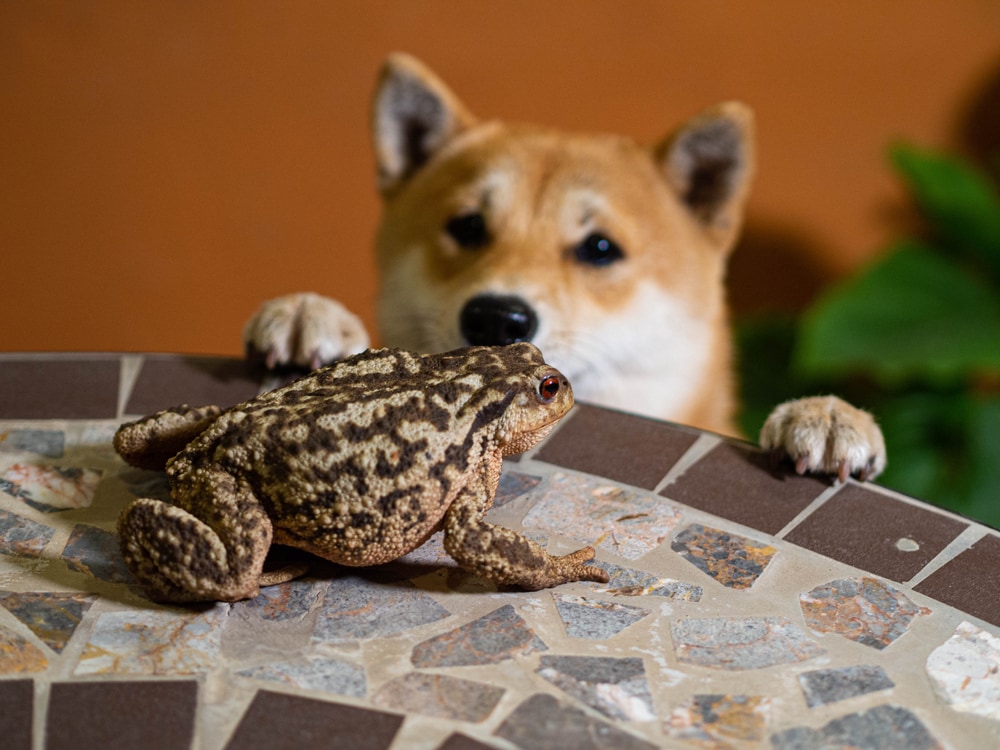
Most of the common frogs your dog may encounter will not pose a health risk to your dog if they are eaten, but toads are more of a concern. It is important to identify the difference between which type of amphibian your dog has eaten since this can influence whether your dog’s health is in trouble.
Another concern for dogs who interact with frogs and toads is that they carry salmonella. This puts dogs who lick toads or frogs at risk of developing salmonellosis. There are only two species of frogs that are venomous, which means that they inject a venom that can affect your dog without having to be eaten. These two species include the Bruno's casque-headed frog and the Greening's frog. The spines on these frogs' heads can inject venom into your dog's mouth.
Poisonous Frogs
Frogs tend to have smoother skin than toads and more color and shine to their bodies. There are only two species of highly poisonous frogs: dart frogs (Dendrobatidae) with over 100 species, and mantella frogs (Mantellidae) with 16 species. Poison dart frogs secrete a toxin known as batrachotoxin, which is a type of neurotoxin. Another toxin found in a few species of frogs is tetrodotoxin.
Poisonous Toads
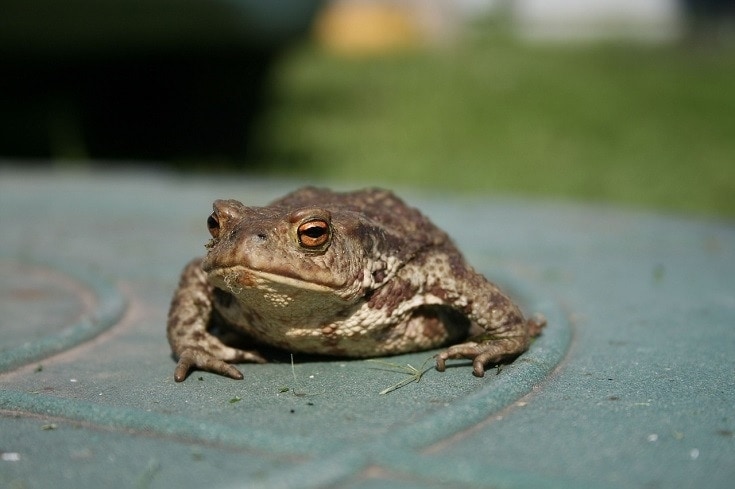
Toads have more bumpy and textured skin, and their shorter hind legs mean that they do not jump as high as frogs do, making them easier for dogs to catch. Most of the toxins produced from the toad’s salivary glands are mildly toxic and won’t cause any serious side effects if your dog ingests them, but bufotoxins secreted by certain toads are deadly to dogs.
Keep an eye out for the following species:
What to Do if Your Dog Ate a Frog
1. Identify the Frog or Toad
If your dog has eaten a frog or toad, it is important to remain calm. It will be beneficial to try and determine which species of frog or toad your dog may have eaten. Take a picture of the toad or frog to make it easier for the veterinarian to identify which species your dog has eaten. If the frog is still lodged in your dog’s mouth, remove it with gloves or an object that protects your hands.
2. Contact a Veterinarian
If your dog has eaten a highly poisonous toad or frog, you can call your local animal poison control or veterinary clinic to get help on inducing vomiting or keeping your dog stable until you get your dog to the vet. This is important in cases where dogs have ingested a highly poisonous frog or toad.

3. Rinse Your Dog's Mouth
Since most dogs will react to the toxins by salivating excessively or foaming at their mouth, you can rinse their mouth under running water for at least 5 minutes. Be sure that the water is running out of their mouth and that they are not swallowing the water. Rinsing helps to dilute some of the irritating toxins. If you can, use a damp washcloth to rub the gums, rinsing the cloth regularly.
In many cases, the foaming at the mouth is only a reaction to the toxin and most dogs won't show any other signs. Even a harmless toad or frog can cause mouth irritation.
4. Take Your Dog to a Veterinarian
If you notice your dog acting abnormally after the ingestion or if your dog ate a highly poisonous species, take them to a veterinarian right away. Some of the toxins from frog and toad species can be fatal to dogs, so taking them to a veterinary hospital is essential in these cases.

Signs Your Dog Has Eaten a Highly Poisonous Frog
Foaming at the mouth, often accompanied by rubbing at the face and mouth, is usually the first sign of irritation to the frog or toad's toxins. Excessive salivation and foaming are your dog's primary methods of trying to eliminate the irritating toxin. Your dog may show no further signs if the toad or frog is not poisonous enough to harm your dog. However, your dog's signs may progress quickly if they are experiencing poisoning.
Dogs who have eaten a frog or toad with potent poison will show the following signs:
- Excessive drooling
- Foaming at the mouth
- Vomiting
- Swollen and inflamed gums
- Retching
- Pawing at the face and mouth
- Head shaking
- Rubbing mouth on different objects

In severe cases, your dog may show the following signs after a few minutes or hours:
- Disorientation
- Seizures
- Lethargy or collapse
- Irregular heartbeat
- Labored breathing
- Dilated pupils and abnormal eye movements
- Hypertension (high blood pressure)
- Brain damage
- Death if left untreated
Dogs who are experiencing toad or frog toxicosis will experience neurological problems since most of the toxins target the animal’s nervous system. The more potent the frog's neurotoxins are, the more serious signs your dog will show. Your dog can show these signs even if the frog or toad has been dead for a few hours.
Conclusion
While almost all frogs and toads secrete a poison of some kind, only species with a potent poison can harm your dogs. Most dogs won't have any serious signs of poisoning if they ingest a common toad or frog that only has a mild poison.
Regardless of the type of frog or toad your dog has licked or eaten, rinsing their mouth out with water flushes away the remaining toxins. Dogs who are showing signs of poisoning or have eaten a highly poisonous frog or toad should be taken to a veterinarian hospital immediately.
Featured Image Credit: Trotskaya Nastassia Shutterstock
Get Hepper In Your Inbox


Pet care tips from our vets and experts, straight to your inbox.
You may opt-out at any time. View our Privacy Policy for more information.
Sarah is residing in South Africa with her partner and pets. She currently is interested in veterinary science and ichthyology, which she wants to study alongside her main passion: pet content writing. Sarah has over 60 fish including goldfish, tropicals, shrimp, and snails. She also keeps hamsters and a tarantula and wishes to provide quality content for readers and allow others to learn from her knowledge and experience. Sarah has much experience in all aspects of pet care, and providing the world with knowledge on ethical pet ownership is her lifelong dream.
Join the conversation
Ask a question, share your story, or send private feedback.