Hepper is reader-supported. When you buy via links on our site, we may earn an affiliate commission at no cost to you. Learn more.
12 Glass Frog Facts (With Pictures)

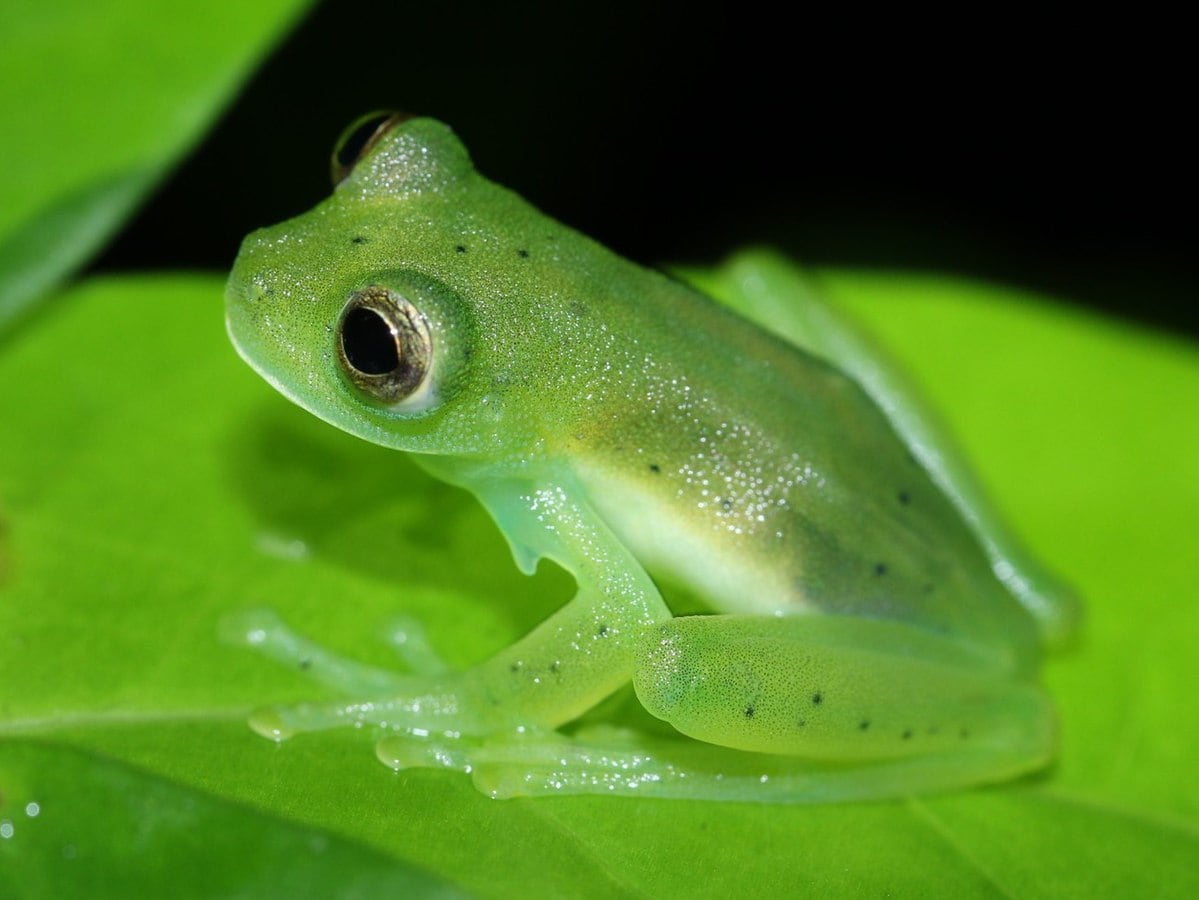
Did you know there’s a frog that has skin so translucent you can see inside it? It’s true! This frog is known as the glass frog and is located in Central and South America. They’re fairly hard to find and study, but we do know some about them at this point. Want to learn more about these cool animals?
We’ve got 12 fun facts below that will give you a relatively good understanding of the glass frog. From where it lives to how it survives, we’ve got you covered!

The 12 Facts About Glass Frogs
Ready to learn more about these fascinating frogs? Then, keep reading for 12 facts about glass frogs you might not have known!
1. There are 158 known species.
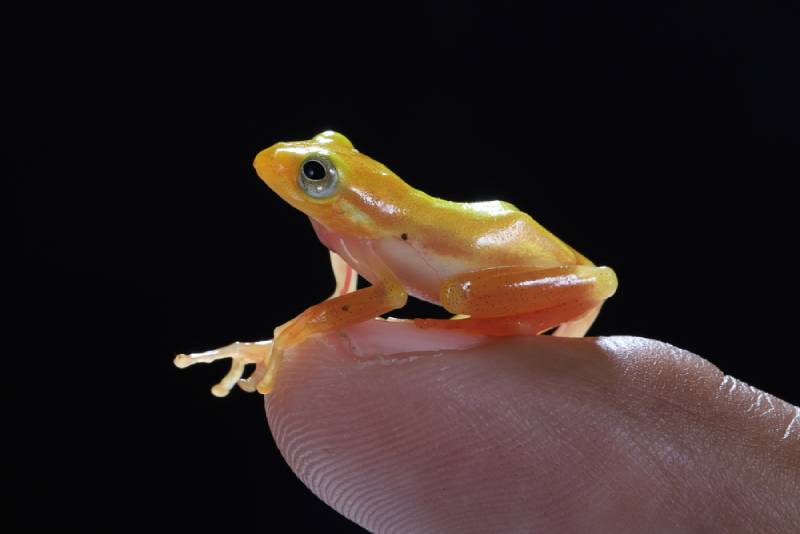
Glass frogs are challenging to study, so very little is known about them. However, as of now, there are 158 known species of these frogs (though that number varies as people discover more).1 Each species of glass frog belongs to the Centrolenidae family. But some of these species have so little known about them that they only have scientific names but no common ones.
2. Glass frogs are carnivores.
Glass frogs have short tongues and no teeth, so you would think they’d be herbivores. But they are not; they are carnivores! A glass frog diet is made up primarily of insects that are small, like flies, ants, crickets, and spiders. Surprisingly, they will also prey on frogs smaller than them if the chance arises!
3. These tiny guys are nocturnal.
The majority of glass frog species are nocturnal, so they sleep (or merely stay hidden) during the day. They like hanging out in trees, so you’ll find them safe beneath branches and leaves while the sun is up. Once night arrives, though, these tiny creatures are up and at them, venturing out to seek food or mate.
4. Glass frogs can jump really far.
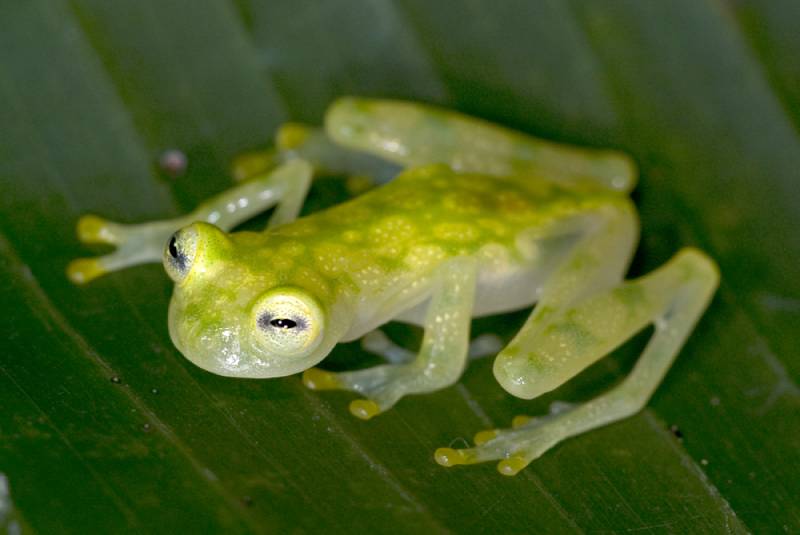
One surprising fact about the glass frog is just how far it can jump. These guys are so small you’d think it wouldn’t be very far. But the glass frog can make leaps of up to 10 feet! This ability to jump long distances is particularly beneficial in escaping from predators.
5. Glass frogs are great at camouflaging themselves.
Believe it or not, glass frogs are pretty great at camouflaging themselves. These frogs’ partial translucency enables them to better blend in with their surroundings by masking their outline,2 thus hiding them from predators. In fact, the glass frog is less likely to be seen than opaque frogs, making them more likely to stay alive longer.
6. Edward Harrison Taylor was the first to catalog the glass frog.
The glass frog wasn’t cataloged until the 1920s. The first to do so was Edward Harrison Taylor,3 an American herpetologist that headed the Department of Zoology at the University of Kansas. He even has a species of glass frog named after him! Discovered in the Guineas, the species is named Hyalinobatrachium taylori, otherwise known as “ranitas de crystal de taylor” or Taylor’s glass frog.
7. Eggs are laid on the undersides of leaves.
Most frogs will lay their eggs in water. Not the glass frog, though! These frogs instead lay eggs on a leaf’s underside (although the leaf does have to be hanging over a stream). Once the eggs have hatched, the tadpoles fall straight into that stream and develop into frogs!
8. Males are the ones to guard eggs against predators.
When you think of animals watching over eggs, you might picture females in this role. But with the glass frog, it’s the males that guard the eggs. Males are highly territorial, so they watch the eggs at all times until they are hatched. This is good because these guards often have to fight off predators, such as carnivorous wasps, to ensure the eggs mature fully.
9. Glass frogs can only be found in South and Central America.
Glass frogs only live in South and Central America in humid forests. But don’t expect to go there and see one in the wild! These frogs are incredibly tiny, nocturnal, and live in trees, so they’re very challenging to locate. And as stated previously, they’re also amazing at camouflaging themselves!
Some people own glass frogs as pets, but this is inadvisable, as these frogs need to have a habitat similar to their natural homes and require very specific care.
10. The only translucent part of the glass frog is the underside.
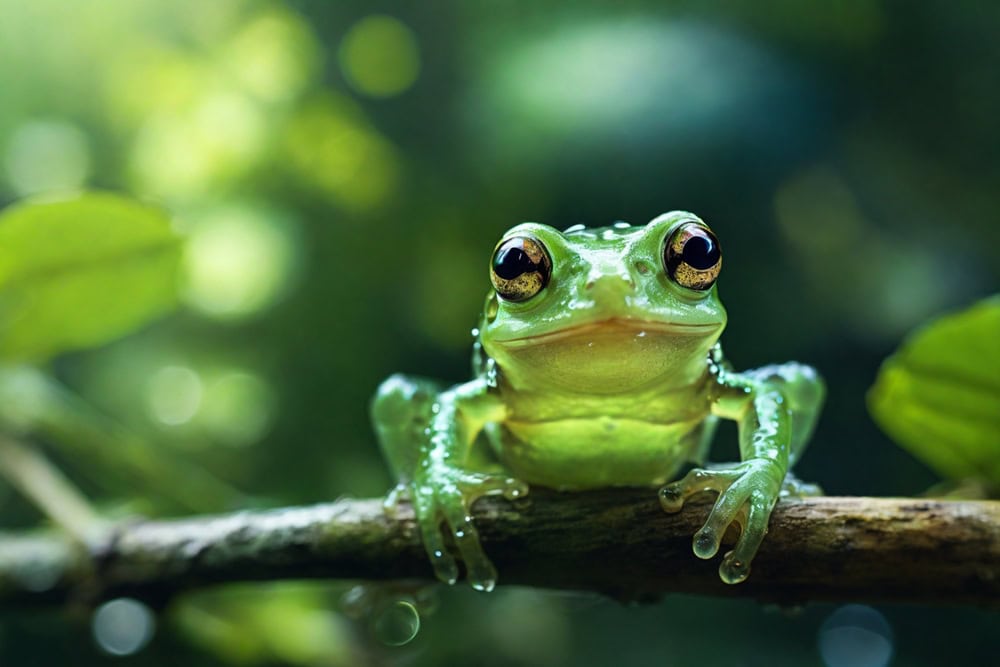
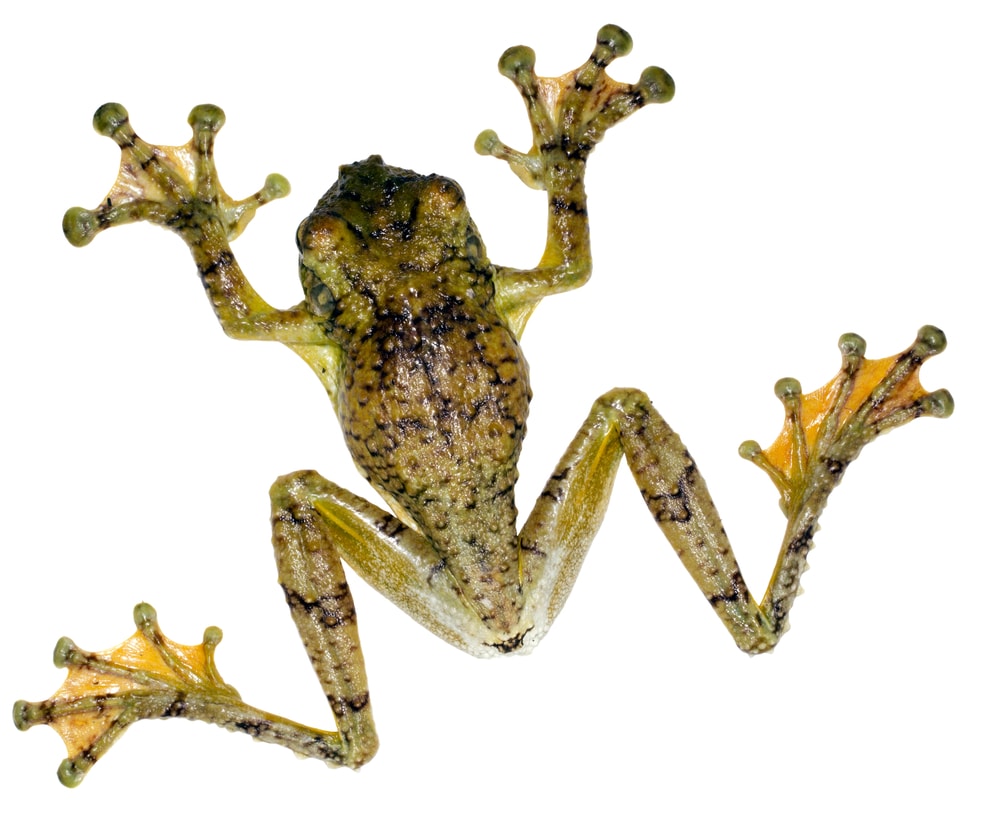
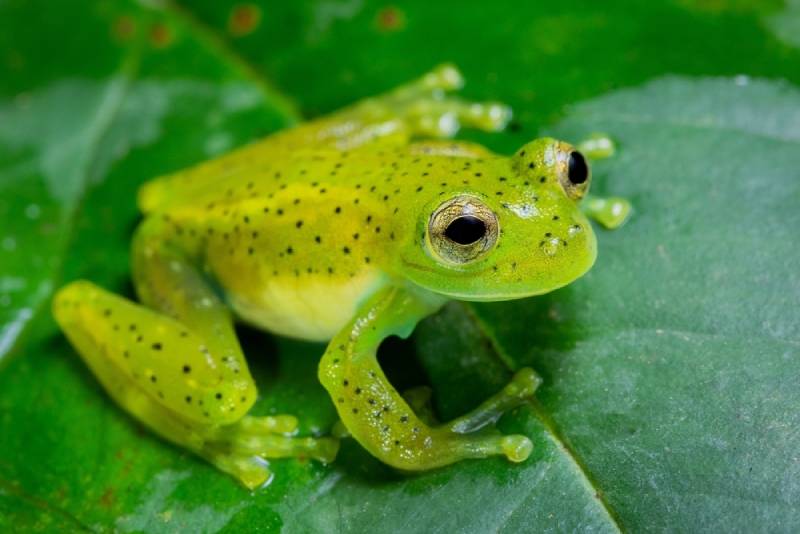
The glass frog gets its name due to the transparency of its skin, but that transparency is only on its underside. If you were standing over a glass frog and looking down, you wouldn’t be able to see that transparency at all, as the skin on their topside is normally a bright green. But look at the glass frog’s underside, and you’ll be able to see bones and organs!
11. They spend the majority of their time in trees.
Glass frogs don’t live in water, but they do live near it (most often rivers and streams). These frogs are arboreal, though, which means they much prefer to live in trees. You’ll find them up high and only coming down for food or to mate. Those trees also help them camouflage themselves from predators!
12. Glass frogs are being threatened by deforestation.
Though glass frogs have many predators—everything from snakes to giant wasps—the biggest threat to them is deforestation. Rainforests in South and Central America are increasingly being cut down, which means the glass frog’s habitat is decreasing steadily. If deforestation continues, these frogs might end up dying out due to a loss of habitat.
In Conclusion
Glass frogs are truly fascinating animals. Their translucent skin enables you to see inside them (which is both creepy and cool) but also allows them to camouflage themselves well against predators. Add that camouflage to their preference for being in trees, and it’s easy to see why studying these frogs can be a challenge. Unfortunately, deforestation is a huge threat to the glass frog, as it means their natural habitat is slowly being destroyed. Too much deforestation and the glass frog could be gone forever.
Sources
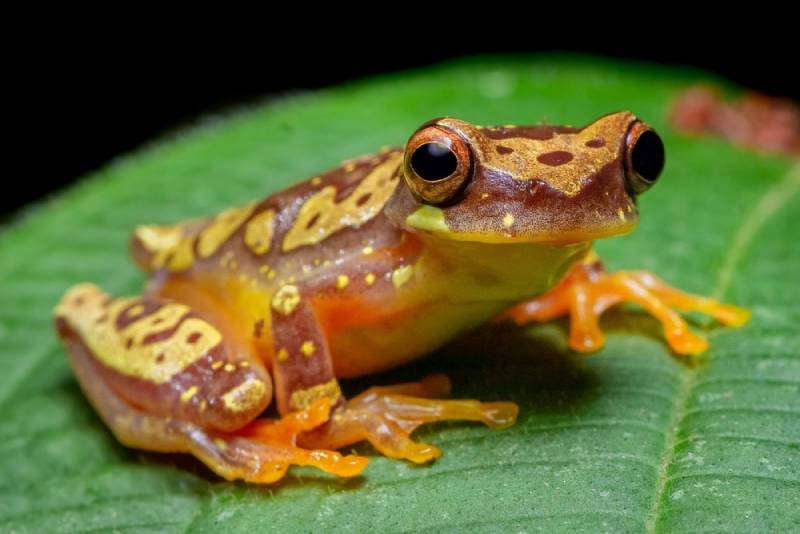
Featured Image Credit: Espadarana andina (Image Credit: Diego Gómez Hoyos, Wikimedia Commons CC SA 4.0 International)
Get Hepper In Your Inbox


Pet care tips from our vets and experts, straight to your inbox.
You may opt-out at any time. View our Privacy Policy for more information.
Misty Layne lives out in the woods in small-town Alabama with her two Siamese—Serafina and Jasper. She also has an array of stray cats, raccoons, and possums who like to call her front porch home. When she’s not writing about animals, you’ll find her writing poetry, stories, and film reviews (the animals are, by far, her favorite writing topic, though!). In her free time, Misty enjoys chilling with her cats, playing piano, watching indie and foreign films, photographing abandoned places, and catching up on her never-ending TBR list.
Join the conversation
Ask a question, share your story, or send private feedback.