Hepper is reader-supported. When you buy via links on our site, we may earn an affiliate commission at no cost to you. Learn more.
Presa Canario vs Cane Corso: What Are the Differences? (With Pictures)

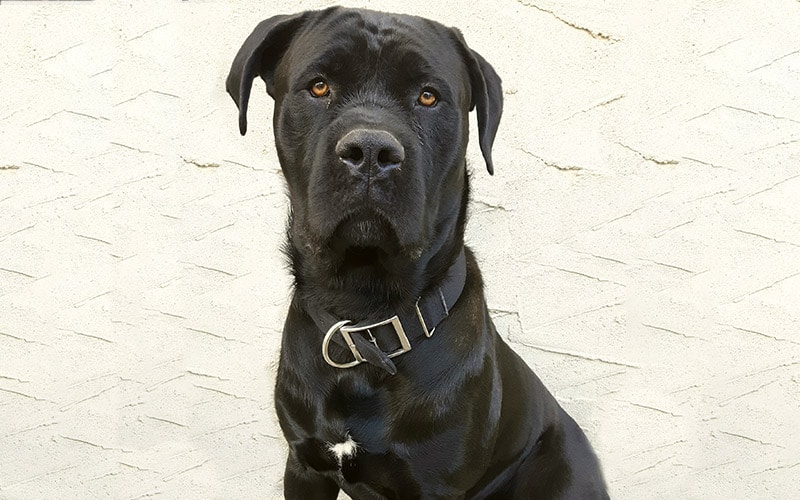
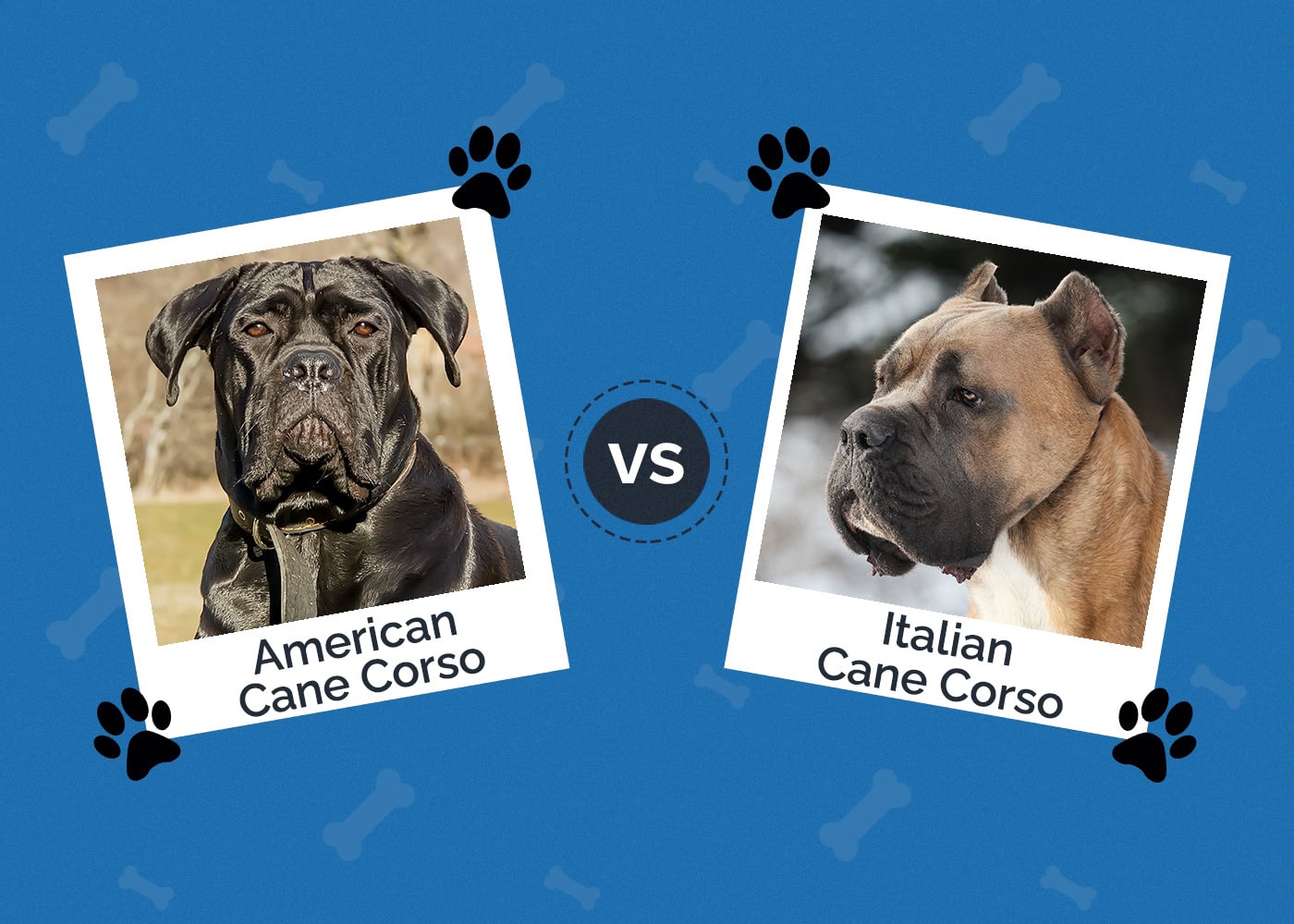
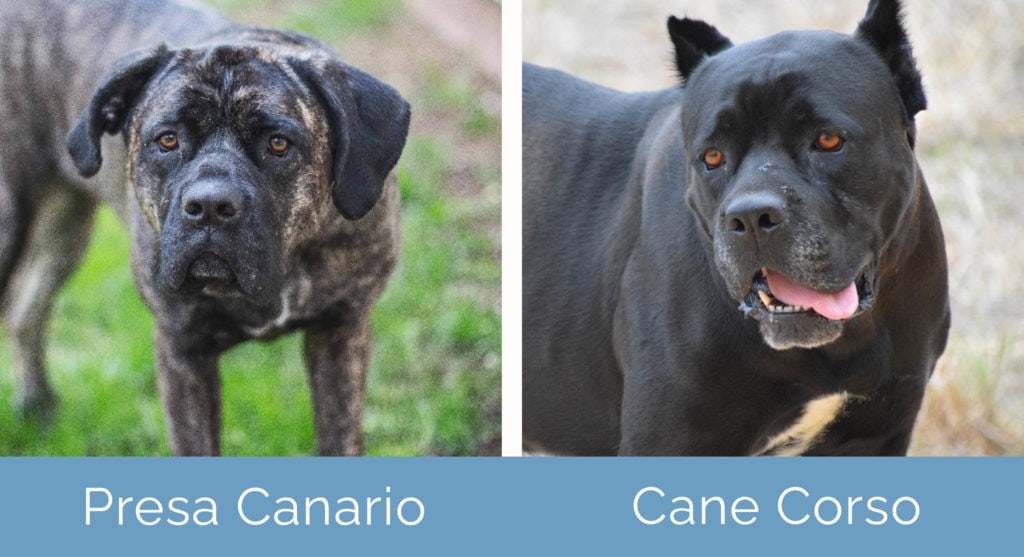
At first glance, Perro de Presa Canarios and Cane Corsos look like the same breed: giant stature, bulky muscles, and an intimidating expression. Both are immensely large and powerful, both were bred for similar purposes, and both are breeds that need experienced owners. Yet, some key differences separate these two powerhouse canines. Today, we’re going to break down both breeds to understand what makes them similar and different, while also going over what it takes to own these strong dogs. Let’s take a look at the Perro de Presa Canario and the Cane Corso to see what sets these two breeds apart:

Visual Differences Presa Canario vs Cane Corso
A Quick Overview
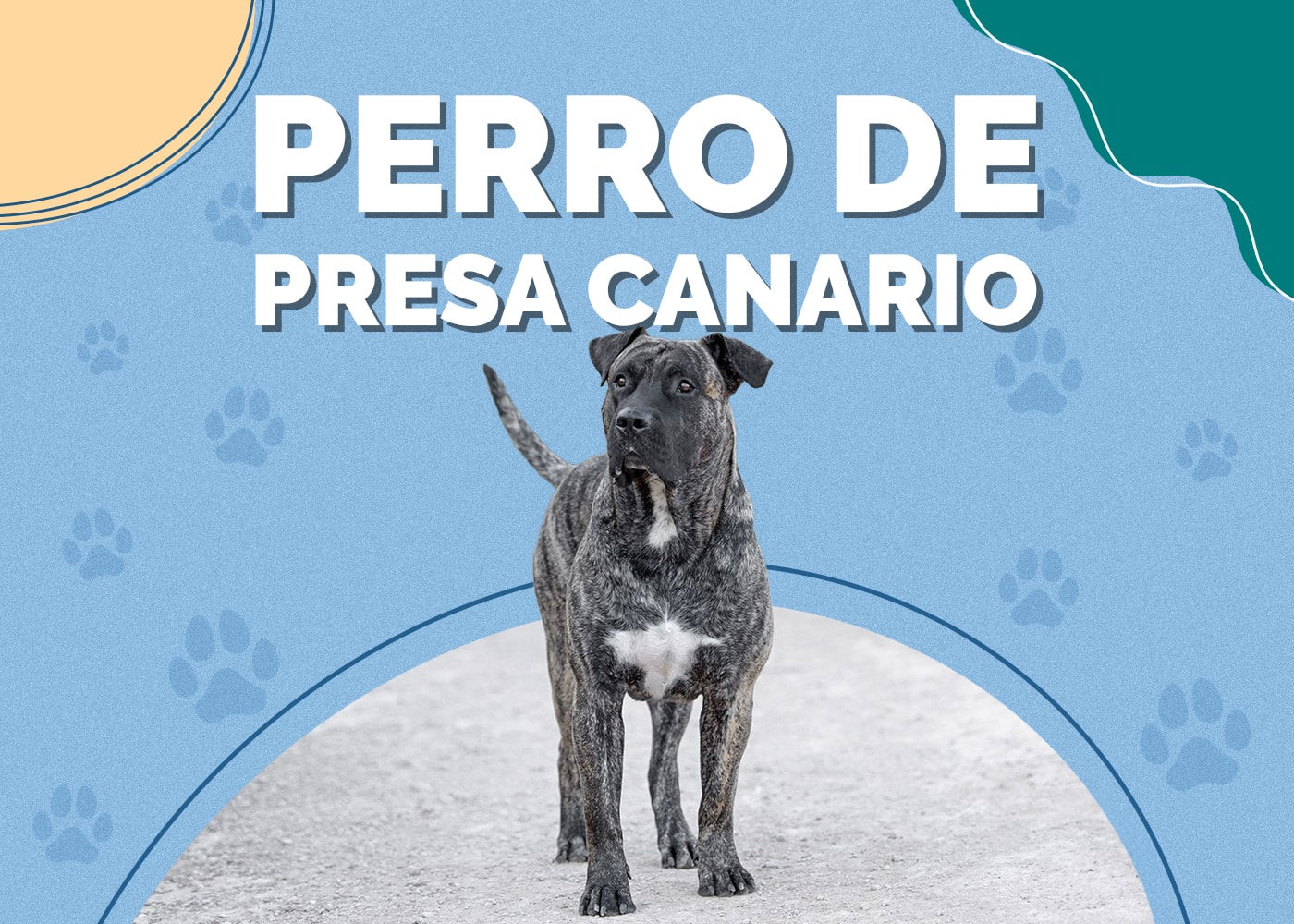
Presa Canario Overview

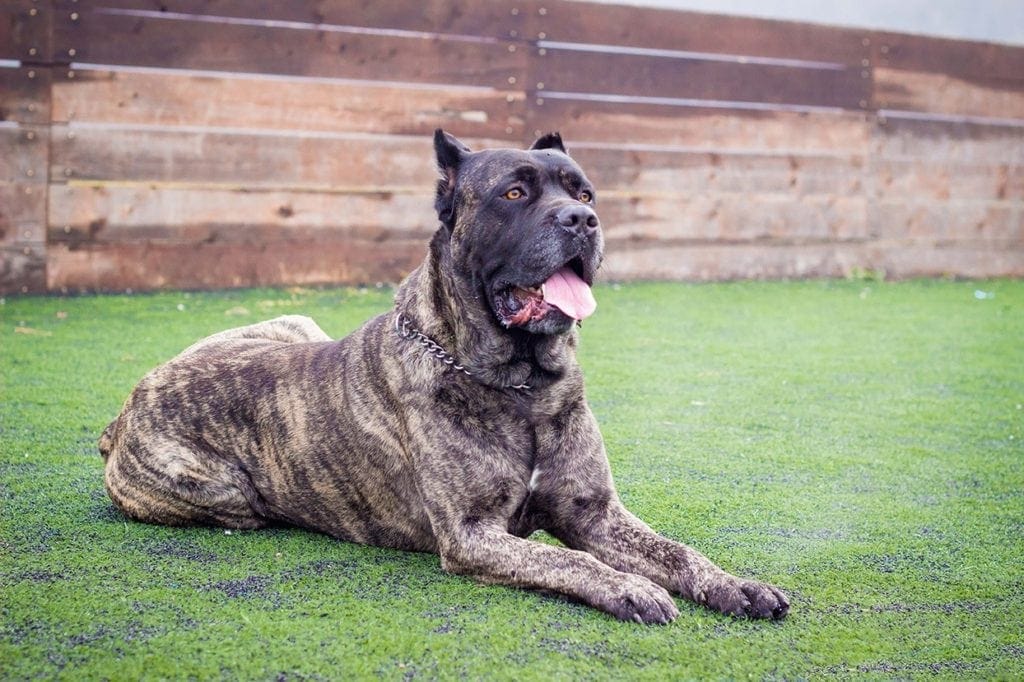
Perro de Presa Canario dogs often shorted to Presa or Presa Canarios, are a large breed of dog hailing from the Canary Islands. One of the older of the Mossoler-type dogs, their history has been recorded as early as the 13th century. Bred for working livestock and protecting the homestead, Presa Canarios have a powerful build and make quite an imposing sight to see. Unfortunately, there’s a long history of using Presa Canarios for dogfighting in the Canary Islands, but the practice has been almost completely stopped in today’s world.
Temperament
Presa Canarios are great for rural and farm living, especially for bigger homesteads that need the extra set of eyes. They will naturally take up the position of a working farm dog, especially if they’re living on a livestock farm. Presas are naturally aloof and suspicious of strangers, so early socialization is a must to prevent people-based aggression. Although these massive Mastiff-based dogs have a serious outlook on life, Presas are actually quite affectionate to those they consider family and are quite gentle with children. That being said, these dogs are not suitable for families with lots of visitors or for families with overly rambunctious children.
Training
Training Presa Canarios will be a challenge, especially for first-time dog owners. These dogs are incredibly keen and will sense any weakness, often challenging and pushing the invisible line their owners set. Persistence and patience are crucial, but a true understanding of canine behavior is needed for these powerful dogs. Positive reinforcement training will only go so far, so it’s highly recommended to hire a dog trainer that has experience with Mastiff-type dogs. Strong-willed temperaments aside, Presa Canarios tend to be food-motivated and can learn a wide variety of commands. Early socialization is a must for this breed, but they’re not going to be social and excited to see new people.

Exercise
Presa Canarios are working dogs that were bred for livestock work, so they’ll need a fair amount of exercise daily. Exercising should consist of at least two to three 1-mile walks a day with jogging intervals to keep them in tip-top shape, while preventing boredom and obesity. Playtime is also important as they will bond closely with those who spend the most time with them, so games like tug-of-war will help burn off energy. These dogs are not fetch-type of dogs, so it's important to find activities that they'll enjoy.
Grooming
Grooming Presa Canarios is a breeze since their coats are short-haired, but they're moderate shedders. They can definitely benefit from brushing out once a week to help promote normal shedding while getting rid of any debris, especially for Presas that are going to be working dogs. Bathing should be kept at a minimum as they’re prone to dry skin, which can be painful and itchy. Their nails need to be trimmed on an as-needed basis, roughly around every 3 to 4 weeks.
Pros
- Good working dog
- Affectionate with family
- Easy to groom
Cons
- Need a lot of real estate
- High exercise requirements
- Hard to train

Cane Corso Overview
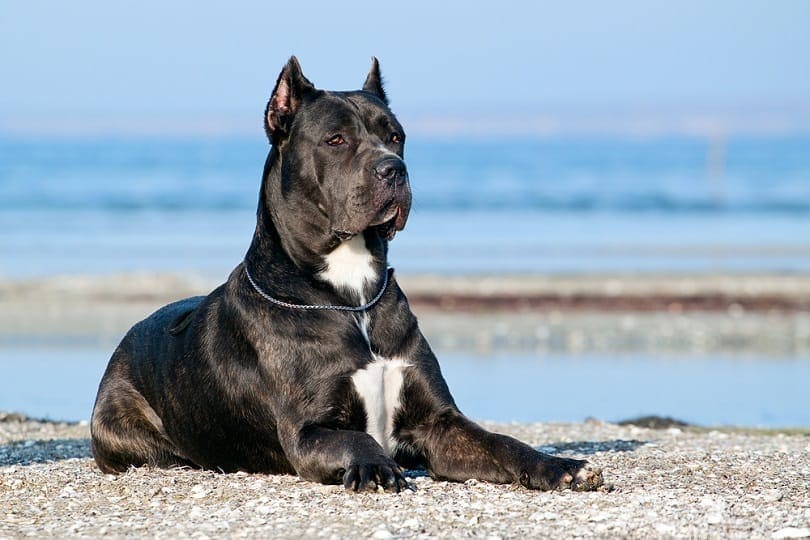
Cane Corsos are part of the Mastiff family, originating in southern parts of Italy. Cane Corsos were specifically bred for guarding, protection, and companionship, often being the chosen breed for police work. In 1994, the breed was officially recognized, though they have quite a long history. Some historians have even been able to link them to extinct breeds of Ancient Greece, though there is some confusion as to when the breed truly emerged. They’re also closely related to the Neapolitan Mastiff, one of the largest breeds in the world.
Temperament
Cane Corsos were bred for protection and guardianship, so they’re more naturally suited as guard dogs than Presa Canarios. These dogs are strong-willed and need a very confident, strong leader to follow or else they’ll quickly become the boss. Cane Corsos bond very closely with their families, which can lead to people-based aggression if they’re not socialized early and consistently. Cane Corsos can be family pets and are generally gentle around children but are better suited for families with older kids. These dogs require a lot of human interaction on a daily basis, which means they’re prone to extreme separation anxiety if left alone for too long.
Training
Cane Corsos are similar to Presa Canarios and Mastiff-type breeds in that they will push their owners to see what they can get away with. Very clever and aware of their surroundings, Cane Corsos need an experienced owner that understands the mentality of guarding breeds. Similar to Presa Canarios, Cane Corsos can learn a wide variety of commands if they’re given the chance to succeed. However, positive reinforcement training will only cover the basics and additional training by a professional dog trainer is highly recommended. Cane Corsos require early socialization especially due to their origin as guard dogs, but this breed will almost always remain aloof towards strangers.
Exercise
Cane Corsos are prone to obesity due to their already massive size, so daily exercise is crucial to prevent that from happening. Similar to Presa Canarios, Cane Corsos need to be taken on long walks (~1 mile) with jogging intervals to keep them in shape. Playtime is also crucial with this companion breed and they'll enjoy playing with active children, but supervision is required to prevent roughhousing. Tug-of-war is a favorite game of theirs and they'll actively seek to play, which is important for their mental health.
Grooming
Cane Corsos also have short-haired coats, so grooming will be quite easy. Since they’re moderate shedders, brushing out their coats once a week will help remove any loose fur and debris. Brushing also massages the skin, and they’ll most likely enjoy it. Bathing should be kept at a minimum as well for Cane Corsos due to their skin becoming irritated and dry easily. Their nails need to be trimmed once a month, depending on the activity levels.
Pros
- Highly protective guard dogs
- Close bonds with family
- Very clever
- Easy to groom
Cons
- Hard to train
- Not great with strangers
Health Conditions of Both Dogs
Presa Canarios and Cane Corsos are giant-sized dogs, so they’re unfortunately prone to more health conditions than smaller breeds. Between various joint problems and neurological conditions, Presas and Cane Corsos are prone to a few serious conditions that can be fatal if not treated. That being said, they still tend to live longer lives, with a lifespan average of around 10 years. Here are the most common health conditions that the Presa Canario and the Cane Corso are most likely to develop:
Final Thoughts - Presa Canario vs Cane Corso
Presa Canarios and Cane Corsos have a lot of similarities and differences, especially with their origins. While Presas was bred for livestock and farm work, Cane Corsos were bred for protective purposes. Presa Canarios tend to be heavier than Corsos, while Cane Corsos are usually leaner and taller. However, both breeds are immensely powerful and difficult to handle for inexperienced owners, so they’re usually not suitable for the average household. That being said, both breeds can do well as family pets for certain environments and both breeds are naturally affectionate with their owners. If you're looking to own either a Presa Canario or a Cane Corso, we hope this guide will help you choose the breed best fit for your lifestyle.
See Also:
Featured Image Credit: (L) Mary Swift, Shutterstock | (R) Babeshkin, Shutterstock
Get Hepper In Your Inbox


Pet care tips from our vets and experts, straight to your inbox.
You may opt-out at any time. View our Privacy Policy for more information.

Nicole is a lover of animals of all sizes but is especially fascinated with the feline variety. She’s the proud mom of Baby, a Burmese, and works every day so he can relax in the sunshine or by the fire. She’s always had a cat in her home and has spent countless days with others, observing behaviors and softening up even the grouchiest of the lot. Nicole wants to share her kitty expertise with you so you and your cat can live happy, healthy, and care-free.
Join the conversation
Ask a question, share your story, or send private feedback.