Hepper is reader-supported. When you buy via links on our site, we may earn an affiliate commission at no cost to you. Learn more.
Pumi Dog Breed: Info, Pictures, Characteristics & More
In this article
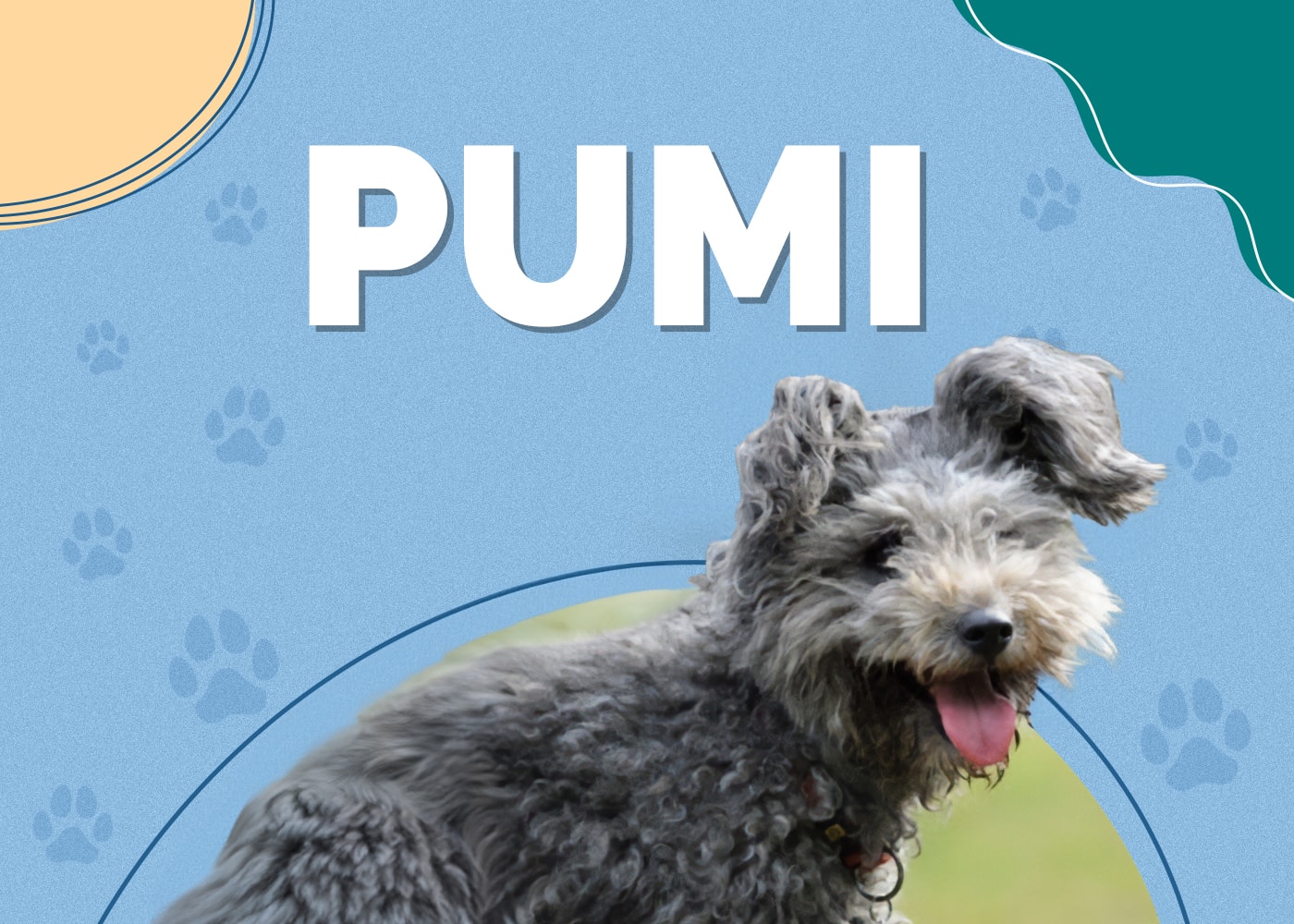
The Pumi (pronounced POO-me) is an AKC-recognized purebred from the Herding Group and is a lively, intelligent dog bred to herd sheep and cattle in Hungary. They become attached to their family quickly and are affectionate and energetic dogs that are protective of everyone in the household.
Breed Overview
Height:
Weight:
Lifespan:
Colors:
Suitable for:
Temperament:
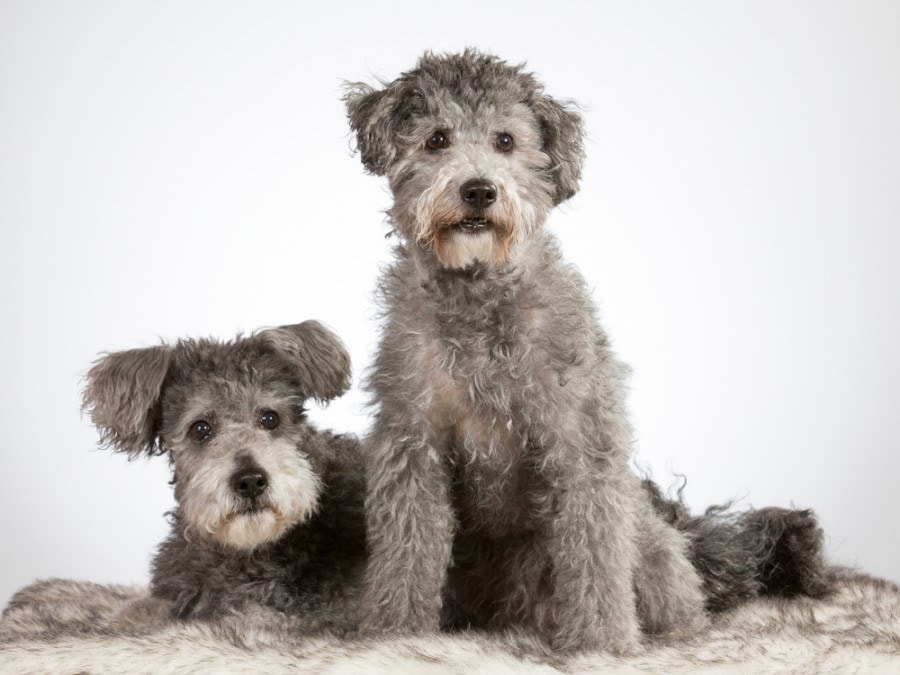
Pumis are medium-sized dogs with curled tails and erect ears that flop over at the ends, giving them a rather whimsical appearance. They come in various colors, such as black, white, silver-gray, gray, and fawn, and can have black & tan or brindle markings. They are most well known for their gorgeous corkscrew curly coats of fur.
Pumi Characteristics

Pumi Puppies
Pumis are high-energy dogs that are very healthy and are known to live past their expected lifespan. They are easy to train due to their intelligence and willingness to please, but they can be wary of strangers.


Temperament & Intelligence of the Pumi 🧠
The Pumi is an energetic breed that is a quick learner and excels at working since they're agile and are willing to work endlessly. They bond with the entire family but will choose one person out of the family as their favorite.
Pumis are herding dogs and will attempt to herd children and smaller animals in the household. They are very intelligent and lively dogs. Their intelligence allows them to evaluate every new situation, whether new places or strangers, and they might appear standoffish while figuring out their circumstances.
Are These Dogs Good for Families? 🏡
Pumis are excellent family dogs who enjoy bonding with the entire family. They will protect the whole family without any serious aggression, and they are devoted and affectionate. Because they are herding dogs, they might nip at the heels and legs of younger children in an attempt to herd them, but they won’t hurt them.
Does This Breed Get Along with Other Pets? 🐶 😽
The Pumi will get along with other pets in the household, provided they are socialized as puppies and were raised with them. Just like with the children, the Pumi might also attempt to herd other animals, and they should be watched around any pets other than cats and dogs.

Things to Know When Owning a Pumi:
Food & Diet Requirements
Pumis are medium-sized dogs and should be fed high-quality dog food, which should work out to about 1 to 1½ cups of kibble two times a day. How often and how much you feed them can be determined by following the instructions on the back of the food bag and consulting your vet.
Be careful with giving your Pumi treats and human food since you want your dog to avoid overeating or eating something that could cause harm. Speak to your vet if you’re ever concerned about your Pumis health and weight.
Exercise 🐕
Pumis are highly energetic and need lots of daily exercise as well as activities to help with mental stimulation. They enjoy chasing and fetching, so throwing balls and frisbees is an excellent way to help them burn off some of their energy.
They also excel at various dog sports, such as agility, obedience, tracking, and herding. If the Pumi is left alone for too long and isn’t given enough exercise and playtime, they will become noisy and destructive.
Training 🦮
The Pumis learn quickly since they're intelligent dogs and will pick up training quite easily. They should be socialized early, and as with most dogs, the Pumi will respond best to positive reinforcement. As long as they have enough mental stimulation and exercise, they can become well-adjusted and happy dogs.
Grooming ✂️
The grooming process for the Pumi is relatively simple. Their curly coat is unique, with half the fur being coarse and the other half soft. It is recommended to comb your Pumi every 3 to 6 weeks, but combing them once a week will help remove dirt and mats.
After combing your Pumi, you should wet down their coat (no shampoo) and allow it to air dry, all of which will bring the curls back up. Avoid using a blow dryer, or you’ll end up with a frizzy, poufy dog.
The Pumi should be given a bath not more than once a month with a high-quality dog shampoo. Any more frequently than that could damage your dog’s skin. The Pumi does need to be trimmed occasionally, about once every 2 or 3 months.
You also need to brush their teeth several times a week, clean their ears about once a month, and trim their nails every 3 or 4 weeks.
Health and Conditions ❤️
Pumis are healthy canines, but maintaining regular veterinary appointments is crucial. Since they're vulnerable to eye conditions, you can ask your vet to run a full physical exam on your Pumi and check their eyes for any potential problems.
Male vs. Female
The female Pumi is a little smaller and lighter than the male. She can grow to be 15 to 17 inches tall compared to the male, who reaches 16 to 18 inches. The females weigh 22 to 24 pounds, and the males around 27 to 29 pounds.
If you elect to have surgery for your dog, neutering the male dog is not as complicated as spaying the female and is, therefore, less expensive and has a shorter recovery time. Neutering and spaying can potentially give your dog a longer lifespan as it might prevent future health issues. Your dog also might be less likely to run away and engage in aggressive behavior.
Finally, some believe there’s a difference in temperament between males and females. It’s thought that females are generally less aggressive and more affectionate than males, but there are debates about this perspective. However, how a dog is socialized and trained and how they're treated throughout their life will be the primary influences of their behavior.
Think this dog is adorable? Learn about other dogs that start with the letter P
3 Little-Known Facts About the Pumi
1. The Pumi Likes High Places.
They love to know what’s going on at all times and will, at times, gravitate to high places to check everything out.
2. The Pumi Is One of Three Hungarian Herding Dogs.
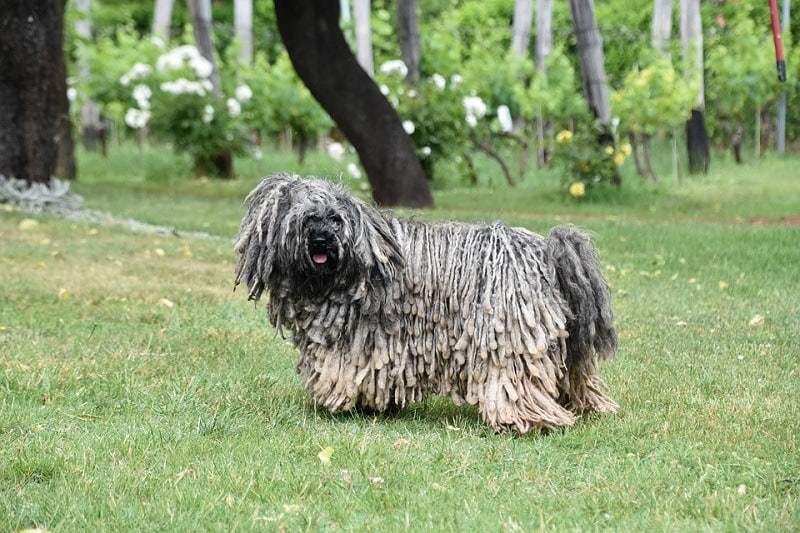
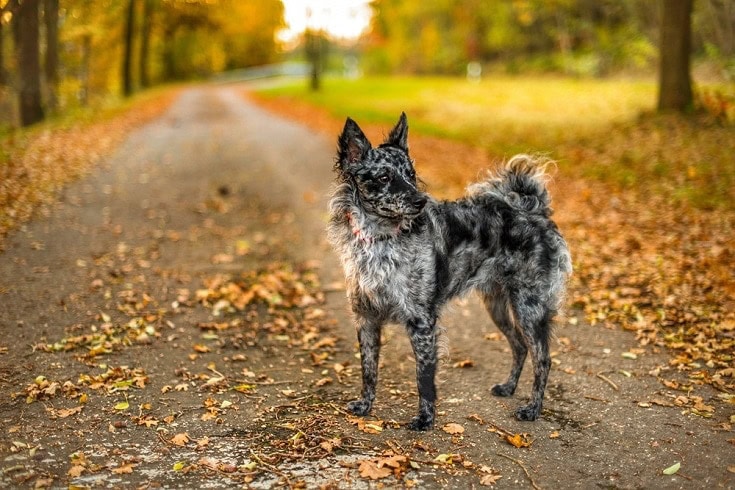
The Mudi, which is in the Miscellaneous Class, and the Puli, are all Hungarian herding dogs, but the Pumi is becoming more popular.
3. The Pumi Is a Barker.
Because the Pumi is a herding dog, they tend to be quite vocal and might not be the best dog for apartment living.

Conclusion
The Pumi looks like an adorable muppet with their perky ears and curly coat, and they're a smart and lovely companion. As previously mentioned, the Pumi is a relatively rare purebred, particularly in North America. If you’re looking for a Pumi puppy, you could start by looking for breeders of the Pumi, but if there aren’t any in your area, you can attend dog shows or speak to local and national dog clubs.
Some breeders are willing to fly puppies to your location, but be prepared for a much larger expense. Posting a message on social media will also spread your message to a bigger audience. Also, don’t forget to look into adopting a rescue dog. If you want to add a lively, affectionate, and intelligent dog to your family, the Pumi will make an excellent addition.
Related Reads:
Featured Image Credit: Katinka Bakos, Shutterstock
Get Hepper In Your Inbox


Pet care tips from our vets and experts, straight to your inbox.
You may opt-out at any time. View our Privacy Policy for more information.

Nicole is a lover of animals of all sizes but is especially fascinated with the feline variety. She’s the proud mom of Baby, a Burmese, and works every day so he can relax in the sunshine or by the fire. She’s always had a cat in her home and has spent countless days with others, observing behaviors and softening up even the grouchiest of the lot. Nicole wants to share her kitty expertise with you so you and your cat can live happy, healthy, and care-free.
Join the conversation
Ask a question, share your story, or send private feedback.