Hepper is reader-supported. When you buy via links on our site, we may earn an affiliate commission at no cost to you. Learn more.
What Is Single Kitten Syndrome? Vet-Reviewed Causes & Concerns


In this article
Adopting a new pet is one of the best things in the world, but have you ever wondered if adopting a single pet, like a kitten, means the animal will be lonely? Well, they may or may not be lonely, but when it comes to felines, a single kitten being adopted could result in single kitten syndrome. If you aren’t familiar with this term, it refers to certain behaviors that can develop as a result of the kitten being raised on its own.
But what exactly is single kitten syndrome, and how concerned do you need to be? What are the signs of single kitten syndrome, and how can you deal with it? Below is everything you need to know about this condition, including why two kittens are better than one!

What Is Single Kitten Syndrome?
Single kitten syndrome is not a specific diagnosis, but a concept based on the observations and experience of feline behaviorists, and those working in animal rehoming shelters, as well as cat owners.
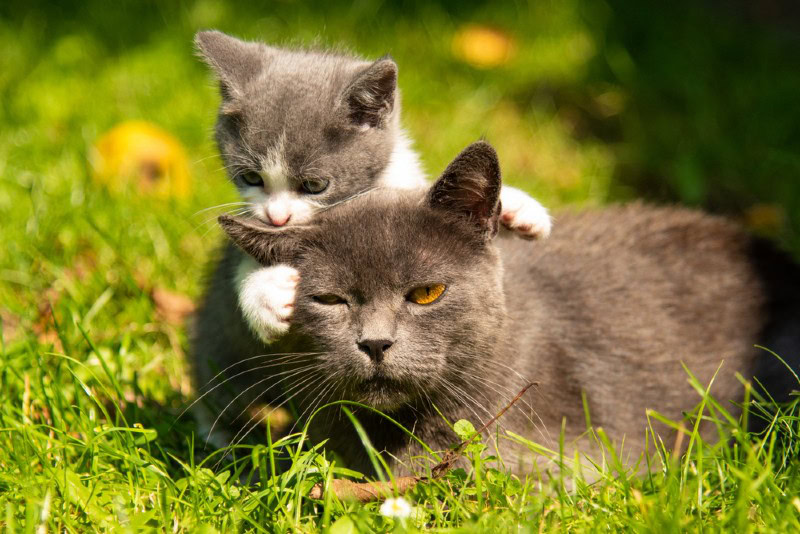
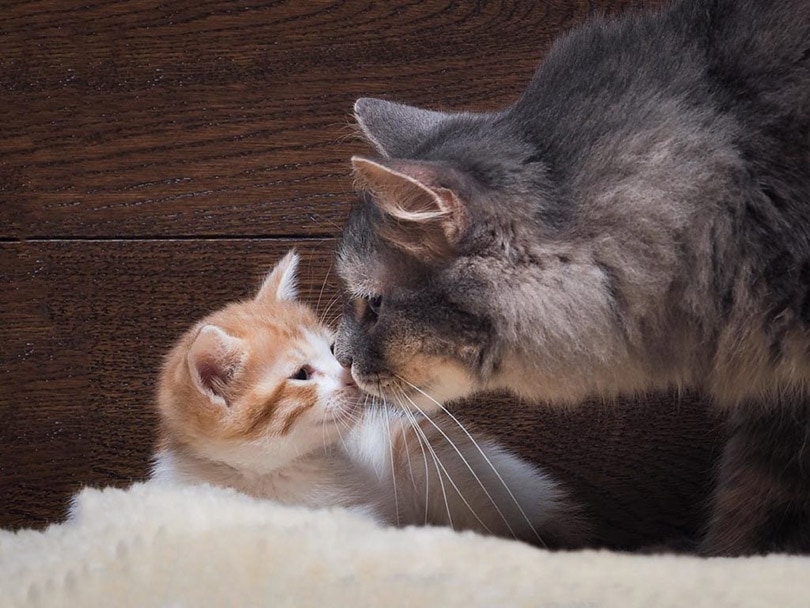
What exactly is single kitten syndrome? It’s not an illness, but a set of behaviors that develop when very young kittens are adopted into homes that don’t have other cats. Much of a kitten’s behavioral learning comes from playing and fighting with their peers; knowing how rough is too rough, learning social cues and body language etc. So, if a kitten is by themselves and doesn’t have playmates, they won’t learn when not to bite or scratch (among other things).
Think about it—you’ve probably seen kittens playing with one another, and sometimes this play gets pretty full on! That aggression is important because it teaches cats boundaries—how to play nicely instead of rough-housing, biting, and scratching; how much is too much. Without those interactions, a cat may grow up to be more aggressive because they haven’t learned boundaries. And while it might seem cute when a kitten attacks your ankles as you walk by, it’s not cute when a 15-pound cat does the same!
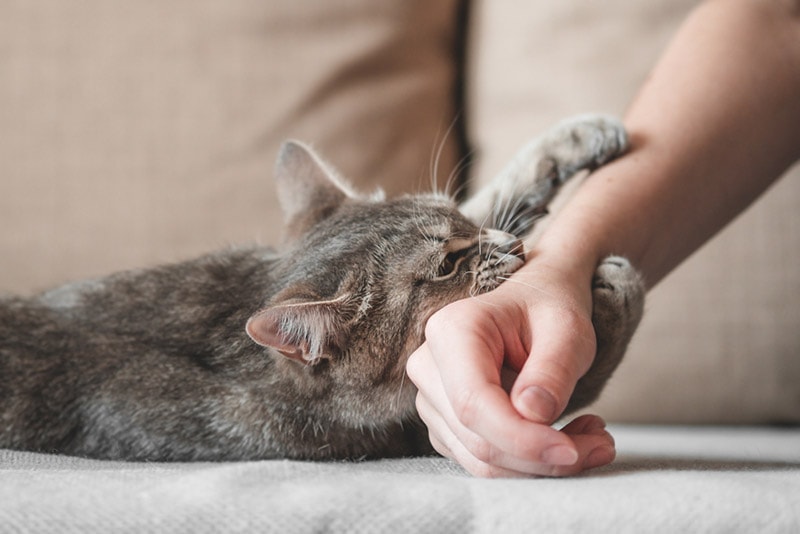
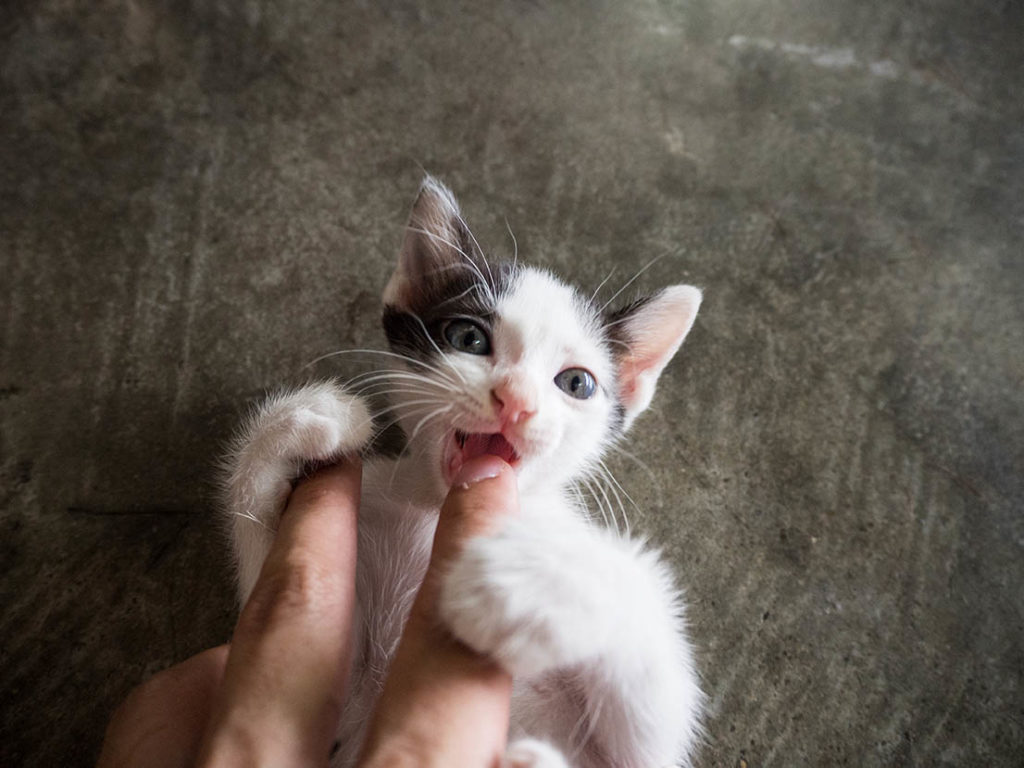
Worse still, many kitten parents enjoy winding their kittens up, finding it adorable when they scratch and bite with their tiny teeth and claws. What seems like harmless fun when they are young, is basically teaching your cat that it’s okay to bite and scratch humans.
What Are the Signs of Single Kitten Syndrome?
So, how do you know if your cat is experiencing single kitten syndrome? After all, not every cat adopted on their own will develop these behaviors. So, what signs should you look for to determine if your pet has single kitten syndrome?
Below are some behaviors that may be the result of single kitten syndrome:
- Biting at ankles (particularly when a person tries to leave)
- Suckling (on blankets, toys, your clothing, etc.)
- Being too rough during play (clawing and biting)
- Being standoffish or aggressive towards guests
- Inappropriate elimination (going to the bathroom outside the litter box)
- Being clingy with you or others in the home
- Obsessively chewing and scratching things they shouldn’t, like furniture
- Constantly wanting attention
- Excessive vocalization
- Keeps you awake at night
- Picky eater
If your pet only exhibits one or two of these behaviors (such as being a picky eater or meowing a lot), it doesn’t necessarily mean they’re dealing with single kitten syndrome. They may just be that picky when it comes to food or be an extremely talkative cat breed. But if you see several of these behaviors in your solo feline, single kitten syndrome may be the cause.
What Causes Single Kitten Syndrome?
The cause of single kitten syndrome is singular adoption at a very young age (less than 6-7 weeks).
When very young kittens aren't given enough time to socialize and interact with their littermates before being adopted into a household where they are the only cat, they won’t learn how to behave appropriately. Their lack of socialization and education can result in single kitten syndrome.
Single kitten syndrome is why many shelters and adoption centers have a policy that two kittens must be adopted at a time instead of just one. This policy is in place to ensure that no kitties leaving the shelter develop the behaviors associated with single kitten syndrome.
How Do I Care for a Cat With Single Kitten Syndrome?
If you can’t adopt two kittens together, there are some ways you can help socialize and teach your single kitten. Even if your kitten is already beginning to exhibit single kitten syndrome behaviors, the following should help to fix the issue or at least prevent further progression of behavioral problems.
- Provide a safe chillout zone. Though most people associate playpens and crates with dogs rather than cats, using these when your kitten is unsupervised (whether you’re away from home or simply in another room) will provide your kitten with a safe area to play and rest. A playpen or crate will prevent them from getting hurt when they’re on their own and prevent damage from being done to your home. It should be a cozy, comfy place where they feel safe and relaxed.
- Your kitten will also need lots of environmental enrichment. A lone kitten can quickly become bored since they have no one to play with (and you can’t always play with them). Left to their own devices, a bored feline will find their own entertainment (which will usually involve your belongings). So, provide lots of cat towers, cat trees, and scratching posts to keep the kitten entertained. Toys and games are also vital for enrichment and an excellent way to help your pet release excess energy. You can also help keep your kitten entertained by providing a puzzle feeder that teaches them to “hunt” for their food.
- Avoid the laser toy. If you have a kitten that struggles to self regulate already, a laser toy can quickly become an obsession. This is a phenomenon commonly seen in dogs, and some cats, where they become hyper focused on the laser toy, so much so that they struggle to think about anything else.
- Teach your kitten how to play appropriately. One of the most vital things you need to do is to teach your pet that you are not a toy. That means if your kitten is nibbling or biting at your hand while you play, or trying to eat your toes, you need to redirect them to more suitable objects. Hand them a toy they can chew or kick at (stuffed toys are fabulous for this, especially if they’re about the size of another kitten). You can also use wand toys to keep your fingers far from tiny teeth. Never yell at your bitey kitten - this will only stir them up or lead to resentment. If they are being rough, a single ‘hiss’ is a much more effective and feline appropriate way to interrupt their actions. Make sure that EVERYONE in the household knows not to engage in rough play with the kitten, no matter how adorable it may seem.
- Encourage your pet’s socialization by introducing them to new people and animals. Let other people come in to pet your kitten (carefully and gently!) so they become used to being handled. If other animals are in your home, such as dogs, introduce them slowly by first allowing your cat to smell the other animal’s scent on a blanket or toy, then letting them “meet” at a distance, and finally letting them meet face-to-face.
- Use pheromone diffusers. Plug-in diffusers like Feliway, are actually artificial reproductions of the pheromone produced by mother cats when nursing. Having one of these in the house can help your kitten feel more settled and secure, and less inclined to chase, attack, and bite everything and everyone!
Frequently Asked Questions (FAQ)
If I get two kittens, do they have to be from the same litter?
They don’t have to be, but ideally, they would be. Kittens from the same litter are already familiar with each other and will have already begun learning how to interact with each other. If this isn’t possible, two kittens of a similar age (within a few months of each other) should work just as well.
Won’t two kittens be much more work than one?
Not really. Yes, you’ll need to buy a few extra things, but having two kittens means your pets are always entertained when you’re not around and won’t be as desperate for attention from you. They’ll also help each other learn. The best thing is that they’ll do all their chasing, wrestling, and fighting with each other, leaving the play and cuddles for you!
What if there was only one kitten in the litter?
In this situation, there are two things that can help prevent single kitten syndrome:
Leave the kitten with their mother until they are at least 12 weeks old, allowing her time to teach them properly.
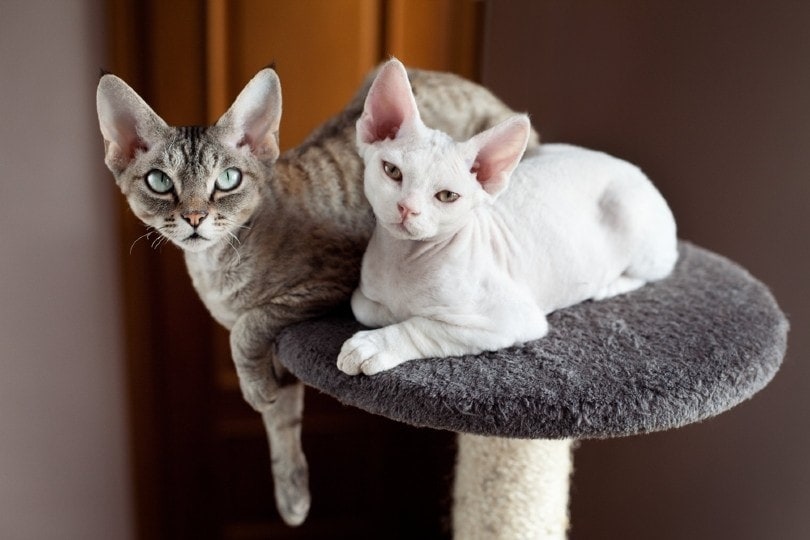
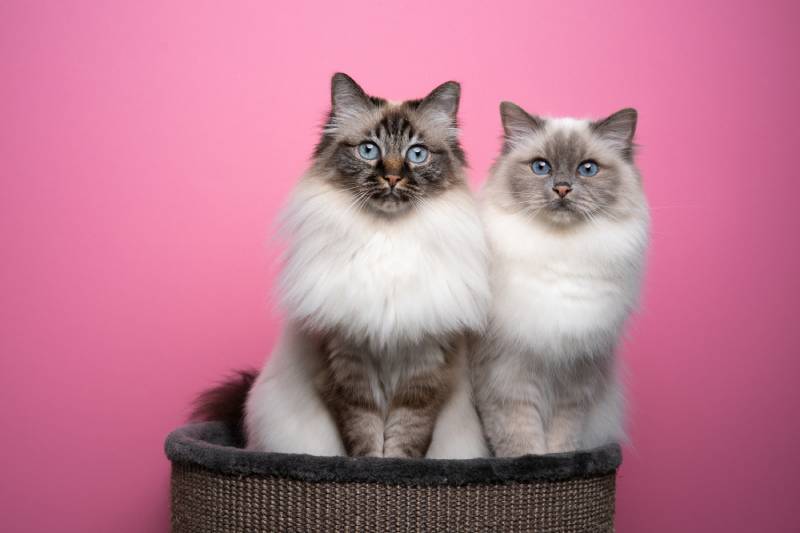
Adopt them with a friend; this is one situation where two kittens will definitely be better than one.
What if I already have an adult cat in the home? Will that prevent single kitten syndrome?
Not necessarily. For one, your adult cat and the kitten might not get along. And even if they do, your adult cat may get easily annoyed by having a kitten constantly pouncing them or wanting attention, so your kitten may still not learn how to behave properly.

Conclusion
Single kitten syndrome may not be a scientifically proven diagnosis, but it is a well recognized behavioral condition. When kittens are adopted on their own at a young age, they don’t get a chance to learn things like how to play appropriately, which can result in destructive behaviors when they reach adulthood. The best way to prevent this is to adopt two kittens at once, but if you can’t do that, you can make your home a safe space, provide plenty of enrichment, and teach your kitten how to play properly to hopefully prevent single kitten syndrome.
Sources
Featured Image Credit: Galina Photo, Shutterstock
Get Hepper In Your Inbox


Pet care tips from our vets and experts, straight to your inbox.
You may opt-out at any time. View our Privacy Policy for more information.
Misty Layne lives out in the woods in small-town Alabama with her two Siamese—Serafina and Jasper. She also has an array of stray cats, raccoons, and possums who like to call her front porch home. When she’s not writing about animals, you’ll find her writing poetry, stories, and film reviews (the animals are, by far, her favorite writing topic, though!). In her free time, Misty enjoys chilling with her cats, playing piano, watching indie and foreign films, photographing abandoned places, and catching up on her never-ending TBR list.
Join the conversation
Ask a question, share your story, or send private feedback.