Hepper is reader-supported. When you buy via links on our site, we may earn an affiliate commission at no cost to you. Learn more.
How to Tell If a Cat is Feral or a Stray: The Key Differences
In this article
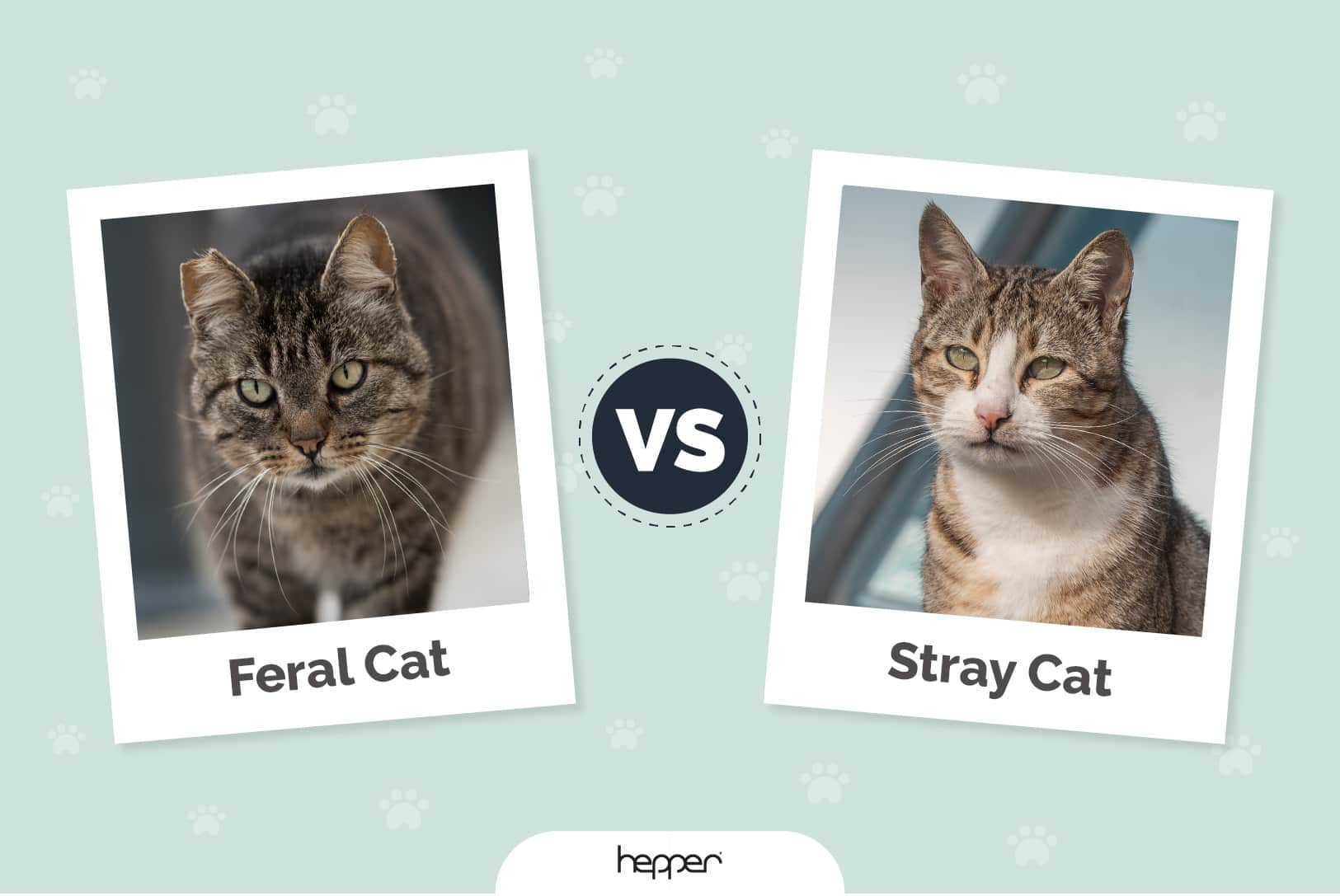
The terms stray and feral are commonly heard in the animal community. The terms help distinguish homeless cats based on how they interact with humans. While it may be easy to group feral cats and strays into one category, they are very different. We are here to help explain the difference between feral cats and stray cats and how to tell if a cat is feral or a stray.

Feral vs. Stray
Telling the difference between a feral cat and a stray cat is very important. This knowledge will assist you in your overall interaction with an unknown cat and help you decide how to handle each unique situation.
Feral Cats
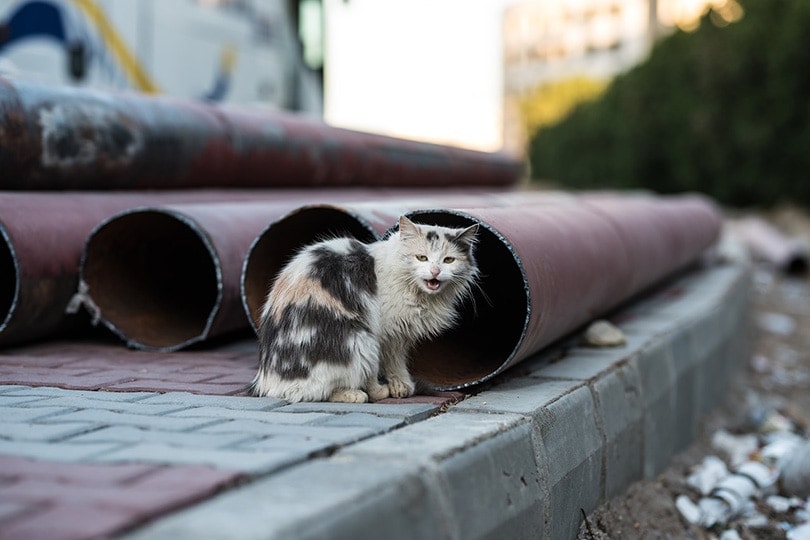
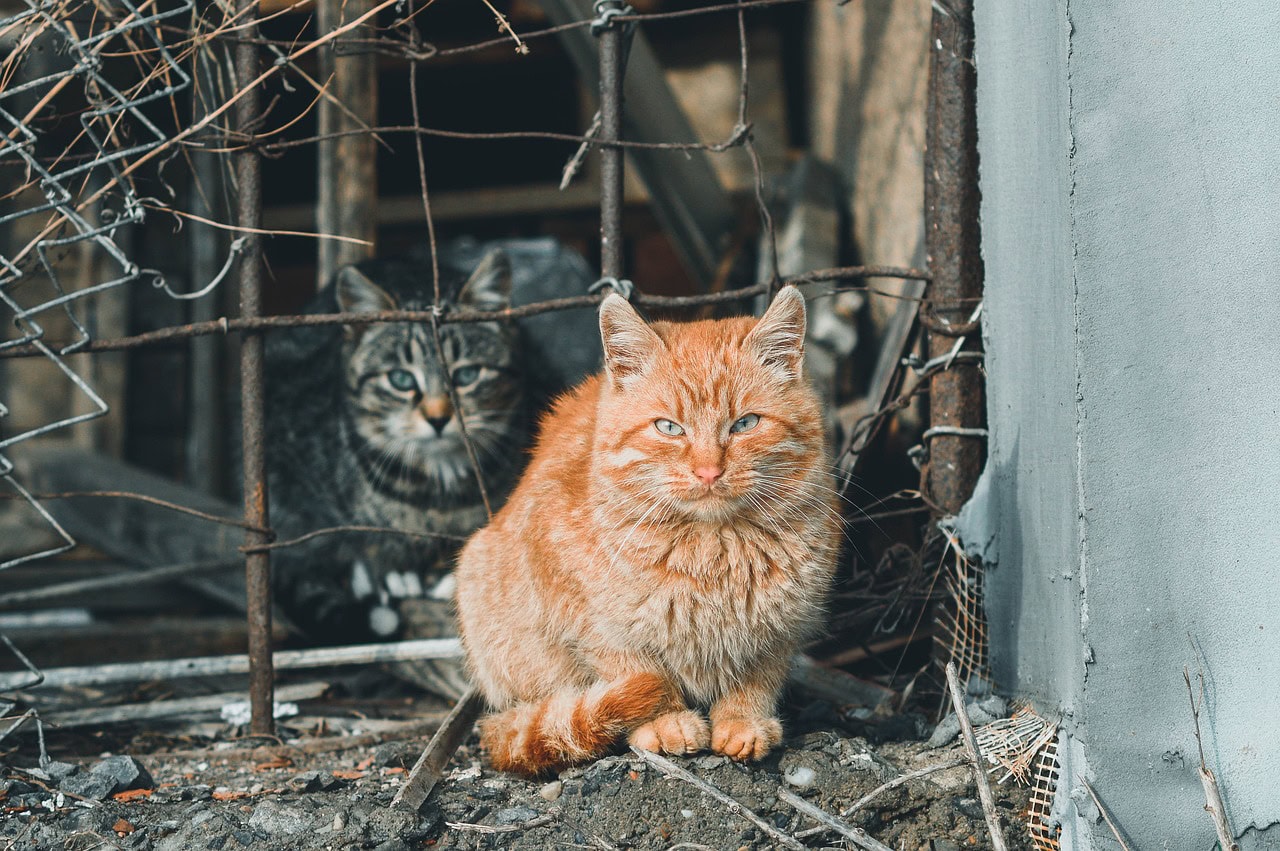
Feral cats are categorized as outdoor cats that have had little to no physical contact with humans and are entirely unsocialized with people. While some feral cats may have had interactions with humans at some point in the past, the interaction did not allow them to develop relationships with people and made no impact on having positive interactions with humans.
Feral cats are typically unable to be adopted out into homes. They are simply too wild to function as a family pet unless human intervention happens during kittenhood. It is crucial to remember that this is not the fault of the cat but a direct result of too many domesticated pets and not enough homes.
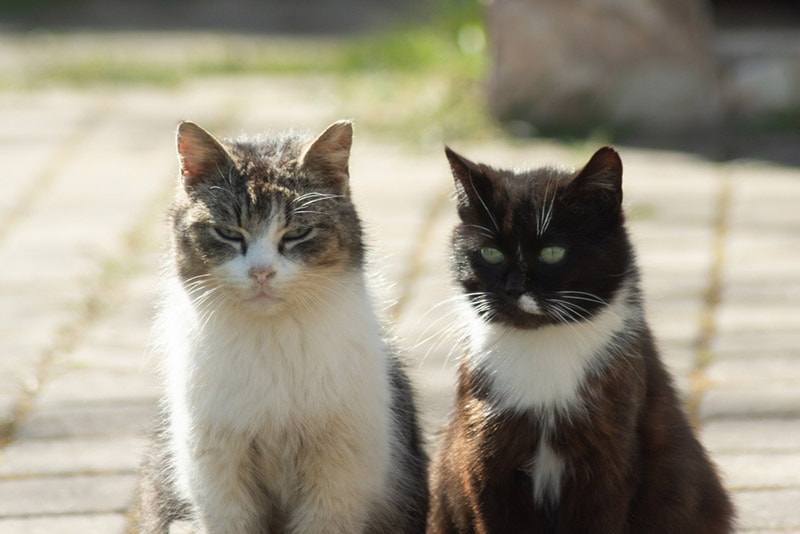
Feral cats are considered nuisances in urban environments, but their existence is primarily due to the lack of responsible ownership among cat owners. Lack of spaying and neutering and pets being abandoned or lost have resulted in many cats that are born on the streets that have never had the ability to interact and socialize with people. They are essentially wild versions of our domesticated cats that are having to survive on their own.
Stray Cats
Stray cats differ from feral cats because they have either lived indoors at one point or were previously socialized with humans. Stray cats have either been abandoned or lost and no longer have a home or regular contact with humans.
Because the cats have been able to engage with humans and have had the opportunity to share their lives alongside them, they are accustomed to human contact and generally enjoy human interaction. They are suitable to be adopted into new, loving homes since they're comfortable with people and can readjust to life as housecats.
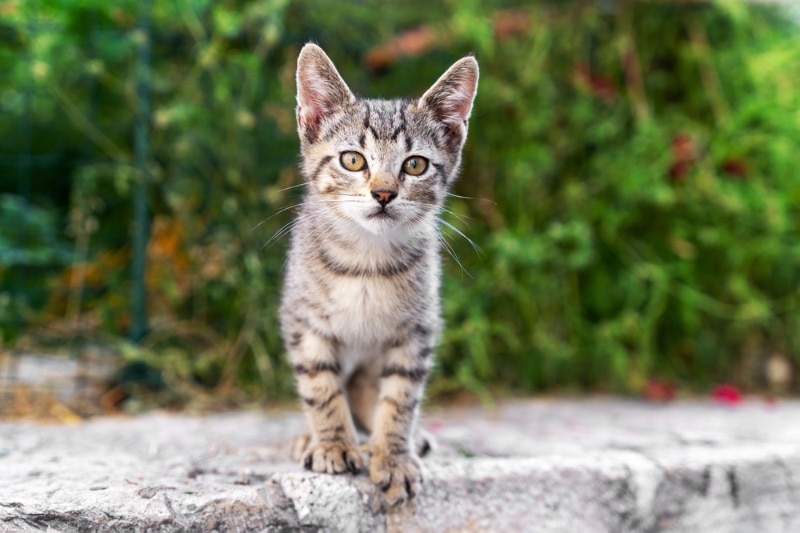
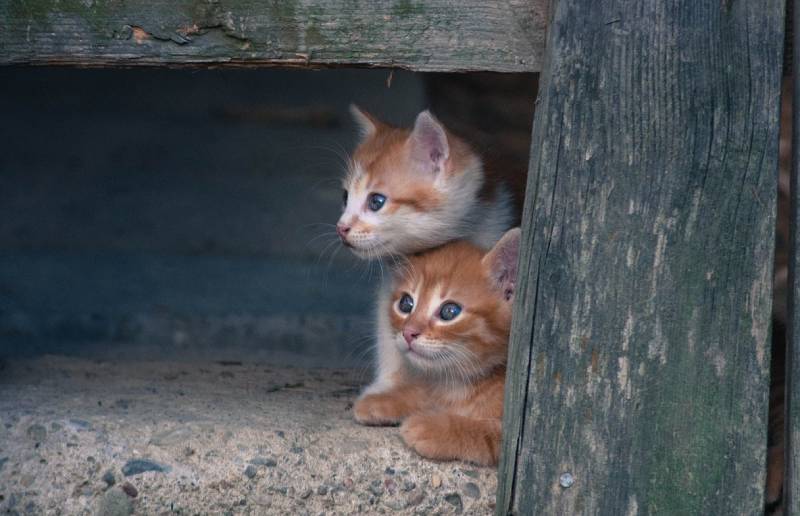
Kittens can become well-socialized by regularly interacting with humans at an early age. If they were lucky enough to experience human interaction by being talked to and played with from an early age, it can have a long-lasting effect on how they react to people.
How to Tell the Difference
Now that we have gone over what defines a feral cat and a stray cat, we will give you an idea of how to tell the difference between the two.
Feral Cats Overview
Appearance
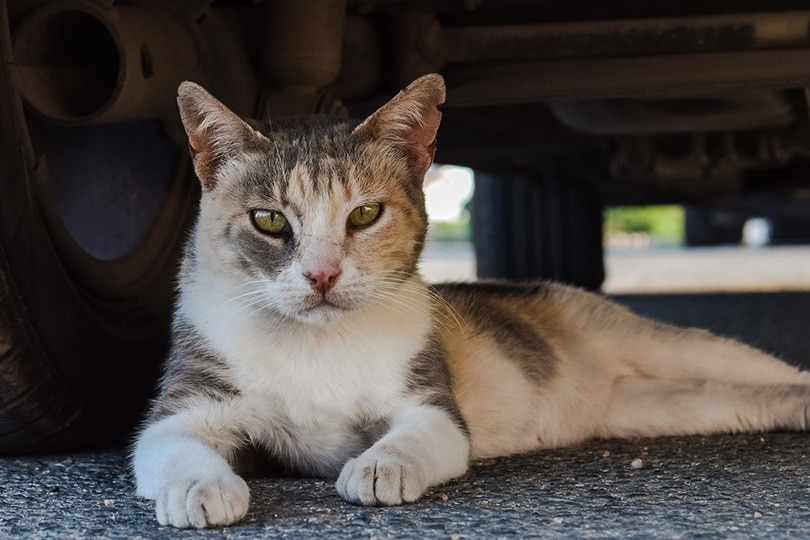
Feral cats and stray cats may be hard to distinguish by appearance alone, depending on how long a stray has been left to fend for itself. When homeless, the cats can look more rugged than an indoor house cat. A lot of times, they have unkempt fur and scars, are missing parts of the ear, and have other wounds that are indicative of fighting.
Body Language
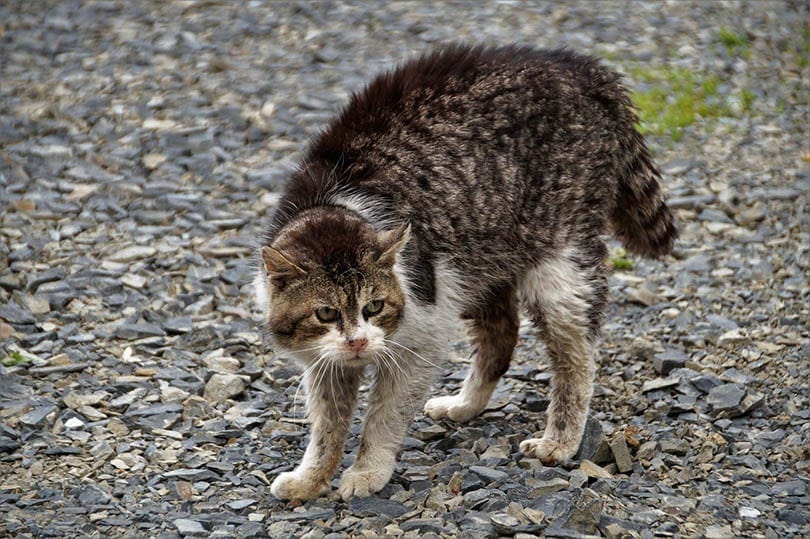
Feral cats display body language that is entirely different from that of a stray. Feral cats may crawl and crouch low to the ground as a means of defense to protect their body from the perceived threat of a human.
Feral cats are unlikely to make eye contact and slink away at any given time to avoid interaction. Their body language is very tense, and you can clearly tell how uncomfortable and fearful they are.
Behavior
Feral cats will display aggression and lash out at people if they feel threatened or cornered. If they have been trapped in a cage, they will likely stay in the back of the cage and retreat to the farthest corner to protect themselves.
If they become overly frightened, they'll rattle the cage or even climb in a desperate escape attempt. They are so fearful of humans that they can even harm themselves when trapped in an attempt to escape.
Vocalizations
Feral cats will not meow or purr and aren't interested in interacting with humans. They typically hiss or growl when approached or cornered.
Daily Schedule
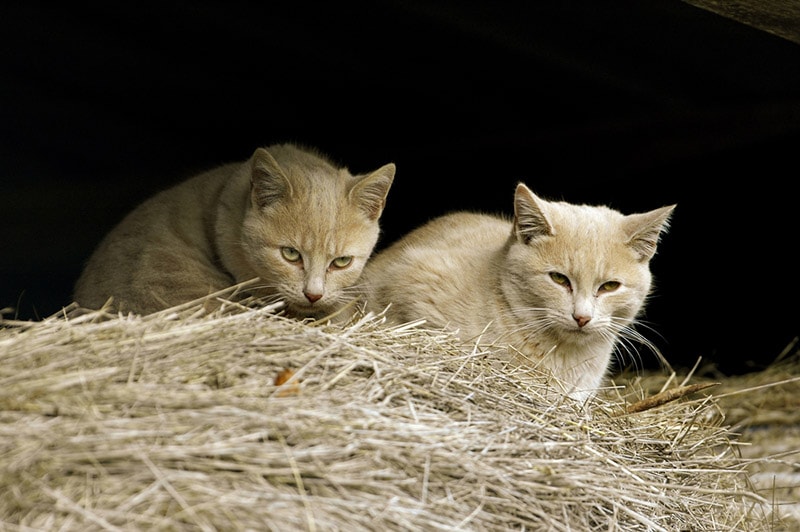
Although most cats are crepuscular, feral cats are likely to be nocturnal. They're wild and like to avoid human interaction at all costs, and unlike house cats, they don't have to adapt to a human's schedule. Some feral cats live in colonies where they hunt and sleep together, and they generally avoid humans during the day.
Responsiveness
Feral cats will not be responsive to humans and will avoid human interaction. Some feral cats are more accepting of people who provide them with regular feedings. Even in those circumstances where there is some level of comfort, they typically don't allow humans to pet or pick them up.
Stray Cat Overview
Appearance
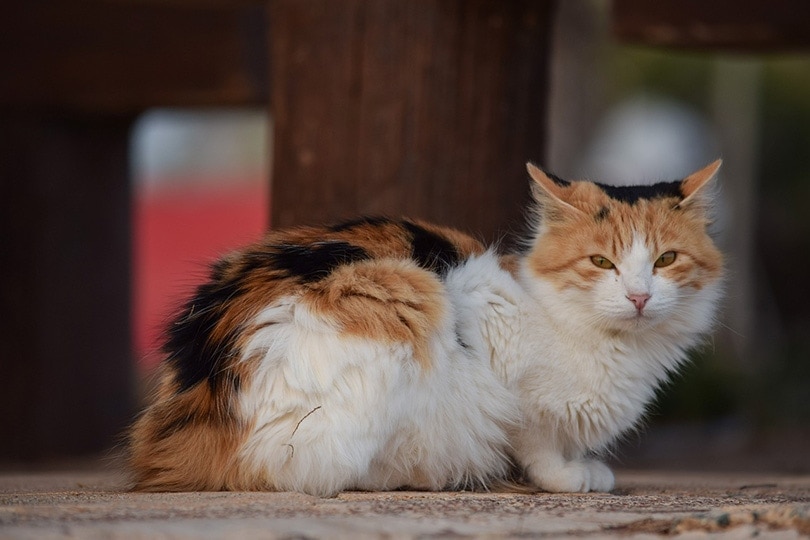
There is a chance a stray cat may look a bit cleaner than a feral, but that depends on how long they have been left to survive on the streets. The more time they spend on the street, the rougher they may look. Appearance is not so much an indicator of stray versus feral status as behavior and some other factors.
Body Language
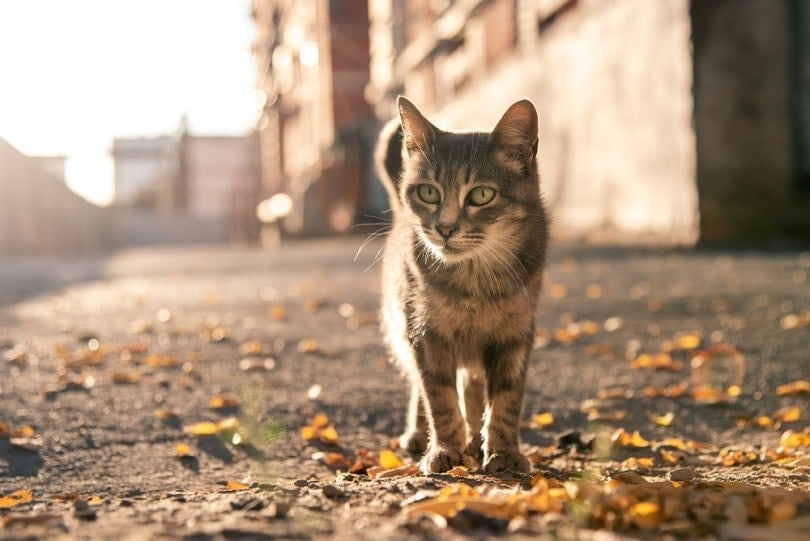
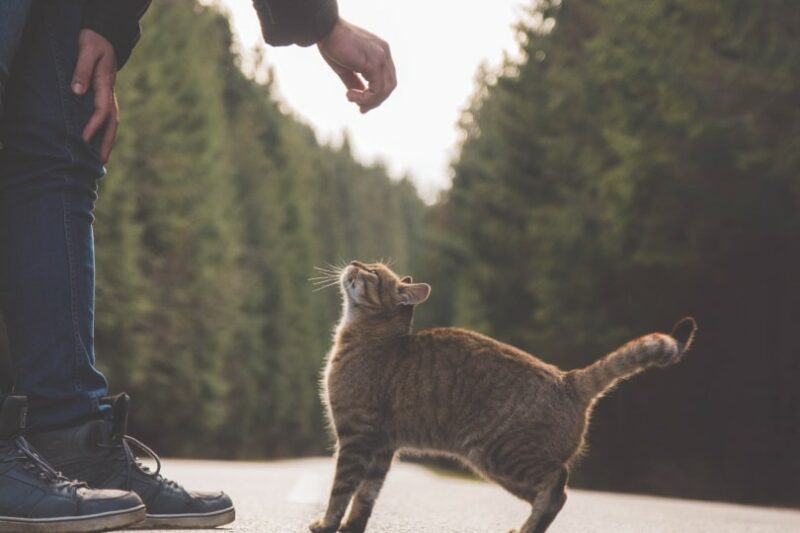
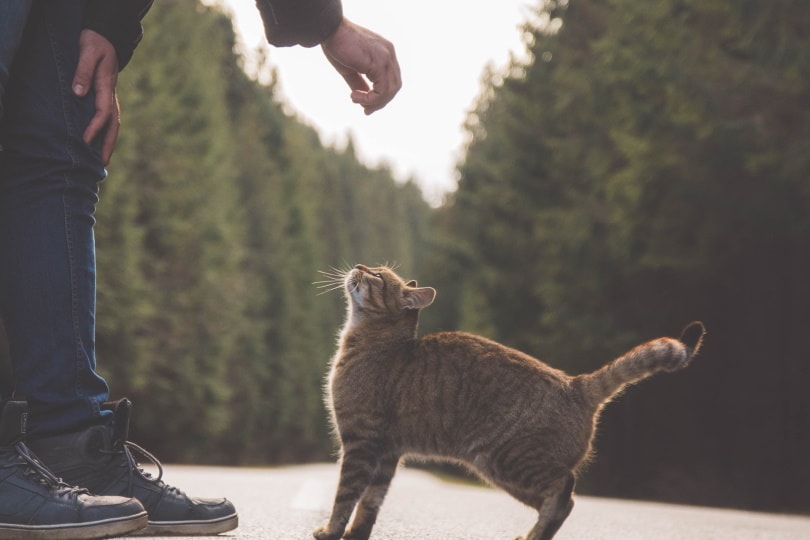
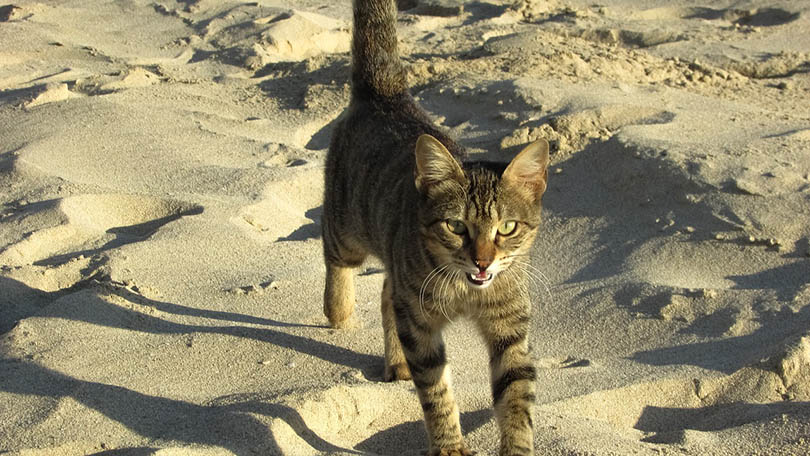
Stray cats don't have the fearful, self-protective body language of a feral cat. A stray cat’s body language will be very similar to a house cat's (unless they are under severe stress.) They will likely walk fully erect with their tail up and will make eye contact with you. These are all signs of being comfortable with humans rather than fearful.
Behavior
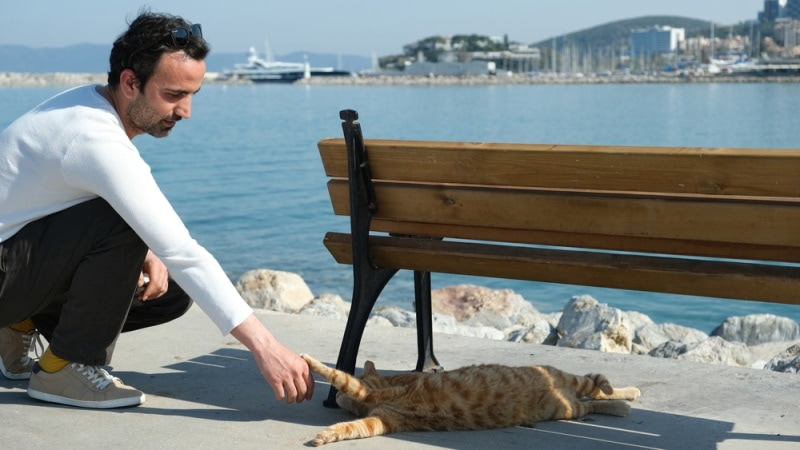
Stray cats will behave similarly to house cats. Unless they are in a tense and stressful situation that is making them uncomfortable, you will likely be able to touch and pet some of them. They may even approach you in search of attention.
In a high-stress situation, they may be hard to distinguish from feral cats. Strays will eventually calm down after they realize you mean them no harm. Feral cats are unable to realize you are not a threat. A stray cat typically allows you to touch them once they have calmed.
If caged and stressed, they will relax over time and may show interest in toys or food.
Vocalizations
If a stray cat approaches you, they will likely do so with friendly meows and purring. If you have trapped a stray cat, they may be nervous and fearful enough to growl or hiss, but they will relax eventually.
Daily Schedule
Most strays are more active during the daytime. This is due to their experience with humans and their desire for social interaction. They are much more likely to run into a sought-after human companion if they are out and about during the day. Many strays have lived as house cats and follow their old routines.
Responsiveness
Some stray cats will approach people and may end up lingering around porches in a desperate attempt to get love and attention. After all, they're accustomed to a more pampered life, and it’s only natural for them to seek companionship. Stray cats are known for making their way into the hearts of many by rubbing up against our legs, purring, and bringing out a person’s desire to take them home.
Why Does It Matter to Know the Difference Between the Two?
Understanding the difference between feral and stray cats will help you determine the best way to interact with them, care for them, and help them. Stray and feral cats can be challenging to tell apart when they are in stressful situations and are trapped and frightened. It is vital to give them time to relax in those circumstances. especially when they are trapped or frightened.
Most feral cats cannot become pets and are generally unadoptable unless taken in as young kittens. Some people support the euthanasia of trapped feral cats, while others strive for catch-and-release programs where they are spayed or neutered to prevent more overpopulation.
Stray cats can typically readjust to living as house cats and tend to make good candidates for adoption into new, loving homes. Knowing the difference between the two can save lives and potentially lead to a much better life for a homeless cat.
Conclusion
Regardless of whether a cat is feral or a stray, they find their way to homelessness due to a lack of responsible ownership. There are simply too many cats than there are loving homes. There are some significant telltale differences between feral cats and stray cats, and knowing the difference between the two can help you interact with them and provide them the help and protection they need.
Featured Image Credit: dimitrisvetsikas1969, Pixabay
Get Hepper In Your Inbox


Pet care tips from our vets and experts, straight to your inbox.
You may opt-out at any time. View our Privacy Policy for more information.

Lindsay is a wife, mother, nature enthusiast, animal lover, and business major. She was born and raised in the United States and now lives in Tulsa, Oklahoma. She shares her home with a German Shepherd, several snakes, tarantulas, and a couple of rescue cats.
Lindsay and her husband enjoy traveling the US with their children and photographing wildlife. Lindsey is passionate about proper animal care and education around it!
Join the conversation
Ask a question, share your story, or send private feedback.