Hepper is reader-supported. When you buy via links on our site, we may earn an affiliate commission at no cost to you. Learn more.
What Do Ferrets Eat? Vet Approved Dietary Advice


In this article
Ferrets are unique pets. Their care needs are a bit less intuitive than those of cats and dogs, which people typically have more experience with. If you are a new ferret owner or considering being one soon, you may wonder what to feed a pet ferret.
To put it simply, ferrets are strictly carnivores. In their natural habitat, they eat meat and other animal tissues. As a result, ferrets as pets require a similar diet. There are high-quality, complete, ferret commercial foods that you can purchase that will ensure the correct balance of nutrition for your ferret. The biscuit foods are recommended to help with your ferret's dental health. There are lots of tasty options to feed your ferret as treats alongside a commercial diet that you can prepare at home. Keep reading below to learn more about what you can and should feed your ferret.

Feed Your Ferret Healthy Proportions
Since ferrets are truly carnivorous, their diet should primarily be made up of meat protein. 32%–40% of your ferret’s diet should be made of high-quality protein, 10–15% should be made of fat, and no more than 4% should be fiber. If your ferret’s diet is not balanced properly, they may experience nutritional deficiencies that lead to further health complications.
Depending on your ferret’s life stage, you may need to alter their diet. There are different diets available for growing kits and geriatric ferrets. Similarly, you must provide a unique diet for a pregnant or lactating ferret. If you are uncertain about what to feed your ferret for the life stage that they are in, reach out to your vet for advice.
Appropriate Meals for Ferrets
High quality, commercial ferret foods are readily available and are the best option for your ferret’s daily nutrition. They are professionally balanced diets and you can get different options for the life stage of your ferret. As a treat, owners can add in a bit of variety occasionally to keep your furry friend happy.
Kitten Food
Kitten food can be a suitable meal for your ferret on the odd occasion, perhaps once a week. As long as it provides an adequate amount of protein and fatty acids, it can be an excellent option for a bit of variety for your pet. Cat food is not as beneficial for ferrets because it is typically lower in protein than kitten food.
Homemade Food
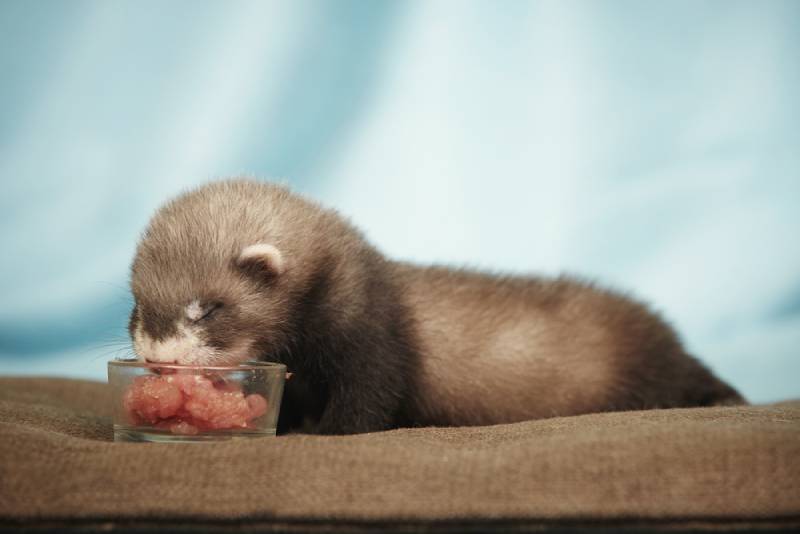
Cooked and raw meats should be used as a treat only. Keep treats to a minimum. They should make up no more than 5% of a ferret’s daily caloric intake. Too many treats may lead to malnutrition.
Baby Food
As strange as it may sound, a meat based baby food is sometimes used to feed a sick ferret. However, it is not suitable for your ferret everyday. If your ferret is unwell and you notice it isn’t eating as much as it normally does, it is best to seek veterinary advice sooner rather than later.
Foods You Should Not Feed Your Ferret
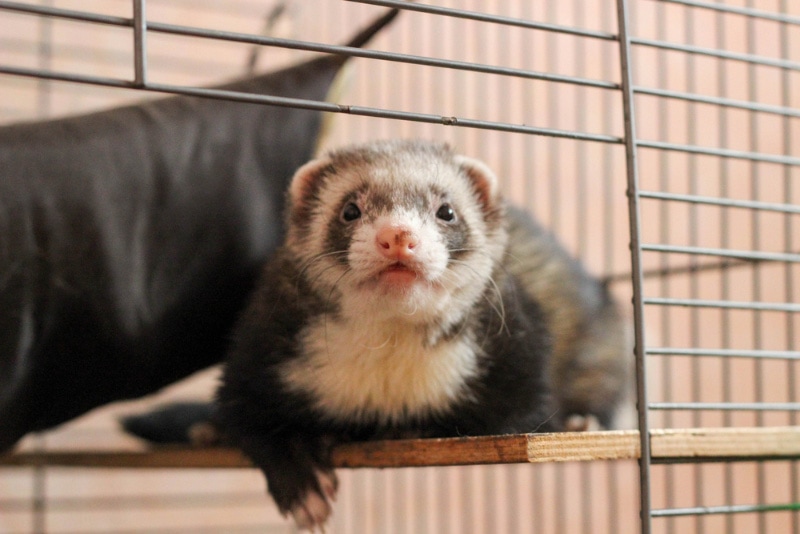
Determining which foods are harmful to your ferret is just as important as knowing which ones you should feed them. Below are some of the most hazardous foods for ferrets.
Cooked Bones
Cooked bones are extremely dangerous for ferrets. When they are cooked, they become weakened enough to splinter. Splintered bones can become a choking hazard or an intestinal obstruction. In some instances, bone shards may cause internal damage, which can lead to severe consequences. If your ferret has eaten cooked bones, call your vet immediately for the best course of action.
Chocolate
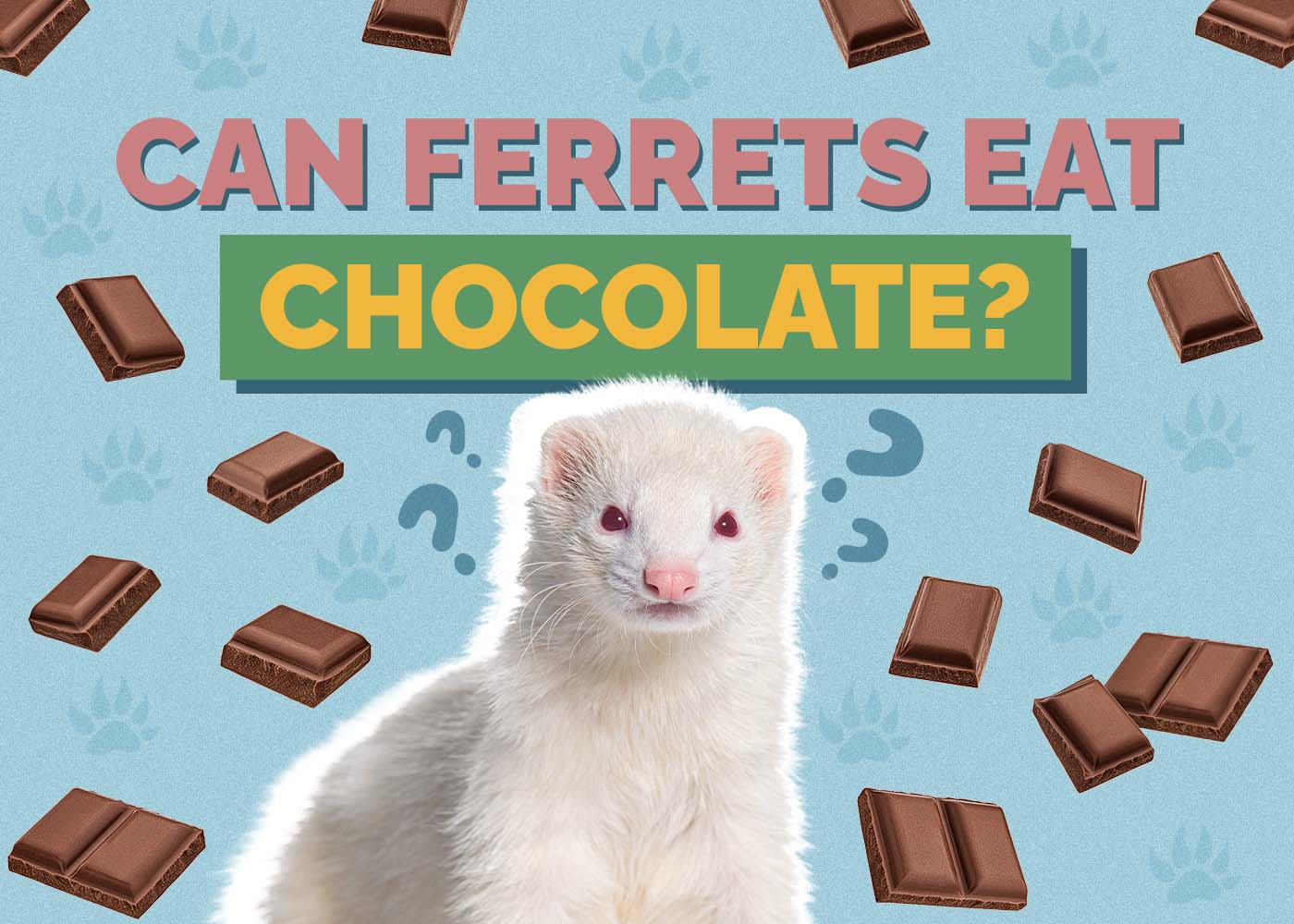
Much like cats and dogs, ferrets may experience a fatal reaction to chocolate. Chocolate should never be fed to your pet under any circumstances.
Foods High in Complex Carbohydrates
Foods that are high in complex carbs should be avoided. This includes veggies, fruits, dairy, bread, and any food containing sugar. Ferrets are strict carnivores, and their digestive system struggles to process complex carbohydrates. They are also lactose intolerant, so any dairy products are a definite no-no.
Grapes, raisins, sultanas and currants
Any derivative of the grape can cause kidney failure in ferrets, just like in dogs. An emergency trip to the vet must be made if your ferret has eaten any amount of these.
Onions and garlic
Can cause anemia in ferrets because they contain a substance that attacks their red blood cells.
Xylitol
A sweetener found in many sugar-free products. This can cause low-sugar levels (hypoglycemia) in ferrets and dogs and must be treated immediately.
How Often to Feed Your Ferret
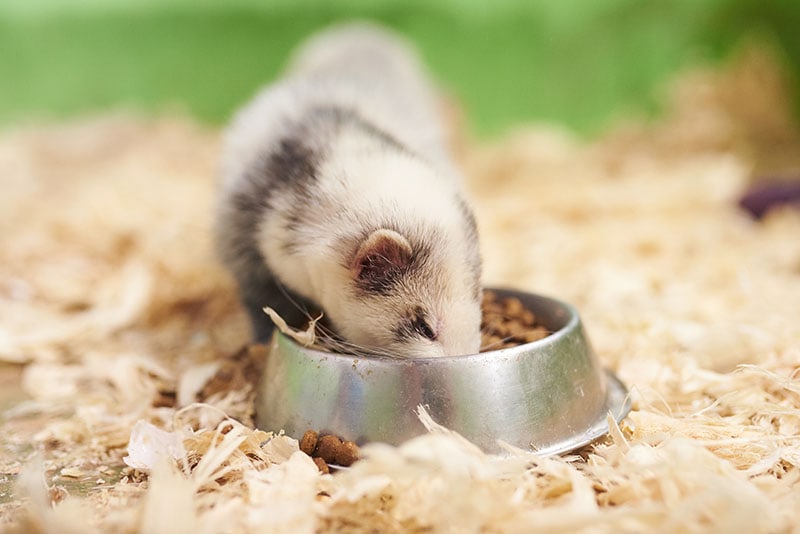
Ferrets have a high metabolic rate and a short gut transit time (time between eating and defecating) It usually takes only 3-4 hours from eating to defecating. As a result, your ferret will need several small feeds a day to allow it constant access. A hard, complete, commercial ferret food can be left out at all times for your ferret to help itself to.
Ferrets are at risk of low blood sugar without constant access to food, but they can be at risk of obesity if unlimited food is available for them to graze on at will. Therefore, how you feed your ferret depends a little on how food-orientated your ferret is. If you have a greedy ferret that will eat whatever is put in front of it, it should be fed small amounts throughout the day. A ferret that only takes small amounts throughout the day can be left with its daily allowance.
Provide Healthy Treats in Moderation
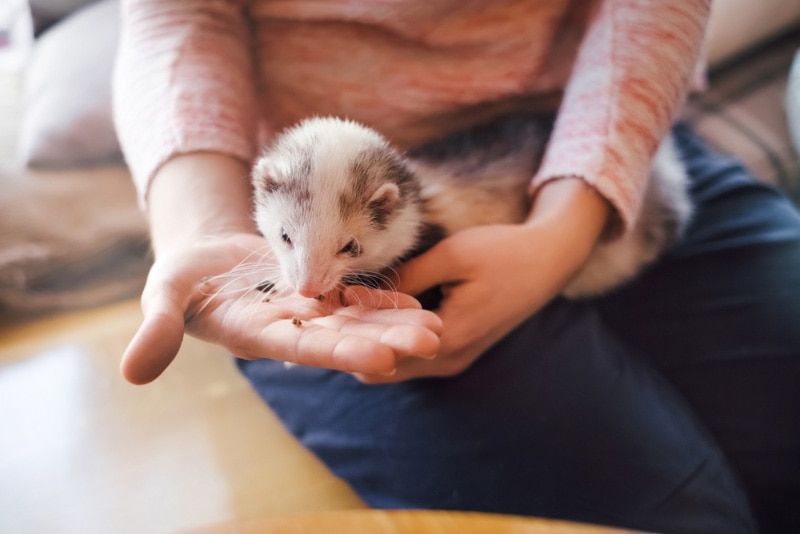
Treats are an essential part of training your pet and spoiling them. However, it is best to only give your ferret healthy treats occasionally, such as a boiled egg, some cooked chicken or some kitten food. Foods with grains, veggies, chocolate, or other sweets are not appropriate treats for your ferret.
Final Thoughts
Ferrets are amazing pets. Although understanding their dietary needs can be challenging for a first-time ferret owner, providing for them isn’t so difficult once you get the hang of it. A high-quality commercial, nugget based ferret food should be the staple diet for your ferret. Additional treats can be given to give your ferret a bit of variety or to help with training, but they shouldn’t make up more than 5% of your ferret’s daily calorie intake. The best way to ensure that you are sustaining a good level of care for your pet is to remain in frequent contact with your vet. Your vet can provide guidelines for feeding your ferret a proper diet to ensure they remain healthy and happy.
Sources
Featured Image Credit: Artsiom P, Shutterstock
Get Hepper In Your Inbox


Pet care tips from our vets and experts, straight to your inbox.
You may opt-out at any time. View our Privacy Policy for more information.
Pets are Jordyn’s passion, cats especially. Whenever she has the opportunity, she loves to learn about them and share her knowledge with everyone. She is devoted to her tabby cat named Jack and works hard to buy him his favorite treats and toys. Discovering new ways to better care for her pet is always on her to-do list, and she is eager to help pet parents everywhere who have similar pursuits. In her spare time, she loves to read, write, and take long walks. She has a creative spirit, which often helps her to come up with funny cat names.
Join the conversation
Ask a question, share your story, or send private feedback.