Hepper is reader-supported. When you buy via links on our site, we may earn an affiliate commission at no cost to you. Learn more.
9 Common Cockatiel Sounds & Their Meanings (With Audio)
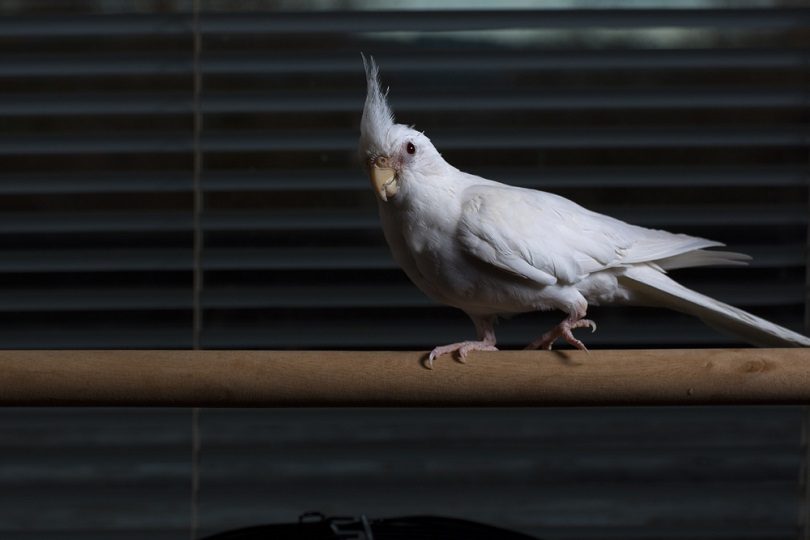
Cockatiels are natural-born communicators. In their natural habitat, they live in flocks where vocalizations are crucial to their survival, so it’s only natural to expect your domesticated bird to use its voice, too.
If you’re new to cockatiel ownership, you might wonder if the sounds escaping your bird’s mouth are normal and what they mean. Truthfully, there are a lot of sounds that cockatiels make, but we’re going to review the nine most common varieties to help you gain a better understanding of your bird. Keep reading to find out more.

The 9 Cockatiel Sounds and Their Meanings
1. Screaming
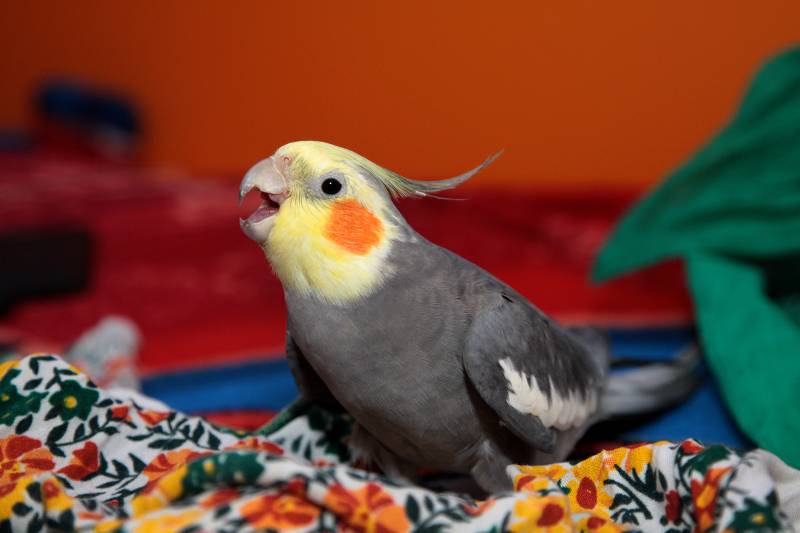
Screaming is one of the harshest and loudest noises your cockatiel can produce. It is very easy to distinguish screaming from happier and less shrill sounds such as chirping.
Sometimes your cockatiel may start screaming because they feel like being noisy. Most of the time, however, your bird is screaming because they want you to know that they’re feeling afraid or uncomfortable. Usually, it’s pretty easy to determine what it is that’s causing the screaming. For example, they may scream if their leg gets trapped in one of their toys or if it’s fighting with one of their feathered friends.
The occasional scream is usually nothing to be concerned about. Still, if your cockatiel starts screaming for extended periods of time, you might want to check it for other symptoms of illness. Keep your eyes open for:
- Rapid or shallow breathing
- Rapidly flapping wings
- Arched back
2. Whistling
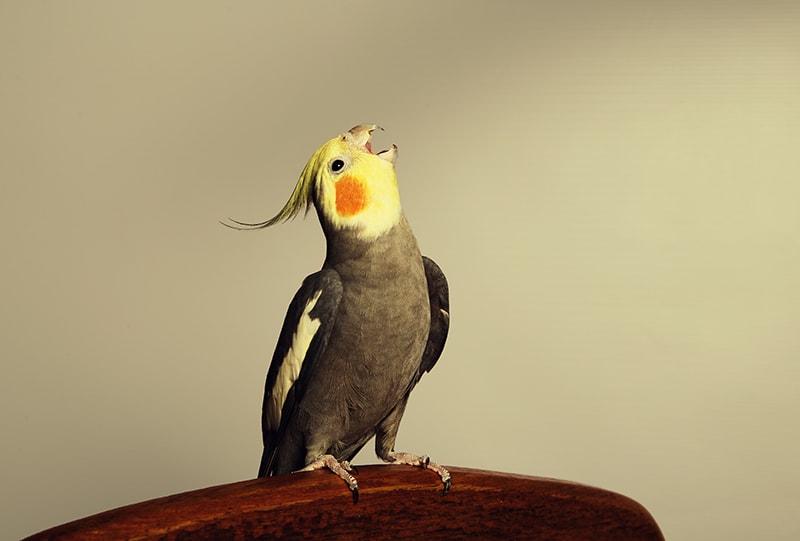
Whistling is one of the most common sounds you’ll hear from a cockatiel. Whistling in cockatiels sounds just as it does in humans. It is melodious and drawn out with rising and falling notes that change pitch and pattern.
Your cockatiel may whistle in response to fun and exciting tunes they’re hearing or to entertain themselves. Not all cockatiels are born knowing how to whistle. You can try teaching them by whistling at them or even playing bird-specific whistling music you can find online or on CDs.
3. Hissing
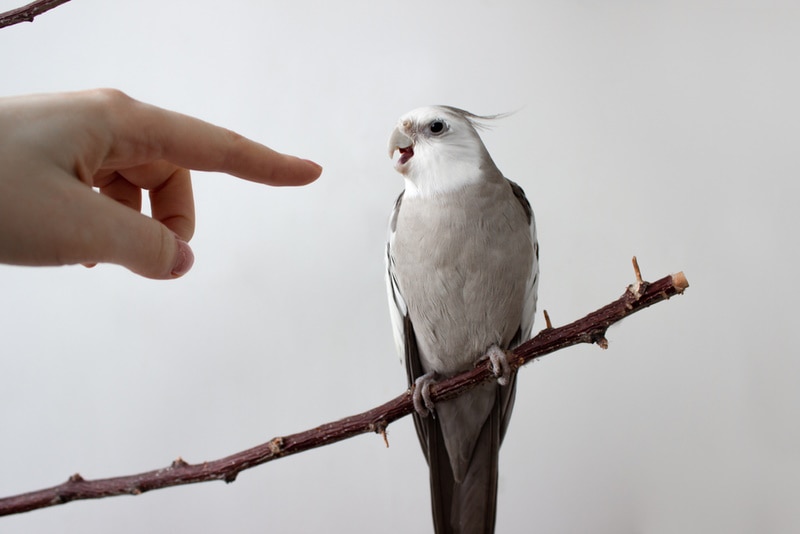
Like cats, a cockatiel will hiss if it is afraid or feeling threatened. If your bird is hissing and feels like it’s being cornered, it will be more likely to bite. Do not try to calm your hissing bird by putting your hand near them or trying to pick them up. Instead, leave them alone and give them some time to calm down on their own.
4. Contact Call
A cockatiel’s contact call is a noise it develops to communicate with other cockatiels or their humans. In the wild, cockatiels may be part of a flock of up to 100 birds. When birds from the flock spread out, finding one another again can be difficult. Cockatiels will use their contact calls to find out where their flock is. Even though your cockatiel isn’t in the wild, it still may maintain these instincts.
It’s normal to hear contact calls when you have a pair (or more), and one of the birds is out of sight. Your cockatiel may develop a contact call with you. So, if you’re not in the room and you hear your bird making the same sound every time you’re out of sight, it’s very likely calling for you.
5. Talking
Cockatiels may not be as chatty as other birds in the parrot species, but they can certainly learn words and phrases from you. Just don’t expect your tiel to pronounce human words like other parrots. That said, cockatiels are still very smart and will imitate songs and phrases that they hear you say.
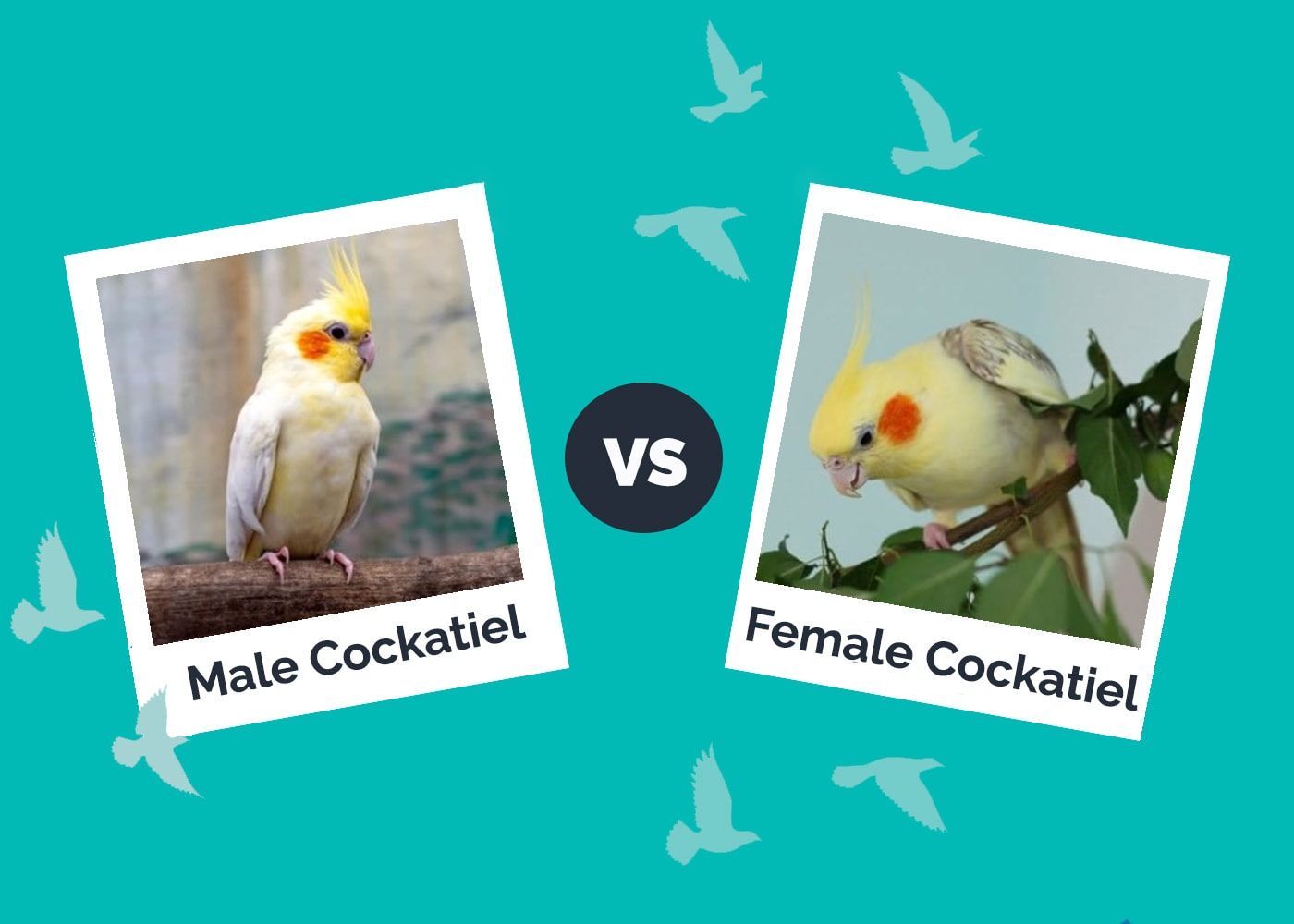
Male cockatiels are much more likely to learn to talk than their female counterparts.
6. Mimicking
Mimicking and talking are two distinct sounds. While talking may sound like your cockatiel is imitating your voice, mimicking occurs when they imitate sounds they hear around them.
You may hear your cockatiel mimicking the sound of your doorbell, microwave, or even a cough.
7. Chirping
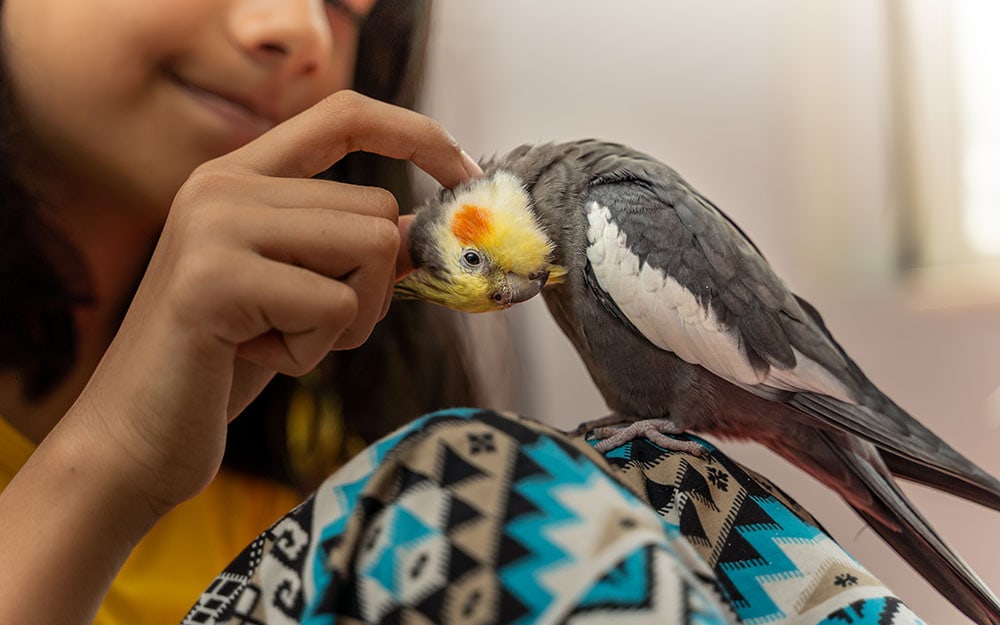
Chirping is a lovely sound that cockatiels can make. It is comprised of a variety of tones and pitches. You may notice your bird chirping when it’s happy and content, at sunrise, or when it’s playing. They will chirp at their humans to let them know that they’re a part of the flock. Think of chirping as your cockatiel’s way of communicating with you.
Chirping is not shrill and won’t be annoying like some of the other sounds on our list.
8. Beak Grinding
Beak grinding is a sound cockatiels make when they’re rubbing their beaks together. It is not akin to teeth grinding in humans because this behavior is actually positive to hear from your cockatiel. If your bird is grinding its beak, it is likely content and relaxed. You may notice your bird making this sound as it is trying to soothe itself to sleep.
Beak grinding can be an irritating sound for humans to hear. If you find that your cockatiels’ grinding noises are too loud at night, try covering their cage to drown out some of the noise.
9. Chiding
Chiding is a warning sound that a cockatiel makes when trying to tell other birds to stay away. Think of chiding as your bird’s way of de-escalating a situation to prevent a fight. If you have multiple cockatiels, you may hear the chiding sound as they try to establish personal space.
Chiding sounds like a sharp “tsk.” If you hear your bird making this sound, be sure to monitor them carefully. You may need to separate your birds to help them establish boundaries. You’ll know it’s time to separate them if the chiding noise is accompanied by raised wings, biting, or lunging.
Your cockatiel may also make this noise towards you if it believes it’s being mishandled or wants some alone time.
How Can I Quiet My Bird?
Birds are noisy little creatures, so one should expect their cockatiel to make some degree of noise throughout the day. You never want your bird to be completely silent as that is usually a sign of stress, injury, or illness.
If your cockatiel is too noisy, there are some things you can do to discourage them from excessive vocalizations.
First, you need to determine why your bird is making the sounds it’s making. Is it hungry? Bored? Lonely? Address its needs by ensuring it has enough stimulation, food, and social activity.
Next, check its environment to determine if something in its cage or the room it’s in is causing stress.
Try lowering the volume in the room if there are noisy things nearby (e.g., a loud television). Your cockatiel may be vocalizing loudly as they compete with the ambient sound in their room.
Do not reward unnecessary and loud noises. Every time you react to your cockatiel’s incessant noises, you’re reinforcing in its mind that noises equal attention. But, of course, you will need to make sure that your bird isn’t making a commotion because it’s afraid or in danger, first.
Instead, reward good behavior. For example, if your cockatiel is vocalizing at an acceptable volume, offer it a treat or toy as a reward. Being consistent with this rewards system will help your cockatiel understand that the quieter vocal range it’s speaking at is resulting in rewards.

Conclusion
Noises are a part of bird ownership, so it’s good to acquaint yourself with the typical noises one should expect from their cockatiels. Doing so can help you determine if your bird is vocalizing because it’s happy, because it’s trying to mimic the sound of your microwave beeping, or because it’s in danger. Once you can distinguish between the different noises, you’ll better understand your bird’s moods and behaviors. Before too long, you will find yourself whistling or chirping back at your feathered friend to tell them how much they mean to you.
Related Read: Why Is My Parakeet Panting? Vet-Verified Reasons
Featured Image Credit: Gary Ellis Photography, Shutterstock
Get Hepper In Your Inbox


Pet care tips from our vets and experts, straight to your inbox.
You may opt-out at any time. View our Privacy Policy for more information.

Chantelle's life revolves around two passions: writing and animals. Raised on the prairies of Canada amidst a menagerie of pets, she now lives with five cats, two guinea pigs, and a bearded dragon. Together with her husband and child, Chantelle delights in being an exemplary animal parent, going as far as installing wall-mounted cat shelves to give their cats an indoor playground. When she's not cozying up with her cats or snapping their amusing antics, she enjoys venturing into the Rocky Mountains, binge-watching her favorite Netflix shows, and indulging in spontaneous reading adventures.
Join the conversation
Ask a question, share your story, or send private feedback.