Hepper is reader-supported. When you buy via links on our site, we may earn an affiliate commission at no cost to you. Learn more.
What Were Papillons Bred For? Breed History Explained
In this article
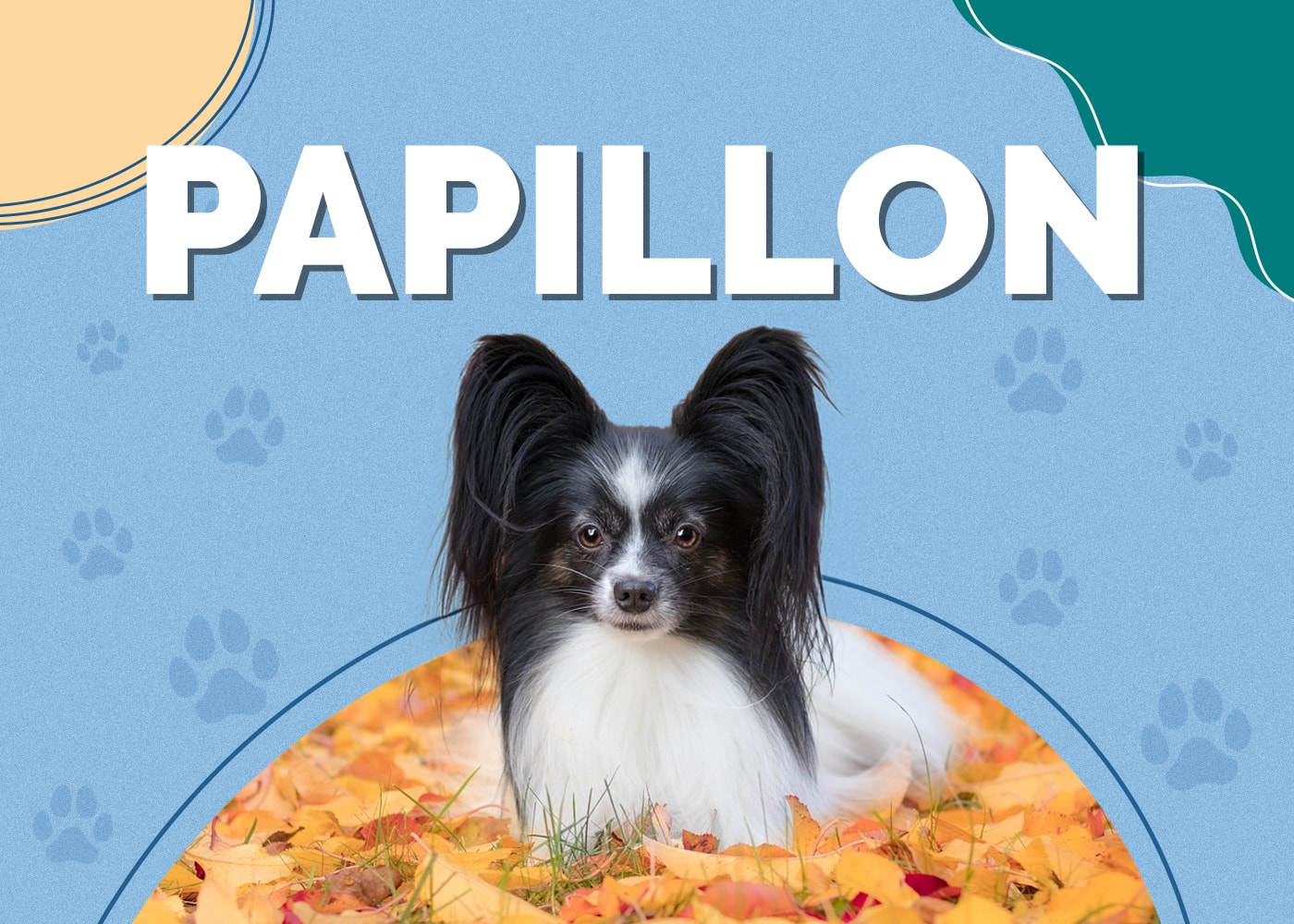
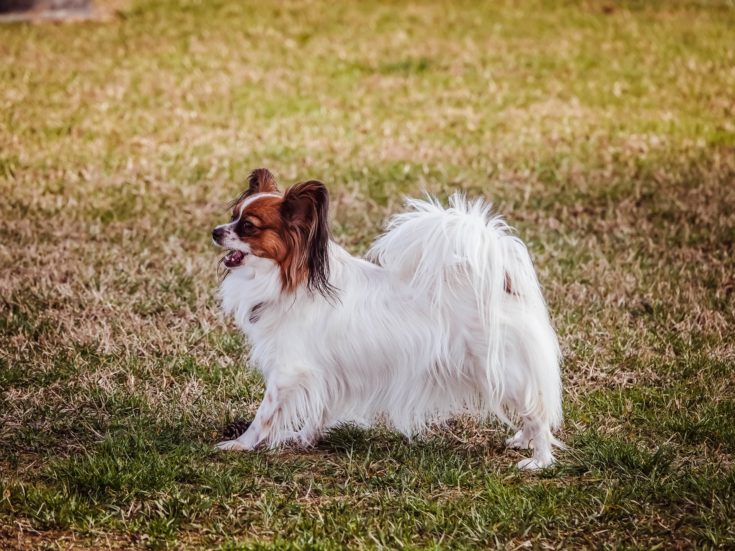
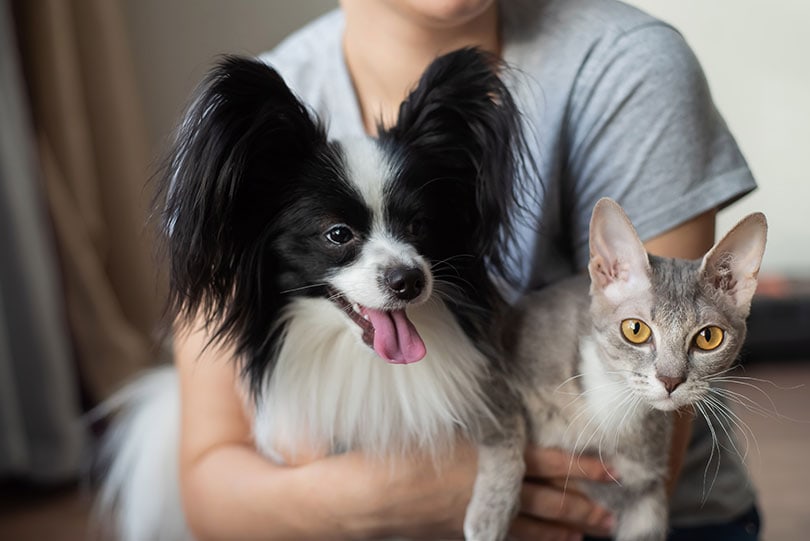
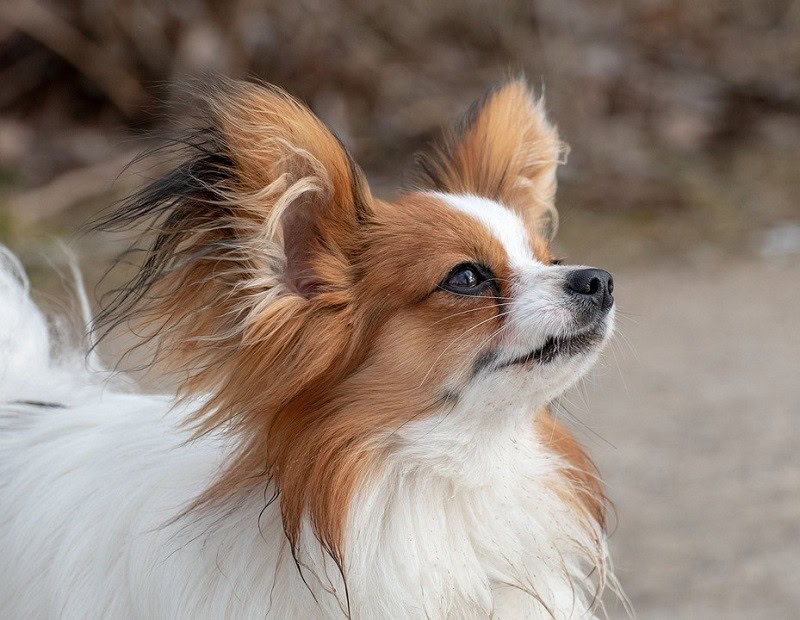
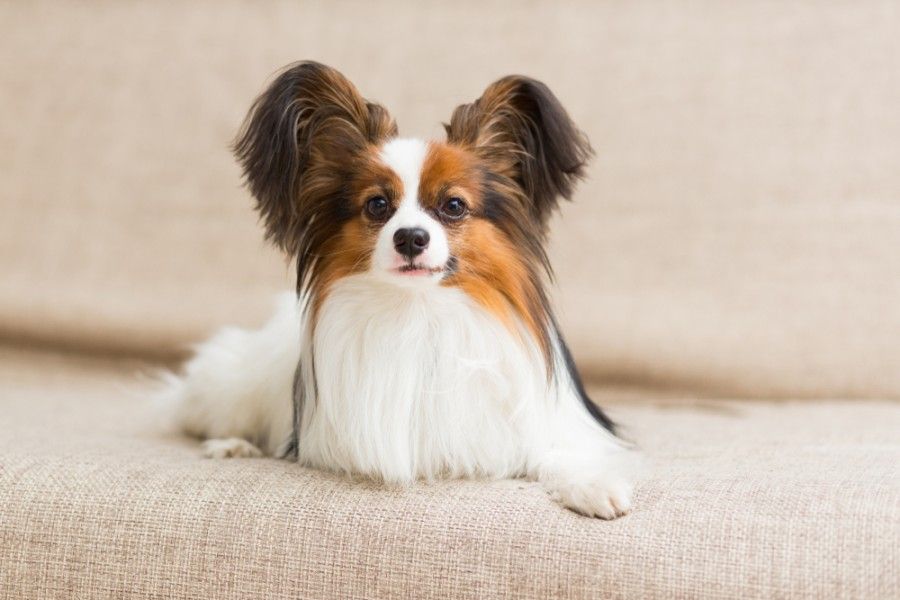
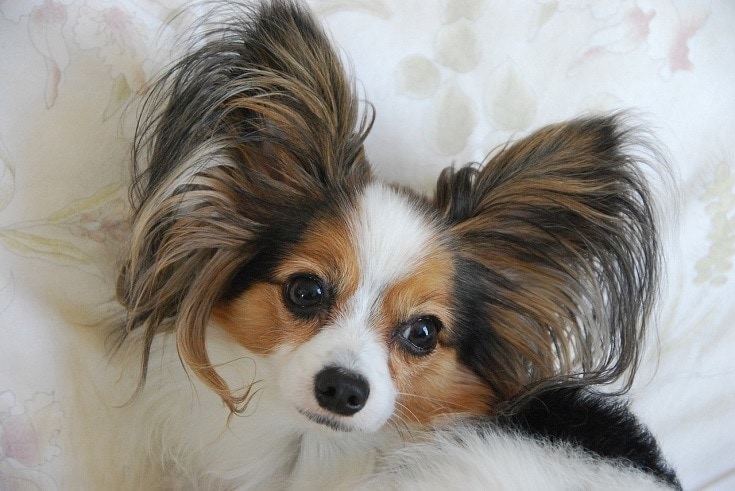
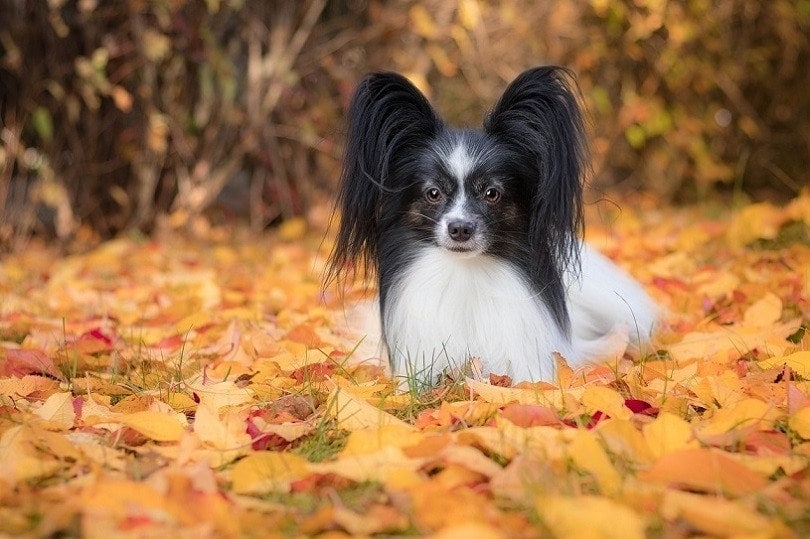
The Papillon is one of the most recognizable dog breeds because of their large, fluffy, wing-shaped ears. In fact, due to the appearance of their ears, these dogs are aptly named, as the word "papillon" means "butterfly" in French.
The breed originated in Western Europe, and they are thought to be one of the oldest European breeds, dating back at least 500 years, though their exact date and place of origin are unknown.
So, what were these adorable, intelligent, spunky little pups originally bred for? It turns out that the answer is just as elegant as the dog's appearance. Papillons were bred to be companions for noblewomen, even serving as lap and foot warmers.
Basically, this breed is truly the epitome of the term, “lap dog.” In this article, we provide a history of the Papillon breed, including their origins and how they came to be so well-known today.

History of the Papillon
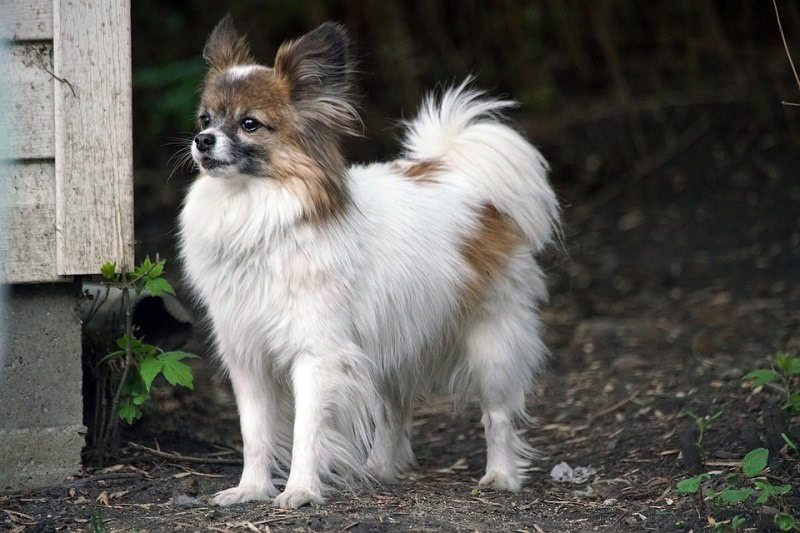
Before we get into the exact history of the Papillon, you should know that like other dog breeds, these pups didn’t always look the way that they look today. As a matter of fact, the original dog that it is thought that Papillons descended from didn’t even have erect ears at all. The ears were still fluffy and feathery, but they lay down as if they were folded instead of sticking straight up.
Earlier versions of Papillon dogs with "drop ears" were given the name "Phalene," the French word for "moth," and the name was given because the ears dropped downward in a way that was similar to a moth’s wings being folded.
It’s not immediately clear at which point the pointed, erect ears came about in the Papillon breed. However, the Phalene variety still exists today, and it is possible for a litter of Papillon puppies to have dogs with both erect and dropped ears.
But regardless of whether the Papillon has erect or dropped ears, they didn’t just appear out of nowhere. The breed has a very long history spanning many centuries, so we’ve provided a timeline to help you understand how these dogs developed into the breed they are today.
However, you should know that since these dogs have been around since a time when keeping written records of dog breeds wasn’t necessary or expected, most of their history is based on assumption or speculation rather than verified facts.
16th Century
The Papillon is thought to be the modern representation of a Continental Toy Spaniel. These Spaniels have been depicted in Italian paintings as early as the 12th and 13th centuries, leading many people to believe that they were originally bred in Italy. However, the name spaniel also infers that these dogs came from Spain, which is why it is still not evident where exactly the breed came from.
Continental Toy Spaniels had drooping ears and feathery coats, which is why many people believe that Papillons descended from them. Spaniels were primarily used as hunting dogs, but as they became more popular, smaller versions of the dogs started to be bred more for companionship than hunting.
However, sometime in the 1500s, an Italian painter known as Titian depicted tiny Spaniel dogs in some of his paintings with an appearance that was different from what other Spaniels looked like at the time. The Spaniels depicted in his paintings came to be called Titian Spaniels and looked very similar to the Phalene variety of Papillons of today. This gives reason to believe that these Titian Spaniels were actually the original ancestors of the Papillon.
Because of their small size, these Spaniels started to become known as Toy Spaniels or Dwarf Spaniels. Due to looking so different from the other Spaniels that were used as hunting dogs, it was thought that these Toy Spaniels served no other purpose other than companionship to nobility or others who were wealthy enough to be able to own and care for one.
Even though their main purpose was companionship, it is thought that these small dogs also served the purpose of keeping their owners' laps and feet warm. Many doctors during that time also thought that the dogs had healing properties and would recommend that noblemen and -women get one as a way to cure or treat whatever illness they were experiencing.
17th & 18th Centuries
Not a whole lot changed about the Papillon during the 1600s and 1700s. However, Toy Spaniels started to become increasingly popular in wealthy circles, so more dogs were being bred in order to keep up with popularity.
Breeding led to some changes in their appearance, as breeders tried to refine the appearance of the dog. Toy Spaniels that looked almost exactly like the Phalene dogs of today started to appear. These dogs had more feathering in their coats than the traditional Toy Spaniel, and the shape of the head changed as well, becoming more rounded.
Most of the breeding happened in France during the reign of French kings Louis XIV and Louis XV. This is likely why the current names of Phalenes and Papillons are French, since that’s where the breed as we know them today originated, though some were bred in Belgium as well. The breed was favored by Marie Antoinette, and it’s thought that she and her Papillon were only separated when she went to prison before being guillotined.
19th Century
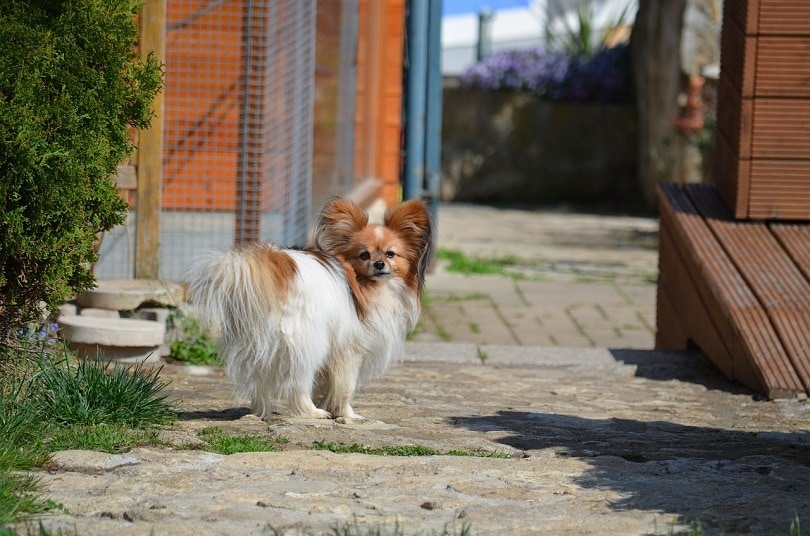
After the French Revolution, ownership of Toy Spaniels and Phalenes started to become more common in households other than just those who were wealthy and noble. Sometime during this century, the Phalene variety gave way to the erect-eared Papillon.
It is thought that the erect ears came about due to a genetic mutation and not due to cross-breeding with other dogs. However, it is unclear if this is what actually occurred, nor is it clear exactly when this change to the breed happened.
But what is clear is that Papillons with erect ears started to become even more popular than the drop-eared Phalenes. Sometime during the late 1800s, the breed was brought over to America as well, and they quickly became just as popular as they had been in Europe, if not more so.
The 20th Century to Today
During the early 1900s, the Papillon started to be recognized as a distinct and separate breed. Phalenes and Papillons were first recognized at Belgian dog shows, but the name Papillon stuck to the erect-eared variety. The drop-eared variety was still known as Continental Toy Spaniels, and the name Phalene wasn’t approved for the dogs until the mid-1950s.
In America, Papillons were first recognized by the American Kennel Club (AKC) in 1915. In 1935, the AKC parent club, the Papillon Club of America (PCA) was formed. The PCA is the custodian of the breed standard for Papillon dogs.
After the forming of the PCA, the AKC gave full breed recognition to the Papillon and Phalene dogs as a toy breed. The AKC also considers the Papillon and Phalene as a single breed, though some parts of Europe still recognize the Phalene as a separate breed.
Since coming to America, Papillons have maintained their status as one of the most popular dog breeds. They were once in the top 50 most popular dog breeds but have declined a bit in the past 10 years and now fall just outside of that category. However, out of around 200 dog breeds, Papillons are still in the top 30% as far as popularity goes.

Conclusion
Papillons have a history that is just as elegant as their appearance, having served as companions and lap warmers for the wealthy and noble for around 300 years. Today, anyone can own a Papillon, and these dogs have only continued to grow in popularity throughout their 500 year history. But their beautiful coats and ears are only part of what makes these dogs so popular, as their intelligence and personality are sure to make anyone quickly fall in love with them.
See also:
Featured Image Credit: Fayzulin Serg, Shutterstock
Get Hepper In Your Inbox


Pet care tips from our vets and experts, straight to your inbox.
You may opt-out at any time. View our Privacy Policy for more information.

Savanna is a former science teacher who is now a full-time freelance writer. She currently lives in the U.S with her daughter and husband. Other members of her family include a long-haired chihuahua named Penny, three cats (Bubba, Kittylina, and Thunder), and a turtle named Creek. Her passions include gardening, traveling, and protecting wildlife and natural resources.
Join the conversation
Ask a question, share your story, or send private feedback.