Hepper is reader-supported. When you buy via links on our site, we may earn an affiliate commission at no cost to you. Learn more.
White Great Danes: Info, Pictures, Origin & History
In this article
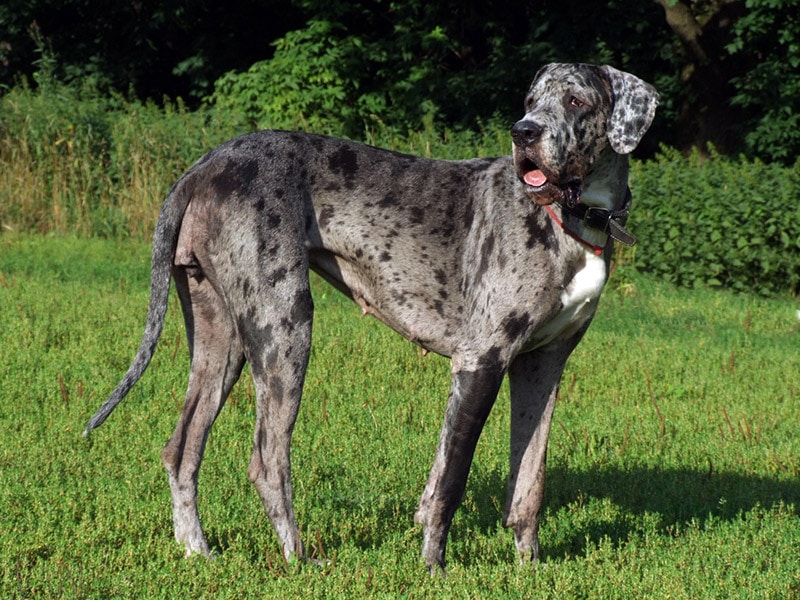
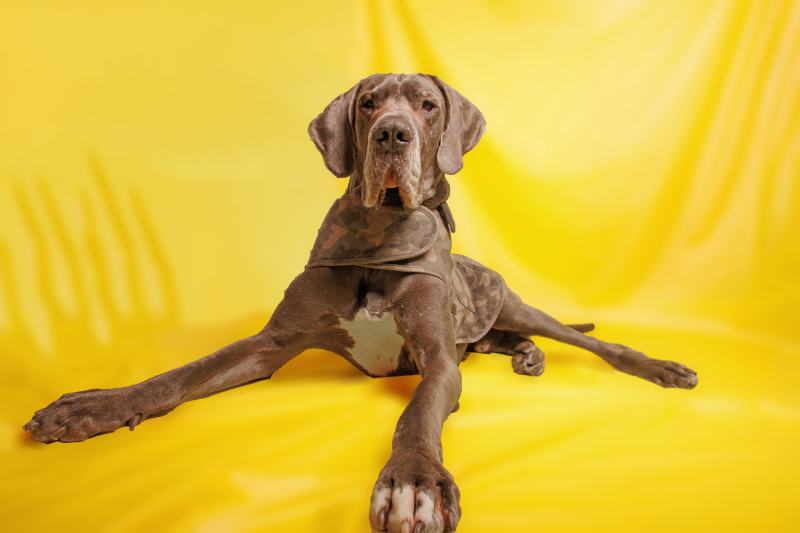
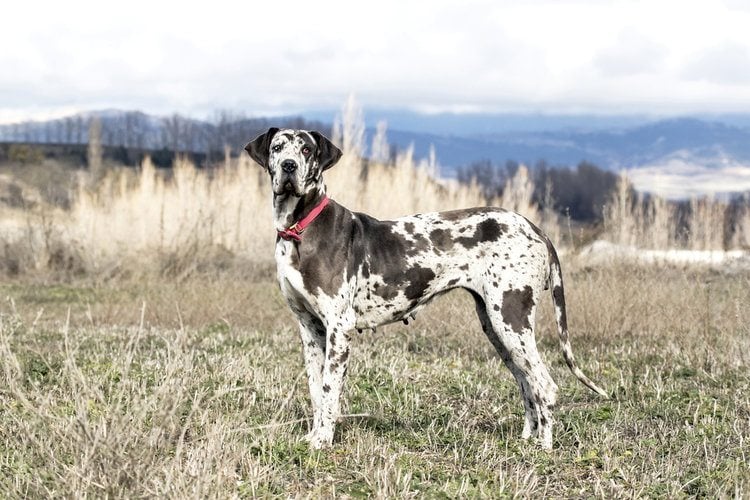
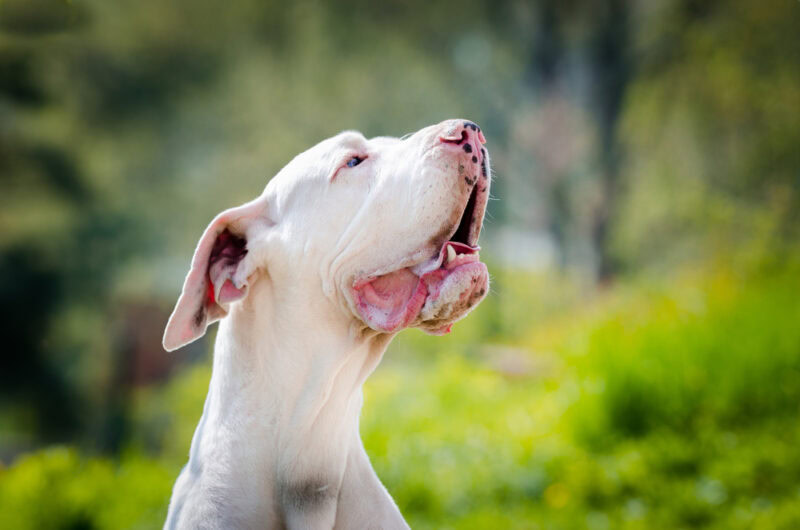
According to the American Kennel Club, the Great Dane is “a large, short-haired dog with a smooth, muscular body and square head. The coat is usually fawn, brindle, or black, with a white chest and feet.” But there is another color of Great Dane that is much rarer than all of the others: the white Great Dane.
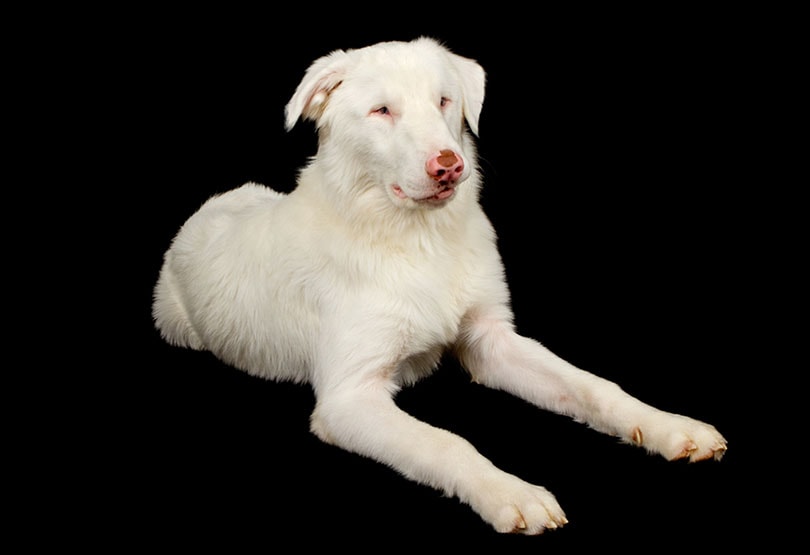
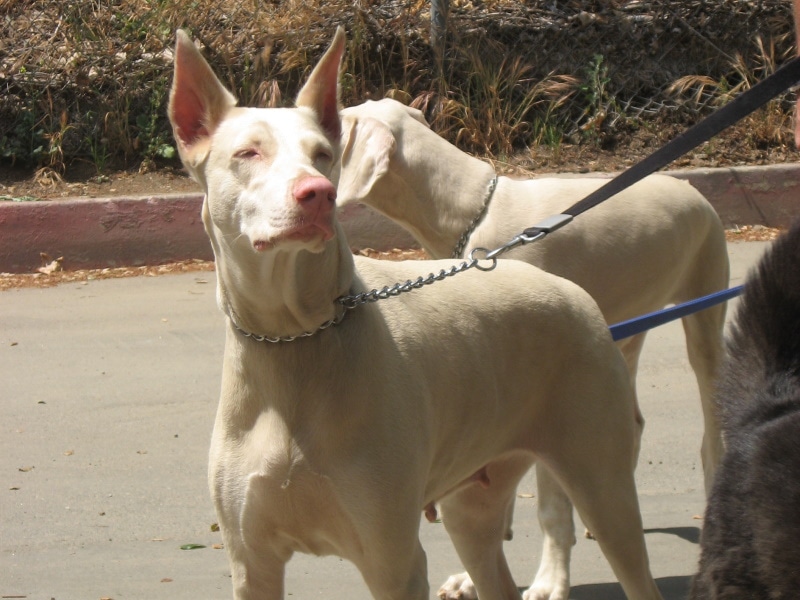
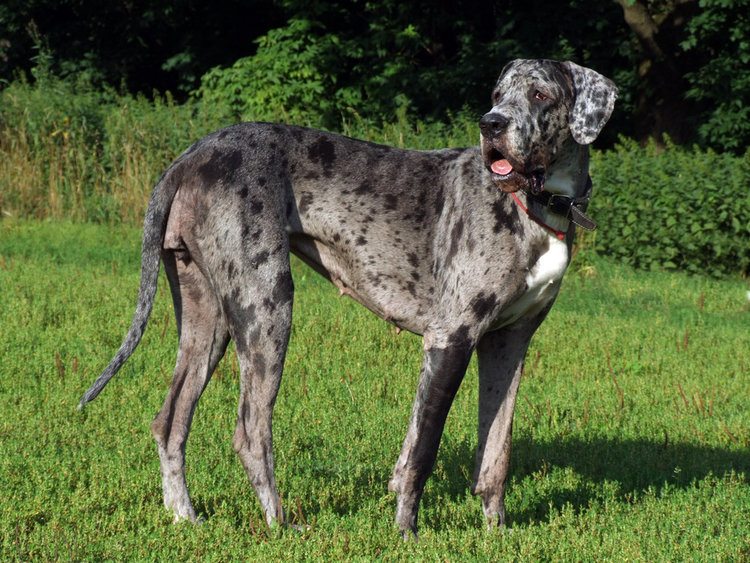
While the white Great Dane may be beautiful to look at, they are often plagued by health problems due to their lack of pigmentation. This is because white Great Danes are the result of double-merle breeding. When two merle-inheriting dogs are bred together, there is a good chance that a quarter of their offspring will be born completely white. However, because of the increased risk of health problems associated with double-merle breeding, many breeders choose not to breed for this color, and breed standards strongly discourage it.
This article discusses the history of the white Great Dane and the reasons for not breeding them.

The Earliest Records of White Great Danes in History
The history of the Great Dane is a rich and complicated one. The breed we know today is actually the result of a long process of evolution and crossbreeding that spans centuries. The earliest ancestors of the Great Dane were likely mastiff-type dogs from Asia, perhaps brought to Europe by Alexander the Great and his armies in the 4th century BC. These dogs were then cross-bred with other local breeds, resulting in the emergence of Mastiff-type dogs. Over time, these canines were further improved and used for hunting large game such as deer and wild boar, and likely crossed with greyhounds. In the 19th century, dogs of this type became known as Deutsche Dogge. It was in Germany that they were further refined into the tall, muscular breed we know today. No one is quite sure why this dog, originating in Germany is named “Great Dane”, since no significant part of their creation involved, or took place in, Denmark.
In the 19th century, Southern Germany developed a reputation for breeding harlequin Deutsche Dogge puppies with black spots on a white background. These early breeders did not have the genetic sequencing techniques available to owners today. However, the German breeders intuitively excluded white from their standards, likely because the consequences of breeding for this coloration are dire for the health of Great Dane puppies.
How White Great Danes Gained Popularity
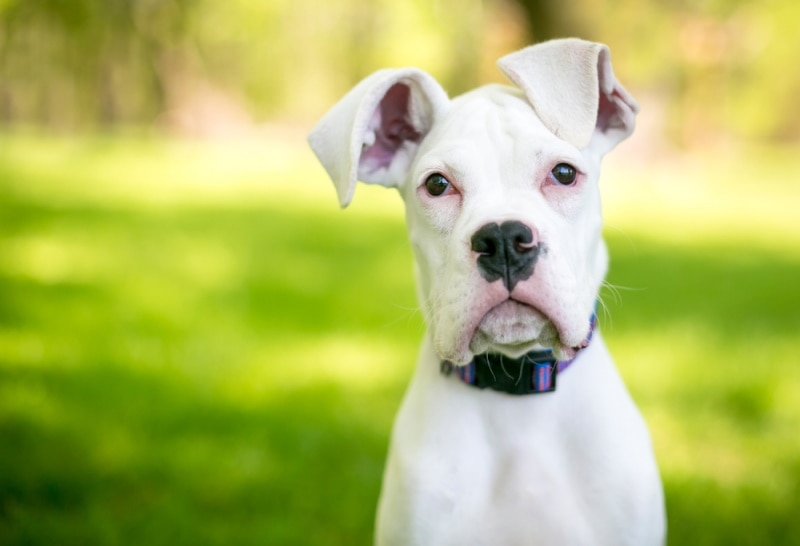
There are several reasons driving the increased prevalence of double-merle white Great Danes. Double-merles can be unknowingly produced by amateur breeders who do not know the genetics of the parent dogs or the impacts of breeding them. They may be breeding dogs that carry the merle gene without clearly exhibiting white spotting.
Unfortunately, many amateur breeders are unaware of the health risks associated with double-merle Great Danes. They may think they are optimizing their chances of producing more harlequins or merles by breeding two merle-inheriting dogs, but in reality, they are putting their puppies at grave risk.
Some established breeders knowingly create double-merle Great Danes as a byproduct and cost of doing business when (improperly) breeding harlequins. In an effort to produce aesthetically beautiful harlequin dogs, show breeders may deliberately pair harlequin Great Danes with exceptional pedigrees. Breeders who do this know they will have to either cull or euthanize any deaf double-merle puppies in the litter (currently condoned by the Great Dane Club of America) or find these disabled dogs forever homes with families equipped to handle their needs.
Lastly, some people are drawn to the unique beauty of double-merle dogs. There are some who find the all-white look beautiful, and they are willing to risk the health of the puppies for the sake of aesthetics.
Formal Recognition of White Great Danes
There is as yet no safe way to breed a reliably healthy white coloration in Great Danes. For this reason, it is highly unlikely that white Great Danes will ever be formally recognized in any breed standard. The health problems associated with white coloration are numerous and well-documented. If you are thinking about breeding your dog—or buying a double-merle or harlequin Great Dane—please do your research on the dog’s genetic lineage first. Make sure you understand the risks involved and be prepared to take on any medical bills—and heartache—that may arise from double-merle breeding.
Top 3 Unique Facts About White Great Danes
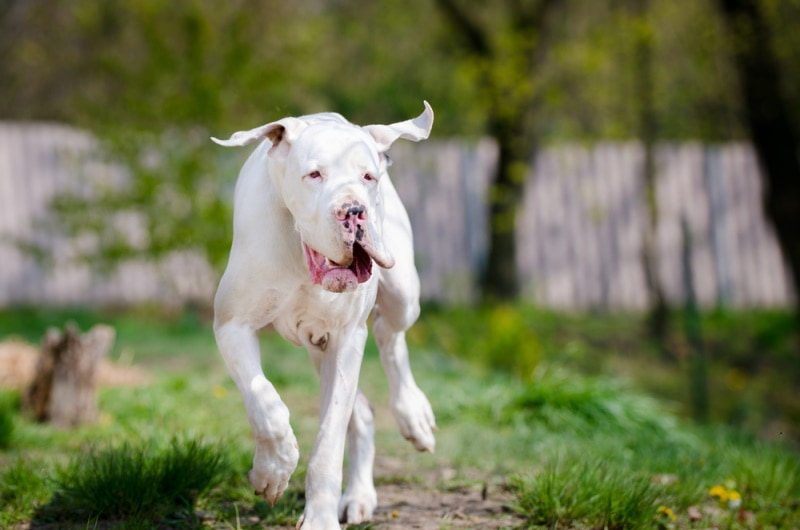
1. You can test for the merle gene
If you're concerned about the health risks associated with breeding two merle dogs, genetic testing can give you some peace of mind. The test will tell you whether or not your dogs are at risk for passing on the merle gene to their offspring.
2. When two merle dogs are bred, there is a 25% chance of producing double-merle Great Danes
The dominant color of a merle dog is indicated by a capital "M" and the recessive color is indicated by a lowercase "m". Statistically, the offspring of two merle dogs will be 50% merle (Mm), 25%, not merle (mm), and 25% double merle (MM).
3. Double merles are almost always destroyed or end up in shelters
When they aren't destroyed in puppyhood, double merle puppies almost always end up in shelters or rescues. Because special needs dogs rarely get adopted or rescued because they cannot be cared for, shelters sometimes won't accept them. It's understandable why most people wouldn't want to adopt a large, high-needs dog.
Health Implications for Double-merle White Great Danes
In Great Danes, white-producing genes (including Merle, harlequin, and Piebald) are actually spotting genes, which disable the body from making pigment. These spotting genes affect pigmentation and patterning together. The merle gene de-pigments the dog—its presence is subtracting color from the dog’s coat, rather than adding white. Biologically, this subtraction of pigment causes problems for the dog because, in addition to limiting color, pigment plays a protective and structural role in the body.
Double-merles result when any two merle or harlequin dogs—who also have the merle gene—are allowed to have puppies. As a result of this lack of pigment, double-merle puppies are likely to suffer from a variety of congenital defects, if they survive at all.
One of the most common health problems that double-merle white Great Danes face is deafness. This is because the lack of melanin can cause problems with the development of the inner ear. While some double-merle white Great Danes are born deaf, others may lose their hearing as they get older. Another common health problem that these dogs face is blindness. Again, this is caused by the lack of melanin in the eyes, which can lead to problems with vision. Skin problems are also relatively common in double-merles. This is often due to a lack of pigment in the skin, which can lead to sunburn or other skin issues.
Does a White Great Dane Make a Good Pet?
The majority of people would agree that a double-merle White Great Dane does not make a good pet for most households. They are prone to blindness and deafness, and they often have genetic defects that make them unhealthy. Their issues also make them difficult to train, and at the same time, Danes require a lot of exercise. This combination of needs makes them a challenging dog for the vast majority of owners.

Final Thoughts
In conclusion, double-merle White Great Danes should not be bred. This is because they are often born deaf or blind, and even if they are not, they are at a greater risk for these health problems as they age. The number of dogs killed or made to suffer because of double-merle breeding is tragic and unconscionable. If you are buying a Merle or harlequin Great Dane, thoroughly research the genetics of its parents and if you are planning on breeding white Great Danes, please opt for another color.
Related Read:
Featured Image Credit: Piqsels
Get Hepper In Your Inbox


Pet care tips from our vets and experts, straight to your inbox.
You may opt-out at any time. View our Privacy Policy for more information.

Nicole is a lover of animals of all sizes but is especially fascinated with the feline variety. She’s the proud mom of Baby, a Burmese, and works every day so he can relax in the sunshine or by the fire. She’s always had a cat in her home and has spent countless days with others, observing behaviors and softening up even the grouchiest of the lot. Nicole wants to share her kitty expertise with you so you and your cat can live happy, healthy, and care-free.
Join the conversation
Ask a question, share your story, or send private feedback.