Hepper is reader-supported. When you buy via links on our site, we may earn an affiliate commission at no cost to you. Learn more.
Why are Dogs so Loyal to Humans? Vet-Verified Advice


In this article
As diverse as breeds have become over the centuries, loyalty is one characteristic we expect from any dog. It’s easy to take for granted, but also something we appreciate as singular to man’s best friend.
Despite being only one of many domesticated animals throughout history, a dog’s devotion to people raises some intriguing questions. Why are dogs so loyal to humans? What makes them more protective, affectionate, and agreeable toward their owners than other pets?
We’ll unravel our unique relationship and storied history with dogs to understand how they became such committed companions.

Why Are Dogs Loyal to Humans?
The modern dog’s loyalty is the product of their physical and social evolution over several millennia. As the descendants of wolves, dogs were man’s first domesticated animal. Evidence suggests that pre-agriculture humans may have begun interacting with wolves as early as 20,000–40,000 years ago.
Early domestication likely benefited both species: humans may have gained assistance from proto-dogs, while wolves gained access to food and shelter. Over time, humans likely selected for animals that were more tolerant and sociable, while wolves living alongside humans experienced reduced pressures for survival traits such as aggression. This combination of natural and human-driven selection helped shape the physical and behavioural traits we see in dogs today.
Wolves and the Foundation of Loyalty
Although humans may have fine-tuned it, loyalty was already established in wolves. Fundamentally, wolves are pack animals within a hierarchy, with all members loyal to the group. Wolves are incredibly cooperative.
In one experiment, researchers discovered wolves were equally able to communicate with people to solve a collaborative task, showing a high social ceiling that they undoubtedly gave to dogs.
Dogs inherited the tolerance, inhibition, and attentiveness wolves show to fellow pack members.
The difference appears in where they show their loyalty. The study comparing dogs and wolves in a string-pulling task found that although both species could work cooperatively with humans, the wolves were likely to disregard them or take the lead. Meanwhile, the dogs more often waited to follow their person’s guidance.
Some scientists theorize that dogs developed this deferential behavior toward humans during their domestic history. They aren’t more cooperative than wolves. But they direct that attitude more towards humans than their own kind.
Indeed, wolves work well together to raise their young, hunt, and survive, maintaining functional relationships even during conflict. Dogs are less likely to tolerate other dogs, instead opting to avoid conflict and cooperate more with humans.
Selective Breeding
As civilization advanced, dogs became widespread globally. Breeds grew more diverse, taking shape according to local conditions and the needs of their people. Ancient Malamutes, for example, had thick fur and powerful bodies to haul cargo in their native Alaska.
Meanwhile, ferocious Molossus dogs had enormous frames to aid Roman conquerors as war dogs. Over the centuries, specialized hunting functions, herding, and other duties created more breeds.
While physical traits unsurprisingly passed to later generations, behavior also persevered. Border Collies, for instance, are more prone to nipping due to a herding background. Differences exist between individuals due to life experience, but genetics plays a clear role in defining behavioral traits. Scientists discovered as much in a 2019 study pulling C-BARQ survey data from dog owners to explore behavioral and genetic differences among breeds.
The researchers found 131 genetic variants playing significant roles (alongside upbringing and environment) in determining traits like stranger-directed aggression, predatory chasing, and excitability. As we measure a dog’s loyalty to humans in traits like biddability and friendliness, we can see it’s written into their DNA!

Are Dogs Loyal to Owners?
Now that we know why dogs are loyal, a new question arises: How loyal are they? Any responsible dog owner has enough experience to say their dogs are loyal to them and their family. Stories abound of dogs fearlessly protecting children, waiting for hours or even days for owners to return, and offering affection in moments of sorrow.
While its expression might vary between breeds and individuals, loyalty is typical of any dog.
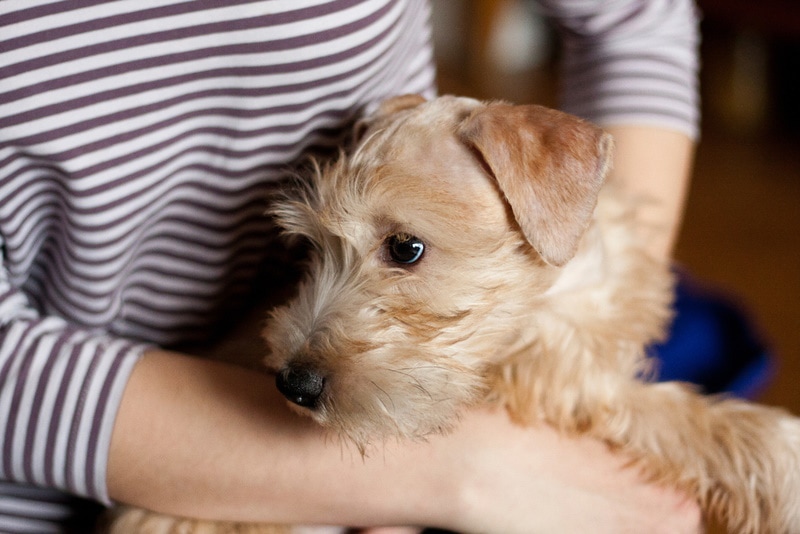
If the vast amounts of anecdotal evidence suggest a dog’s loyalty to an owner and family, the science practically proves it. Studies show that dogs closely connect with owners, identifying them by their face, smell, and voice.
They display a clear general preference for owners versus other stimuli. In one study, the dogs in the sample even showed a higher emotional response toward the anticipation of owner praise than a food reward!
Dog-Human Relationship
Humans and dogs, both social animals, have an exceptional ability to bond. Compared to other stimuli, including unfamiliar people and food, an owner’s praise or presence often does more to activate reward centers in the dog’s brain.
Specifically, researchers have found that owners consistently increase activity in the caudate nucleus. Alongside reward detection, this area of the brain affects learning, memory, motivation, and even feelings of love.
What makes the owner so special? Dogs develop unique relationships with humans based on attachment. Scientists relate their neural processes when getting praise to those of a child in an infant-mother relationship.
Unlike the casual relationship with people outside the home, dogs trust their owners because they are a secure base and a safe haven. Dogs depend on owners as a reference point and security when exploring new places or situations. As safe havens, owners offer a place to retreat when the dog is in danger. Just as a child seeks comfort from their mother, a dog needs attention from their owner.
Conclusion
Canines have come a long way in their domestic history. The modern dog's connection to man is intrinsic and essential to survival. From the outset, it pushes them toward loyal, cooperative relationships with people. Yet, nature only tells half the story.
Dogs are still individuals shaped through experience. While domestication gave dogs the capacity to bond and show loyalty to humans, it’s up to their people to make the most of that potential.
Featured Image Credit: RebeccasPictures, Pixabay
Get Hepper In Your Inbox


Pet care tips from our vets and experts, straight to your inbox.
You may opt-out at any time. View our Privacy Policy for more information.
Nicole is a lover of animals of all sizes but is especially fascinated with the feline variety. She’s the proud mom of Baby, a Burmese, and works every day so he can relax in the sunshine or by the fire. She’s always had a cat in her home and has spent countless days with others, observing behaviors and softening up even the grouchiest of the lot. Nicole wants to share her kitty expertise with you so you and your cat can live happy, healthy, and care-free.
Join the conversation
Ask a question, share your story, or send private feedback.