Hepper blog

Search our database of over 9,984 posts with up-to-date information from our experts and veterinarians.

Hepper is reader-supported. When you buy via links on our site, we may earn an affiliate commission at no cost to you. Learn more.

Are Dogs Social Animals? Vet-Reviewed Science & Info

By Cheryl Regan · Reviewed & fact-checked by Dr. Luqman JavedVet Approved
Dr. Luqman Javed
Reviewed & Fact-Checked byDr. Luqman JavedDVM (Veterinarian)
Dr. Luqman grew up with an extreme fondness for animals and turned a childhood dream into reality by becoming a veterinarian. His goals are now focused on helping pet owners understand their pets better in order to ensure the best quality of life for all pets globally. He is passionate about wildlife, exotic pets, pet owner education, and animal welfare. Luqman has 3 years of professional experience working with a variety of animal species. He has skills in demonstrating proper animal husbandry and training some exotic species, such as parrots. Additionally, he has decades of personal experience with keeping many exotic pets: freshwater fish, parrots, songbirds, chickens, ducks, turtles, and hamsters.View authorThe information is current and up-to-date in accordance with the latest veterinarian research. Read about our vets
Share
Ask us a question in the comments
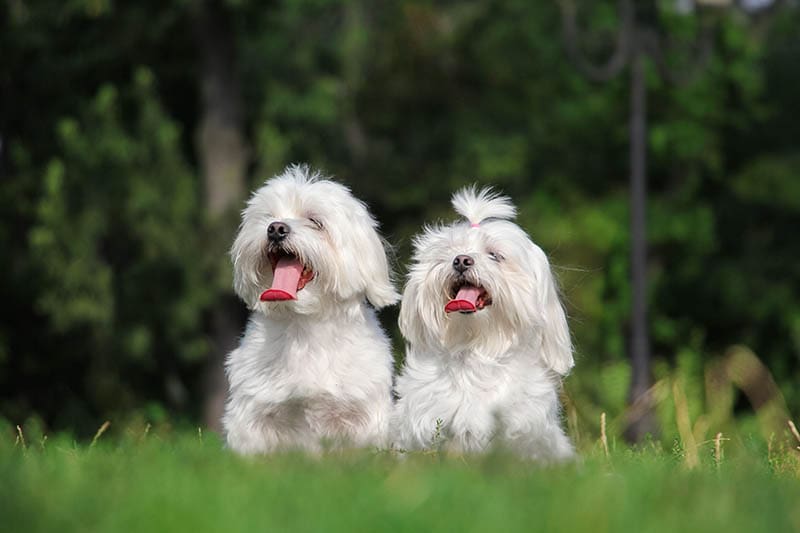
male and female maltese dogs

Dogs are some of the most social animals on earth. You’ve probably seen this demonstrated in many ways—from excited doorway greetings to adoring gazes aimed at their owners; there’s a good reason these animals are known as “man’s best friend.” But a dog’s friendly nature is not just down to conditioning. Studies prove that this animal’s hypersocial behavior may actually be written in its genetics!

Dogs establish relationships with those around them—both human and animal—through giving and receiving care and affection, and by cooperating. In this article, we’ll delve a little deeper into the social behavior of dogs, and explain what makes them some of the world’s best companions!

Why Are Dogs Such Social Creatures?

Ancestry

Like their descendants, the wolves, dogs are also pack animals. In the wild, a pack will work together to hunt for food and to protect its territory, and in domestic situations, a dog will consider its owners and its human family to be members of its pack.

A dog’s pack mentality is one of the factors that makes it such a social animal. They crave the companionship of their pack members and feel safest when they know everyone that they care about is close by.
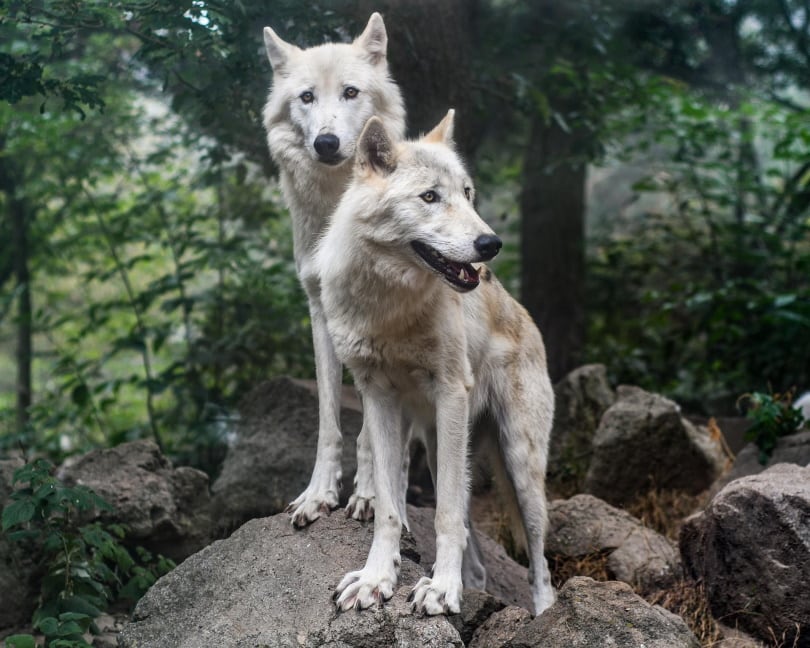
two wolves standing on the rock
Image Credit: Christel SAGNIEZ, Pixabay

Empathy

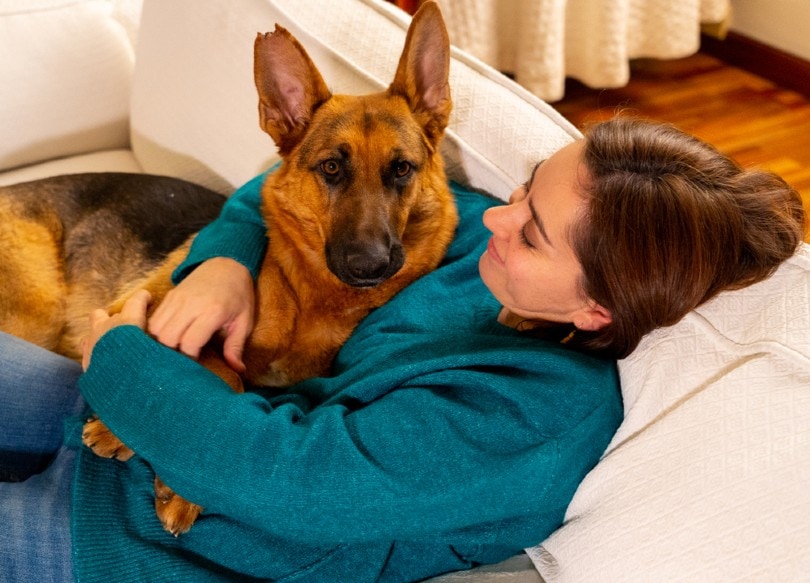
Dogs are excellent at sensing their owner’s moods. Not only do they recognize different words, but they can also identify the different emotions behind each word, and from that, they can interpret how their owner may be feeling. In fact, just the sound or tone of your voice can help your dog read your emotions!

A scientific paper published in 2018 1 explains that “…dogs not only feel empathy towards people, but in some cases also act on this empathy.”

What makes dogs even more social is that they also receive—gladly—the emotional support that humans give them, be it through praise, physical affection, or treats.

Communication

For an animal to be considered social, good communication is vital. Not only do dogs have an intricate system of communicating their emotions with other dogs and humans—for example, through wagging their tails, flattening their ears, changing their postures, and even vocalizations, but they are also exceptionally good at reading expressions on human faces!
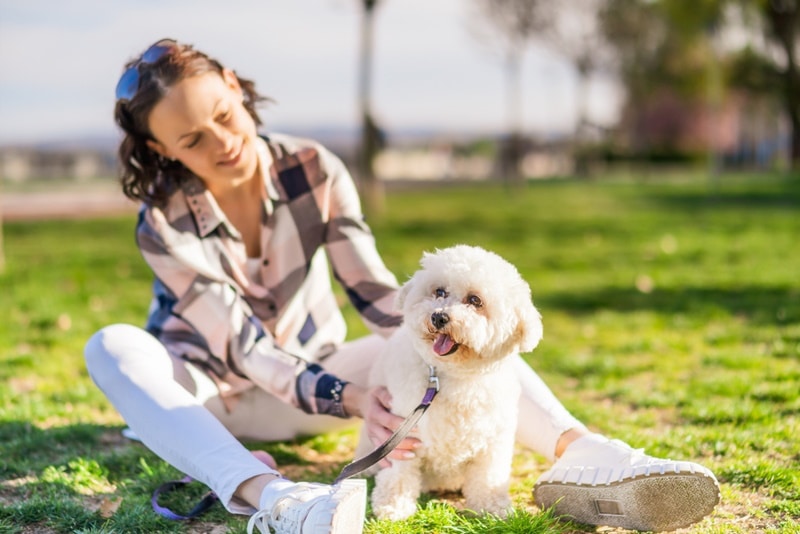
bichon frise dog with his owner
Image Credit: Mladen Mitrinovic, Shutterstock

Genetics

It is widely accepted that dogs are hypersocial in comparison with their ancestors—wolves. Although it was long believed that this was down to conditioning, a study in 2017 demonstrated that dogs may be genetically predisposed to being more social2. Specifically, it is the presence of GTF21 and GTF21RD1 genes that makes dogs more likely to form stronger bonds with social companions 3.

Puppy Socialization

Dogs may be predisposed to being friendly and sociable, but without early socialization to help puppies learn how to interact with people and animals, they can develop a variety of behavioral issues, such as anxiety or aggression.

From around the age of 3 weeks, puppies will begin to seek interaction with other dogs, or people, who are close by. Between the ages of 3 weeks and 16 weeks, puppies are most receptive to learning how to interact with others and adapt to different environments. During these first few crucial months of a puppy’s life, they should be allowed to experience a range of settings, interact with people and animals, and experience different sights, sounds, and smells safely.

shiba inu sitting in the grass with his owner
Image Credit: MENG-KONGSAK, Shutterstock

Conclusion

Dogs are incredibly social animals. These intelligent creatures not only communicate how they feel with their owners, but they are also attentive and sensitive to how humans and animals around them may be feeling. As pack animals, dogs naturally crave being near the people or animals that they care about.

Proper socialization during a puppy’s first few months is vital to nurturing a confident, sociable, and well-adjusted dog.

Sources

Featured Image Credit: Madeeva_11, Shutterstock

Get Hepper In Your Inbox

Pet care tips from our vets and experts, straight to your inbox.

List

Select all that apply.

You may opt-out at any time. View our Privacy Policy for more information.

Cheryl Regan
Authored by

Cheryl Regan

Join the conversation

Ask a question, share your story, or send private feedback.
Rate this post
Required to post. Only our editors see your rating.
Who should see this?

A human reviews every comment before it appears. Your email is never published.

Picked to go with this article

Why are Dogs so Loyal to Humans? Vet-Verified Advice

Why are Dogs so Loyal to Humans? Vet-Verified Advice

As diverse as breeds have become over the centuries, loyalty is one characteristic we expect from any dog. It’s easy to take for granted, but also something we…

Nicole Cosgrove
By Nicole Cosgrove ·
Do Dogs Have Best Friends? Exploring Canine Companionship

Do Dogs Have Best Friends? Exploring Canine Companionship

We all know that dogs are a human’s best friend, but do they form close friendships among themselves? Though there isn’t enough scientific data to prove that d…

Kit Copson
By Kit Copson ·
7 Dog Personality Types: Which One Is Your Dog?

7 Dog Personality Types: Which One Is Your Dog?

Dogs come in all kinds of different shapes and sizes. Some are natural hunters, while others are bred strictly as companion dogs. Pooches also have different p…

Nicole Cosgrove
By Nicole Cosgrove ·
Social Anxiety in Dogs: Vet-Verified Causes & Care Guide

Social Anxiety in Dogs: Vet-Verified Causes & Care Guide

Social anxiety in your dog can spark a fearful reaction in you, too, since you never know how they'll respond in a given situation. Dog park trips, car rides,…

Brooke Bundy
By Brooke Bundy ·

Keep reading

More stories you might like

Why Do Dogs Love Humans? What the Science Says (Vet-Reviewed)

We all know that dogs are man’s best friend, but it turns out that man is dog’s best friend too! While you need to be careful not to give your pup too many per…

Adam Mann
By Adam Mann ·
Why Do Dogs Love Humans? What the Science Says (Vet-Reviewed)

Puppy Socialization Checklist: Vet-Approved Tips & Guide

Whether you're a seasoned pup owner or just a fan of reading dog-training articles, you know how vital puppy socialization is. In fact, it’s been scientificall…

Genevieve Dugal
By Genevieve Dugal ·
Puppy Socialization Checklist: Vet-Approved Tips & Guide

Can Dogs Be Introverts? Vet-Approved Facts & FAQ

Many introverted humans love the company of dogs, often more than they do people. But can dogs be introverts? People are quick to say yes, but sometimes, human…

Grant Piper
By Grant Piper ·
Can Dogs Be Introverts? Vet-Approved Facts & FAQ

Social Aggression In Dogs: What It Is & How To Stop It (Vet Reviewed)

Aggressive behavior in dogs can be a disheartening challenge, particularly when the dog is a beloved pet. There are many causes for canine aggression but this…

Eleanor Glaum
By Eleanor Glaum ·
Social Aggression In Dogs: What It Is & How To Stop It (Vet Reviewed)

Do Dogs Like Hugs? How To Hug Them the Right Way

Dogs are a part of the family for many people and are often considered to be man's best friend. It is important to show dogs how much you care for them and one…

Nicole Cosgrove
By Nicole Cosgrove ·
Do Dogs Like Hugs? How To Hug Them the Right Way

Why Does My Dog Follow Me Everywhere? 5 Vet-Verified Reasons

Is your dog your shadow? Do they follow you into the bathroom, the kitchen, and the bedroom, no matter what you’re doing? Dogs can be clingy for a lot of reaso…

Nicole Cosgrove
By Nicole Cosgrove ·
Why Does My Dog Follow Me Everywhere? 5 Vet-Verified Reasons

How to Teach Your Dog to Play Nicely with Other Dogs in 10 Simple Steps

Dogs are social animals and love to play. Unfortunately, not all dogs know how to play nicely with others. This can lead to tension and fights between dogs. If…

Nicole Cosgrove
By Nicole Cosgrove ·
How to Teach Your Dog to Play Nicely with Other Dogs in 10 Simple Steps

Do Dogs Have Unique Personalities? Vet-Verified Facts & FAQ

The relationship between humans and canines has had profound impacts on both of us. Several factors played a role in the diversity of jobs we assigned them and…

Chris Dinesen Rogers
By Chris Dinesen Rogers ·
Do Dogs Have Unique Personalities? Vet-Verified Facts & FAQ