Hepper is reader-supported. When you buy via links on our site, we may earn an affiliate commission at no cost to you. Learn more.
Why Is My Cat Shaking His Head? Possible Reasons Explained (Vet Answer)

In this article
If your kitty has a bell on their collar, you're probably all too aware of when they are shaking their head! After all, it sometimes seems like they only start noisily shaking their head and scratching their ears when your favorite TV show is on! But why do cats shake their heads? What are the possible causes, and when should you take them to see the veterinarian?
Read on below to find out more.

Why Do Cats Shake Their Head?
The truth is there are loads of reasons why your cat might be shaking their head.
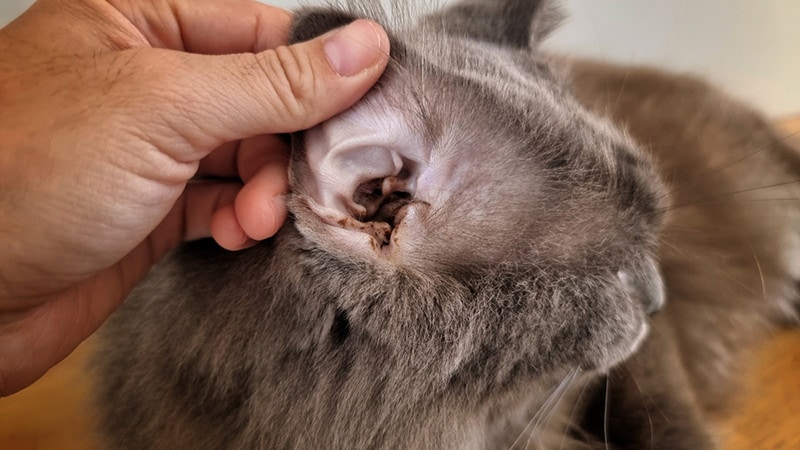
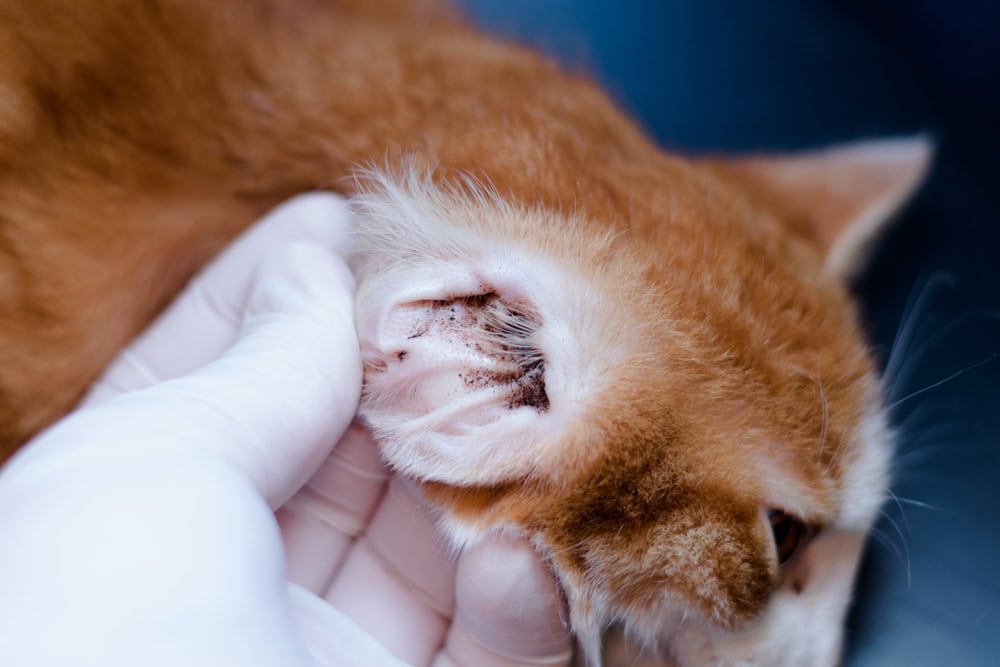
But here are some of the possible causes:
What Other Signs Might Your Cat Show When They Shake Their Head?
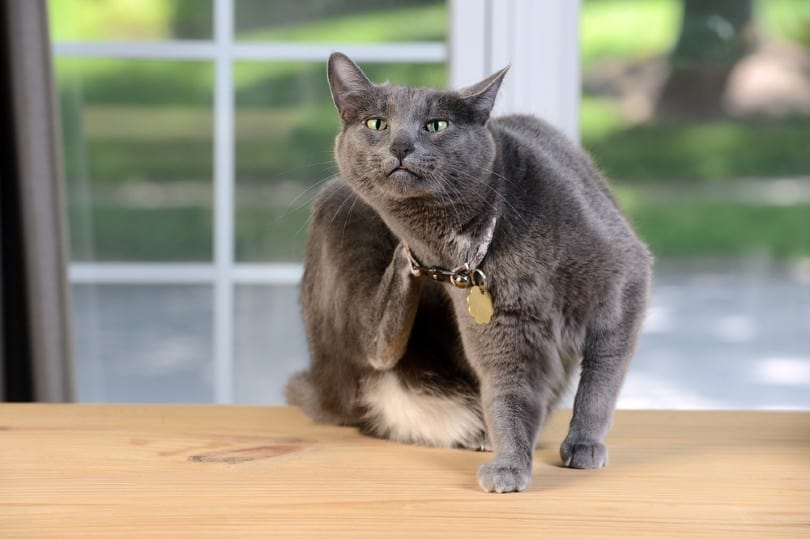
If your cat is suffering from an ear infection, ear mites, or other itchy ailments, you might see them scratching at their ears with their hind legs. If your cat is quite private, they might not scratch in front of you, but you might spot the evidence if the backs of their ears start to look a bit bald!
An infection of the middle or inner ear or a polyp deep in their ear canal might cause them to tilt their head to one side, and they might lose their balance easily or act a bit drunk and wobbly. You might also notice that their pupils are different sizes or that their eyes are flickering side to side. If your cat's balance is severely affected, they might start vomiting, a bit like when people get motion sickness or vertigo.
If your cat has fleas, they'll probably give you some other clues aside from the itchiness! You might notice patches of thin fur or bald patches, and if you look closely, you might spot some fleas or flea dirt.
When to See a Vet
Most causes of head shaking in cats won't get better on their own without veterinary treatment. However, if you suspect that your cat companion has some extra "friends" in the form of fleas, you might be able to treat them at home. It's worth using a fine-tooth comb to check for fleas or flea dirt and ensure your cat is up-to-date with preventative treatments.
If your cat is shaking their head and has no other symptoms, and their ears look clean and comfortable, it’s okay to keep an eye on them for a couple of days to see if things improve. But, if they seem unwell, have other symptoms, or their ears are red, dirty, smelly, or sore, you should take them to see the veterinarian.

What Are the Possible Treatment Options?
If your cat is shaking their head, the treatment that your veterinarian recommends will depend on the cause.
1. Ear mites
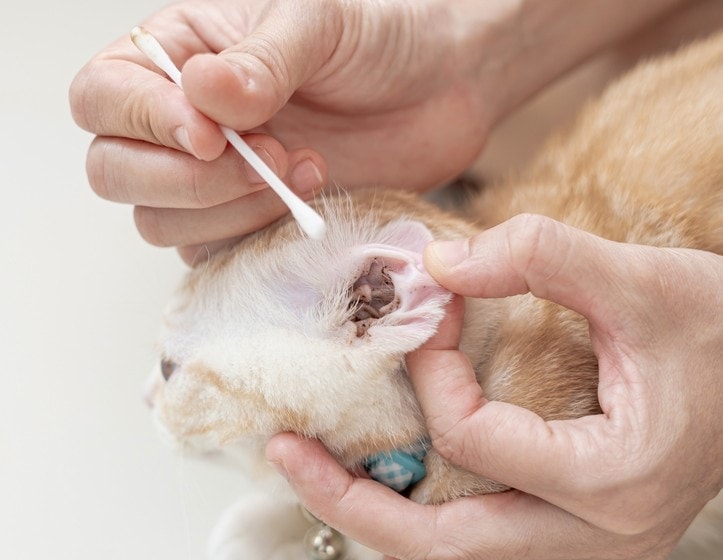
If your veterinarian sees ear mites down the microscope after taking a sample from your cat, they'll need to prescribe some treatment. There are various treatments for ear mites, including prescription ear drops and spot-on treatments. When using the ear drops, your veterinarian might suggest treating the ears for a week, then stopping for a week to allow any eggs to hatch. Once the eggs have hatched, the mites can be treated for a further week.
2. Ear infection
If your cat has an ear infection, they will need antibiotic treatment, usually given as drops into the ear. The type of antibiotic used will depend on which bacteria are causing the infection. Your veterinarian might take a swab to look at under their microscope, or they might send a sample to a specialist laboratory.
3. Aural hematoma
Aural hematomas often need to be drained. Your veterinarian may be able to use a needle or a small blade to release the blood from inside the ear while your cat is under sedation. However, sometimes the ear can refill with blood after drainage, so a semi-permanent drain or a surgical procedure might be needed. Unusually, some veterinarians have recently started using leeches to treat aural hematomas!
4. Polyps
It's not as easy as you think to find a polyp in your cat's ear! They can be very deep inside the ear canal, behind the eardrum. So, your veterinarian might need to take X-rays or even do a CT scan to find it. Once located, polyps can be removed using various surgical techniques.
5. Foreign material
If your cat has a grass seed or other foreign material in their ear, your veterinarian might be able to see it using a special ear scope. If they find foreign material, they can usually remove it under sedation.
6. Fleas
Fleas can be treated with spot-on treatments, sprays, or oral parasite treatments. These treatments should be continued even once the fleas are gone as a preventative. Remember, though, that fleas can also be hiding on other pets or in soft furnishings and carpets around the house, so household treatments are also necessary.
FAQ About Cats Shaking Their Head
How do I know if my cat has ear mites or an infection?
The symptoms of ear mites and ear infections are very similar, and they both cause itchiness, scratching, and brown discharge in the ears. To decide whether there are ear mites, your veterinarian will need to look at a sample of debris from your cat's ear. If the cause of the symptoms is ear mites, they'll be able to see them crawling around amongst the ear wax when they look under the microscope. If they don't see any ear mites, they can look for bacteria and choose an appropriate antibiotic.
Do indoor cats get ear mites?
Although it's unusual, indoor cats can get ear mites. It's most common for cats to get ear mites from other cats, including their mother, if they're kittens. But some cats have small numbers of ear mites in their ears without showing any signs. Then, if their immune system is suppressed, the ear mites can grow out of control.
Do cat ear infections go away on their own?
Cat ear infections are usually caused by bacteria, and they need to be treated with antibiotics. Ear infections don’t go away on their own, and they can cause your cat a lot of pain. Therefore, if you think your cat might have an ear infection, it’s best to get them examined by a veterinarian as soon as possible.
Should You Be Worried If Your Cat Is Shaking Their Head?
If your cat is shaking their head, it's really important not to ignore it, especially if they have other symptoms or seem in pain. There are a variety of causes of head shaking, and most of them will need treatment from a veterinarian before they improve. So, don't delay; make a call to your veterinary clinic and get your feline friend checked over.
See also:
Featured Image Credit: Mikhail Vasilyev, Unsplash
Get Hepper In Your Inbox


Pet care tips from our vets and experts, straight to your inbox.
You may opt-out at any time. View our Privacy Policy for more information.
Joanna is an experienced vet working in the UK. She has written about pets and pet health for many websites, blogs, and pet magazines and loves to help owners understand their pets through her writing.
Joanna is an experienced vet working in the UK who has always loved both writing and science. So, after following her passion for science and graduating as a veterinarian, she was able to begin writing and join her two passions together.
She has written about pets and pet health for many websites, blogs, and pet magazines. She loves to help owners understand their pets better through her writing, and loves to teach and educate her clients. She owns her own freelance company to help even more clients than just the one standing in front of her in a consultation room.
Education
In 2016, Joanna graduated from the University of Nottingham, with a degree in Veterinary Science (BVMedSci) and a degree in Veterinary Medicine and Surgery (BVM BVS).
Experience
Joanna practiced as a clinical vet from 2016 - 2019 and left full-time practice after that to work as a locum/relief vet in the Channel Islands, alongside her freelance writing work.
Join the conversation
Ask a question, share your story, or send private feedback.