Hepper is reader-supported. When you buy via links on our site, we may earn an affiliate commission at no cost to you. Learn more.
Why Do Cats Hate Closed Doors? 6 Possible Reasons & Tips
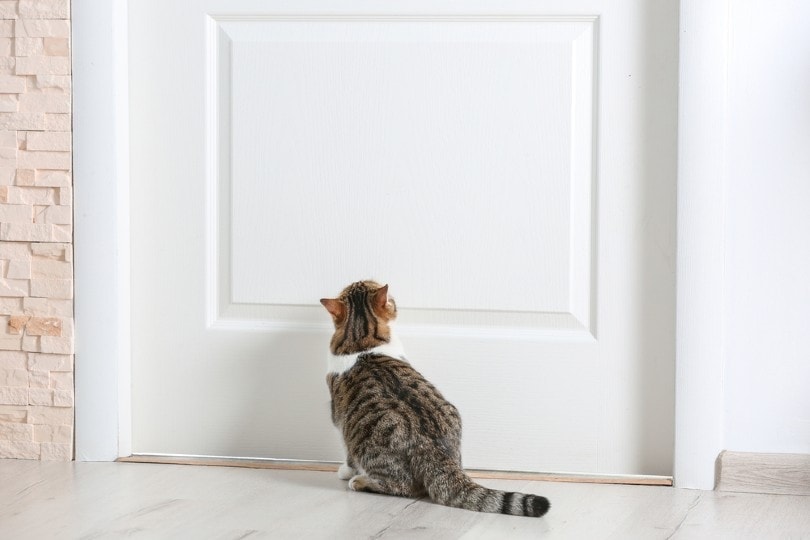
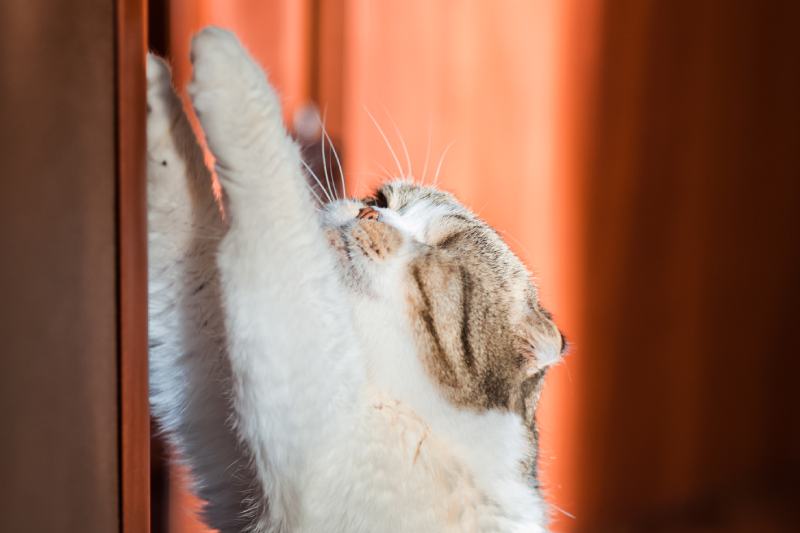
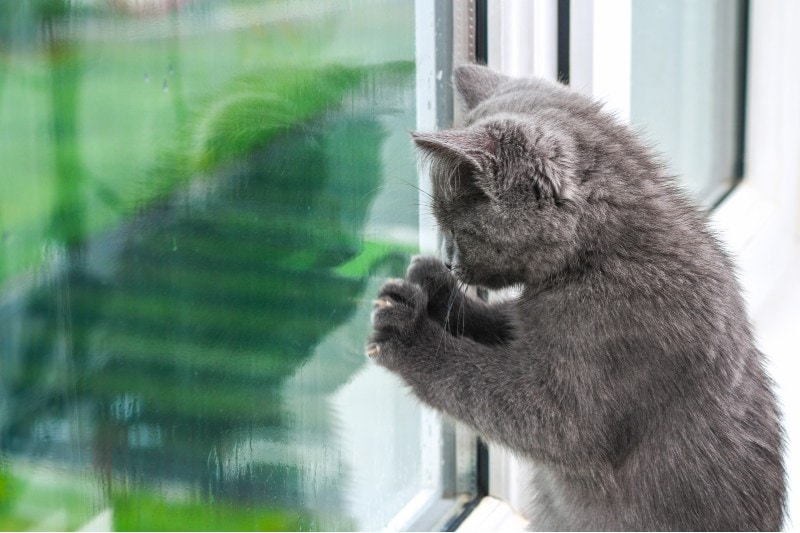
For any cat owner, the sight of a closed door can often trigger a series of meows and scratches at the door. It's no secret that cats seem to hate closed doors, but have you ever wondered why? This question has puzzled so many new and seasoned cat owners that it was worth a bit of exploration.
So, if you've ever found yourself wondering why your cat insists on having access to every room in the house, keep reading to learn more about why some cats hate closed doors. And hopefully, by the end of this post, you'll have a better understanding of your cat's behavior and be able to provide them with a more comfortable living environment.

The 6 Reasons Why Cats Hate Closed Doors
1. Natural Instincts of Cats
Cats have been domesticated for thousands of years, but their instincts still play a significant role in their behavior. One of the most prominent instincts that cats have is their need for freedom and independence. In the wild, cats are solitary hunters and spend most of their time exploring their territory. Simply put, they're used to having free access to all areas of their environment, and closed doors can make them feel trapped and confined.
Another instinct that cats have is their desire to hunt and catch prey. This instinct is particularly strong in cats that have access to the outdoors, but even indoor cats have a strong hunting drive. Closed doors can prevent cats from accessing potential prey, such as rodents or insects, which can be frustrating for them.
Cats also have a strong sense of smell, and closed doors can prevent them from investigating new scents. They use their sense of smell to explore their environment and to communicate with other cats. A closed door can prevent them from accessing new scents and can be a source of stress for them.
2. They're Hungry And Want Food
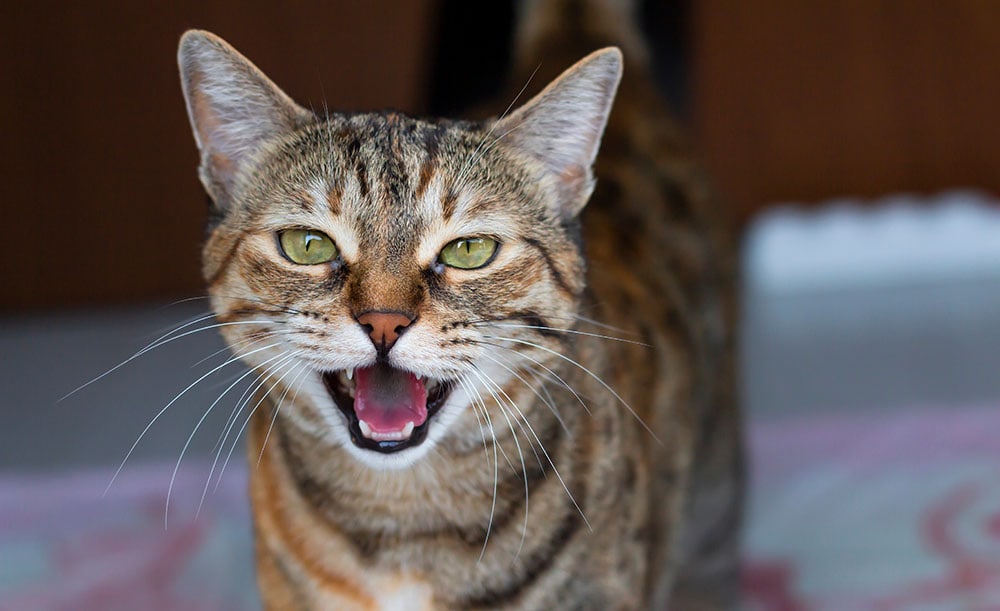
Some cats simply want to be fed and will meow while outside closed doors for breakfast or a start fight with their owners. In their feline minds, they absolutely need to have access to you. Why? Well, because you're the one who gives it. Your cat simply will not be happy if you're behind closed doors during these times. They'll also beg for your attention loudly and walk away when you open the door. To prevent this from happening, you can simply take note of when you feed your cat every day and make sure to have food prepared for it in case it gets hungry in the morning before you have a chance to wake.
3. Curiosity and Exploration
Cats are curious creatures by nature and enjoy exploring their environment. They're known to be active and playful, and closed doors can prevent them from accessing new areas to explore. This can be particularly frustrating for cats that are used to having free access to all areas of the house.
Cats are also known to be territorial, and closed doors can prevent them from accessing areas that they consider to be their territory. This can be a source of stress for cats, and they may become aggressive or anxious if they are prevented from accessing their territory.
4. Separation Anxiety and Fear of Missing Out
Felines, just like dogs, can experience separation anxiety, which is a condition that can cause them to become anxious or stressed when they're separated from their owners. Closed doors can trigger separation anxiety in cats, as they may feel isolated and cut off from their owners.
Additionally, cats can experience fear of missing out, or FOMO, which is a condition that can cause them to become anxious or stressed when they feel they are missing out on something. Closed doors can trigger FOMO in cats, as they may feel that they're missing out on something exciting in your home or interesting that is happening behind the closed door.
5. They Want to Greet You
It could also be because your cat is eager to greet you or say good morning – this is true if you notice that this happens particularly in the morning. Just like with us humans, cats may simply want to say hello to you once they wake up from their night’s slumber. This may be especially true if you live alone and don't have any other pets. Pets can get lonely just like we do and if you don't allow your cat to sleep in the same room, don't be surprised if it comes scratching on the door waiting to say hello once the sun rises.
6. Health Issues and Discomfort
Finally, cats may dislike closed doors because of health issues or discomfort. Cats that suffer from arthritis or other joint problems may find it difficult to jump over obstacles, such as closed doors. Similarly, cats that suffer from respiratory problems may find it difficult to breathe in areas where the air is stagnant or poorly ventilated.
Additionally, cats may dislike closed doors because they associate them with negative experiences, such as being trapped in a room or being punished for bad behavior. These negative associations can lead to a general dislike of closed doors, even if there is no negative experience associated with them.
How to Address Your Cat's Dislike of Closed Doors
If your cat dislikes closed doors, there are several things that you can do to address this issue. If you've established that it's not a hunger issue, you can first try to make your cat more comfortable by providing them with a comfortable living environment.
This can include providing them with plenty of toys and play areas, as well as ensuring that they have access to fresh air and sunlight in other areas of the house. Keeping your cat with a handful of toys can keep them busy when you're not in the same room with them.
You can also try to make your cat more comfortable with closed doors by gradually exposing them to closed doors over time. Start by leaving doors slightly ajar, and gradually increase the amount of time that the door is closed. This can help your cat to become more comfortable with closed doors and reduce their anxiety. Let's learn a few more ways to keep your cat from becoming disgruntled by, and even scratching at your closed doors.
Buy a Scratching Post
One of the easiest ways to prevent your cat from scratching at your closed door is to provide them with a scratching post. Cats need to scratch to maintain their claws and stretch their muscles, so it's essential to provide them with a designated scratching area.
Choose a scratching post that suits your cat's preferences, such as a vertical or horizontal scratching post, and place it close to the door they tend to scratch. Keeping your cat busy with a scratching post and other toys, may make them less likely to focus on the closed door in your house and give it something else towards which it can direct its energy.
Or, if you're thinking of getting your cat something a little different, that entices play and looks like a modern piece of furniture in your home, you might think about giving our Hepper Hi-Lo Cat Scratcher a try! Its curved design targets a full range of motion, and with three height configurations and a durable design, you can be sure your cat is getting the exercise, height, and adventure they naturally desire. Click here to learn more about our innovative, functional, and funky, Hi-Lo cat scratcher.

- Premium Materials - Hepper's cardboard scratcher is made with dense, B-flute cardboard, and a metal core. Encased in a 1/2" plywood frame with gloss coating. Stable and beautiful, use after use
- High, Low and Lower - A single cat scratch pad won't keep your cat engaged. 3 unique positions keeps them coming back, and back, and back again. Finally, something to get them away from the couch!
- Activates Muscles - The Hi Lo isn't just a cat nail file to stop the chief cat couch scratcher. The deep cat scratcher wave encourages maximum musculoskeletal activation for a healthier workout
Use a Deterrent
Another effective way to prevent your cat from scratching at your door is to use a deterrent spray or tape. These products are designed to discourage cats from scratching by creating an unpleasant smell or texture. You can spray the deterrent on the door, or even apply the tape to the areas they usually scratch. Over time, your cat will learn to avoid the door and use the designated scratching post instead.
Give Them a Nice Sleeping Area
If your cat is scratching at your door because they want attention or to be let in to sleep with you, consider providing them with a comfortable sleeping area or a designated room. If you haven't already, try providing your cat with a comfortable cat bed and have it set up right next to your door or in its own little area in your home. You can buy a decent cat bed for about $10.
Wrapping Things Up
In conclusion, cats' dislike of closed doors can be attributed to their natural instincts, curious nature, separation anxiety and fear of missing out, territorial behavior and the need for space, and health issues and discomfort.
By understanding these factors and addressing them appropriately, you can help your cat to feel more comfortable and secure in their environment. Remember to provide your cat with plenty of love and attention, as well as a comfortable living environment, to help them lead a happy and healthy life.
Sources
Featured Image Credit to: Africa Studio, Shutterstock
Get Hepper In Your Inbox


Pet care tips from our vets and experts, straight to your inbox.
You may opt-out at any time. View our Privacy Policy for more information.

Nicole is a lover of animals of all sizes but is especially fascinated with the feline variety. She’s the proud mom of Baby, a Burmese, and works every day so he can relax in the sunshine or by the fire. She’s always had a cat in her home and has spent countless days with others, observing behaviors and softening up even the grouchiest of the lot. Nicole wants to share her kitty expertise with you so you and your cat can live happy, healthy, and care-free.
Join the conversation
Ask a question, share your story, or send private feedback.