




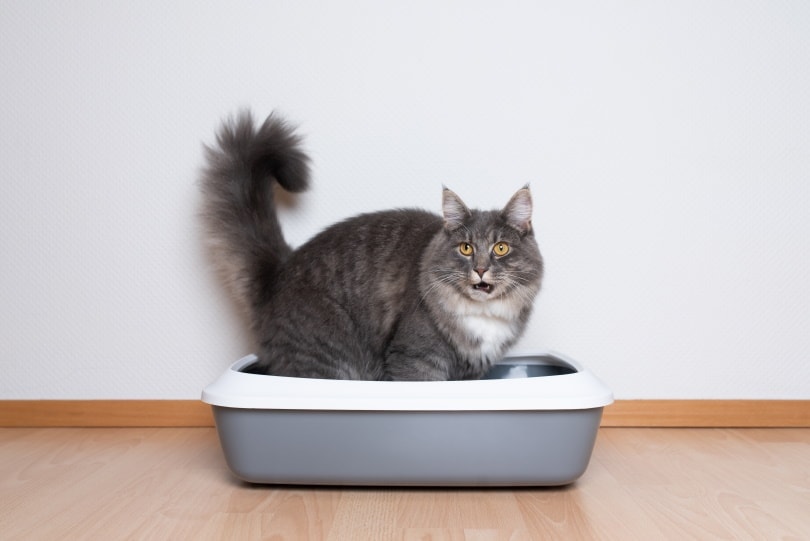
This may be an odd behavior that some cats may display when they are using the bathroom, and sometimes it may point to a health problem. The meow can be variable and repeated several times at any point during toileting. Some cats may also spend more time in the litter box than usual or visit it frequently.
Most owners who notice their cat meow before they poop or urinate may become concerned, as this could point to an underlying health issue or pain. In some cases however, cats may meow in their litter box for more benign reasons, and the difference between a meow and a yowl can mean a thousand words, but it’s best to consult a veterinarian to be sure.
We’ll go through which signs to look out for, that may point to a health issue in your kitty, and what are other possible reasons for meowing. Continue onto this article where we’ll do our best to inform you of the most important things to know on the topic.

The 4 Possible Reasons Why Cats Meow Before They Poop
There are several possible explanations behind why your cat may be meowing before, during or after defecating. Some reasons are not concerning while others may need a vet’s help to determine the cause of the problem. The tone of your cat’s meow as well as their body language while displaying this behavior can give you a good indication of whether they are trying to communicate with you, or if they are in pain.
1. Protection & Vulnerability
If you are in the same area where your cat is using their litterbox, or merely outside while your cat does their business in the yard, a possible explanation for your cat to meow before defecating is that they may be seeking reassurance. When cats are using the bathroom, they naturally feel vulnerable to predators, even in their own homes. This is based on an instinct that cats have, and many of these predator and prey instincts stayed with them despite thousands of years of domestication.
It may be a way your cat is expressing uncertainty and displeasure for toileting out in the open and feeling vulnerable and exposed, seeking reassurance and comfort from you. This can be determined by your cat’s body language. If this is the case for your cat’s bathroom meowing, they may face you or stare at you while they go about their business.
In some cases, the cat may even feel as if you are the threat. Some cats prefer privacy and do not welcome their owners staring at them. Sometimes other animals like dogs can bother them to the point that they show distress while pooping or urinating. If you feel that this is the most reasonable explanation for your cat’s meowing, then perhaps an enclosed litterbox is a good option to provide your cat with the privacy they need. However, keep in mind some cats may dislike this option as they may feel trapped without a good overview of their environment and easy exit routes.

2. Issues with Defecation
Cats may suffer with various digestive issues, some of which cause diarrhea, while others can lead to constipation and difficulty passing a stool. Even when suffering from diarrhoea, cats may strain and appear as if they are struggling to poo, meowing while in their litter box due to discomfort they’re experiencing.
Constipation on the other hand may be caused by underlying medical conditions, such as megacolon, kidney disease, dehydration, tumors and more, while ingestion of foreign bodies such as toys or formation of furballs more often lead to an obstruction of the stomach or small intestines, which causes vomiting, rarely signs of a constipation.
Some of the digestive signs you may notice in your cat that warrants a veterinary exam may include:
- Painful meowing when defecating
- Straining to defecate
- Blood in the stool or around the anus
- Loss of appetite
- Diarrhea or constipation
- Vomiting
- Lethargy
- Anal prolapse from straining
All of these signs require an urgent trip to the vet so the underlying cause can be promptly identified and treated.f
3. Urinary Issues
This is an equally concerning issue that causes your cat to meow in pain while they urinate. This is because it hurts for them to urinate, and they are trying to communicate their pain with you. It’s similar to when a human gets a UTI, it’s uncomfortable and painful.
There are many possible causes for pain associated with the lower urinary tract in cats, and this group of conditions is often referred to as FLUTD or feline lower urinary tract disease. Besides a urinary tract inflammation and infection, there may be bladder stones, crystals, urethral plugs, and an idiopathic feline cystitis (FIC) without a known cause. The biggest concern with such conditions is a urinary blockage, mostly impacting male cats due to a smaller size of their urethra, which leads to a life-threatening illness due to inability to urinate.
Aside from letting out a painful meow, your cat may also display various signs that can indicate a urinary problem.
- Straining to urinate
- Crying out while urinating
- Excessive licking of the genital area
- Blood in the urine
- Dripping urine
- Visiting the litter box constantly
- Urinating outside of the litter box
- Inability to pass urine
- Frequent or prolonged attempts to urinate
- Vomiting
- Painful abdomen
If your cat is showing any of these signs, they will require an urgent trip to the veterinarian. A urinary blockage, if left untreated, may be fatal due to risk of a urinary bladder rupture, damage to the kidneys and systemic derangements including life threatening electrolyte disbalance.
4. Pain
Besides urinary and digestive issues, there are other health conditions that may cause pain to a cat while using the litter box. This is not uncommon in older cats suffering from arthritis, when entering and using the litter box and posturing to poop or pee may be causing a degree of pain. Same goes for cats with a muscle injury or recent orthopedic surgery.
Occasionally, a particularly large or firm poop may prove painful for your cat, but this shouldn’t be a regular occurrence. If it is, it’s best to talk to your vet about some dietary changes you can make to improve your feline’s fecal form.

 When to be worried?
 When to be worried?
In many cases, regular meowing before defecating may be normal behavior, and some cats may do it more often than others.
It becomes concerning if the cat meows because of health problems, either from struggling to pass urine or feces or due to another painful condition. If your cat only does it in your presence, then it is possible they are searching for your reassurance. However, if your cat suddenly started doing it while going to the bathroom, it could indicate that they are in pain or discomfort.
If your cat is starting to go to the bathroom outside of the litterbox, this could be another sign it’s time for vet intervention. However, occasional accidents are to be expected with pets so monitoring frequency and severity are important.
Our favorite enzyme cleaner for eliminating pet smells and stains is our very own Hepper Advanced Bio-Enzyme Pet Stain & Odor Eliminator Spray. It makes clean-up a breeze because it permanently removes even the very worst smells and stains (urine, feces, vomit, you name it!) from basically any surface you can imagine.

- ADVANCED ENZYMATIC CLEANER - Penetrates the most stubborn smells and stains at the deepest molecular...
- FOR ANY MESS, ON ANY SURFACE - This pet odor eliminator cleans your carpets, floors, furniture...
Is Veterinary Intervention Necessary?
It’s never a bad idea to get your cat checked by a vet, even if it is simply to gain reassurance that nothing is wrong. It is recommended to get your cat checked into the vet for a full health evaluation every 6-12 months, depending on their age, so that they can have a routine examination to check for any underlying health problems that can affect their wellbeing.
If you do suspect that your cat is meowing due to pain while pooping or urinating, then you must get them to your nearest vet as soon as possible. Even if it may seem silly to do because your cat is meowing while pooping, it may be necessary to mention it to your cat’s vet the next time a check-up is due.
It is also important to regularly monitor your cat’s litterbox and toileting habits because it will help you notice any issues with their urine or poop.
Final Thoughts
Do not be afraid to get up in your cats ‘business’, especially when it comes to checking on their health. There could be an underlying health condition if your cat has recently started meowing while they go to the bathroom, even if you are not looking at them.
If anything seems amiss, do not hesitate to get them to a veterinarian to be safe.
Related Reads:
Featured Image Credit By: Nils Jacobi, Shutterstock
 The 4 Possible Reasons Why Cats Meow Before They Poop