Hepper blog

Search our database of over 9,984 posts with up-to-date information from our experts and veterinarians.

Hepper is reader-supported. When you buy via links on our site, we may earn an affiliate commission at no cost to you. Learn more.

Why Do Cats Scream While Mating? Vet-Approved Feline Reproduction

By Nicole Cosgrove · Reviewed & fact-checked by Dr. Maja PlatisaVet Approved
Dr. Maja Platisa
Reviewed & Fact-Checked byDr. Maja PlatisaVeterinarian
Dr. Maja has over 8 years of veterinary experience working with various animal species in the United Kingdom and the Channel Islands, from dogs, cats, rabbits, guinea pigs, to cows, goats, sheep, pigs, and poultry. Maja is very enthusiastic about veterinary volunteering work and often helps in neutering projects for stray animals in Greece. She has a wide range of skills in the fields of animal medicine and surgery, diagnostic imaging, endoscopy, microscopy and other aspects of clinical work. She is very passionate about animals and their health and loves to help our readers with any questions or issues with their four-legged family members and other animal companions. Her passion is small animal medicine and emergency work, while she also has a great interest in animal welfare. Dr. Platiša received her veterinary training and degree from the Faculty of Veterinary Medicine, University of Zagreb, Croatia, in 2015.View authorThe information is current and up-to-date in accordance with the latest veterinarian research. Read about our vets
Share
Ask us a question in the comments
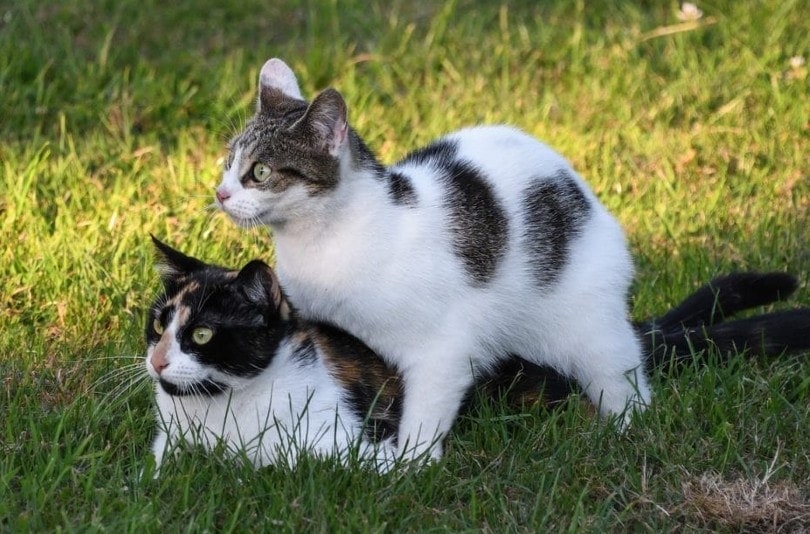
two cats in the grass

Cats are unique little creatures that we love and adore. They tend to have some very peculiar behaviors in many aspects of their existence. It’s beneficial to understand feline behavior, especially if you share your life with cats. One awkward question that comes up is, why do cats scream when mating?

Not only are cats vocal during the actual act of mating, but females can also be vocal throughout the entire process of being in heat. Cats scream while mating due to the specific anatomy of the male cat's penis, causing discomfort to female cats. Mating is what induces ovulation in cats, and the intense and often loud vocalizations are a way to attract the mate in the first place. We’ll investigate the courtship and mating of cats to best answer the question.

Heat Cycle

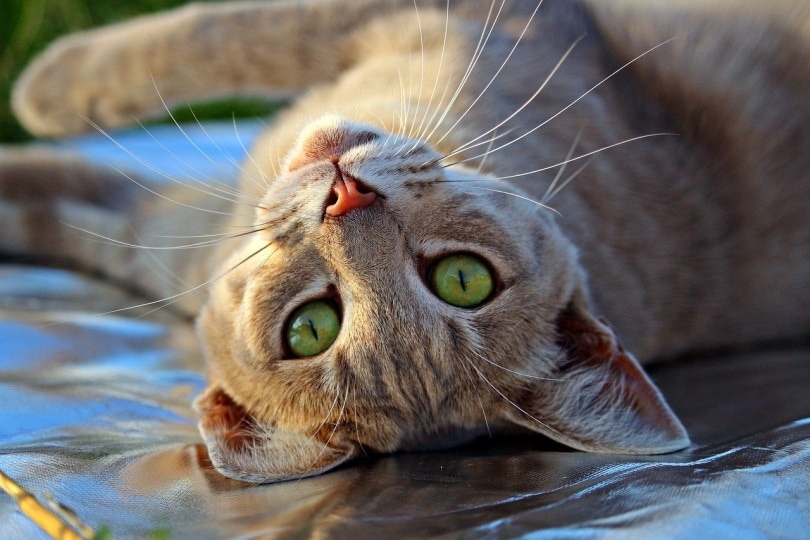
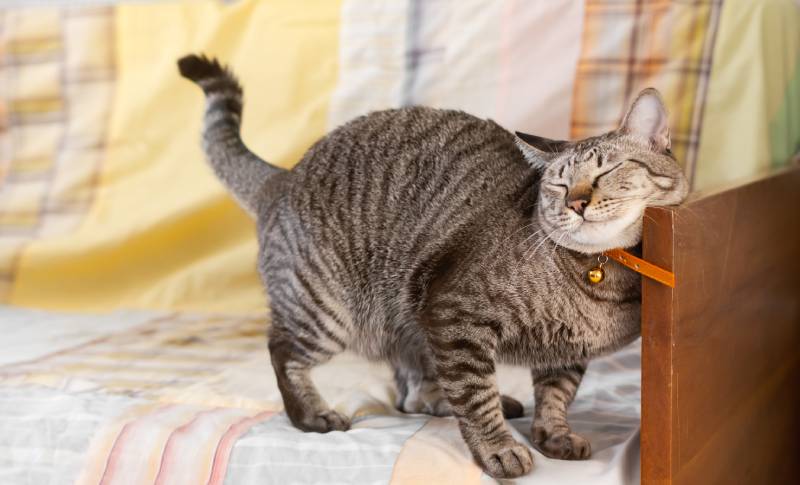
In a female cat, the ovaries do not release any eggs until mating has taken place, known as mating-induced ovulation. You will notice that when a female cat comes into heat, they tend to be very affectionate and vocal, they will do a lot of grooming and rolling around during this time. This is due to an influx of hormones and is an indicator that she is ready to ovulate and is trying to attract a male to complete the process and become pregnant.

Not all females make the loud vocalization when in heat, but most do. Females can begin heat cycles as young as 4 months of age. Breeding season for cats is generally from January to late fall in the Northern Hemisphere, and a female can typically go into heat every 2 to 3 weeks until she is either spayed or becomes pregnant.

Two cats playing in the field
Image Credit: rihaij, Pixabay

Mating

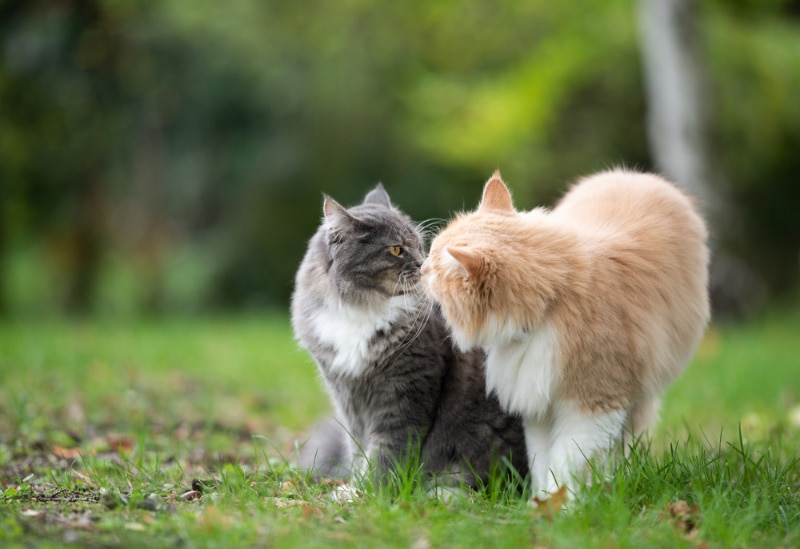
When a male cat finds the female cat in heat through scent and vocalizations, the mating process will begin. The reason why there is so much screaming during the mating process is that male cats have a barbed penis, also called penile spines, that is very painful for the female to endure.

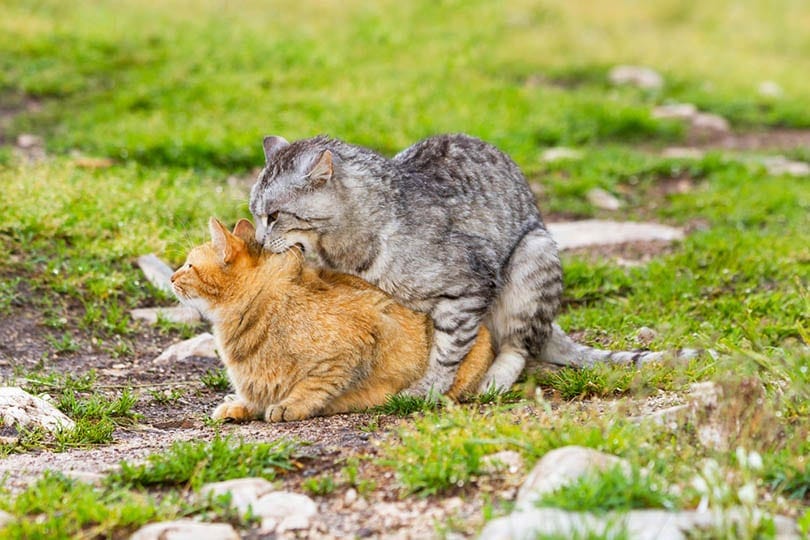
The male reproductive organs are barbed to stimulate the female to ovulate, and though it is not so pleasant, it’s necessary for reproduction. Males will often bite the females on the neck in order to hold them down so that the mating will be successful. Otherwise, females may try to leave due to the pain of the experience, but the barbed penile spines also prevent this to a point. Males may vocalize if the female resists and tries to attack them afterwards. 

After mating is complete, which is typically under a minute, the female tends to act aggressively toward the male, likely due to the discomfort she endured. The male will typically leave the female alone until she settles down, and he may attempt to mate her again.

Once the male has left, the female will go back and forth between grooming herself, rolling around, and may vocalize again. Most females will mate at least three to four times over a 1- to 2-day span and may mate with several suitors over this period. It is not uncommon for a litter of kittens to be fathered by different males.

Spaying and Neutering Cats

It is very important to note that spaying and neutering your cats is an important responsibility of a cat owner. There is currently a crisis when it comes to the homelessness of domesticated pets around the world. In the United States alone, 920,000 dogs and cats are euthanized each year, 530,000 of those being cats.

Neutering your cat will prevent many unwanted pregnancies and kittens. There are simply not enough homes for the number of cats in this country. Not only does spaying and neutering help with the overflow of shelter pets, but it also has medical, behavioral, and financial benefits.

two neighbouring cats hissing at each other
Image By: Astrid Gast, Shutterstock

Medical Benefits

  • A female cat has a better chance to live a much longer and healthier life if spayed before her first heat cycle. Having her spayed will help prevent breast tumors, infectious diseases, injuries from cat fights, uterine infections that will seriously impact the health and welfare of your cat, or even road traffic accidents due to less or no roaming.
  • Neutering a male cat will help to prevent urine spraying and other male-typical behavior while reducing their need for roaming if they are allowed outdoors. This way, the risk of them contracting infectious disease through fighting with other cats or being hit by a car is reduced, prolonging their life and improving their health.

Behavioral Benefits

  • An intact male cat will want to roam in search of females. He may even resort to escape attempts. If he is free to roam, he is at great risk of injury or even death in traffic or by fighting with other male cats. A neutered male will not have the desire to roam in search of females.
  • Intact male cats are very likely to mark their territory by spraying strong-smelling urine all over your house. It’s best to neuter them as soon as possible to avoid this behavior, as in some cases, it can continue after being neutered.
  • By spaying a female cat, she will not go into heat. As discussed, females can have varying behavior while in heat, which lasts on average around 7 days, although it can be anywhere from 1 to 21 days, and it can repeat every few days to 3 weeks unless spayed or pregnant. By having them spayed, you will avoid the vocalizations, changes in behavior, and spraying of urine during heat.

Financial Benefits

  • Having your cats either spayed or neutered will help avoid costs of care for any litter produced by intact animals.
  • Spaying and neutering will also help owners avoid the cost of medical expenses related to the health issues that can result from allowing your cat(s) to remain intact and contract infectious diseases and injuries during roaming in the heat period.

When Can I Spay/Neuter My Cat?

It is typically considered appropriate to spay or neuter kittens at the age of 4 to 6 months, depending on their size, health, and individual circumstances. It’s important to avoid urine spraying from males marking their territory and heat cycles in females, which each typically start around 4 to 5 months of age, but may be later depending on the breed size and climate.

It is best to speak directly with your veterinarian about the process and ensure the surgery is completed promptly to prevent unwanted pregnancies and any associated behavioral and medical issues you can face with unaltered animals.

Adopting straight from a rescue or shelter is a wonderful option that will ensure your new cat is spayed or neutered before coming home.

Final Thoughts

We now know that the reason cats scream during mating is due to the barbed reproductive organs of the male causing physical discomfort for the female. Occasionally, the males will reciprocate with vocalizations in response to any aggression they may experience from the female cat during mating, but also in order to attract the female in the first place.

It’s vital to have your cats spayed or neutered unless you are a reputable breeder. It will not only save the female from the pain of breeding but has many other health benefits. We all must do what we can to prevent homeless pet populations and mass euthanasia of abandoned and unwanted animals.

See Also:

Sources

Featured Image Credit: christels, Pixabay

Get Hepper In Your Inbox

Pet care tips from our vets and experts, straight to your inbox.

List

Select all that apply.

You may opt-out at any time. View our Privacy Policy for more information.

Nicole Cosgrove
Authored by

Nicole Cosgrove

Join the conversation

Ask a question, share your story, or send private feedback.
Rate this post
Required to post. Only our editors see your rating.
Who should see this?

A human reviews every comment before it appears. Your email is never published.

Picked to go with this article

Why Do Cats Have Barbed Penises? Vet-Verified Facts & FAQ

Why Do Cats Have Barbed Penises? Vet-Verified Facts & FAQ

If you’ve ever witnessed two cats mating, you notice that the experience seems rather painful for the female. Female cats tend to make screaming noises during…

Hallie Ballard
By Hallie Ballard ·
Do Cats Feel Pain When In Heat? Our Vet Discusses Signs, Cycles & Tips

Do Cats Feel Pain When In Heat? Our Vet Discusses Signs, Cycles & Tips

It can be distressing to hear your cat vocalize loudly when in heat, and you may wonder if her unusual behavior is due to pain. However, it is highly unlikely…

Dr. Lindsay Bisset
By Dr. Lindsay Bisset ·
What Sounds Does a Cat in Heat Make? Vet-Reviewed Noises Explained

What Sounds Does a Cat in Heat Make? Vet-Reviewed Noises Explained

This article has been fact-checked by a qualified veterinarian using information available at the time of review. Veterinary medicine is continually evolving a…

Misty Layne
By Misty Layne ·
Will Male Cats Mate with Females Who Aren't in Heat? Vet-Reviewed Facts & FAQ

Will Male Cats Mate with Females Who Aren't in Heat? Vet-Reviewed Facts & FAQ

When your cat is in heat, that means she is in the reproductive phase of her cycle and actively seeking a mate. This can occur several times a year, and you ma…

Hanh Duong
By Hanh Duong ·

Keep reading

More stories you might like

Why Is My Cat Screaming? 6 Vet-Verified Reasons for This Behavior

Cats make adorable and interesting sounds, but occasionally, they let out yowls that sound just like screams, which is also known as caterwauling or howling. I…

Lorre Luther
By Lorre Luther ·
Why Is My Cat Screaming? 6 Vet-Verified Reasons for This Behavior

How Do Female Cats Act After Mating? Vet Approved Advice

The average cat reaches sexual maturity at six to nine months, after which she starts experiencing estrus cycles. Some cats hit puberty earlier, at four months…

Nicole Cosgrove
By Nicole Cosgrove ·
How Do Female Cats Act After Mating? Vet Approved Advice

Do Cats Mate for Life? Reasons, Behavior, & Breeding

There are approximately 60 million pet cats in the U.S. alone, which shows the love that humans have for our feline friends. But, while tens of millions of cat…

Nicole Cosgrove
By Nicole Cosgrove ·
Do Cats Mate for Life? Reasons, Behavior, & Breeding

Do Cats Bleed When in Heat? Vet-Reviewed Feline Reproduction Facts & FAQs

We all know that most female mammals go through physical and hormonal changes as their bodies prepare to accept a mate, with the sperm from a male fertilizing…

Hallie Ballard
By Hallie Ballard ·
Do Cats Bleed When in Heat? Vet-Reviewed Feline Reproduction Facts & FAQs

Caterwauling: Vet-Reviewed Facts & FAQ

They might not be able to talk, but cats have a plethora of ways in which they can communicate. Caterwauling is one such way. Caterwauling is a shrill, howling…

Nicole Cosgrove
By Nicole Cosgrove ·
Caterwauling: Vet-Reviewed Facts & FAQ

Do Cats Have a Clitoris? Vet-Reviewed Reproductive Anatomy

Cats have clitorises like all female mammals, but the organ's function differs between species. While it's clear that non-human primates experience sexual plea…

Lorre Luther
By Lorre Luther ·
Do Cats Have a Clitoris? Vet-Reviewed Reproductive Anatomy

How Far Can Cats Sense Females in Heat? Vet-Verified Facts & FAQ

When it comes to cats, their sense of smell is incredibly sensitive. They can detect pheromones from a female in heat from around a mile away and tell when a f…

Nicole Cosgrove
By Nicole Cosgrove ·
How Far Can Cats Sense Females in Heat? Vet-Verified Facts & FAQ

How to Tell if Cat Mating is Successful: Vet-Reviewed Signs & FAQ

If you are new to breeding your cats, it can be a little tricky at first to figure out when your cats are ready to mate and whether mating is successful. A suc…

Chelsea Mortensen
By Chelsea Mortensen ·
How to Tell if Cat Mating is Successful: Vet-Reviewed Signs & FAQ