Hepper is reader-supported. When you buy via links on our site, we may earn an affiliate commission at no cost to you. Learn more.
Why Does My Cat's Tail Vibrate? 4 Vet-Verified Reasons


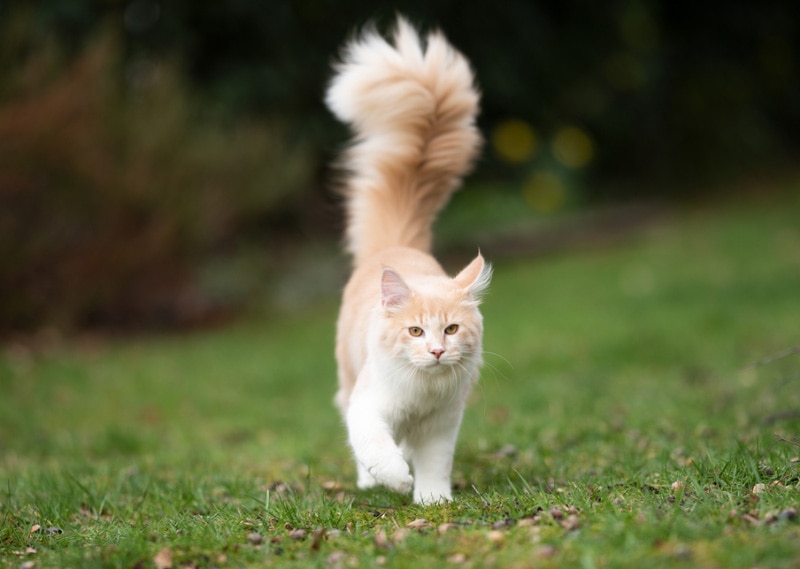
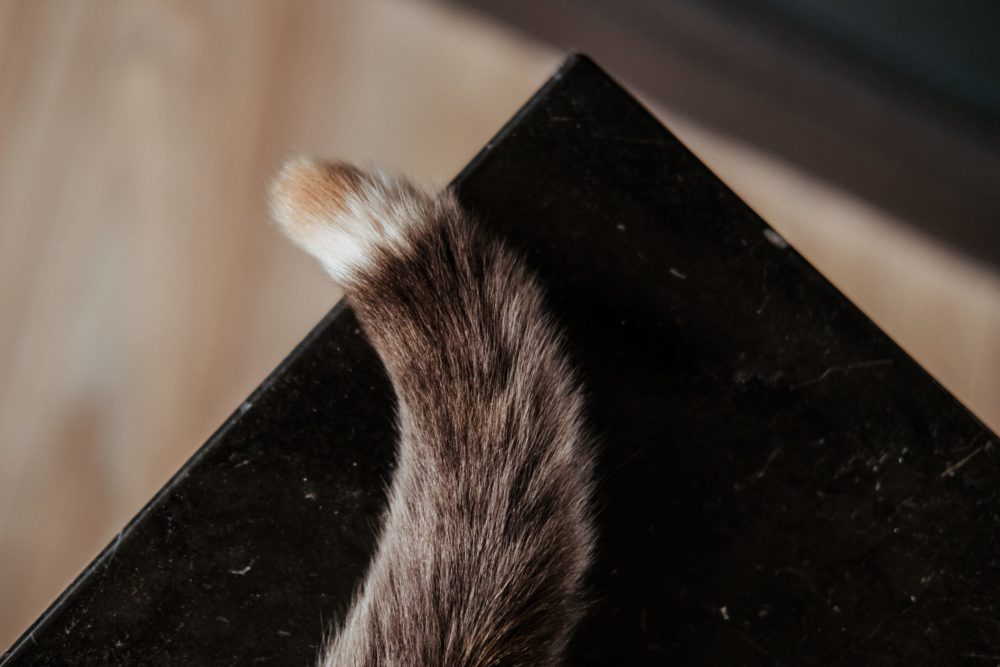
Cats, consistent with their nature, communicate in mysterious ways, and using their tails is one of them. It might seem an odd part of their body to use as a communication mechanism, but felines use their tails to communicate in complex ways. Using a variety of different motions, positions, and movements, their tails can express what they are feeling or trying to say or to elicit warnings. Their tails can be limp, tucked under their bodies, puffed out, tap the floor, swish around, be held up in the shape of a question mark, or twitch, and all of these mean particular things.
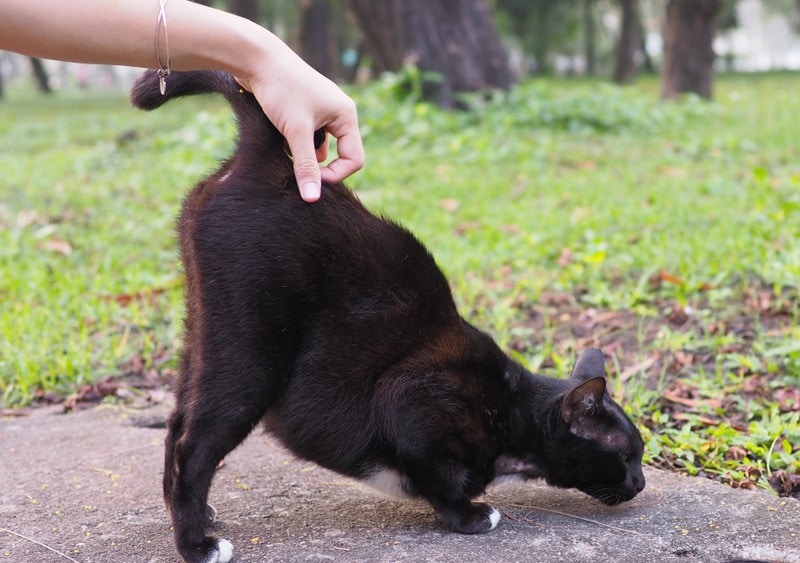
With all that said, it can be confusing to know just why exactly your cat’s tail starts to vibrate whenever you start petting them. With these explanations and understandings, now it’s time to piece all the clues together to discover the message they are trying to convey to you.

The 4 Reasons My Cat’s Tail Vibrates
1. Anger or Annoyance
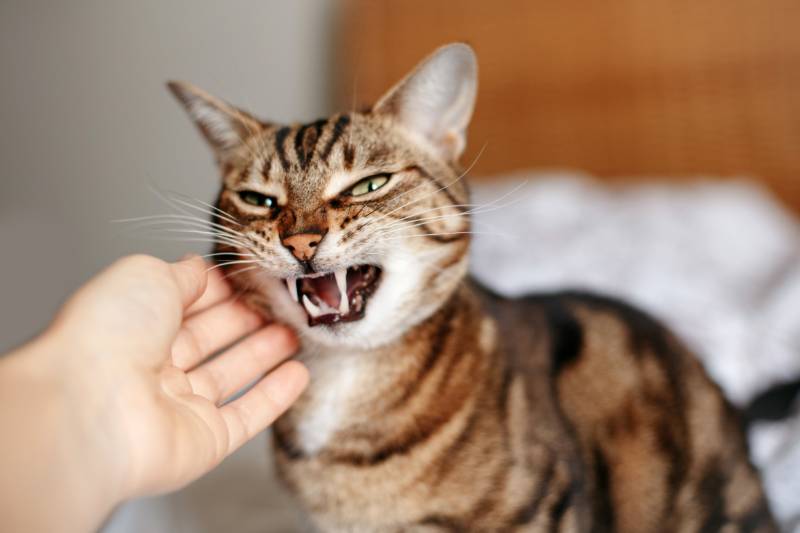
Anger usually follows annoyance or impatience, and cats can become angry quickly, often without warning! Cats frequently become angry at situations, items, or others (like their playmates or people) for seemingly no reason. One minute they appear fine, and the next they are all moody, hissing, and annoyed. It may be because they have had enough playtime or are done with your cuddles. They may feel they are not getting enough attention. Or maybe they are craving some food and would like it now!
Their tails will vibrate rapidly to let you know one of these thoughts is circulating in their head. An angry cat usually twitches their tail too, or they may tap or smack it on the floor if they are lying down.
2. Anxiety
Just as anxiety and stress are very common among humans, so are they with cats. Cats are highly sensitive creatures, and even what appears to us as the smallest of things can indeed be a big trigger for a cat.
It is important to realize a cat’s senses, hearing and smell, in particular, are exceptional. Their hearing levels, for example, are better and more advanced than in humans and canines. So, they might hear many things we don't, and any one of the noises could spark angst. Likewise, there may be a more obvious cause, like a new baby in the house, builders, or an unfamiliar cat hanging around outside. Whatever the root cause, if a cat is anxious or restless, they might shake or vibrate their tail when you touch them to let you know that something is wrong.
Pet parents with anxious kitties know the pain of watching their companions be uncomfortable—that’s where the Hepper Nest Bed comes in. Our product is designed with nervous pets in mind. The bowl shape with high rounded sides comforts your cat to make them feel safe and secure, while the self-warming, sherpa fleece insert and flexible molded foam ensure that they stay as cozy as possible. Learn more about how the Next can calm your anxious pet here.

- COMFY KITTY - Your cat or kitten will have an amazingly deep sleep in this self warming, nesting cat bed. The warm, fluffy cat bed lining provides calming stress relief for cats of all ages.
- PRETTY HOME - This round cat bed has a modern and unique design that’s perfect for a sleek indoor look. We don’t think of it as cat furniture but think of the Cat Nest as a “cat home”.
- SPACE SAVER - Reclaim your desk, window sill, or couch from kitten encroachment. This calming nest cat bed has an elevated, space-saving hideout so comfortable your kitty can't resist!
3. Impatience
Cats are known for impatience and do not like waiting or being unable to obtain their goal or desire. Can they get in the door they wish to? Are you taking too long to feed them? Are you petting them too much or too little? Do they not like your new burning candle? Any of these types of scenarios will induce an impatient and frustrated cat when you pet them.
4. Happiness
In truth, a vibrating tail could very well represent a negative meaning. But there is hope! Out of all the reasons for a vibrating tail, this is the one you may hope for, and it’s because they’re feeling happy.
We all like to think that our cats are as happy and healthy as can be, and in this instance, an upright tail with a vibrating or shaking end usually means a happy cat. The context and nature in which this is done need consideration as well, but their happiness or excitement may be related to multiple causes, such as food, treats, toys, you, another person, catnip, or anything else that is considered their favorite.
Conclusion
Cat communication and behavior is a fascinating topic that can be studied further, either for personal interest or professional purposes; just be sure to learn from reputable sources. The cat’s tail conveys many messages, and even one movement, such as a vibration or shaking tail, holds subsequent and multiple meanings.
If you are looking to get closer to your cat and understand them more, then hopefully this has given you some insight or inspired you to learn about cat body language a little more. Also, remember that cats are not little dogs, and using an understanding of canine behaviors to attempt to translate cat communication and care won’t cut it.
Related Read: Cat Tail Language
Sources
Featured Image Credit: Nils Jacobi, Shutterstock
Get Hepper In Your Inbox


Pet care tips from our vets and experts, straight to your inbox.
You may opt-out at any time. View our Privacy Policy for more information.
Annaliese began her career as a veterinary nurse in Edinburgh, later advancing her qualifications with a diploma in advanced veterinary nursing in surgery from London. Her work in small and mixed veterinary practices led her to become a head nurse, where she trained other veterinary nurses, managed the nursing department, conducted nurse clinics, and developed new patient care protocols.
Throughout her career, Annaliese has cared for thousands of patients and their owners, setting higher standards in nursing regimes with a focus on surgery and anesthesia. She co-authored multiple veterinary nursing textbooks and contributed to various mainstream publications in the UK and USA. After more than twenty years in the veterinary and pet care professions, she retired from clinical practice to pursue full-time writing. Having cared for thousands of patients and owners, Annaliese specialized in surgery and anesthesia. She was asked to co-author several veterinary nursing textbooks and contributed to a number of other publications in the UK and USA. After more than two decades in the veterinary and pet care industries, she retired her scrub suit and now works as a full-time writer.
Annaliese Morgan has been a dedicated veterinary nurse for over two decades, having completed a diploma in advanced veterinary nursing in surgery from London and qualifying from Edinburgh. Her professional experience includes managing a nursing department, training other veterinary nurses, providing patient care, and running nurse clinics in both small and mixed veterinary practices.
As an expert in surgery and anesthesia, Annaliese has treated thousands of patients and owners. In addition to being asked to co-author multiple veterinary nursing textbooks, she has written for a variety of publications in the UK and USA. After a long and successful career in the veterinary and pet care professions, Annaliese now dedicates her time to writing full-time. You can find out more about her work at www.annaliesemorgan.com.
Join the conversation
Ask a question, share your story, or send private feedback.