Hepper is reader-supported. When you buy via links on our site, we may earn an affiliate commission at no cost to you. Learn more.
Why Do Dogs Have Whiskers? Vet-Reviewed Facts & FAQ


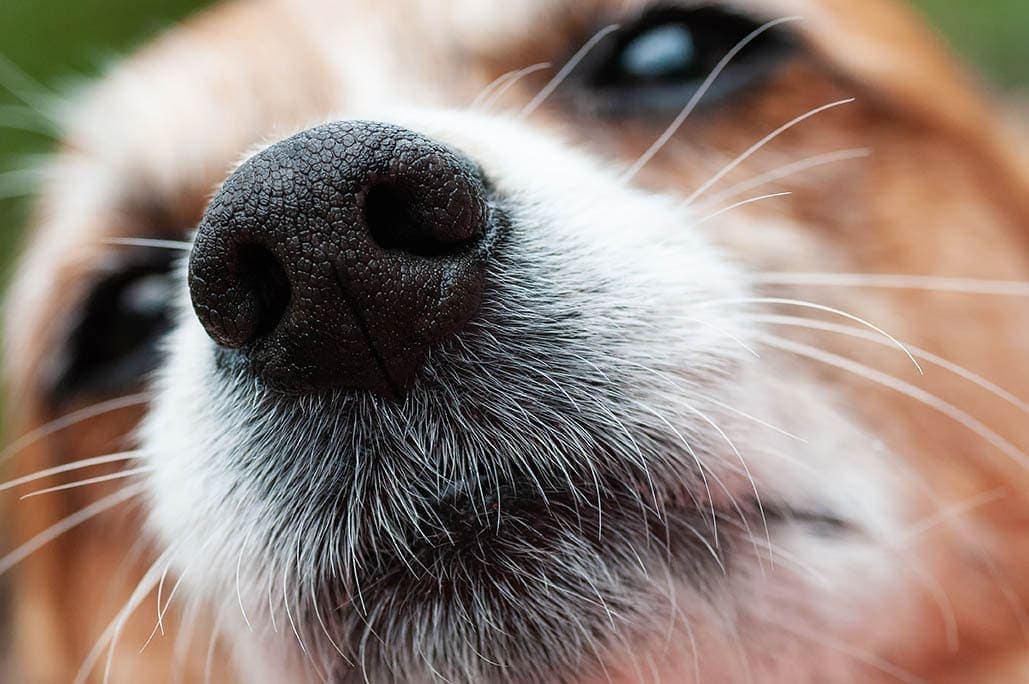
Most of us are familiar with a cat’s whiskers but less so with the whiskers of a dog. While dog whiskers are not as obvious as those of our feline friends, they still serve several important functions. Canines have several sets of whiskers, and here, we take a look at each, so you can learn more about your pet and how they navigate the world around them. We discuss the different types of whiskers that your dog has, where they are on the body, and how your dog uses them.

What Are Dog Whiskers?
Whiskers are distinct types of hair called vibrissae or tactile hairs. The hair follicles they originate from have an abundance of blood vessels that are in touch with sensory nerve endings surrounding the root of the hair. Through these nerve endings, messages are sent to the brain so your dog can react faster to their environment.
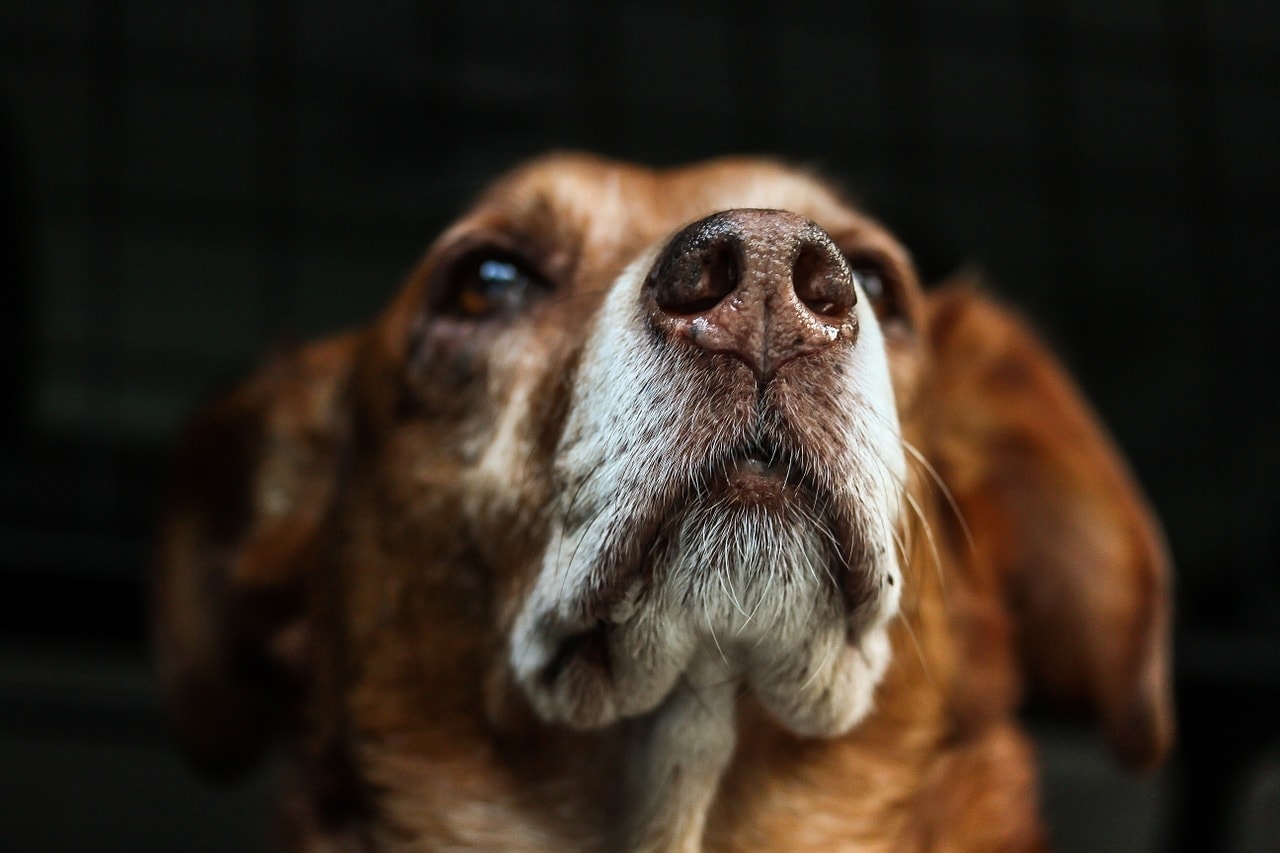
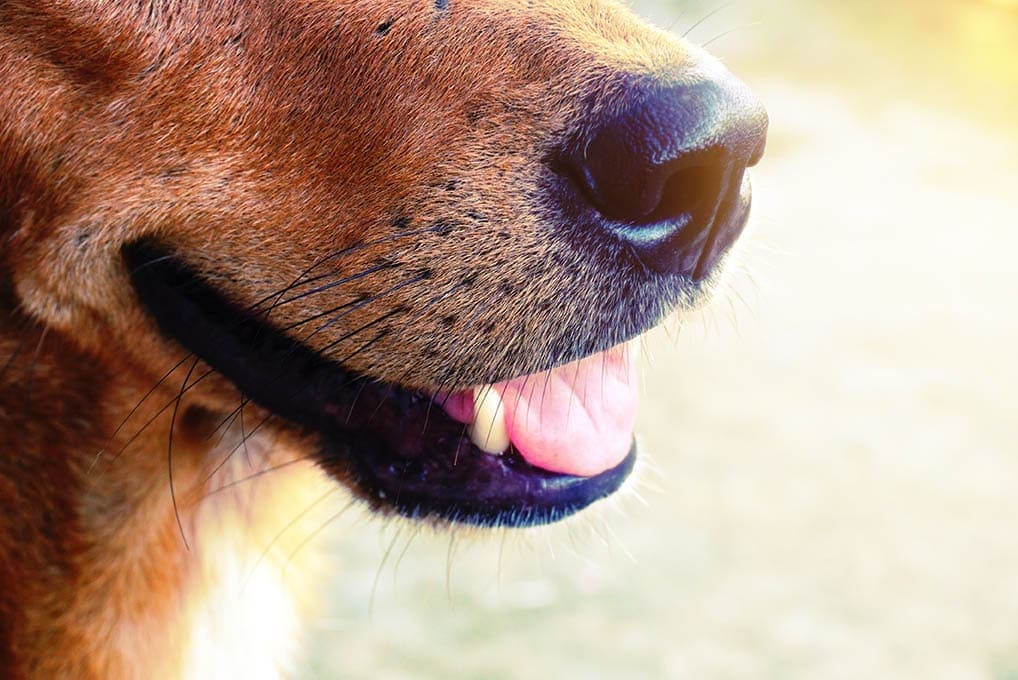
A dog's whiskers are positioned over different parts of the face and are also referred to as mystacial or facial vibrissae. They are quite long and are so sensitive that they don’t need to come into contact with a surface for the dog to know that it is there. These sensitive hairs can also detect a difference in air currents present near the surface. The ability to detect changing air currents and faint vibrations helps dogs navigate their environment during day and night, as well as detect presence of other animals or objects.
Studies have shown that whiskers as tactile hairs are part of a sensory organ and differ from the other fur.1 Without them, the sensory organ is not as functional, and whiskers should never be trimmed off.
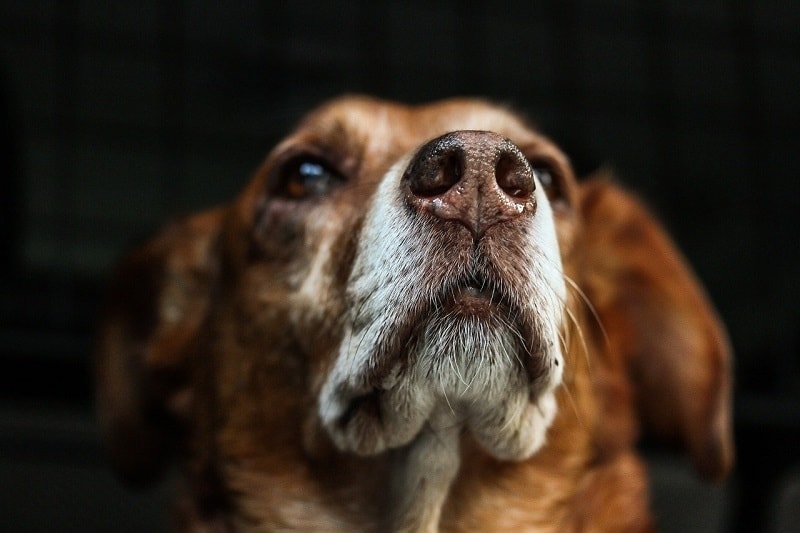
The length of the whiskers varies considerably and is dependent on breed. They are found above the upper lips, on the chin, and above the eyes. Dogs of all ages have whiskers, and they are present from birth.2
What Are Whiskers For?
Whiskers are extremely sensitive hairs that can inform your dog of nearby objects. Their whiskers work to give your dog a better sense of the environment around them. Dogs often move at high speeds, and these whiskers are essential to help them react to their surroundings accordingly.
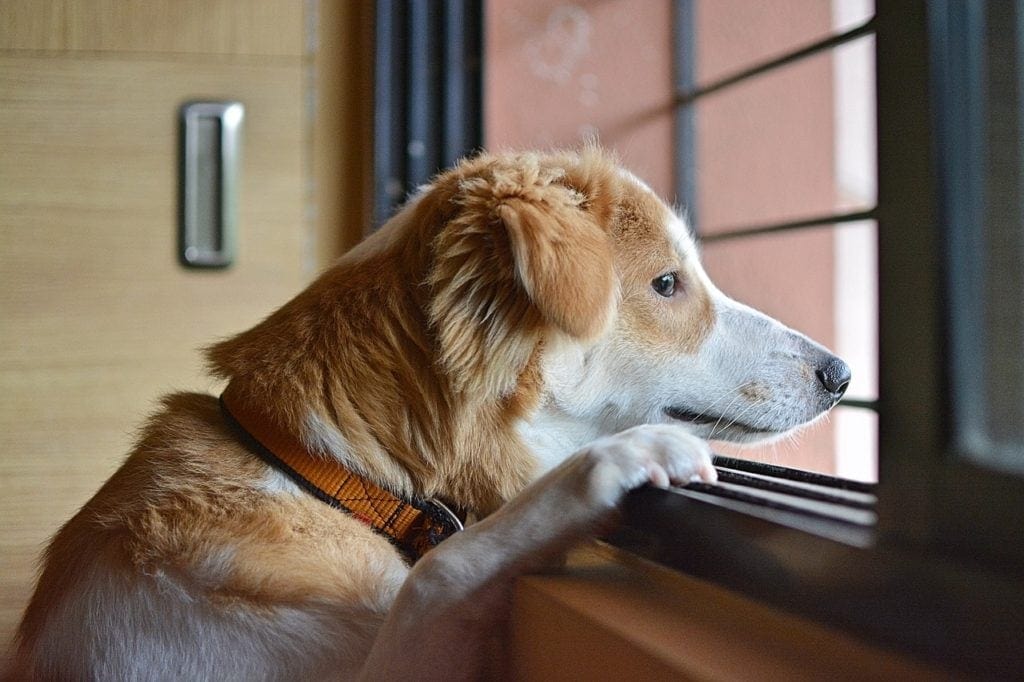
Whiskers help detect objects close to the dog’s nose and are especially useful when navigating the dinner bowl or approaching objects. They alert the dog to objects near the head and help them avoid bumping their head, as well as navigating tight spaces like holes in the ground or fences, thus protecting the dog from getting stuck.
Whiskers above the eyes protect the eyes and top of the head from incoming objects and alert the dog of potential dangers in tight spaces. If there's an object too close to the eye detected by the whiskers, these prompt the dog to move away or blink to avoid an injury.
Other functions of whiskers suggested by research papers include finding food and having a role in social behavior, facial expressions, and communication. They also are said to help maintain their head position while swimming, current detection in water, wind direction, and more. Further research is required on the tactile senses and vibrissae so that we can understand whiskers a little better.

What if a Dog's Whiskers Are Cut Off?
Dogs’ whiskers should never be cut off, as this will cause the dog discomfort, and it may impact their ability to successfully interact with their environment.
The whiskers will intermittently fall out on their own, particularly if damaged, as other hair does as well, but they will be replaced. However, this is in no way the same as having them purposefully cut off. There is really no need to even think about changing anything regarding your dog’s whiskers, as they have a crucial role in their facial anatomy and physiology and are believed to be a part of a sensory organ with a very important role in everyday life. Finally, dog’s whiskers are unique to each dog and are super cute to look at!
Can I Trim My Dog's Whiskers?
No. Whiskers can make a freshly groomed dog look shaggy, and many owners want to neaten them up by cutting or trimming them. However, you should never cut or trim your dog's whiskers. This is completely unnecessary and harmful for your pooch, causing your dog discomfort while impacting their spatial awareness. Some countries, such as Germany and Switzerland, have established Animal Welfare Acts that forbid trimming off whiskers in dogs for aesthetic reasons.

Summary
Whiskers act like another sense that dogs use to navigate their environment. The nerve endings send messages to the brain so your pet can react instantly. Your dog uses their whiskers to sneak under the kitchen table or move through a hole in a fence. They also help your dog swim better and move close to the ground. Many dogs chase game into holes or under thick brush, and the whiskers are important tools to protect the eyes and keep the dog from getting stuck.
A dog's whiskers do grow back, but you should never pluck or trim them, as it can be disorienting for your pup and will be painful. On the other hand, they may sometimes fall out on their own.
Related Reads:
Sources
[The importance of the tactile hairs in domestic dogs and the problem of trimming these from an animal welfare perspective]
Featured Image: Robert Avgustin, Shutterstock
Get Hepper In Your Inbox


Pet care tips from our vets and experts, straight to your inbox.
You may opt-out at any time. View our Privacy Policy for more information.
Ed Malaker is a veteran writer who has contributed to a wide range of blogs that cover pets, tools, guitars, fitness, and computer programming. When he’s not writing, Ed is usually performing DIY projects around the house or working in the garden. He’s also a musician and spends a lot of time helping people fix their guitars and composing music for independent films.
Join the conversation
Ask a question, share your story, or send private feedback.