Hepper is reader-supported. When you buy via links on our site, we may earn an affiliate commission at no cost to you. Learn more.
Can Dogs Get Frostbite? Vet-Reviewed Signs,Treatment & Prevention


In this article
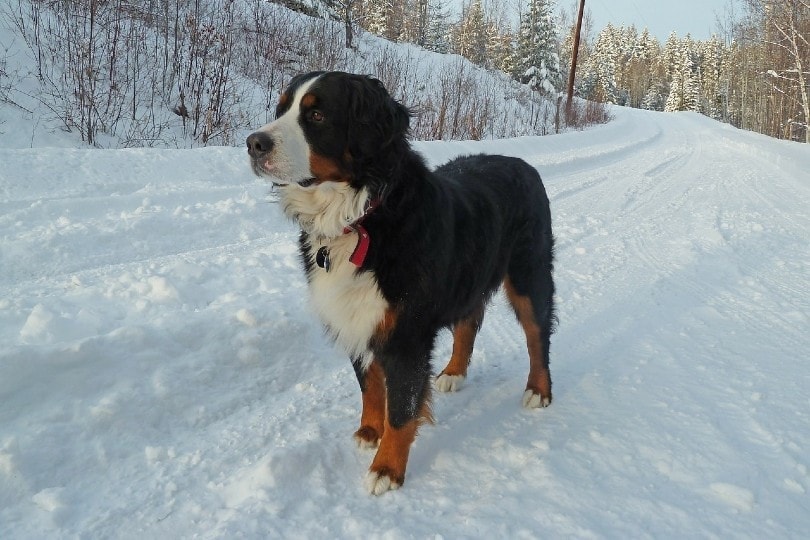
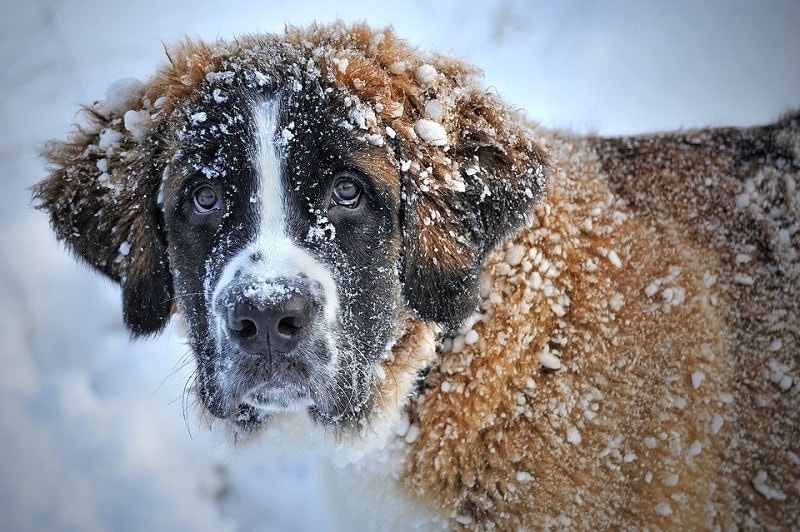
When it’s super cold out, most of you probably put a coat on your dog, particularly if you have a small dog. Some of you might even put little boots on their paws. But have you ever wondered if your dog can actually get frostbite? While it may seem that dogs are not susceptible to it thanks to the thick pads on their paws and built-in fur coats, but dogs are just as likely to get frostbite as people.
We’ll go over what the signs and symptoms of frostbite are and how to best treat it as well as prevent it.

What is Frostbite in Dogs?
Frostbite is a kind of injury that can seriously damage the skin and underlying tissues and usually occurs on exposed skin in extremely cold weather. The risk of frostbite can develop when the temperature drops to below 32°F (0°C) but the risk increases as the temperature falls even further and frostbite may occur in less than 30 minutes at 0ºF.
When the body is cold, the blood vessels closest to the surface of the skin constrict, which helps to protect the core body temperature. This narrowing of the blood vessels helps to redirect the blood away from your extremities and towards your body’s central organs for protection. This makes your extremities quite vulnerable and the first parts of your body that are susceptible to frostbite.
Hypothermia may also be a result if your dog is enduring cold weather for too long. Frostbite attacks the extremities while hypothermia is widespread and affects your dog’s entire body, making it a more serious condition than frostbite. Your dog’s body will start to lose heat faster than it’s able to produce it, which results in an exceptionally low body temperature.
Dog Frostbite Signs
The signs of frostbite are the same for both humans and dogs, but it might be a little more difficult to detect on your dog.
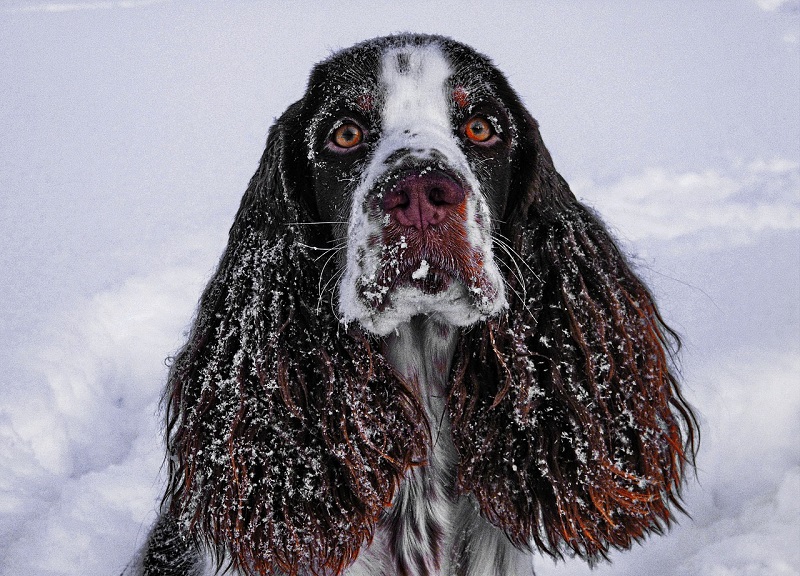
The following are signs of frostbite for a dog, usually in an exposed area of the skin:
Frostbite in dogs can be classified as:
If your dog has been outside in frigid weather, particularly for a long time, and demonstrates any signs of frostbite, call your vet for advice and be prepared to take your dog to the clinic. However, if you notice blackened areas of skin, this is the final stage of frostbite as the tissue is dying, and you should seek help for your dog immediately.
What Happens After Frostbite?
The signs of frostbite might not actually appear until a few days after the event. Particularly if the frostbitten area is small and not on the dog’s paws, as a dog will limp if her paws have been affected.
The more severe the frostbite, the more serious the damage, The skin will start to die, turn a dark color, and eventually fall off.
What Areas Are Vulnerable?
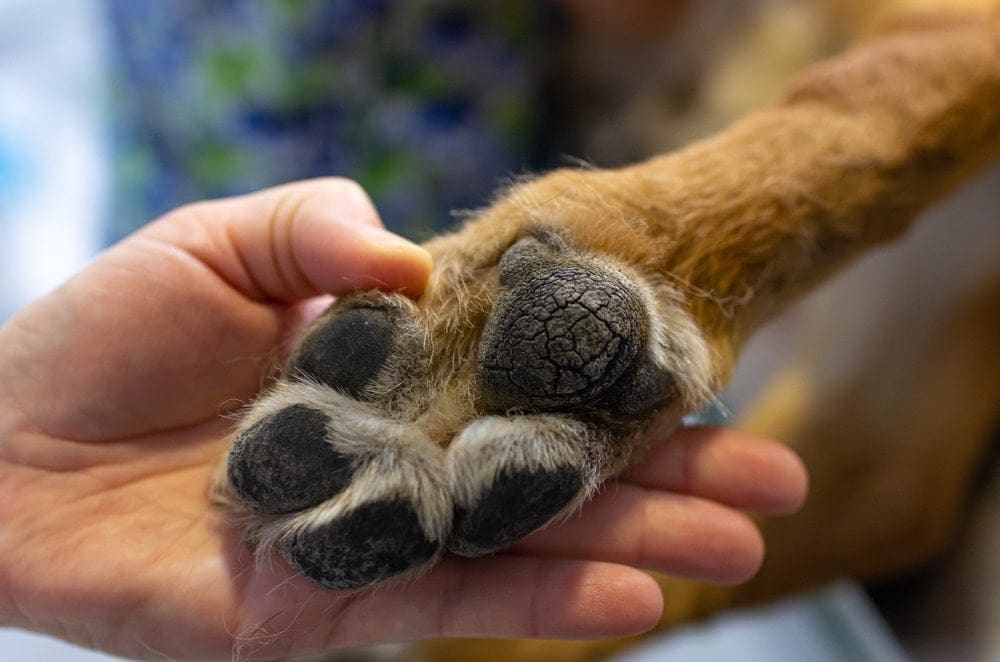
The most common parts of a dog that are the most vulnerable to frostbite are the ears, paws, and tail. Your dog will be even more vulnerable if she is damp or wet.
The dogs that are most susceptible to the cold are:
The breeds that were bred for cold weather, such as the Malamute and the Husky, are much less likely to succumb to frostbite, but every breed is in danger of frostbite and hypothermia if exposed to extreme cold for too long.

How to Treat Frostbite on Dog Paws
If you suspect your dog has frostbite, your vet should treat her immediately, but you should follow these suggestions as soon as possible:
- Bring your dog into a dry and warm area as soon as possible.
- If your dog is also hypothermic, you need to address this first, as it’s a more serious condition. You can start by wrapping your dog’s body in dry and warm blankets or towels and position hot water bottles also wrapped in towels near her body.
- When you’re ready to warm the affected area, you need to use warm water. The appropriate temperature should be 104°F to 108°F (40°C to 42°C). You can use a warm compress or a bowl of warm water.
- Under no circumstances should the water be hot! This will cause more damage, and it would be better to not use any water at all!
- You should be able to put your hand in the water and find it comfortable.
- Thawing usually takes about 20 to 40 minutes.
- Never use a dry heat source! Hair dryers or heating pads are contraindicated.
- After thawing, pat your dog dry carefully and avoid any rubbing.
- When transporting your dog to the vet, wrap her up in warm blankets or towels (you can warm them in the dryer if you choose).

What You Should Not Do
How Your Vet Will Treat Frostbite
All of this will depend on how serious the frostbite is and if your dog is also suffering from hypothermia.
Your vet will more than likely give your dog pain medication since thawing out frostbite can be quite painful. They might also give your dog antibiotics in case of bacterial skin infection if they suspect the tissue is necrotic, and in extreme cases, amputation might be necessary.
Preventing Frostbite
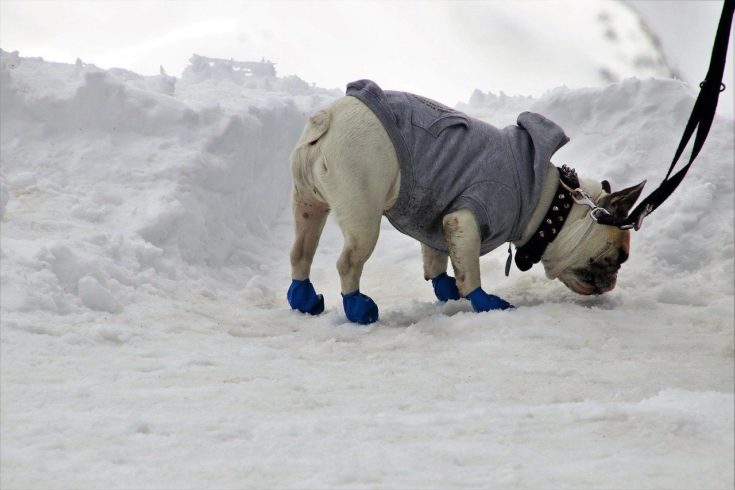
The obvious answer here is to keep your dog inside on cold days and only take her out for short walks. Since the ears, tail, and paws are the most susceptible to frostbite, providing a coat, hat, and booties will help keep your dog’s paws and body core warm. This is particularly important for the more vulnerable dogs discussed above.
Also, make absolutely sure your dog is completely dry before taking her outside, as this will make her more susceptible to the cold.
Keep in mind that if you usually let your dog out unsupervised in your backyard in the warmer months, that this should be avoided on cold days. Your dog should always be under your supervision, even if she’s wearing her cold-weather gear.
What Are Your Options on Chilly Days?
If you have a small dog, puppy, or senior dog, keeping them entertained while indoors should be just fine. But what if you have a very active dog that won’t appreciate these short little walks and needs to expend some energy?
Mental Stimulation
Find activities that will keep your dog entertained and will also provide her with mental stimulation. If you have a hound, find ways to allow her to sniff something out. For example, hide treats around the house and give her the time to sniff these treats out. If you have a terrier, make sure you have toys that will divert her, such as a rope for tugging.
You can also invest in some puzzle games that will occupy your dog or just give her a KONG filled with peanut butter.
Otherwise, when you do take her outside, play fetch or do any activity for a short period of time that will help to wear her out.
Indoor Dog Park
There are a number of indoor dog parks that are climate-controlled and could be an alternative to the traditional dog park. This way, your dog will get her exercise and socialization time but in a safe and warm place!
Have a Playdate
You’re definitely not the only dog owner with the same dilemma, so why not have some friends and their dogs over for a visit? This way, your dog will have the opportunity to play and socialize.

Final Thoughts: Frostbite Dog Paws
Remember, if the weather is too chilly for you, it’s probably too cold for your dog, so be prepared to bundle up—both you and your pup—and have short walks. Remember, a dog can develop frostbite in about 30 minutes, depending on the temperature, so try to keep your walks under half an hour. Especially if it’s frigid out!
If you have any concerns about your dog or the weather, always consult your vet. We all want our furry best friends to stay safe.
Related Reads:
Featured Image: ClaudiaWollesen, Pixabay
Get Hepper In Your Inbox


Pet care tips from our vets and experts, straight to your inbox.
You may opt-out at any time. View our Privacy Policy for more information.
Kathryn was a librarian in a previous lifetime and is currently a writer about all things animals. When she was a child, she hoped to work in zoos or with wildlife in some way, thanks to her strong love for animals. Unfortunately, she's not strong in the sciences, so she fills her days with researching and writing about all kinds of animals and spends time playing with her adorable but terribly mischievous tabby cat, Bella. Kathryn is hoping to add to her family in the near future – maybe another cat and a dog.
Join the conversation
Ask a question, share your story, or send private feedback.