Hepper is reader-supported. When you buy via links on our site, we may earn an affiliate commission at no cost to you. Learn more.
Why Is My Cat Peeing on My Couch? 8 Potential Causes & How to Stop It
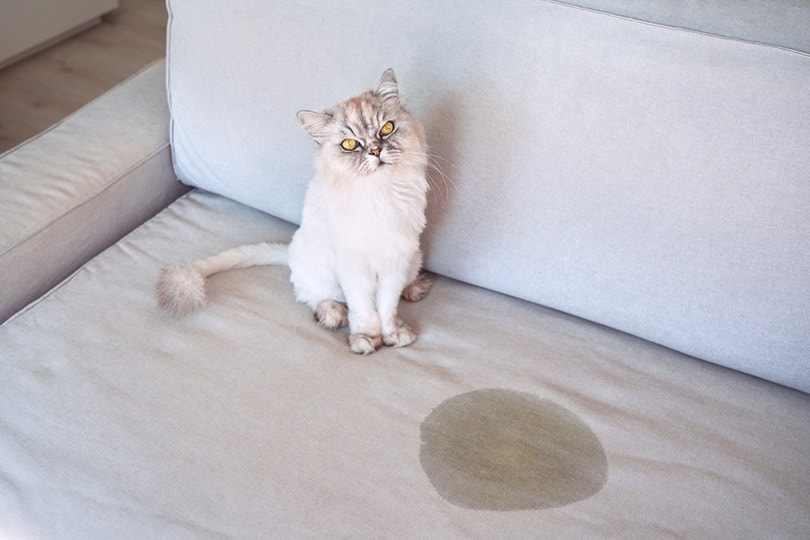
We adore our furry friends for many reasons. From their little toes and noses to their soft chirps and relaxing purrs, there is so much to love that it’s impossible not to be head-over-heels for our cats. We even love all of their little quirks.
Unfortunately, some of their quirks can include unwanted behaviors, like chewing through bags, scratching furniture, and even peeing on everything outside of their litter boxes
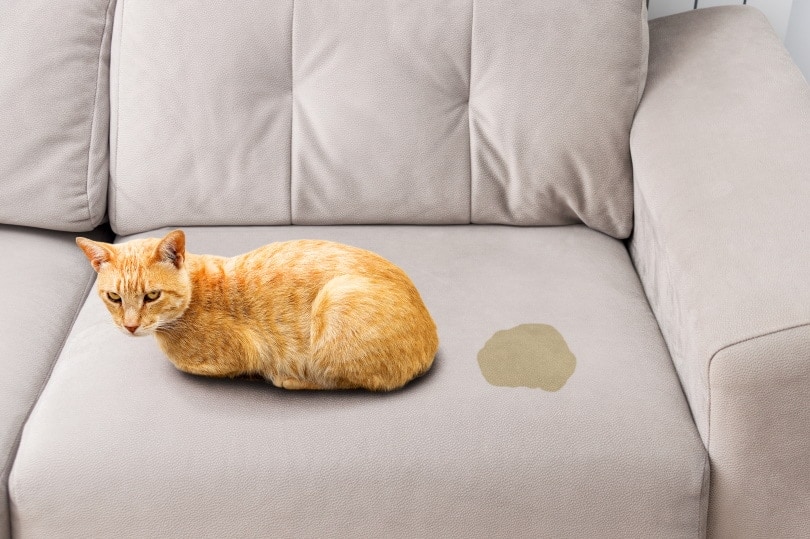
If your kitty is urinating on your couch or outside of their litter box, the odds are they're not doing it to be naughty or seek revenge. You shouldn’t punish your little friend for something they’re not necessarily doing on purpose. Your pet may be peeing outside of the litter box to let you know there is a problem that demands your attention.

The 8 Reasons Your Cat Is Peeing on Your Couch
There are many possible reasons why your cat could be urinating outside of the box and on your furniture. Your cat could be suffering from a medical issue, even an emergency, or they may be suffering from increased stress which can lead to a medical issue.
We’ve put together a list of common causes so you can solve your kitty’s litter box problems.
1. Medical Problems
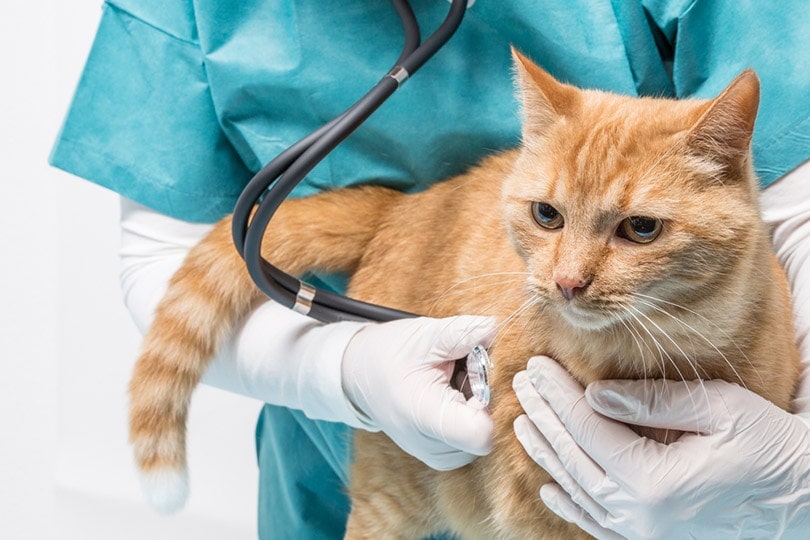
If your cat was previously using the litter box without issue and suddenly started peeing outside of their box, your first step should be taking your cat to the vet to make sure there are no medical issues. If your cat hasn’t experienced any recent changes to its normal routine, the first step is to rule out possible medical conditions.
Taking your cat to a vet will allow the veterinarian to check your cat for medical conditions, such as kidney failure, urinary tract infection, or diabetes.
Some common issues that can stop your kitty from using their litter box include conditions that affect your cat’s attempts to urinate normally, such as bladder stones, urinary tract infections, or even arthritis. These conditions can not only make it physically painful for your feline to use the restroom, but the pain itself can cause your cat to associate using the litter box with being in pain
Diabetes, renal failure, and liver disease can also lead to an increase in urination. If you have a senior kitty (11 or more years old) and you notice that it is showing distress while using the litter box, take them to the vet as soon as possible.
2. Increased Stress Due to Routine Changes
Cats thrive on routine. Have you noticed how your cat waits for you each morning at the same time to feed them? Have you ever been late for mealtime? Your cat will let you know. Cats do their best in an environment that has a steady routine, overall stability, and minimal disruptions to their daily schedule. If you find yourself working longer hours, or if you introduced a new person, baby, or pet into the home, you may find your cat doing things they normally wouldn’t.
Significant changes to your routine can negatively impact your cat. Your cat prefers everything to stay the same, and they are creatures of habit, after all. So, if something has changed in your life (for better or worse), your cat may be experiencing increased anxiety and stress.
As a result, your kitty may start urinating everywhere but in the litter box. Even small things that can seem insignificant to us, like bringing a new plant home, can be stressful to our fur babies and trigger unwanted behaviors.
3. The Litter Box Itself Is a Problem
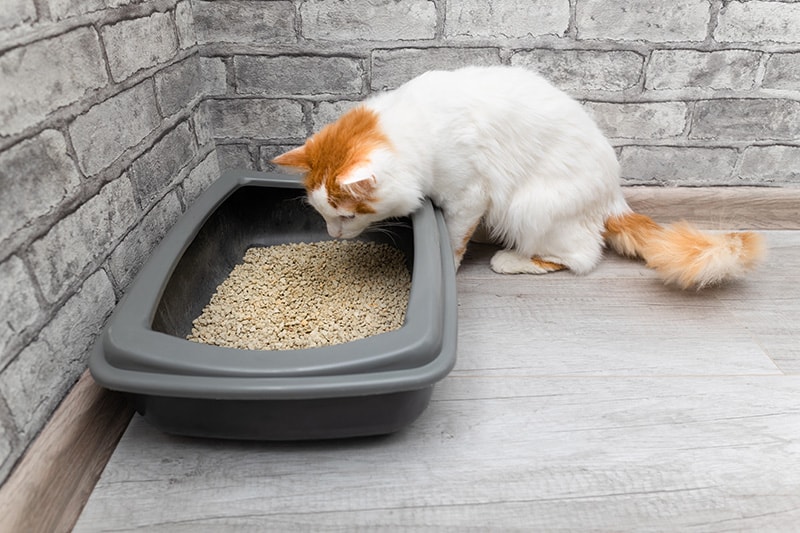
Your cat could be having a problem with the litter or litter box itself. While you may enjoy the convenience of having a covered litter box in your home because it can conceal and block odors, it can also restrict your cat’s movements and make them hesitant to use the box. Many cats don’t like litter boxes with a cover or extra liners, and your pet’s box may not be large enough for your cat. If the box is too small for your cat to move around easily, they may try to avoid it.
It can even be the litter within the box causing the problem. Most cats prefer a fine or medium textured litter. It’s easier on their paws. Some cats also prefer unscented litter because it's easier on their enhanced sense of smell.
Cats are not happy with a dirty litter box, but that is an understatement. You should be scooping it at least once a day for solids and giving it a deeper cleaning once a week. Cats’ noses are extremely sensitive, and they will be upset if their litter box has an odor.
4. Location of the Litter Box
If the litter box is in a high-traffic spot or away from the usual areas your cat frequents in your home, it can cause stress and leave your cat uneasy. Try to keep your cat’s litter box away from loud appliances, dark rooms, and places without an easy escape route. Also, try to keep it away from the front door or away from areas that are not easy to access—like the basement. Aim to keep the litter box in your cat’s in a private and quiet place to avoid stressing your fur baby out.
5. Accessibility Issues With the Litter Box
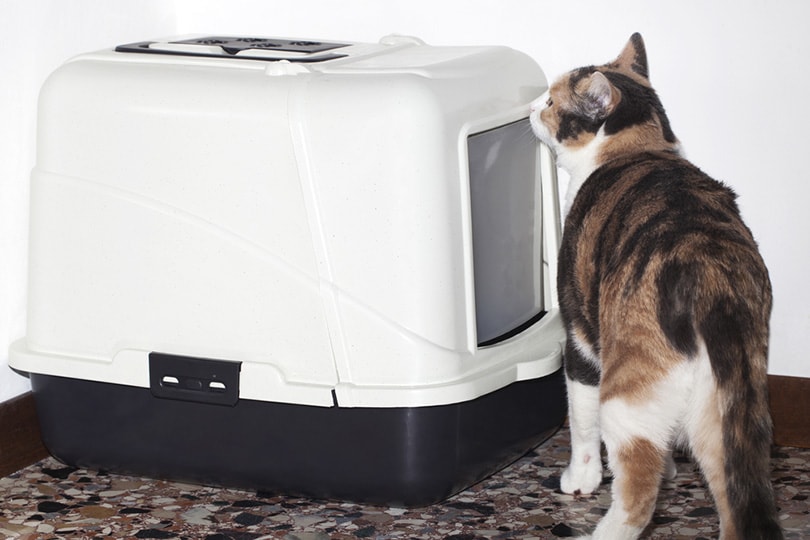
As we have already mentioned, your cat prefers a more open space for movement as opposed to a covered or enclosed litter box. If you have a senior cat or a kitten, or any cat with mobility issues, getting into the litter box itself could be a barrier. If the sides of the box are too high, your kitten or elderly cat may be having difficulties trying to get into the box.
6. Multiple-Cat Household
While your cat may not have issues sharing their home with another cat, they will generally not want to share the litter box. A cat’s litter box is a secure, private place marked with its own individual scent. If you have several kitties in your home, you need to have a minimum of one litter box per cat. You need to have enough litter boxes for every cat in your household. It's highly recommended to have one litter box per cat plus an extra one. So, if you have two cats, you should have a minimum of three litter boxes in your home.
If you don’t have enough boxes, it can create conflict between your cats. There may even be instances where one cat attempts to stop another cat from entering a litter box, creating a highly stressful situation and causing your cat to seek relief elsewhere.
7. Cats Marking Their Territory
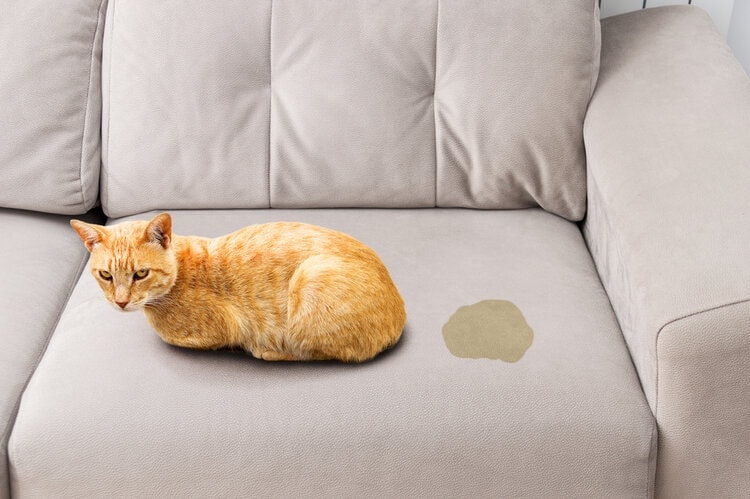
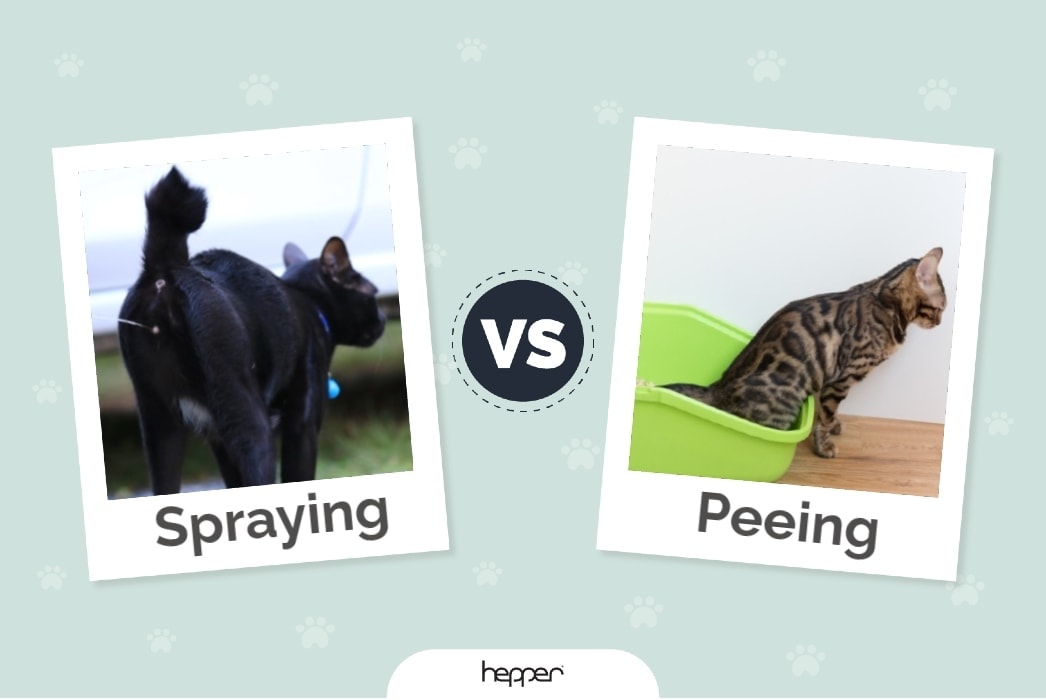
Both male and female cats are known to mark their territory with urine. Much like their own litter box, they seek to mark their homes as their own with their individual scents. Your cat may be more likely to spray around the home if you have recently introduced another cat or pet into their environment. Cats are also likely to spray if they haven’t been spayed or neutered yet. We recommend getting your kitty spayed or neutered young, as it will stop the marking behavior from occurring.
8. Separation Anxiety
Some cats may be solitary animals, but they often bond closely with their chosen humans. Cats can get separation anxiety when left alone for extended periods. Most cats are uncomfortable being left alone every day, and they are happier with another cat or human in the home. Separation anxiety can cause your angel to act out and do things they normally wouldn’t in your presence. They may begin urinating on your furniture, shredding things beyond their scratching pads, or meowing incessantly to express their discomfort.
If you are unable to be home with your cat more, or if you are expecting a change to your schedule that will limit your quality kitty time, you should consider asking a friend or trusted neighbor to check in on your baby once a day. You can put articles of your clothing you recently wore in areas around the house so your cat can be near your scent.

How to Stop Cats From Peeing on Your Furniture
How to fix the problem depends entirely on why your cat is urinating outside its litter box in the first place. The solutions for medical issues compared to your cat’s anxiety and behavioral problems vary as widely as the issues themselves. Depending on the cause, there are multiple ways to stop your cat from using your furniture as a litter box.
Here are some possible solutions:
Our favorite enzyme cleaner for eliminating pet smells and stains is our very own Hepper Advanced Bio-Enzyme Pet Stain & Odor Eliminator Spray. It makes clean-up a breeze because it permanently removes even the very worst smells and stains (urine, feces, vomit, you name it!) from basically any surface you can imagine.

- ADVANCED ENZYMATIC CLEANER - Penetrates the most stubborn smells and stains at the deepest molecular levels to dissolve any pet mess you encounter and lift it away at the source.
- FOR ANY MESS, ON ANY SURFACE - This pet odor eliminator cleans your carpets, floors, furniture, fabrics, and more. Whether it's urine, feces, vomit, or drool, you can erase all foul spots and smells!
- FRESH, NATURAL ODOR - Our unique formulation doesn't rely on dangerous or unpleasant chemical fragrances to get the job done. We eradicate smells and stains, not just cover them up.
Final Thoughts
While there are many reasons your cat may be choosing your furniture over their litter box, you can address the problem with equally as many solutions. You must first ensure that your cat is healthy before you look to change its behavior. Often, a change in your cat’s behavior is a cry for help that needs immediate attention.
Spend time playing with your kitty and get to know its mannerisms and quirky little traits that make it unique. Understanding your cat’s routine makes it easier to notice when something is slightly amiss.
See also:
Sources
Featured Image Credit: Creative Cat Studio, Shutterstock
Get Hepper In Your Inbox


Pet care tips from our vets and experts, straight to your inbox.
You may opt-out at any time. View our Privacy Policy for more information.

Samantha's passion is writing, and she has been a freelance writer since 2014. She has also worked on literary magazines and newspapers as an editor and as a writer. Samantha wrote full time while in school, and continues to do so as a full-time educator. She currently teaches Middle School English Language Arts and always encourages writing activities in her classrooms. If she is not writing about pets or grading papers, you can often find her reading or binge-watching another Netflix series and spending time with her cat, Raven.
Join the conversation
Ask a question, share your story, or send private feedback.