Hepper is reader-supported. When you buy via links on our site, we may earn an affiliate commission at no cost to you. Learn more.
Why Is My Dog Dry Heaving? Our Vet Explains the 7 Causes & What to Do

In this article
When vets see that a dog is dry heaving, they tend to assume the worst, but for good reason. Dry heaving in dogs is one of the signs of a medical emergency: gastric dilatation and volvulus (GDV). Most of the time with GDV, surgical treatment is needed to save the pet’s life, though even surgery can’t guarantee survival.
However, dry heaving can also occur due to other conditions and be accompanied by other clinical signs. Conditions in which dry heaving can occur include nausea, gastrointestinal discomfort, intestinal obstructions, cancer, and intoxication. It can also occur when dogs eat too fast or get too excited.

What Is Dry Heaving in Dogs?
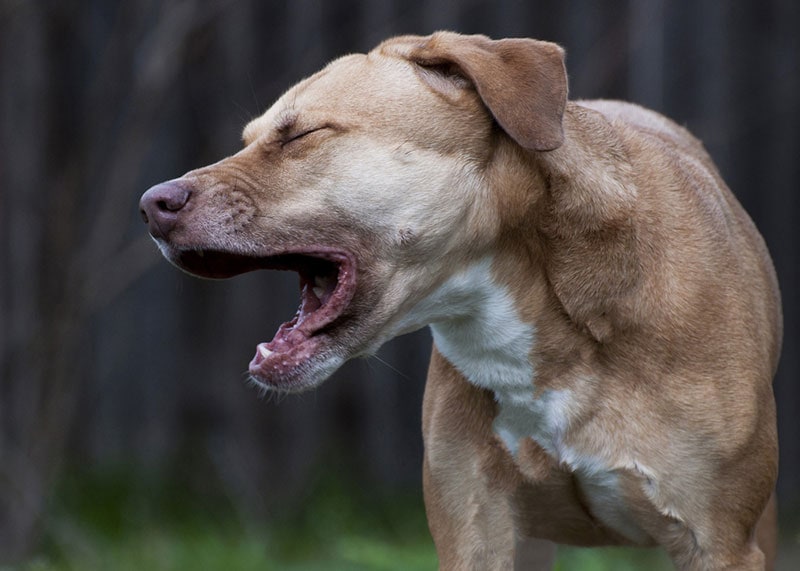
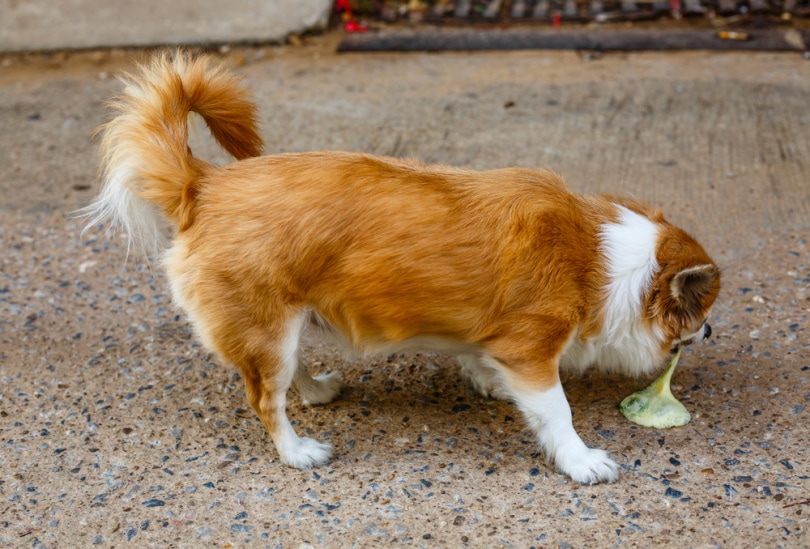
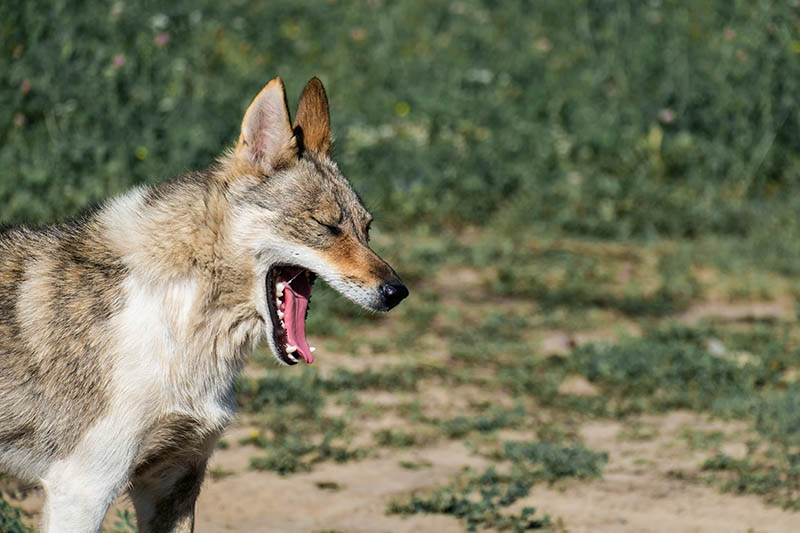
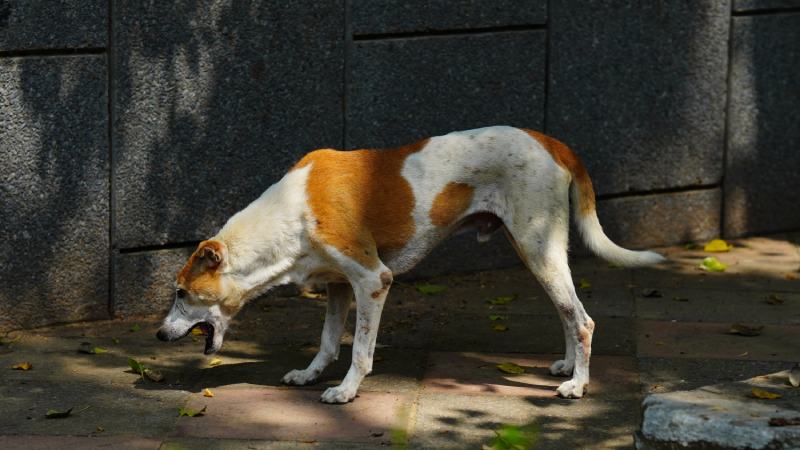
Dry heaving is often confused with reverse sneezing, gagging, coughing, or vomiting. It happens when your pet tries to vomit, but nothing comes out. In some cases, dry heaving can sound like vomiting, burping, or even difficulty breathing.
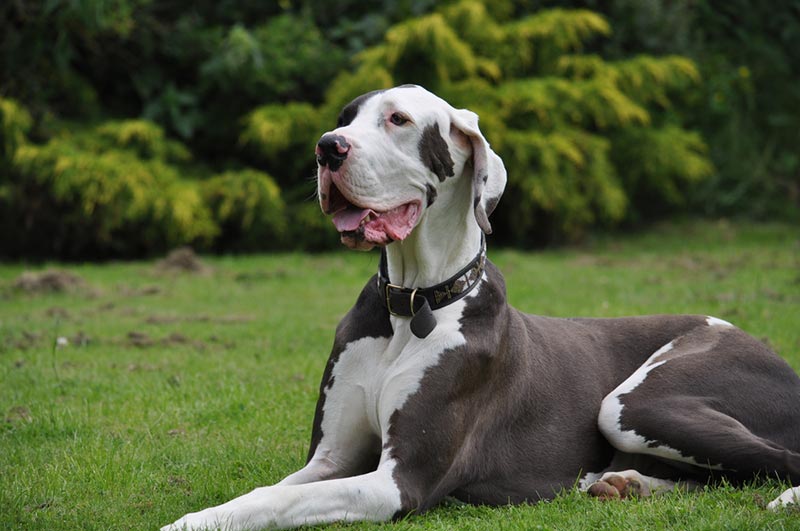
Dry heaving caused by a GDV is more common in large and giant dog breeds, with some being more prone than others, including Weimaraners, Dobermans, Gordon Setters, Irish Setters, Great Danes, Saint Bernards, Standard Poodles, and Bernese Mountain Dogs, but it can occur in any breed of dog.
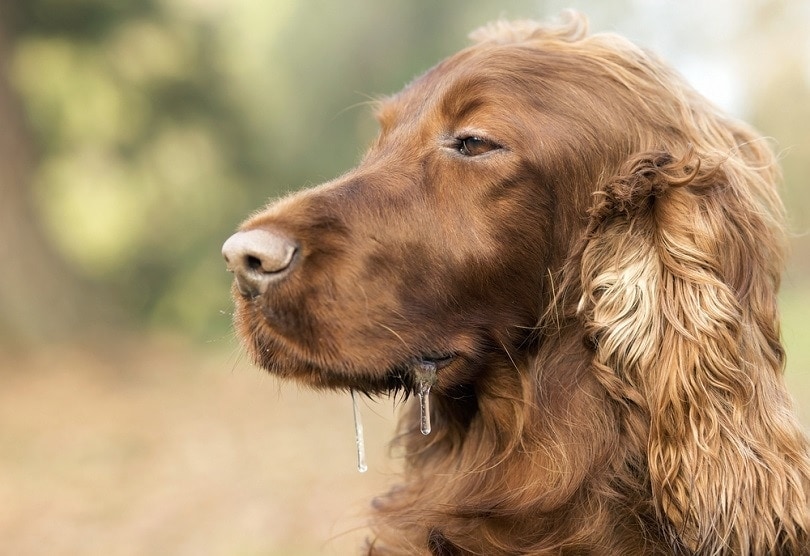
Sometimes, dogs spit foamy saliva, but this should not be confused with real vomiting of the gastric content. Dry heaving can occur as a one-time thing, or your dog can have multiple episodes that occur suddenly.
The 7 Causes of Dry Heaving in Dogs
1. Nausea
Nausea is the feeling of being sick, which often precedes vomiting. In many cases, nausea eventually leads to vomiting, but the dog sometimes does not vomit actual gastric content—they dry heave or retch.
Nausea and vomiting are two clinical signs that occur in many medical conditions1, including gastroenteritis, gastrointestinal foreign bodies, parasites, liver and kidney diseases, poisoning, heatstroke, and viral infections. Keep in mind that these medical conditions can cause other clinical signs besides nausea and vomiting.
The clinical signs of nausea in dogs include:
- Panting
- Hypersalivation
- Shaking/trembling
- Repeated swallowing
- Lip licking
- Vocalization
- Restlessness
- Dry heaving
- Nervousness
- Vomiting
2. Gastric Dilatation and Volvulus (GDV)
Gastric dilatation is a surgical emergency and happens when your dog's stomach fills with gas, food, or fluids and expands. This is called a stomach or gastric bloat or dilatation. This condition is more common in large and giant breeds, and in more severe cases, gastric torsion (volvulus) can also occur. With gastric torsion, your pet's stomach expands and rotates around its axis.
As a result of this condition, dogs can suffer a series of aggravating complications. The increased pressure inside the abdomen affects the cardiovascular system and leads to ischemia of the stomach lining (local blood deficiency, caused by an obstacle in arterial circulation). Ischemia can lead to the necrosis of the stomach wall and eventually sepsis.
Clinical signs of GDV emerge rapidly and include:
- Agitation
- Excessive salivation
- Swollen distended abdomen
- Dry heaving
In severe cases, dogs can present with:
- Pale gums (shock)
- Increased heart rate
- Poor pulses
- Weakness
- Breathing difficulties
- Collapse
Since GDV is a surgical emergency that can kill your dog if you don’t intervene in time, contacting the vet as soon as you notice the clinical signs is vital.
3. Gastrointestinal Discomfort
Gastrointestinal discomfort or gastrointestinal upset can occur when dogs suffer from bacterial or viral infections, intestinal parasites, food allergies, foreign objects, etc.
It may be accompanied by the following clinical signs:
- Abdominal pain
- Bloating
- Nausea
- Drooling
- Dry heaving
- Vomiting
- Reduced appetite
- Lethargy
- Diarrhea
4. Gastrointestinal Obstructions
Gastrointestinal obstructions can occur due to tumors, parasites, coprostasis, or foreign objects. The obstruction can endanger your dog's life if the clinical signs are not recognized and intervened in a short time.
Clinical signs include:
- Lack of appetite
- Nausea
- Drooling
- Lethargy
- Dry heaving
- Vomiting with partially digested food
- Vomit with fecaloid odor
- Tense and painful abdomen
- Lack of bowel movements
- Straining or unable to defecate
- Bloating
- Fever, if the intestine is perforated and your dog has sepsis
- Collapse
Since it is a medical emergency, it is vital to take your dog to the veterinarian as soon as possible.
5. Oral Problems
There can be several issues in your dog’s mouth that may cause pain and dry heaving or retching. Some of these causes include infections, foreign bodies, teeth or gum problems, or cancer in the mouth. These conditions can sometimes lead to tonsilitis, or inflammation of the tonsils, particularly in smaller breeds, although this is not a very common ailment.
Clinical signs of various mouth issues in dogs may include:
- Lack of appetite
- Having an appetite but not eating (they go to the food bowl, smell it, and leave)
- Chewing or swallowing awkwardly
- Drooling
- Pawing at the mouth
- Bad breath
- Discharge from the mouth
- Dry heaving
- Gagging or short soft cough
- Fever
6. Upper Respiratory Infection
An acute infection of the upper respiratory tract may be caused by the direct invasion of the mucous membrane of the upper respiratory tract by viruses or bacteria. This condition is commonly referred to as Infectious tracheobronchitis or kennel cough and is extremely contagious.
If your dog suffers from an upper respiratory infection, you may notice the following signs:
- Snorting
- Sneezing
- Dry hacking
- Discharge from the nose
- Loss of interest in food
- Lethargy
- Fever
- Breathing problems
- Coughing (either dry or productive)
- Gagging
- Dry heaving
- Vomiting
Kennel cough can last for 1-3 weeks, and most dogs will develop a specific dry, hacking cough, which is often accompanied by dry heaving and sometimes vomiting. Treatment, if required, is symptomatic, focusing on pain relief and sometimes antimicrobials, but in very young, old, or sick dogs, it may lead to pneumonia.
7. Eating Too Fast
Dogs that eat too quickly can suffer from digestive problems and a high risk of choking. This happens when they do not take the necessary time to chew their food properly. For large and giant dogs, the risk of developing GDV may increase because they swallow a large amount of air in a short time. Also, swallowing air (aerophagia) leads to bloating.
Here are the clinical signs that your dog may show if they eat too fast:
- Dry heaving
- Regurgitation
- Vomiting
- Excess gas soon after their meal
- Abdominal discomfort
- Bloat

What Should I Do if My Dog Is Dry Heaving?
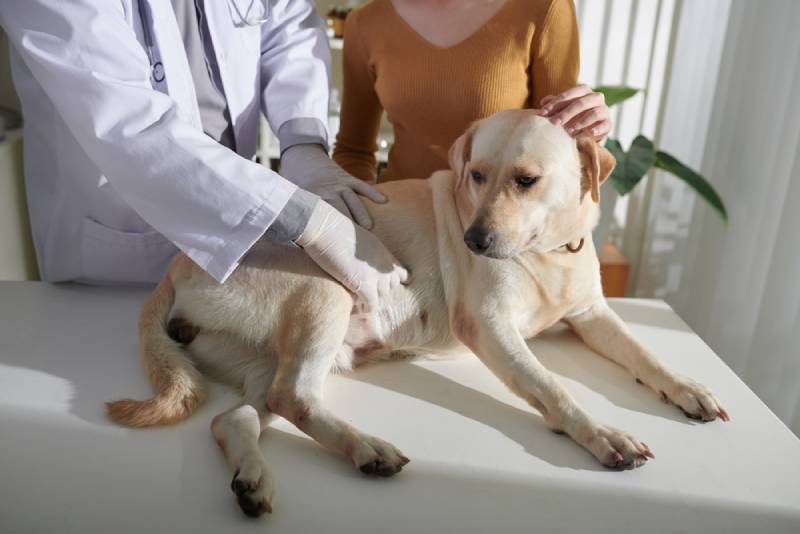
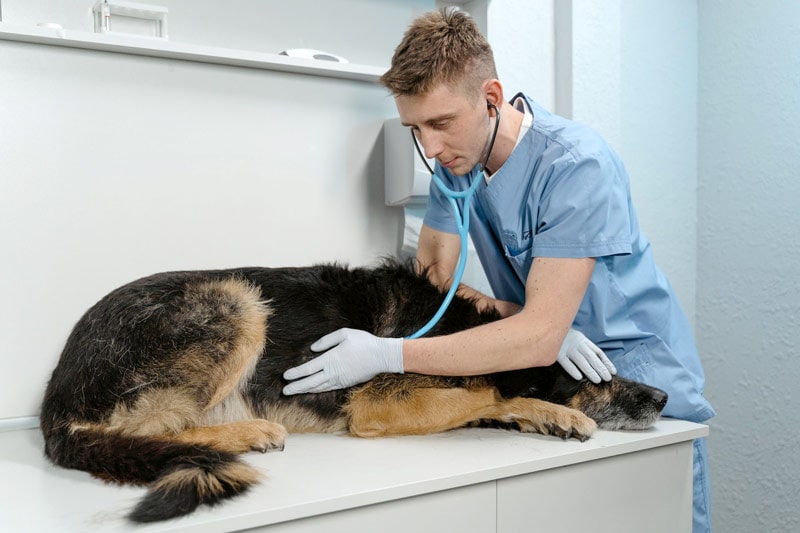
If your dog dry heaves only once, it is probably not a reason to panic. But if your dog does this repeatedly, it means that something is wrong and you should take them to the vet immediately.
The veterinarian will talk to you about your dog's medical history and perform a general examination and possibly additional tests. Most medical conditions that cause dry heaving can be treated with medication.
However, GDV and intestinal obstructions are surgical emergencies and must be acted upon immediately. So, as soon as your dog shows the clinical signs, take them straight to the vet.

Conclusion
Dry heaving in dogs is often confused with gagging or coughing. Dry heaving means your dog is trying to vomit but nothing is coming out of their mouth. The most common medical conditions in which dry heaving can occur are nausea, GDV, intestinal obstructions, foreign bodies, oral issues, or upper respiratory infections.
Dry heaving can also occur if your dog eats too quickly. GDV and intestinal blockage are surgical emergencies, and you must act fast when the clinical signs occur; otherwise, your pet might die.
Featured Image Credit: Mumemories, Shutterstock
Get Hepper In Your Inbox


Pet care tips from our vets and experts, straight to your inbox.
You may opt-out at any time. View our Privacy Policy for more information.
Iulia Mihai is a veterinarian with more than 13 years of experience in pet pathology, laboratory, and cancer. She studied at the University of Agronomical Sciences and Veterinary Medicine of Bucharest, Romania Iulia earned a master’s degree in equine and pet pathology and studied epithelial cancer for her Ph.D. Dr. Mihai's passions for internal medicine and parasitology inspired her to volunteer at the faculty’s clinic in her third year of college. She has worked in a couple of veterinary clinics over the years as an internal medicine specialist, and loves to write and educate pet parents about pet nutrition, behavior, and diseases.
Iulia is a passionate veterinarian with a strong affinity for veterinary parasitology, internal medicine, and laboratory. She is excited to share her experience and knowledge with pet owners around the world through her writing and hopes to educate people on pet nutrition, diseases, and behavior.
Education
Iulia graduated from the University of Agronomical Sciences and Veterinary Medicine, Bucharest, Romania, in 2012 and has a Master’s degree in Small Animals and Equines Pathology and is certified in HAACP food safety system implementation. Iulia started her Ph.D. in epithelial cancer in dogs and cats in 2013. Her research is published in national and international veterinary journals.
Experience
Dr. Iulia has been a veterinarian for more than 14 years. She is experienced in animal pathology and laboratory and has experience with exotic animals, such as pet rats and ferrets. She also has skills in the field of clinical pathology, laboratory, microscopy, cancer, and imaging.
Join the conversation
Ask a question, share your story, or send private feedback.