Hepper is reader-supported. When you buy via links on our site, we may earn an affiliate commission at no cost to you. Learn more.
Why Is My Scottish Fold Sitting So Strangely? Vet-Reviewed Cat Behavior Explanation


In this article
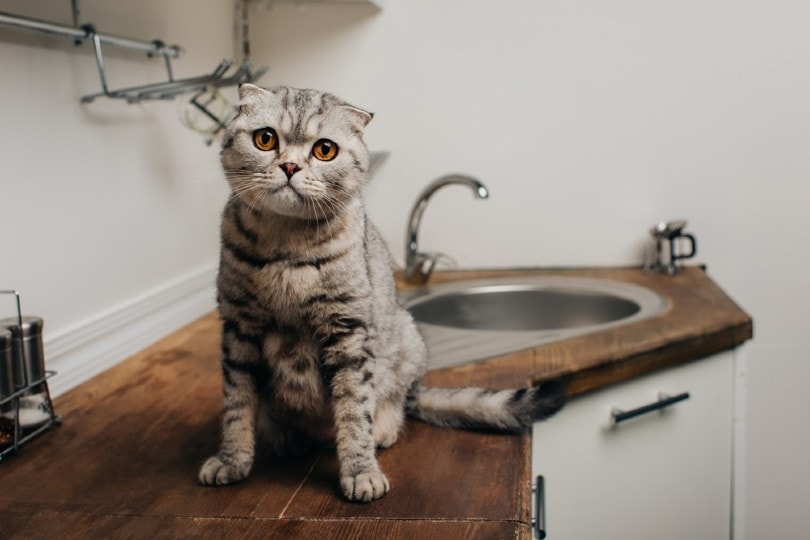
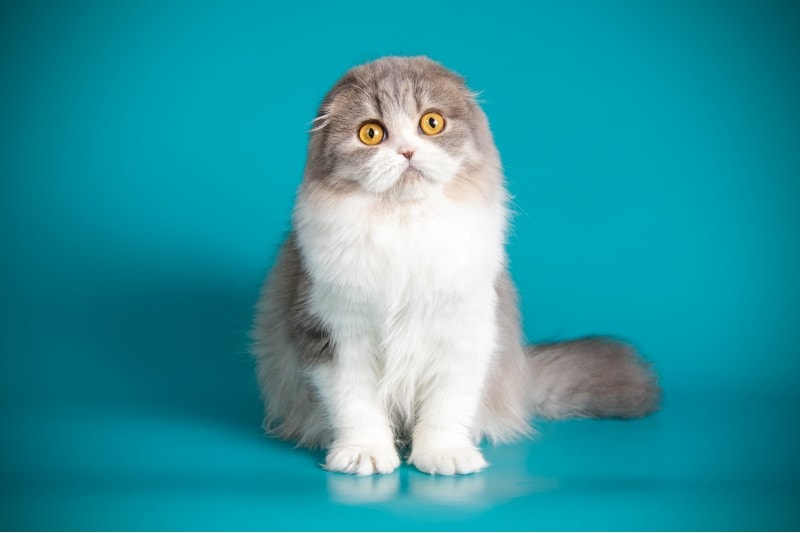
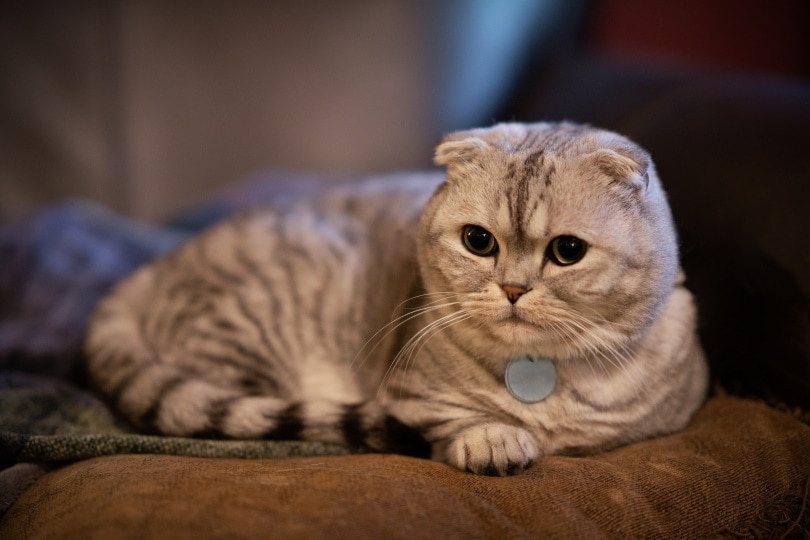
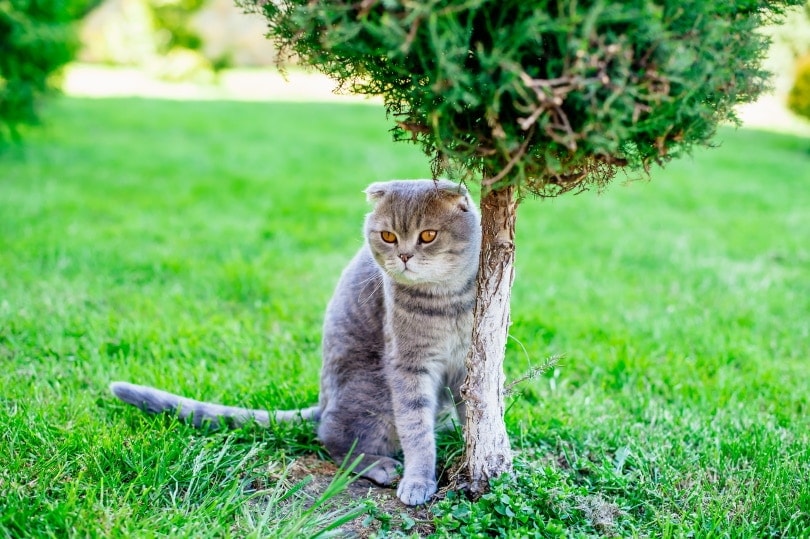
The Scottish fold is an adorable cat breed with characteristically small, folded ears. Aside from their fascinating appearance, Scottish folds seem to have a very weird way of sitting—almost like a human.
All cats will sit in different positions depending on what feels most comfortable for them, but some positions that the Scottish fold sits in can be very unusual, and although it seems to be one of this cat breeds strange quirks, it could also be the result of a genetic condition, which we'll discuss in this article.

Why Do Scottish Folds Sit So Strangely?
Important
With their round face, large eyes, and cute ears, the Scottish fold is known for sticking out amongst other cat breeds, not only for their appearance but their demeanor too. In addition, the Scottish fold is known for its unusual sitting manner.
If you have owned other types of cats before and observed how they sit, your Scottish fold might puzzle you. You might be wondering whether it is normal, or perhaps you are worried about their strange sitting habit.
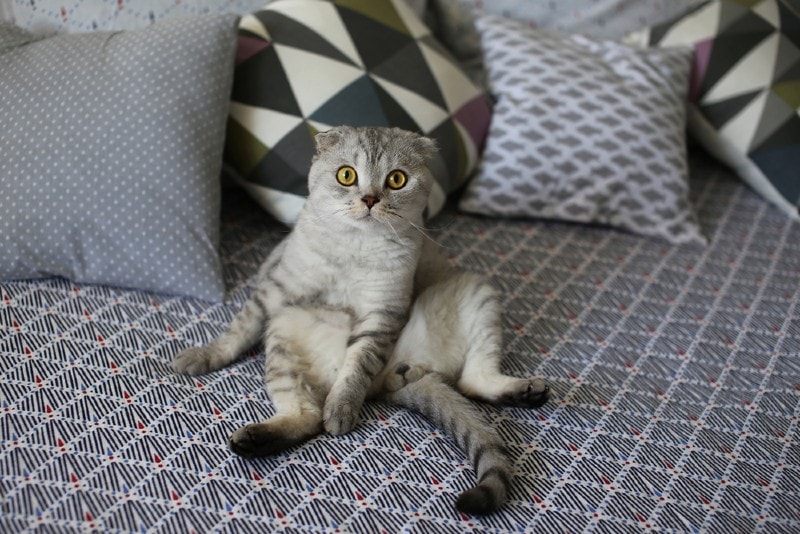
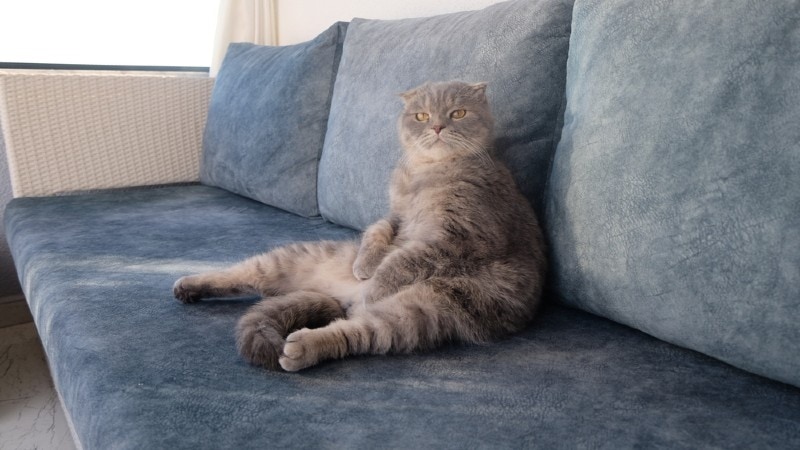
The Scottish fold will sometimes sit on their lower back with their legs stretched out in front of them, much like a human would. It can be alarming to catch your Scottish fold sitting like this, but it is usually nothing to worry about.
If you see your Scottish fold sitting differently than you would expect a cat to sit, it could be due to these reasons:
- A bone, joint, and cartilage abnormality.
- Hyper flexible bones, joints, and abnormal cartilage.
- It is more comfortable for them.
- Sitting on their hind legs can be painful and even uncomfortable.
- Osteochondrodysplasia (a condition they inherit)
The Mutated Gene – Scottish Fold Osteochondrodysplasia (SFOCD)
Scottish folds have a genetic condition that affects their cartilage (hence the folded ears), which unfortunately leads to multiple issues involving their bones, joints, and cartilage throughout their body.
The gene mutation affects their body's cartilage and joints, allowing them to rotate their bodies in seemingly uncomfortable positions. This is due to a condition known as osteodystrophy—a bone and cartilage abnormality found in Scottish folds. This is an inherited condition, and it is formally known as Scottish fold osteochondrodysplasia (SFOCD).
How the Gene Was Discovered
The first known discovery of this gene occurred in 1961 after a kitten with folded ears named Susie was found in Scotland. Susie went on to have kittens, which were taken in by a cat enthusiast, and the resulting cats were known as “lop-eared” cats.
Susie had a genetic mutation, causing skeletal deformities, folded ears, and fused bones. This makes cats with the condition incredibly flexible, and even more than your typical cat. All of the cats bred from Susie and her offspring over the years have led to the creation of the cat breed we now know as the Scottish fold.
Since Scottish folds have skeletal and cartilage deformities, their risk of developing arthritis is higher than other cats.
Your Scottish fold could also avoid sitting on their hind legs because the added pressure can be painful if they have arthritis, and other strange ways of sitting can be more comfortable for this breed.
What Positions Do Scottish Folds Sit In?
The Scottish fold can sit and lie in a variety of different positions, most of which won’t seem comfortable to us, or even to other cats.
It's not unusual to find that a Scottish fold prefers lying or sitting with most of their weight on their back, rather than curling up on their side or sitting directly on their butt as most cats would.
You will also see that when your Scottish fold is grooming themselves, asserting the “human sitting pose” is what they opt for instead. With their tails tucked underneath them, hind legs splayed out, and their front legs supporting them, the Scottish folds sit can be quite a sight to see.
This way of sitting is commonly described by Scottish fold owners as the “Buddha pose”, and it’s all thanks to their increased flexibility from their condition.
Conclusion
The Scottish fold's human-like stance when they sit certainly is strange, but it is common in this cat breed which has health issues from osteodystrophy. This genetic condition causes their ears to fold, but it affects more than that too.
Your Scottish fold will have overly flexible joints and their bone and cartilage are different from other cats who do not suffer from this condition.
Although a Scottish fold’s way of sitting is cute, the reason behind it has caused a lot of controversy over this cat breed.
You might also be interested in: Amazing Scottish Fold Cat Facts
Featured Image Credit: zossia, Shutterstock
Get Hepper In Your Inbox


Pet care tips from our vets and experts, straight to your inbox.
You may opt-out at any time. View our Privacy Policy for more information.
Sarah is residing in South Africa with her partner and pets. She currently is interested in veterinary science and ichthyology, which she wants to study alongside her main passion: pet content writing. Sarah has over 60 fish including goldfish, tropicals, shrimp, and snails. She also keeps hamsters and a tarantula and wishes to provide quality content for readers and allow others to learn from her knowledge and experience. Sarah has much experience in all aspects of pet care, and providing the world with knowledge on ethical pet ownership is her lifelong dream.
Join the conversation
Ask a question, share your story, or send private feedback.