Hepper is reader-supported. When you buy via links on our site, we may earn an affiliate commission at no cost to you. Learn more.
Yorkie Growth & Weight Chart: Puppy to Adult Size Guide (Vet-Reviewed)

In this article
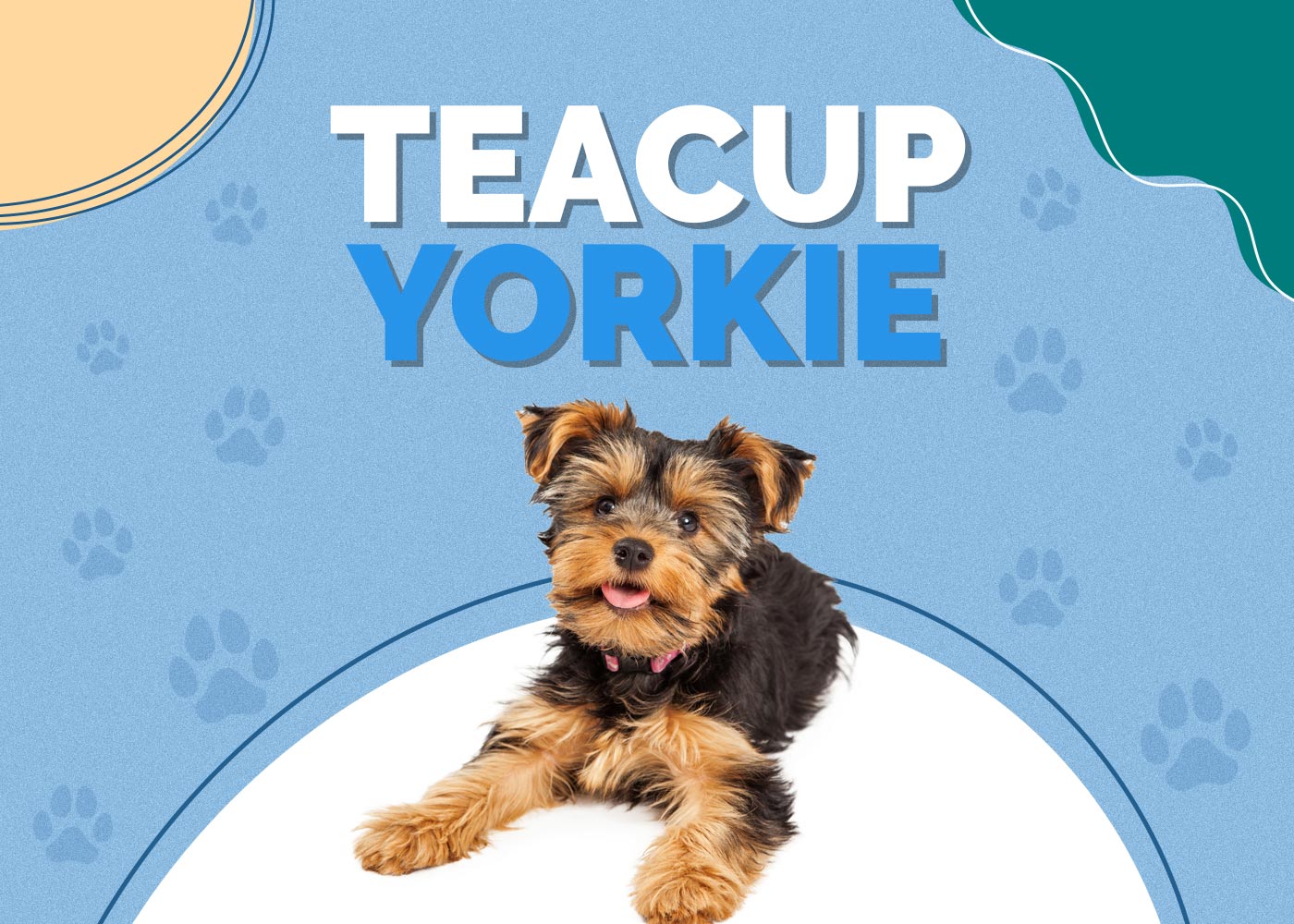
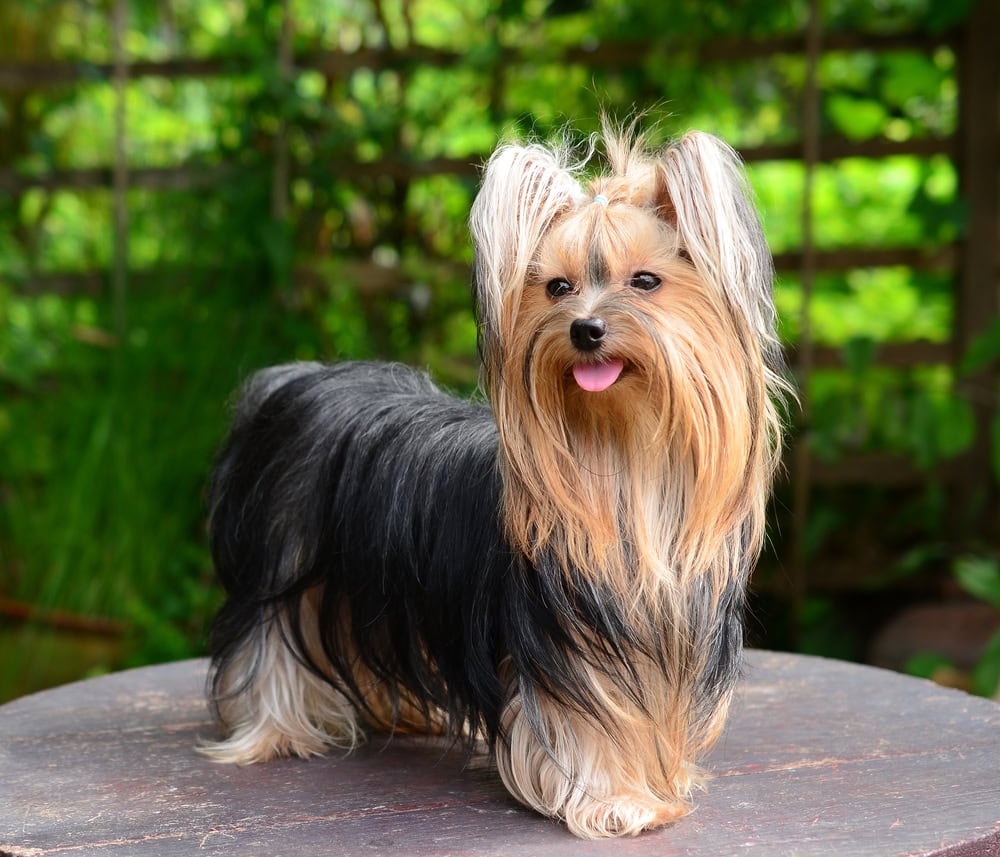
Yorkies are wonderful dogs, but no one will ever accuse them of being big pups. These are tiny dogs, suitable for living in your lap or riding around in your purse.
Even so, many Yorkie owners inevitably find themselves wondering if their pup is normal in terms of size. It’s understandable, as significant deviations from a Yorkie’s expected size can sometimes be associated with underlying health, nutritional, or developmental issues.
With that in mind, we’ve prepared a guide that lets you know just how big Yorkies get, along with how big Yorkies should be at various points of their development. There are always outliers, of course, so don’t use this in place of a vet’s advice, but it should be useful as a broad guideline.

Yorkie Breed Overview
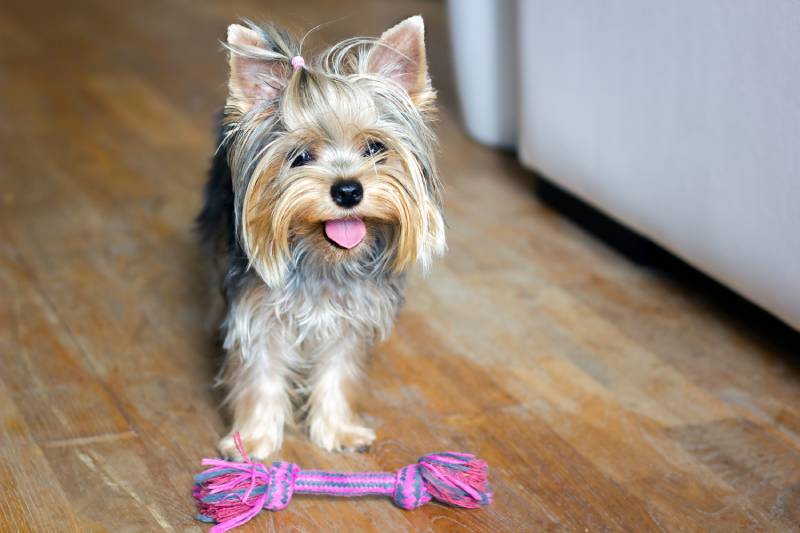
Yorkies are one of the smallest dog breeds on the planet, only tipping the scales at 3 to 7 pounds when fully grown. As a result, you may not see much change in their size from week to week or even month to month.
These charts may be useful for monitoring your Yorkie’s growth and identifying significant deviations from expected size or weight. Many people spoil these dogs with treats, and they can often become overweight as a result. Because Yorkies are so small, even modest excess weight gain can be more noticeable and may affect their overall health. Consult with your vet and use the data below as general guidance to make sure you are not overfeeding or underfeeding your pup.
Also, keep in mind that all this information is designed for purebred Yorkies. If you have a mix, that can skew the data significantly.
Yorkie Puppy Growth and Weight Chart
All the information below is a general estimate of where the average Yorkie will be at different stages of their development. As with humans, some Yorkies develop at different rates, and yours may be bigger or smaller than average at various points.
Therefore, you shouldn’t panic if your dog’s size does not correspond with the chart below in a single time window. Instead, speak to a vet and track their growth over several weeks or months, and only start to become concerned if there’s a consistent pattern of being too big or too small.
Another important thing to realize is that birth weight can influence a puppy’s growth, although genetics, nutrition, and overall health also play major roles. If they were larger than average at birth, they may be larger than average during development and as adults, although genetics and other factors also play important roles. Similarly, puppies that are smaller at birth may remain smaller than average, although many factors can influence their eventual adult size.
Estimated Yorkie Puppy Growth and Weight Chart (Male)
Please note - These measurements are approximate averages and should be used only as a general guide. Individual Yorkies may grow at different rates depending on genetics, nutrition, health, and other factors, and still be healthy.
| Weight Range | Height Range | |
| 8 weeks | 21.5 oz. | 2–4 in. |
| 9 weeks | 23 oz. | 2–4 in. |
| 10 weeks | 25 oz. | 2–5 in. |
| 11 weeks | 28 oz. | 3–5 in. |
| 3 months | 32 oz. | 3–6 in. |
| 4 months | 40 oz. | 4–7 in. |
| 5 months | 46 oz. | 4–8 in. |
| 6 months | 51 oz. | 5–9 in. |
| 7 months | 55 oz. | 6–9 in. |
| 8 months | 58 oz. | 7–9 in. |
| 1 year | 64 oz. | 7–9 in. |
| 2 years | 64 oz. | 7–9 in. |
Estimated Yorkie Puppy Growth and Weight Chart (Female)
Please note - These measurements are approximate averages and should be used only as a general guide. Individual Yorkies may grow at different rates depending on genetics, nutrition, health, and other factors, and still be healthy.
| Weight Range | Height Range | |
| 8 weeks | 21.5 oz | 2–4 in. |
| 9 weeks | 23 oz. | 2–4 in. |
| 10 weeks | 25 oz. | 2–5 in. |
| 11 weeks | 28 oz. | 3–5 in. |
| 3 months | 32 oz. | 3–6 in. |
| 4 months | 40 oz. | 4–7 in. |
| 5 months | 46 oz. | 4–8 in. |
| 6 months | 51 oz. | 5–9 in. |
| 7 months | 55 oz. | 6–9 in. |
| 8 months | 58 oz. | 7–9 in. |
| 1 year | 64 oz. | 7–9 in. |
| 2 years | 64 oz. | 7–9 in. |
Feeding requirements will depend on your dog’s age, body condition, activity level, food type, and veterinary guidance.
You need to take good care of your pet while they are growing, so you should always consult with a vet and can use our calculator tool as a general guide only, to help estimate how much to feed your pup and support their overall well-being:
Dog Calorie Calculator
Recommended Daily Calories
The exact amount of calories an individual animal needs to maintain a healthy weight is variable and influenced by many factors including genetics, age, breed, and activity level. This tool is meant to be used only as a guideline for healthy individuals and does not substitute veterinary advice

Yorkie Growth Stages
Like most small-breed dogs, Yorkies mature faster than their larger counterparts. That means you shouldn’t compare them to, say, your neighbor’s Great Dane. However, if you do, you’ll likely notice that your dog goes through a few stages of growth more rapidly.
Below, we explain what you should look for at each stage, including major milestones, necessary vaccines, and how much your dog should be eating.
8-Week-Old (2 Months) Yorkie
By 8 weeks, most Yorkie puppies have been weaned from their mother, and many are ready to go to their new homes, although some breeders may keep puppies a bit longer.
They should be eating appropriate puppy food at this point, with feeding amounts and schedules based on your veterinarian’s recommendations and the food manufacturer’s guidelines. Be sure your puppy has access to fresh water and is fed appropriate portions throughout the day. Your dog is growing rapidly and needs adequate nutrition to support healthy development.
Your puppy will typically be receiving core vaccinations around this age, including protection against diseases such as parvovirus and distemper, according to your veterinarian’s recommended schedule.
12-Week-Old (3 Months) Yorkie
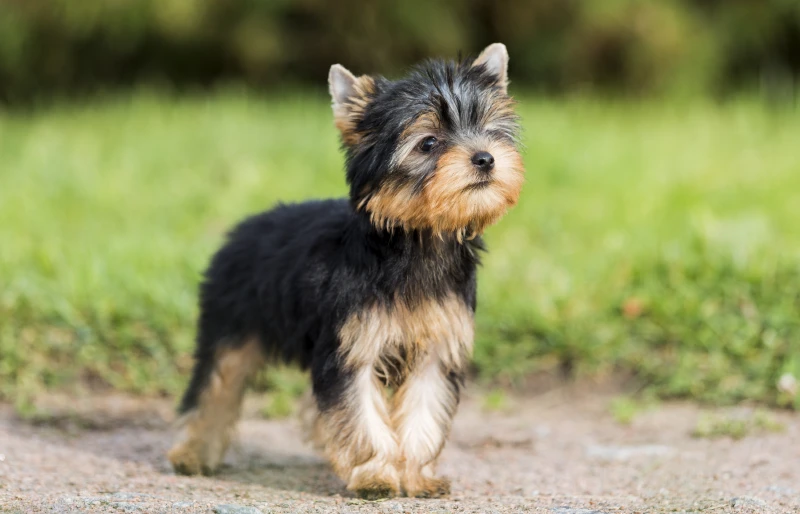
Once your Yorkie is 3 months old, many owners transition away from free-feeding and offer portion-controlled meals about three times per day, depending on veterinary guidance. How much you feed them will depend on the food, calorie density, and their size, and daily portions may vary widely depending on these factors.
Your dog may be due for additional core vaccinations, such as parvovirus and distemper, around this age, depending on their vaccination schedule, and a veterinary checkup (sometimes including a stool sample) is often recommended.
By this point, they should be acclimated to your home (assuming that you brought them home at 8 weeks). You can also begin housetraining them and teaching them to walk on a leash.
6-Month-Old Yorkie
At 6 months old, your Yorkie may be nearing their adult coat color, although many Yorkies continue to change color as their adult coat develops over the first 1–2 years. They’ll also be close to their final size, although some Yorkies keep growing until they’re a year old.
If your pup has put on enough weight, you can likely start feeding them only two meals per day. You can keep the total amount of food the same or drop it down a bit, depending on the advice of your vet.
It’s important to pay attention to your dog’s bite at this stage as well, as changes in jaw alignment or bite issues can become more noticeable during the teething period around 5–6 months old.
A 6-month-old Yorkie may be due for a rabies vaccination depending on local regulations and your veterinarian’s recommended schedule.
This is also around the time some Yorkies may begin reaching sexual maturity, and spaying or neutering is an option to discuss with your veterinarian if you are not planning to breed them.
12-Month-Old (1 Year) Yorkie
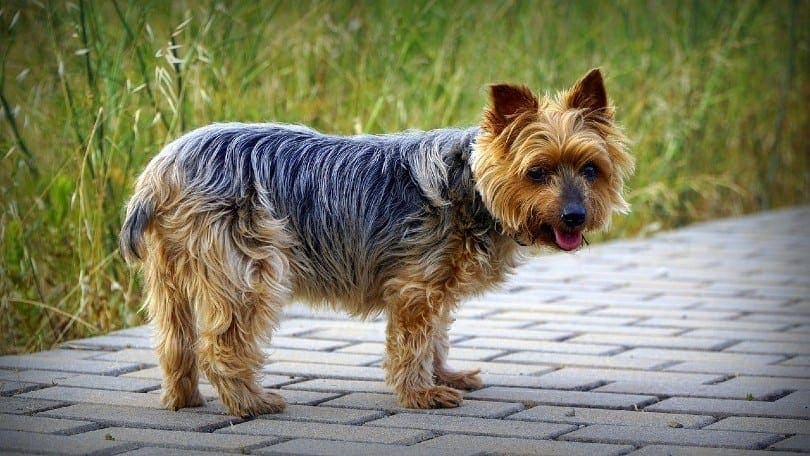
At 12 months, your Yorkie is now officially an adult. With your Yorkie at full-grown size, you can commemorate the occasion by switching them (slowly) to an adult dog food. Continue feeding them an appropriate portion of high-quality adult dog food in two daily servings, adjusting the amount based on your Yorkie’s weight, activity level, and your veterinarian’s guidance.
They may be due for booster vaccinations at this stage, depending on their previous schedule and risk factors, typically including core vaccines such as rabies and DHPP, with others like leptospirosis, Bordetella, or Lyme disease given based on veterinary recommendation and lifestyle.
You can do just about anything with a 12-month-old Yorkie, including putting them through advanced training classes and long grooming sessions. They’ll stay an adult until they turn 8 or so, at which point they’ll be considered a senior dog.

When Do Yorkies Stop Growing?
Yorkies grow quickly (although they don’t grow very much). Many Yorkies stop growing and are fully mature by the time they’re 6 or 8 months old, although some take until they turn a year old to reach physical maturity. As a general guideline, if your Yorkie continues gaining weight after turning 1, it’s a good idea to monitor their body condition and adjust their diet if needed, ideally with guidance from your veterinarian.
They also mature quickly from a mental standpoint. You can start training a Yorkie earlier than you would a larger-breed dog, and they’ll have the attention span and intelligence to handle advanced techniques by the time they’re 6 months old.
The flip side to this is that they lose their “puppy-ness” sooner than other dogs, but even adult Yorkies are still fairly puppy-like.
How Does Neutering/Spaying Affect My Dog’s Growth?
Since Yorkies mature relatively quickly, spaying or neutering near or after physical maturity may have a limited impact on overall growth, though timing can still influence development and should be discussed with a veterinarian. By the time they’re old enough for the procedure, they’ll likely be close to their final size.
However, allowing a female Yorkie to become pregnant before full physical maturity can pose significant health risks, as her body may not be fully developed to safely support pregnancy and birth. If you’re planning on breeding your dog, we’d recommend waiting until they’re fully mature to do so.
Dangers of Growing Too Quickly or Stunted Growth
It is very rare for a Yorkie to grow too quickly or have their growth stunted. Keep in mind that you’ll find quite a few variations in size within the breed, so see if your vet says that you should be concerned.
If your Yorkie is gaining excess weight, it’s best to review their diet and activity level and make adjustments if needed, ideally with guidance from your veterinarian. Being overweight can lead to a host of different health conditions, including diabetes, heart disease, and joint problems.
However, if your dog isn’t putting on any weight at all, you should take them in for a checkup. This is often a sign of an intestinal parasite, so the vet will likely want to take a stool sample to be sure.
If your Yorkie is significantly outside typical size ranges for the breed, it may be worth discussing with your veterinarian and reviewing their lineage or overall health, as multiple factors can influence size. Yorkie mixes can weigh 15 pounds or more, but it’s extremely rare for a purebred Yorkie to get anywhere near that big. If you bought your dog from a breeder, you might want to start asking questions.

Conclusion
Yorkies are wonderful dogs, and raising them as puppies can be both fun and challenging. Yorkies typically follow a naturally rapid growth pattern, reaching most of their adult size within the first several months of life.
Don’t be alarmed by sudden growth spurts, and don’t be concerned if your dog stops growing at 6 or 8 months. These dogs mature quickly, and their puppyhood fades fast.
As long as your Yorkie’s growth remains within a reasonable range and your veterinarian is not concerned, most variations are normal and not a cause for alarm. So, sit back, relax, and enjoy watching your new Yorkie grow to full size and explore the world.
Related Read: Toy Poodle vs. Yorkie: Which One Should I Choose?
Featured Image Credit: Mr. SUTTIPON YAKHAM, Shutterstock
Get Hepper In Your Inbox


Pet care tips from our vets and experts, straight to your inbox.
You may opt-out at any time. View our Privacy Policy for more information.
Quincy never intended to be a cat person. He grew up around dogs, and when his wife brought home a kitten one day, he told her she had one week to find it a new home. That week turned into 10 years (his wife moves very slowly), and that kitten turned into three (they got two more, the kitten didn't self-replicate). After a decade of sharing his home with three cats, one horrifying realization finally set in: oh God, he's a cat person now, isn't he???
Join the conversation
Ask a question, share your story, or send private feedback.